
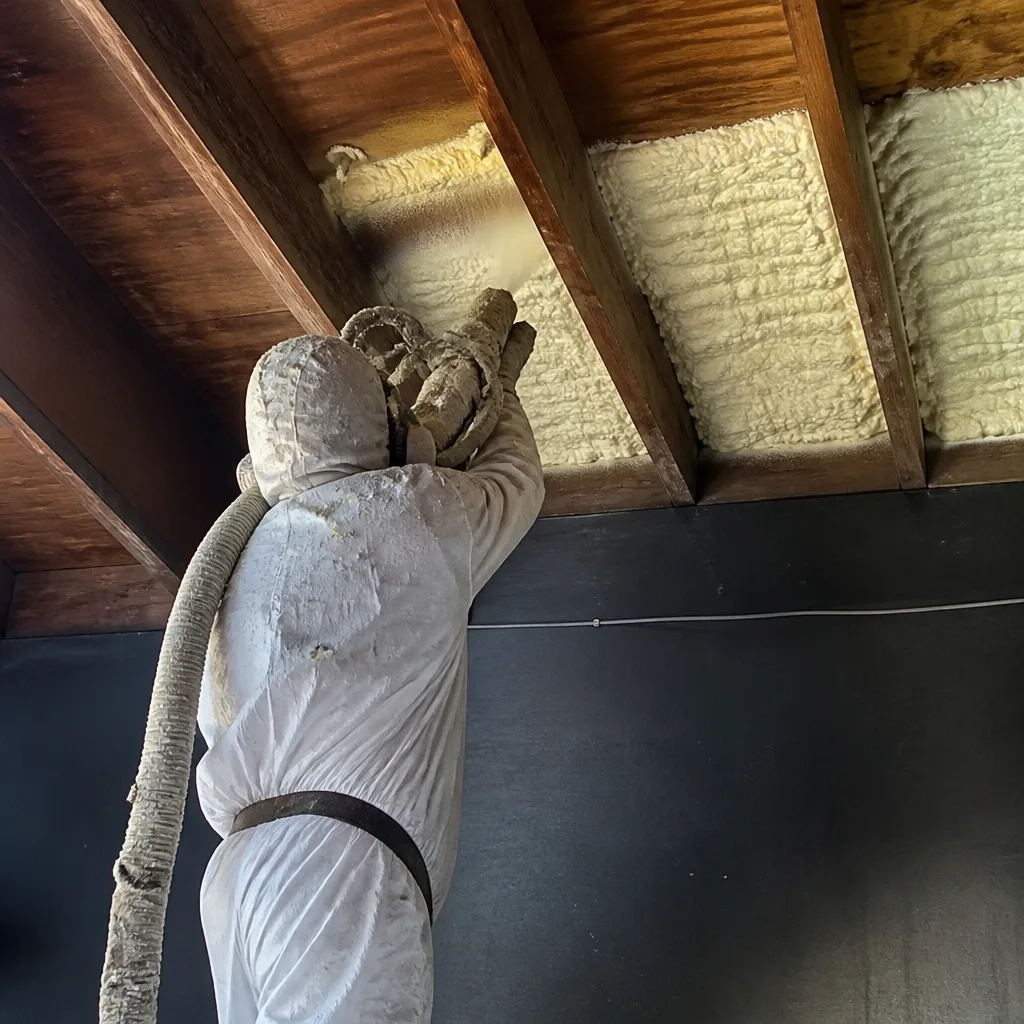
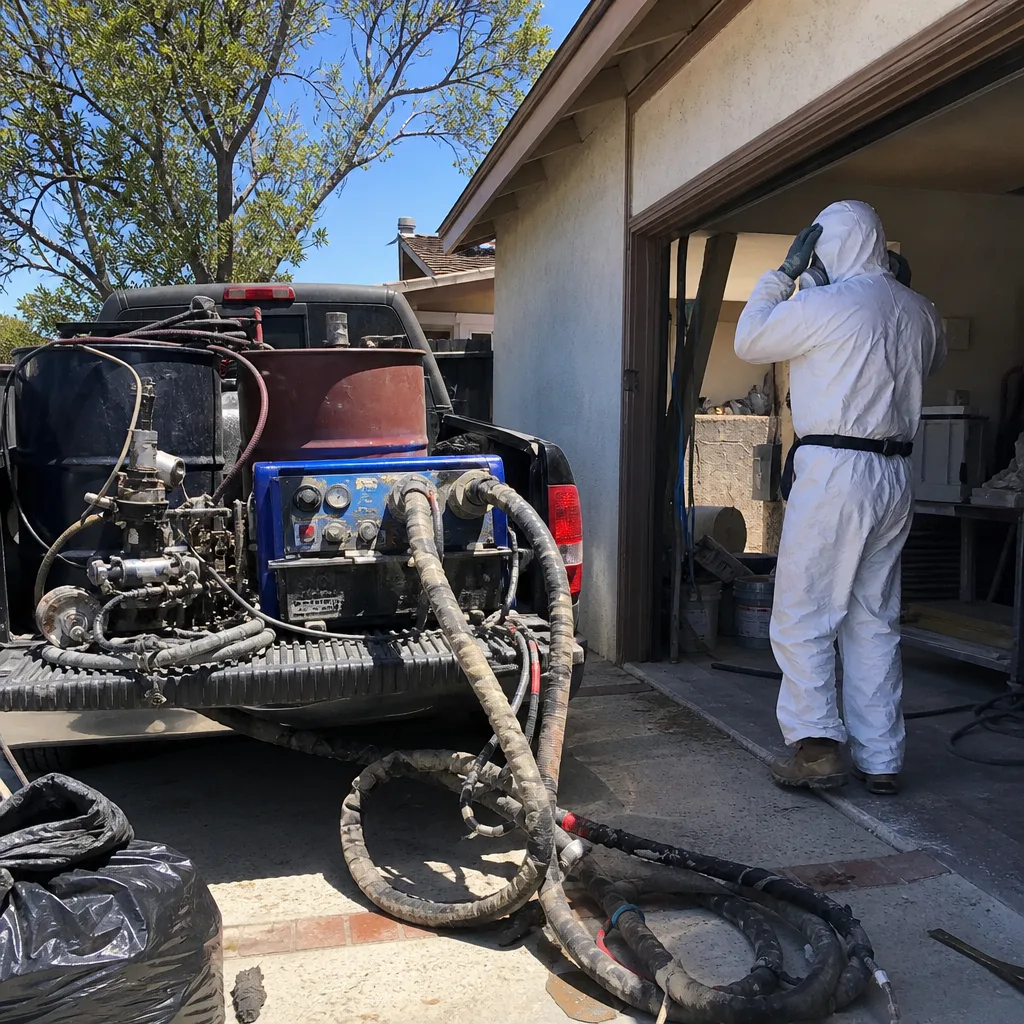
Fast, Reliable Spray Foam Insulation Across Temple City
Spray foam insulation in Temple City typically costs $2,100 to $6,800 for a full attic or wall project, with rim joist sealing running $900 to $2,400. Most Temple City homes we serve are 1940s-1960s bungalows and ranch homes where original rock wool batts have slumped and stopped working decades ago. We respond to Temple City calls within 24-48 hours for estimates and can schedule installation within the same week in most cases. Call (833) 390-3099 and we’ll walk you through what your specific house actually needs.
If you live in Temple City, you already know the struggle: upstairs rooms that never cool down in August, walls that radiate heat at 9pm, and an attic full of insulation that looks like it’s been there since Eisenhower was in office. That’s what we deal with every week here. The fix isn’t always the same for every house, which is exactly why we carry multiple brands and methods instead of pushing one product.
Why Fountain Valley Insulation Is Temple City’s Preferred Spray Foam Insulation Company
Temple City homeowners call us because we understand what’s actually inside these walls and attics. Most of the housing stock between Las Tunas Drive and Live Oak Avenue was built between 1940 and 1965, which means original plaster over wood lath, little to no wall insulation, and attics stuffed with materials that have long since stopped performing. A general insulation crew from outside the San Gabriel Valley won’t recognize what they’re looking at when they pull back an attic hatch and find compacted rock wool jammed against the eave vents. We see it multiple times a week.
Nate Calloway runs our spray foam division with a focus on getting the details right the first time. That means checking ventilation before sealing, addressing moisture issues before they get trapped behind foam, and telling homeowners honestly when spray foam isn’t the right call for their specific situation. We’ve built our Temple City reputation on that honesty. Homeowners along Baldwin Avenue, in the neighborhoods south of Las Tunas, and throughout the 91780 zip code have told us the same thing: they appreciated a straight answer more than a hard sell.
We also stock the materials needed for older-home retrofits, which keeps Temple City jobs moving faster. Baffles, air-sealing products, and spray foam from Icynene and Demilec are on hand, not ordered after we show up. That’s the difference between a one-day rim joist job and a three-day project with a return trip.
Spray Foam Wall Insulation in Temple City
Spray Foam Wall Insulation in Temple City is a retrofit method we use most often on the 1940s-1960s homes with no insulation in their original plaster walls, and it runs $3,200 to $7,100 for a typical single-story bungalow’s exterior walls. This is the highest-impact job for homes built before wall insulation was standard. Temple City’s tightly packed bungalows on narrow lots don’t always allow full exterior re-siding, so foam injected into existing wall cavities from the interior or exterior small-bore access points is often the practical path.
We match the material to your home, not the other way around. For older plaster walls, open-cell foam from Icynene is usually the better fit because it moves with the house and doesn’t put outward pressure on fragile plaster keys. Closed-cell foam, which we also install, delivers a vapor barrier and higher R-value per inch, but it’s a choice we make based on wall condition, not an upsell.
Open-Cell vs. Closed-Cell for Older Walls
Temple City’s plaster walls are 75 to 85 years old in many cases. That matters when choosing foam chemistry. Open-cell spray foam is more forgiving on these structures and it’s what we recommend for most bungalow retrofits. Closed-cell foam makes more sense for rim joists and roof decks, where moisture protection and structural rigidity are bigger concerns.
Moisture and Plaster: What We Check First
You don’t spray foam over original plaster without checking what’s happening behind it. Temple City gets real winter rain, and if your stucco or siding has any water intrusion, foam will trap that dampness and cause paint blistering on interior walls within months. We inspect for moisture before any wall cavity gets sealed. If there’s a problem, we tell you, fix what we can, and don’t proceed until the wall is dry.
Rim Joist Spray Foam in Temple City
Rim Joist Spray Foam in Temple City is the most undervalued single upgrade for these 1940s-era bungalows, and it costs $900 to $2,400 for a typical crawl space or basement band joist perimeter. The rim joist is the gap between your foundation and first-floor framing, and in Temple City homes it’s almost never sealed. That gap is where hot attic air, Santa Ana wind-driven dust, and cold winter drafts enter your home.
When we seal rim joists with Demilec or Icynene closed-cell foam, the result is immediate. Air infiltration drops, the foam’s R-value actually performs because there’s no air moving through it, and your HVAC system stops fighting outside air. During a recent 98°F week, a homeowner near Las Tunas and Live Oak told us the difference was noticeable within two days of completion.
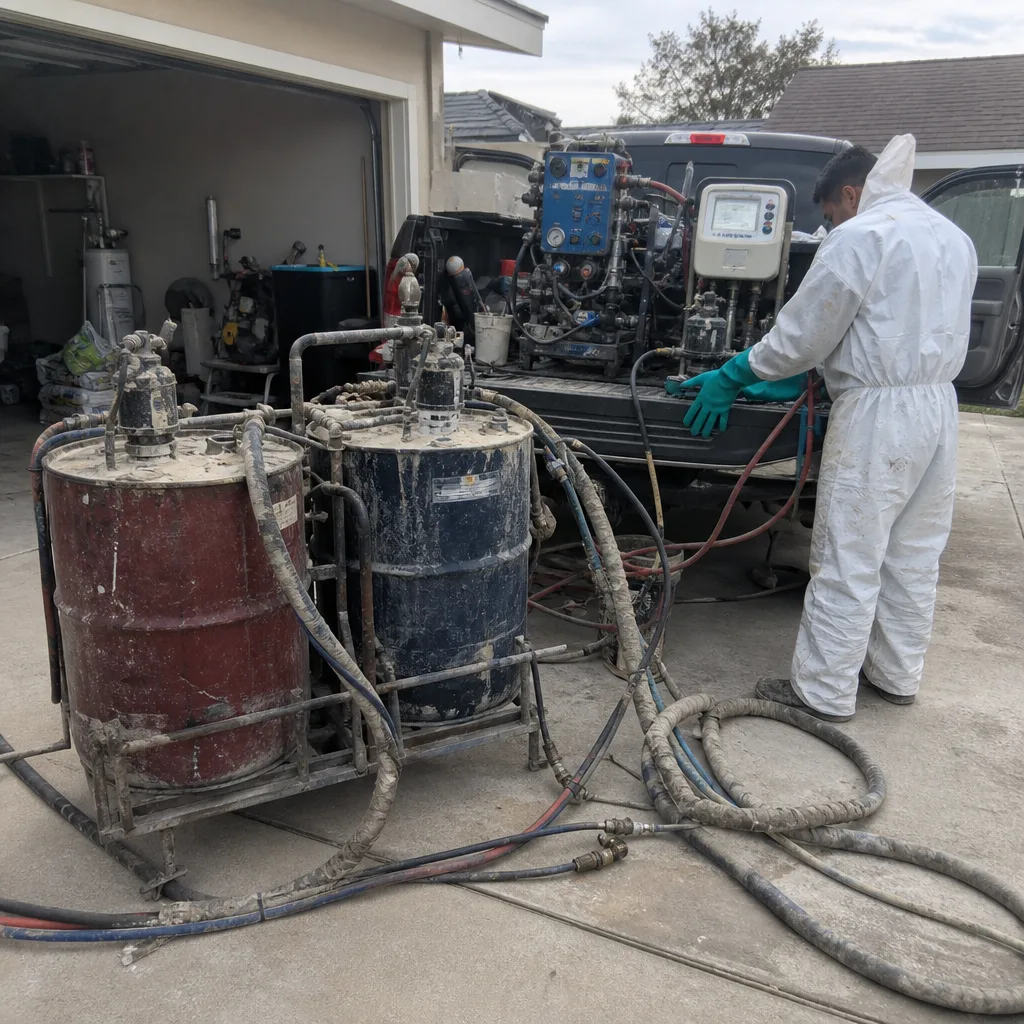
What a Rim Joist Job Involves
Crews access the band joist from the crawl space or basement, clean the surface, and apply 2-3 inches of closed-cell foam to each cavity. The job typically takes 3-5 hours for a standard Temple City ranch home. Insulation depth and perimeter size drive the final cost.
Why This Matters More in Temple City
Santa Ana winds push fine dust through every unsealed gap. That dust lands in your home, your ducts, and your lungs. Rim joist sealing is basically a dust and air barrier first, insulation second. Temple City’s older homes need both. Newer tract housing got this done at construction. Yours didn’t.
On a 1948 bungalow near Las Tunas and Live Oak, we found original rock wool batts slumped against the eave vents, cutting off attic airflow entirely. After pulling out the compacted wool, we air-sealed the top plates and applied Icynene spray foam to the rim joists, then installed baffles to restore ventilation. The homeowner reported the upstairs rooms staying noticeably cooler during that 98°F stretch in late summer.
Trusted Brands We Service in Temple City
We’re a Spray Foam Insulation specialist by trade, but we carry more than spray foam. Fountain Valley Insulation installs Icynene and Demilec spray foam for premium closed- and open-cell applications, and those are the two brands we reach for on most Temple City retrofit work. That said, we also carry Rockwool mineral wool and CertainTeed products for jobs where spray foam isn’t the right answer. Ask us why we carry all of them. Most contractors carry one, maybe two. Eight trusted brands. Three proven methods. One specialist. When you call for an estimate in Temple City, we bring material options that fit your walls, your attic, and your budget.
Common Spray Foam Insulation Problems We See in Temple City Homes
- Foam sprayed over compromised rock wool: Original 1940s rock wool batts have slumped against eave vents in half the attics we open in Temple City. Spraying foam over this mess doesn’t fix airflow. We remove the old material, install baffles, and only then seal.
- Moisture trapped behind foam on plaster walls: After winter rains, we get calls about paint blisters and damp spots. This happens when foam was applied over plaster that wasn’t checked for moisture first. Trapped dampness in a 75-year-old wall is a slow-motion problem.
- Unsealed rim joists undermining whole-attic foam: You can spend $4,000 on attic spray foam and still feel drafts because your rim joists are wide open. In Temple City’s 1940s bungalows, the band joist is almost always original and almost never sealed.
- Low-pitch attics with blocked eave vents: If foam seals over the only air path in a low-pitch attic, heat builds up and shingle life shortens. Temple City roofs are low-slope on most of these older homes, so ventilation planning before any spray foam is non-negotiable.
Pricing for Spray Foam Insulation in Temple City, CA
Here’s what Temple City homeowners can expect to pay. Open-cell spray foam wall insulation runs $2.10 to $3.60 per board foot installed, which works out to $3,200 to $7,100 for a typical bungalow’s exterior walls. Closed-cell spray foam runs $2.80 to $4.90 per board foot, so an attic roof deck application typically lands between $3,100 and $6,800 depending on square footage. Rim joist sealing runs $900 to $2,400 for a standard crawl space. Garage ceiling spray foam runs $1,400 to $3,600. These are Temple City market ranges we see across the 91780 zip code. We give free, written estimates before any work starts. Call (833) 390-3099 and tell us what you’re dealing with.
We Also Serve Cities Near Temple City
While this page focuses on Spray Foam Insulation in Temple City, our crews also cover North El Monte, Rosemead, San Gabriel, and Arcadia. If you’re on the edge of Temple City or just over a border street, call us to confirm coverage for your address. Same crew, same brands, same standards.
Serving Temple City, CA — Our Local Coverage Area
We’re based in the Temple City area and know this community well. Use the map below to see our service coverage — if you’re nearby, we can almost certainly help.
FAQs About Spray Foam Insulation in Temple City
Yes, but not until the old material is removed. The loose rock wool has to come out, eave vents need baffles installed, and then spray foam can be applied to the rim joists, top plates, or roof deck. Skipping this step will trap heat in a low-pitch attic and shorten your shingle life. This step is common in Temple City’s older homes and less common in neighboring cities with newer construction. Call (833) 390-3099 and we’ll assess your attic before recommending anything.
Yes, when done correctly. Open-cell spray foam is the better choice for original plaster because it’s less rigid and won’t pressure the plaster keys that hold your walls together. We check for moisture before any foam goes into a wall cavity, because Temple City’s winter rains can leave plaster damp behind the surface. If moisture is present, we address that first. Spray foam over damp plaster is a guaranteed problem.
It closes the primary air-infiltration gap in these older homes. When rim joists are sealed, Santa Ana wind-driven dust stops entering through the crawl space, and the stack effect that pulls hot attic air down into living spaces is interrupted. During Temple City’s summer stretches above 95°F, sealed rim joists make your cooling system work less. Most bungalows in the 91780 area still have unsealed rim joists. We fix that in a single day.
Temple City’s older homes have shallow, low-pitch attic spaces. If foam seals over eave vents or blocks the only airflow path, that space becomes a sealed heat trap that can exceed 140°F in July. That heat cooks your shingles from underneath and radiates into living space. We install baffles and confirm ventilation before any spray foam goes into an attic. It’s not optional here.
No, not directly. Settled insulation, especially the original rock wool we see in Temple City attics, has to be removed before spray foam is applied to rim joists or roof decks. Applying foam over settled material does two things: it compounds the blockage of eave vents and it leaves a gap between the foam and the surface it’s supposed to seal. Removal, air-sealing, then foam is the correct order. Most Temple City ranch homes between Las Tunas and Live Oak need this full sequence.
Written by Nate Calloway, Owner at Fountain Valley Insulation, serving Temple City and the San Gabriel Valley.