
Fast, Reliable Spray Foam Insulation Across Signal Hill
Spray foam insulation in Signal Hill typically costs $2.50 to $6.50 per square foot installed, depending on whether you need open-cell or closed-cell foam and how much surface area we’re covering. Most attic jobs run $3,800 to $9,400, while wall-cavity injection into an older Signal Hill home usually lands between $4,200 and $8,600. Spray Foam Insulation is what we do every day, and we know the houses on this hill.
We’re not new to Signal Hill. Our crews work homes along Cherry Avenue, Skyline Drive, and the streets climbing up from Willow Street. When you call Fountain Valley Insulation at (833) 390-3099, you’ll get a straight answer about whether spray foam is the right call for your attic or walls, or whether a different material fits better. We drive up the 405, exit at Cherry or Atlantic, and we’re at your door.
Why Fountain Valley Insulation Is Signal Hill’s Preferred Spray Foam Insulation Company
Signal Hill homeowners call us because we carry both Icynene and Demilec spray foam, and we’re not married to one product line. Most insulation contractors in this area sell whatever’s on the truck. We stock open-cell and closed-cell options, both manufacturers, and we’ll tell you which one suits a marine-layer climate better than the other. That’s a conversation most companies never have with you. Signal Hill has specific moisture conditions that change the recommendation, and our estimates reflect that.
We’ve crawled through attics off East Hill Street where the roof sheathing was still damp at 9 a.m. from the overnight fog. We know what that does to foam if applied too early. We’ve also worked the newer townhome projects near the 22 freeway, where interior wall cavities hide plumbing chases left from the city’s oil-patch past. Our crew lead, Nate Calloway, trains every installer to check wood moisture before a single pass of the spray gun. That diligence is why Signal Hill residents keep our number.
Spray Foam Attic Insulation in Signal Hill
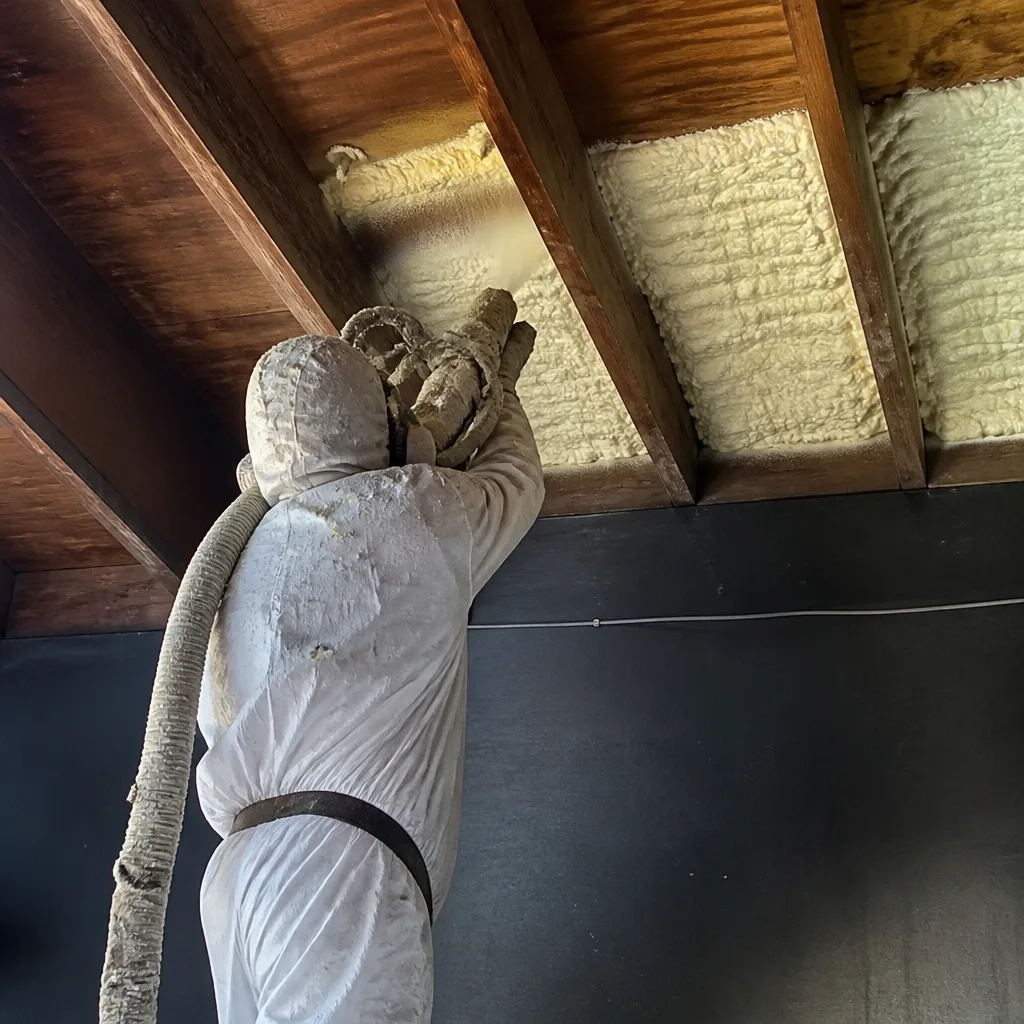
Spray Foam Attic Insulation in Signal Hill means sealing the roofline so your attic stops acting like a moisture trap. The marine layer here rolls in overnight and lingers past morning. If roof decking reads above 18% moisture when foam is applied, the foam locks that water against the wood and you get mold behind the seal within a season. We check first, every time.
A typical attic spray foam job in Signal Hill runs $3,800 to $9,400, with most 1950s ranch homes landing around $5,500 to $7,200 for a full roofline seal. That includes prep, application, and trim. We add air-sealing at top plates and around any legacy vent penetrations before spraying, because those are the paths oil-field dust and damp air use to get into your attic in the first place.
Roofline Sealing for Coastal Moisture
Closed-cell foam on the underside of the roof deck creates an air and vapor seal. In Signal Hill’s microclimate, that means the morning condensation no longer wicks down into your drywall or settles on your existing insulation. We typically apply 2 inches of closed-cell Icynene to the roofline, which also adds structural rigidity to older framing.
Contaminated Attic Cleanup Before Foam
Many Signal Hill attics near the active pumpjacks have a layer of oil-field dust mixed with old rodent activity. Foam won’t bond to that. We HEPA-vacuum, air-seal, and in some cases recommend full removal of the old batts before spraying. Skipping that step is why some foam installs fail within a year.
Spray Foam Wall Insulation in Signal Hill
Spray Foam Wall Insulation in Signal Hill targets the wall cavities of older wood-frame homes, most of which were built without any insulation at all. We inject slow-rise foam through small holes drilled into stucco or drywall, filling the stud bays completely. This is the best fix for a west-facing room that heats up every afternoon.
Wall-cavity injection into a Signal Hill home runs $4,200 to $8,600 for a typical single-story, depending on wall area and how many voids we find. Legacy oil-field plumbing chases often create dead spaces behind old stucco. We sound the walls before injecting, so we don’t leave unsealed pockets that pull moist air into your living space.
Closed-Cell Injection for Stucco Exteriors
Older Signal Hill stucco lets moisture pass. Closed-cell injection behind that stucco cuts both air movement and water vapor transfer. For homes off Skyline Drive that catch the full afternoon sun on the west side, this is the most effective wall upgrade available.
Slow-Rise Foam for Existing Drywall
Open-cell slow-rise foam is the right choice for interior wall cavities that already have drywall. It expands gently, fills the bay without bowing the wallboard, and air-seals as it cures. We use Demilec open-cell for most interior wall work.
Trusted Brands We Service in Signal Hill
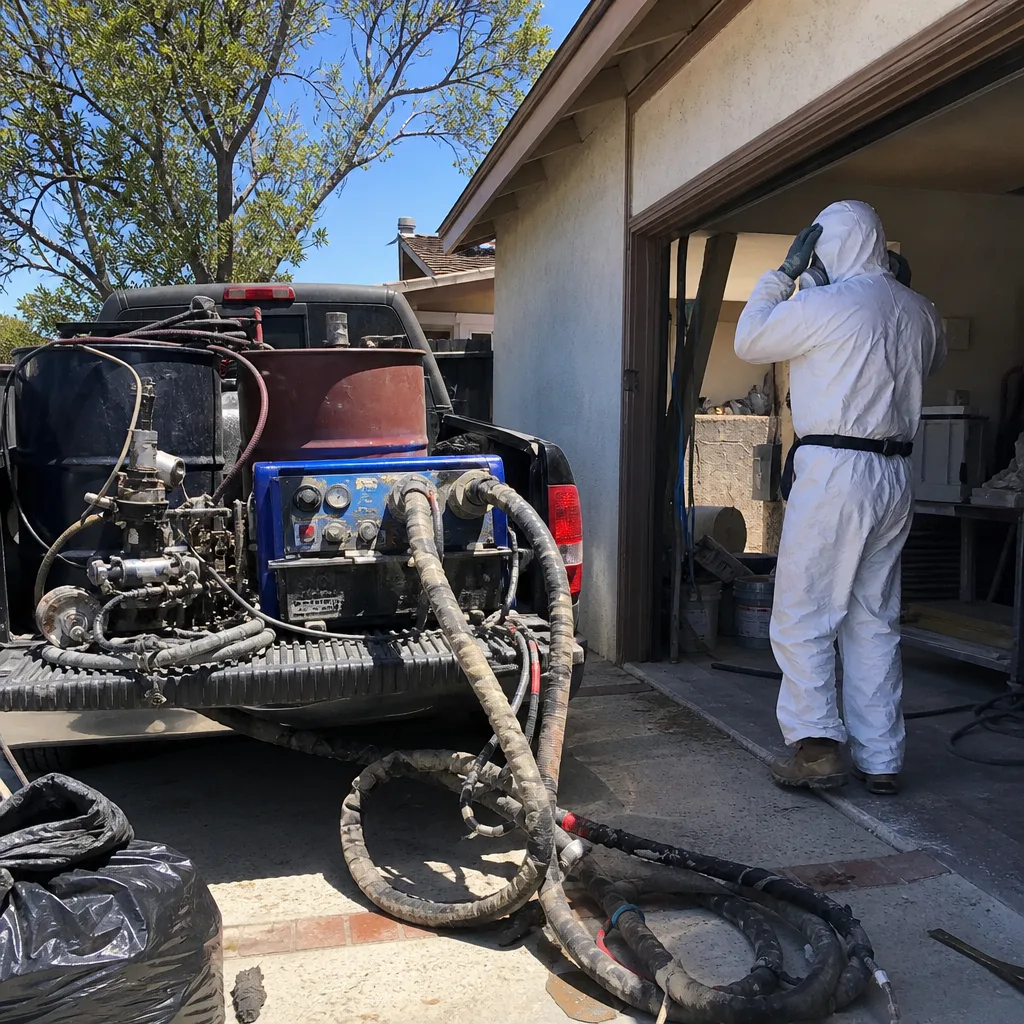
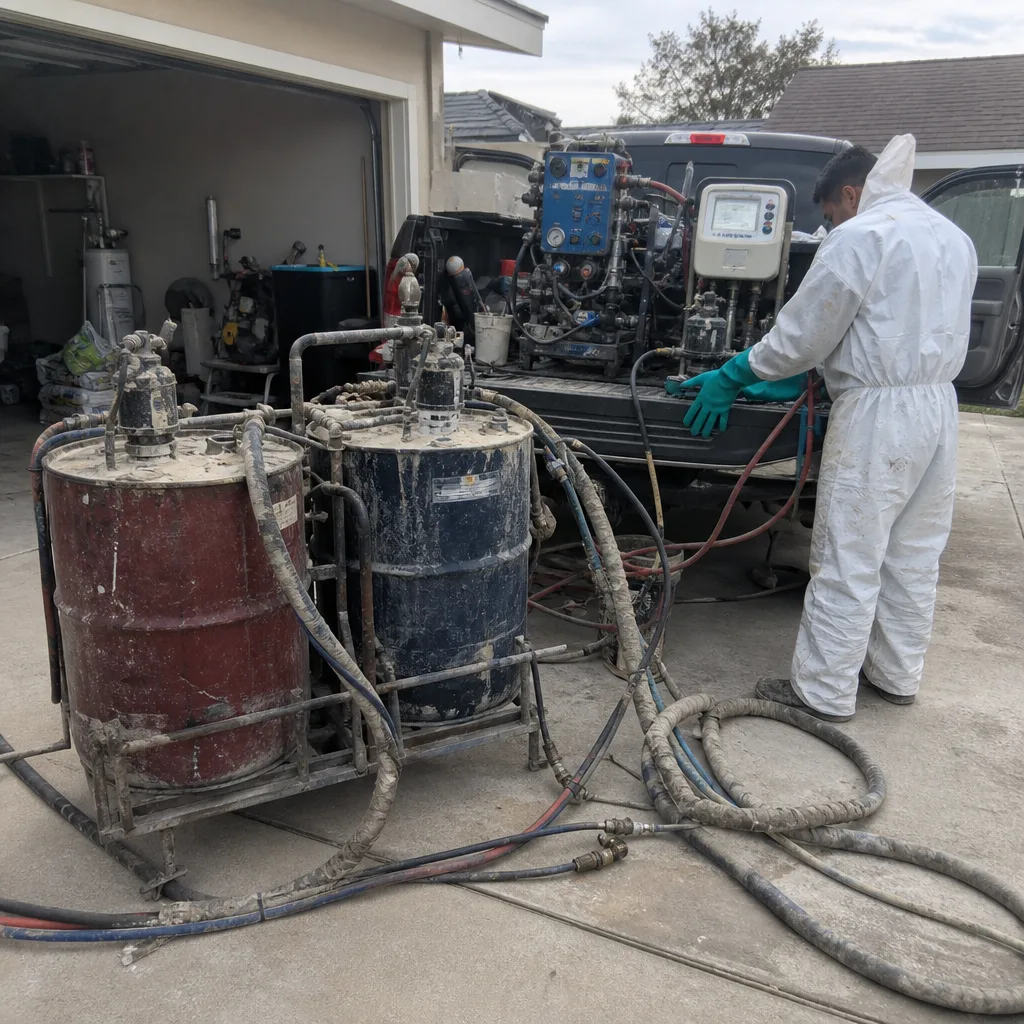
We install both Icynene and Demilec spray foam in Signal Hill, and we carry the manufacturer’s specified guns, hoses, and rig parts for both lines. That means when we quote your attic or wall job, we’re not swapping in whatever generic can was left on the truck. We match the foam chemistry to your house: closed-cell for roof decks and stucco walls, open-cell for interior cavities. CertainTeed and GreenFiber round out our lineup when spray foam isn’t the best fit for part of the job. We stock local parts in Fountain Valley and can be in Signal Hill the same week for most jobs.
Common Spray Foam Insulation Problems We See in Signal Hill Homes
- Foam applied over damp roof sheathing: The marine layer soaks attic decking overnight, and some contractors spray anyway to stay on schedule. That foam traps moisture, turns black, and delaminates within 12 months. We won’t spray until wood moisture reads below 18%.
- Oil-field dust killing foam adhesion: Homes near the active pumpjacks, especially off Cherry Avenue and Temple Avenue, collect a fine dust in the attic that prevents foam from bonding. Full HEPA vacuuming and a bonding primer are non-negotiable on these jobs.
- Missed voids behind legacy plumbing chases: Older Signal Hill homes built during the oil boom have unconventional wall cavities where pipes were run. If we don’t sound the walls first, injection foam misses those voids and the walls still breathe moist air.
- Open-cell foam sagging on attic roof decks: In a humid, mild climate like Signal Hill’s, open-cell foam on the underside of a roof deck can sag if surface prep was shortchanged. We spec closed-cell on rooflines here for that reason.
Pricing for Spray Foam Insulation in Signal Hill, CA
Open-cell spray foam in Signal Hill runs $2.50 to $4.00 per square foot installed. Closed-cell runs $4.00 to $6.50 per square foot. A full attic roofline seal on a 1,200-square-foot ranch typically lands between $5,500 and $7,200. Wall-cavity injection runs $4,200 to $8,600 for most single-story homes. What moves the number: how much contaminated insulation we have to remove first, how many wall voids need filling, and whether we’re doing the attic roofline or just a rim joist band. Call (833) 390-3099 for a free estimate. We’ll give you a specific number after we walk the job, not a text-message guess.
We Also Serve Cities Near Signal Hill
Fountain Valley Insulation covers Signal Hill and the surrounding area, including Long Beach, Lakewood, Carson, and Hawaiian Gardens. If you’re a few blocks over the Signal Hill line, we’ll still come out. Same crews, same moisture-check protocol, same straight answer on material.
Serving Signal Hill, CA — Our Local Coverage Area
We’re based in the Signal Hill area and know this community well. Use the map below to see our service coverage — if you’re nearby, we can almost certainly help.
FAQs About Spray Foam Insulation in Signal Hill
The marine layer keeps Signal Hill’s attic decking damp for hours after sunrise, and foam applied over wood reading above 18% moisture will trap that water and grow mold behind the seal. We check every roof deck with a moisture meter before spraying, and we reschedule if the wood isn’t dry enough. Call (833) 390-3099 if you want an honest read on whether your attic is ready for foam.
No. Spray foam needs a clean, dry surface to bond. Oil-field dust and old rodent droppings in Signal Hill attics prevent that bond, so the foam peels back and fails. We HEPA-vacuum the attic and, in many cases, recommend full removal of the old batts before spraying. Call us for an inspection if you know your attic has decades of accumulation.
Slow-rise open-cell foam is the best choice for existing wall cavities in Signal Hill’s older wood-frame homes. It expands gently, fills the stud bays without bowing drywall, and air-seals as it cures. For west-facing exterior walls behind stucco, we recommend closed-cell injection for added moisture resistance. Call (833) 390-3099 and we’ll sound your walls and tell you which one fits.
Closed-cell foam is the better choice for Signal Hill roof decks and exterior walls. It creates a vapor barrier that blocks the morning marine-layer moisture from wicking into your framing. Open-cell works well for interior wall cavities and sound control, but we don’t recommend it on the underside of a roof deck here unless the attic is fully conditioned and dry.
Spray foam fills the entire wall cavity, cutting the air movement and radiant heat transfer that make west-facing rooms in Signal Hill uncomfortable by late afternoon. Closed-cell injection behind stucco also blocks moisture vapor that colder coastal air pushes against the wall. Call (833) 390-3099 for a free estimate. We’ll tell you which foam chemistry suits your specific wall.
Call Fountain Valley Insulation for Spray Foam in Signal Hill
If your Signal Hill home has a damp attic, bare wall cavities, or rooms that bake every afternoon, spray foam may be the fix. If you’re not sure, we’ll tell you that too. Nate Calloway and the Fountain Valley Insulation crew will come out, check moisture levels, look at your framing, and give you a real recommendation, not a sales pitch. Call (833) 390-3099 for a free estimate. We serve Signal Hill, 90755, and the surrounding streets from the hilltop down to the Long Beach line.
Written by Nate Calloway, Owner at Fountain Valley Insulation, serving Signal Hill and surrounding communities.