
Fast, Reliable Spray Foam Insulation Across San Marino
Spray foam insulation in San Marino typically costs $2.50 to $6.50 per board foot installed, with most whole-attic jobs running $4,800 to $12,000 depending on foam type and access conditions. Closed-cell foam runs higher than open-cell, and San Marino’s older homes often add prep work like wiring remediation that affects the final number. We respond to San Marino calls within 24 hours, and for an exact quote on your home, call (833) 390-3099. We know these houses. Most of them were built before insulation was even a code requirement, and the attics were never designed for modern equipment.
Why Fountain Valley Insulation Is San Marino’s Preferred Spray Foam Insulation Company
San Marino homeowners don’t hand their keys to just anyone. The city’s design review process, the age of the housing stock, and the value of the properties mean insulation work here requires a different level of care than a 1990s tract home in the Valley. We’ve worked in the Oak Knoll, Mission District, and Huntington Library-adjacent neighborhoods long enough to know that a 1928 Spanish Colonial and a 1960s ranch in San Marino need completely different approaches. Nate Calloway built Fountain Valley Insulation around that reality: match the material and method to the house, not the other way around.
Our San Marino customers consistently mention three things in their feedback: we showed up when we said we would, we protected their original plaster and tile, and we explained the foam chemistry in plain English before spraying anything. That matters here. When you’re insulating a home under design review, the inspector wants documentation, the homeowner wants minimal disruption, and the house itself has quirks that generic crews never anticipate. We carry Icynene and Demilec spray foam systems because they’re the two brands most specified for older, architecturally sensitive homes. Most general insulation contractors in the area don’t carry either one. Ask us why that matters for your San Marino project.
Spray Foam Wall Insulation in San Marino
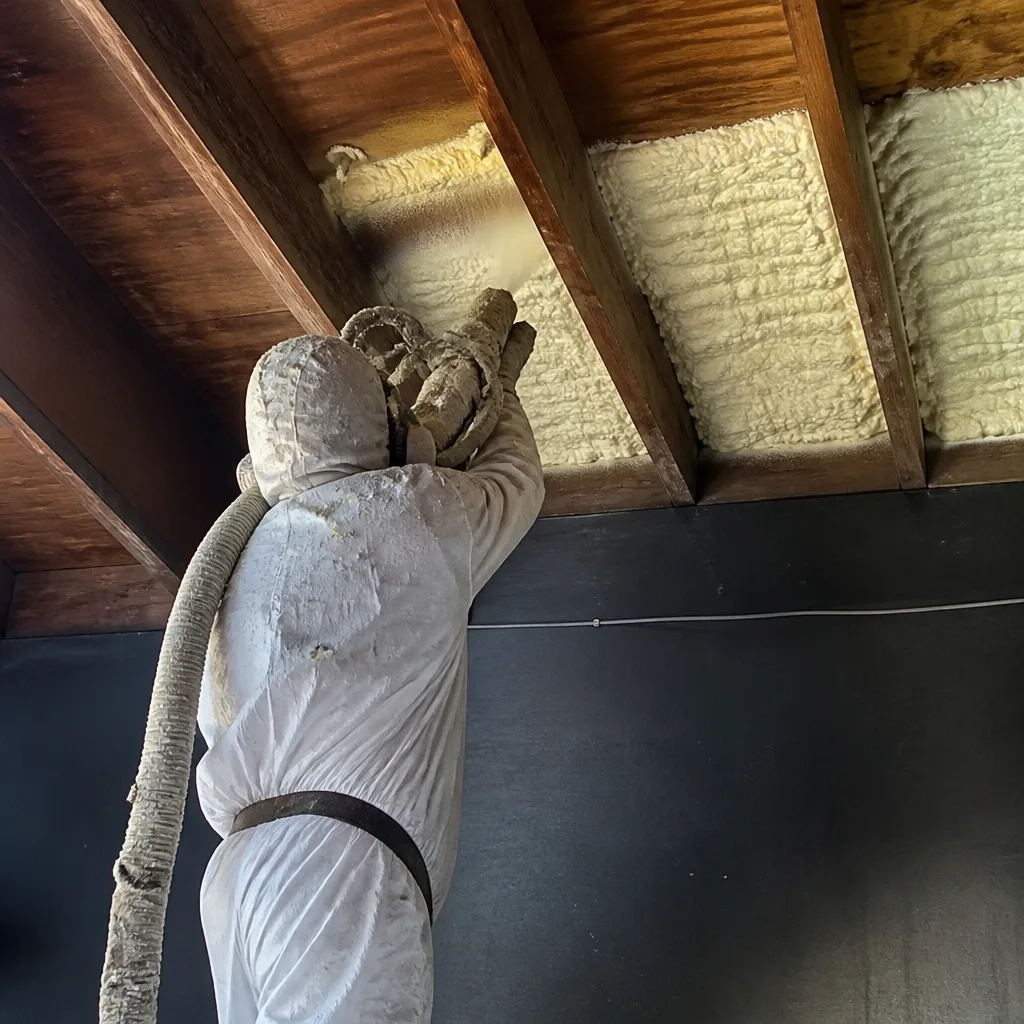
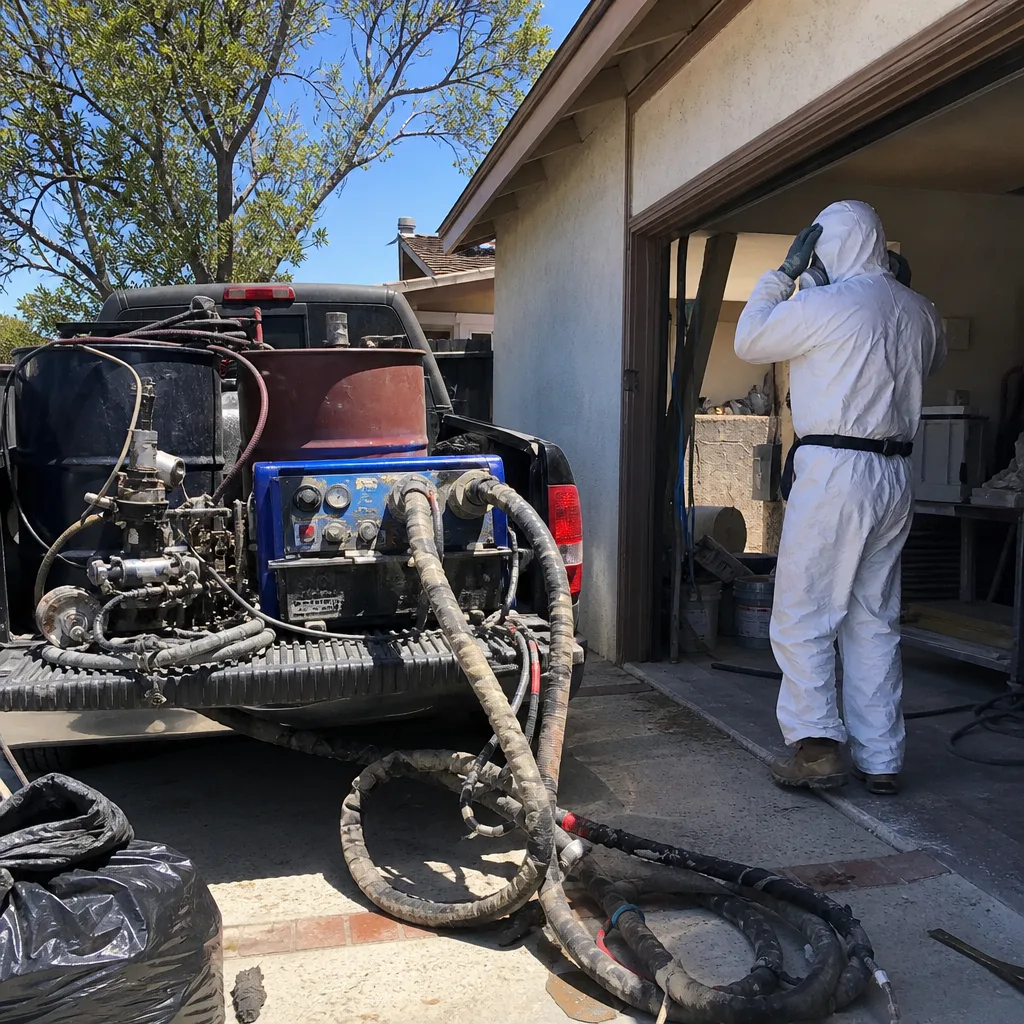
Spray foam wall insulation in San Marino usually means retrofitting walls that were never insulated in the first place. Most homes in the 91108 and 91118 zip codes were built between the 1920s and 1960s with empty wall cavities. We inject foam through small access points, typically from the exterior or through closet interiors, which matters when you’re trying to preserve hand-troweled plaster. On a 1928 Spanish Colonial in the Oak Knoll area, we found original knob-and-tube wiring buried in loose-fill cellulose and a 140°F attic with only 18 inches of clearance under clay tiles. Our tech used a low-profile spray rig to apply closed-cell foam to the rim joists and wall cavities, restoring structural rigidity without disturbing the plaster or shifting a single tile.
Wall insulation in San Marino typically runs $3.50 to $6.00 per board foot for closed-cell and $1.80 to $3.20 for open-cell. The bigger variable is access. Homes with stucco exteriors need interior injection, which means patching and paint touch-up afterward. Homes with wood siding can often be done from outside with less disruption. Either way, if the home still has live knob-and-tube wiring, that gets deactivated and rerouted first. No exceptions.
Closed-Cell for Plaster Preservation
Closed-cell foam adds structural rigidity, which matters in San Marino homes with original lath-and-plaster walls that have started to detach from their studs over 80 or 90 years. The foam bonds the layers together. It’s also a vapor barrier, so it protects against the moisture swings that come with San Marino’s dry summers and occasional Santa Ana-driven humidity shifts.
Open-Cell Where Walls Need to Breathe
Open-cell foam is less expensive and allows some moisture movement. In San Marino’s climate, we usually recommend it for interior partition walls and second-floor spaces where the full vapor-barrier performance of closed-cell isn’t necessary. It also expands more, which helps fill irregular cavities in older framing where stud spacing was never uniform.
Rim Joist Spray Foam in San Marino
Rim joist spray foam in San Marino addresses one of the most overlooked air-leakage points in these older homes: the band board where the first floor framing meets the foundation. On 1920s and 1930s houses, those cavities are often wide open, letting outside air pour into the basement or crawlspace and then rise through the walls. We seal them with closed-cell foam, which stops the airflow and adds meaningful insulation value at the same time.
Rim joist work in San Marino typically runs $1,800 to $4,200 for a full perimeter on a standard two-story home. Smaller crawlspace-only jobs fall at the lower end. The cost depends on access: if the basement is unfinished, we can spray directly. If the crawlspace is tight, which it often is under San Marino’s older homes, we use extended applicators and crawl in with low-profile protective gear. The work usually takes one day, and we schedule it around the homeowner’s availability since access is often through a closet floor or exterior vent.
Why Rim Joists Fail in Older Homes
Original rim joists in San Marino were never sealed. Builders in the 1920s and 1950s relied on the plaster and siding to slow air movement, and those materials deteriorate over decades. The result is a constant draft that makes the whole first floor feel cold in winter and pulls hot attic air down in summer.
Closed-Cell Is the Standard Here
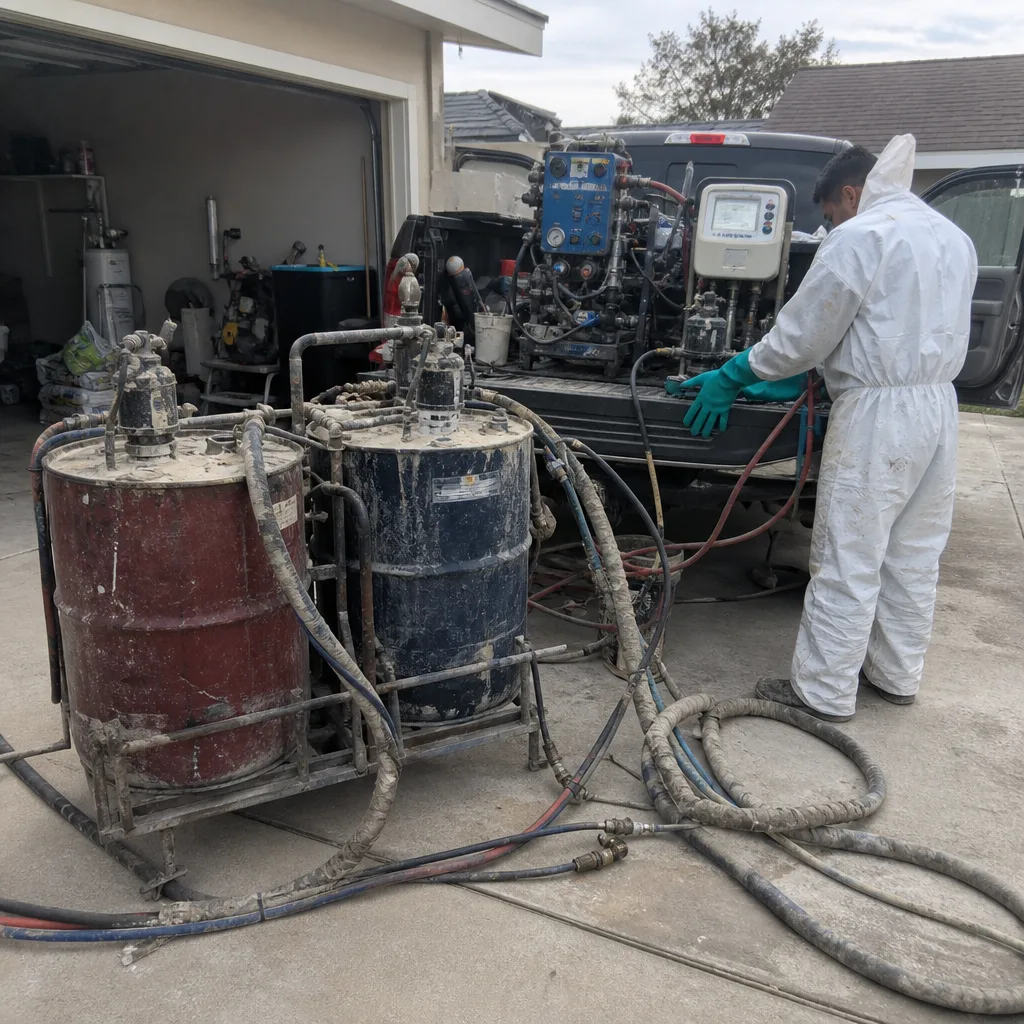
We use closed-cell foam for rim joists almost exclusively. It’s denser, it acts as a vapor barrier, and it adds stiffness to the rim board that helps with older framing. It also resists moisture, which matters in San Marino homes with original foundations that wick groundwater during wet winters.
Trusted Brands We Service in San Marino
Fountain Valley Insulation installs Spray Foam Insulation using Icynene and Demilec systems, because those two manufacturers make products specifically engineered for the conditions we see in San Marino. Older plaster walls, minimal attic clearance, strict energy codes. We also carry Owens Corning and GreenFiber for jobs where blown-in fiber or recycled cellulose makes more sense than foam. For San Marino customers with clay tile roofs and original framing, we stock enough material locally to handle most jobs without waiting on a distributor shipment. That keeps the project moving even when the city’s design review adds a week to the schedule.
Common Spray Foam Insulation Problems We See in San Marino Homes
- Foam over live knob-and-tube wiring. San Marino homes built before 1950 often still have active knob-and-tube circuits in wall and attic cavities. Spray foam directly over this wiring creates a serious fire risk because the foam traps heat. The wiring must be deactivated and rerouted before any foam goes in, and we coordinate that with a licensed electrician familiar with San Marino’s permit requirements.
- Poor foam adhesion during Santa Ana wind events. Attic temperatures in San Marino routinely hit 140°F in summer. If foam is applied during a Santa Ana event without proper ventilation, the substrate temperature and rapid off-gassing cause poor adhesion and voids. We monitor substrate temperature and delay application when conditions are outside the manufacturer’s spec.
- Voids in wall cavities under clay tile roofs. Clay tile roofs with minimal attic clearance limit how much access we have to the top plates of walls. On some San Marino homes, we can’t get the spray gun into position to fill the entire wall cavity from above. That leaves thermal bridging and the house won’t meet Title 24 performance standards. We use injection techniques from the interior or exterior to fill those cavities completely.
- Design review complications mid-project. San Marino requires design review or a conditional use permit for nearly every visible exterior change. If our scope shifts from interior work to anything visible from the street, the permit needs to be amended. We flag this early so homeowners aren’t surprised by a stop-work order.
Pricing for Spray Foam Insulation in San Marino, CA
Let’s talk real numbers for San Marino, because this market is different from Pasadena or Alhambra. Open-cell spray foam runs $1.80 to $3.20 per board foot. Closed-cell runs $3.50 to $6.50 per board foot. A typical attic job in a 2,000-square-foot San Marino home runs $6,000 to $11,000 for closed-cell and $4,000 to $7,000 for open-cell. Rim joist sealing runs $1,800 to $4,200. Wall cavity injection on a single-story home runs $8,000 to $16,000 depending on access and whether knob-and-tube remediation is required. The permit and design review fees are separate and go directly to the city. Call (833) 390-3099 and we’ll walk your specific house through a free estimate. You’ll get a line-item quote, not a vague range.
We Also Serve Cities Near San Marino
Beyond San Marino proper, our crews handle spray foam work in San Gabriel, East San Gabriel, Alhambra, and East Pasadena. These neighboring cities share similar housing stock and climate patterns, so the techniques and materials we use for San Marino apply directly. If your home sits near the San Marino border in any of these communities, the same crew and the same Icynene and Demilec systems are available.
Serving San Marino, CA — Our Local Coverage Area
We’re based in the San Marino area and know this community well. Use the map below to see our service coverage — if you’re nearby, we can almost certainly help.
FAQs About Spray Foam Insulation in San Marino
Interior-only spray foam work usually does not require design review, but San Marino’s code requires permits for most insulation retrofits, and any change visible from the street or affecting exterior walls triggers design review. That review can add one to three weeks to the timeline. We prepare the permit documentation and coordinate with the city so the project doesn’t stall. Call (833) 390-3099 and we’ll tell you whether your specific scope needs design review before you commit to anything.
Yes, but it requires specialized low-rise spray rigs and remote applicators. Many San Marino attics have under 24 inches of clearance under clay tile, and a standard spray rig won’t fit. We use compact equipment and hand-applied techniques to reach rim joists and wall top plates without disturbing the tiles or the original plaster below. This is exactly the kind of access work most crews won’t attempt because it’s slow. We do it regularly.
Have the wiring deactivated and rerouted by a licensed electrician before any foam is sprayed. Applying foam directly over live knob-and-tube wiring is a fire hazard and violates the National Electrical Code. We flag this during our initial inspection and pause the insulation scope until the electrical work is complete. Some San Marino homeowners bundle the two jobs; we’re happy to coordinate scheduling with your electrician.
Yes. Closed-cell foam applied to the roof deck creates an air seal that keeps that 140°F heat from radiating into the living space below. It’s the single most effective upgrade for San Marino homes where the upstairs runs 10 to 15 degrees hotter than the first floor every summer. We recommend closed-cell at the roof deck for this climate, with open-cell reserved for interior walls and sound control. A free attic assessment takes about an hour. Call (833) 390-3099.
Icynene and Demilec are the two brands we recommend for older San Marino homes. Both make closed-cell formulas that bond well to lath and plaster, and both have open-cell options that expand gently enough not to bow old framing or crack unreinforced plaster. We don’t use generic foam on these houses, and we don’t carry brands that can’t meet the performance spec for 1920s and 1930s construction.
If you’re tired of uneven temperatures in your San Marino home or you’re planning a remodel and want insulation done right the first time, call Nate and the team at Fountain Valley Insulation. We’ll send a specialist to your home, assess the attic and walls, and give you a straight answer about what your house actually needs. Estimates are free. Call (833) 390-3099 today.
Written by Nate Calloway, Owner at Fountain Valley Insulation, serving San Marino and surrounding communities.