Fast, Reliable Spray Foam Insulation Across El Monte
Spray foam insulation in El Monte usually means one thing: an older stucco home that’s hot all summer and the homeowner is done paying for it. Closed-cell spray foam applied to wall cavities and open-cell foam across the attic deck can drop cooling costs 25 – 35% in a 1950s El Monte tract house. That’s the job we do most weeks, and we get to El Monte calls fast. If your air conditioner runs all afternoon and the walls still feel warm by 7pm, call (833) 390-3099 and we’ll tell you what’s actually going on inside those walls.
We’re Fountain Valley Insulation, and we work on El Monte homes built for a different climate than the one the San Gabriel Valley has now. Those post-WWII stucco boxes were framed with zero thought toward insulation. Fixing that properly takes a specific approach, specific materials, and a crew that’s seen enough of these houses to know what’s behind the plaster before we open it up.
Why Fountain Valley Insulation Is El Monte’s Preferred Spray Foam Insulation Company
El Monte homes are mostly 1950s and 60s single-story stucco tract houses with wood framing behind that stucco. When our crews show up, we usually find the same thing the last job had: bare 2×4 cavities, a thin layer of rock wool that’s been sitting in the attic for sixty years, and windows that let heat pour through in August. That’s why we stock closed-cell and open-cell foam specifically suited to retrofitting older framing, not just new construction.
We carry Icynene and Demilec spray foam because they’re the two brands that hold up when applied into irregular, aging cavities. Nate Calloway, who leads our crews, has spent years matching the right foam to the right wall condition. When a 1958 Lambert-area homeowner calls about a back bedroom that’s 12 degrees hotter than the living room, we know what we’re going to find before we cut the first inspection hole.
El Monte spans 91731, 91732, and 91734. Our response window for spray foam estimates in those ZIP codes is same week, often within 48 hours. We work around tenants in rental properties and around families who’ve lived in the same house for forty years. We’re not the contractor who shows up, quotes a number, and disappears. We’re the crew that tells you why the last foam quote didn’t include removing the old rock wool, and what happens if you skip that step.
Closed Cell Spray Foam Insulation in El Monte
Closed Cell Spray Foam Insulation in El Monte is the right choice for wall retrofits in older stucco homes because it adds structural rigidity and an air barrier in one pass. In a 1950s tract house with no wall insulation, closed-cell foam applied from the interior through small access holes in the plaster fills the 2×4 cavities completely and stops air movement that fiberglass batts can’t touch. We recommend it for El Monte homeowners dealing with rooms that never cool down, walls that radiate heat at night, or rental units where tenants crank the AC all summer.
Interior-Applied Wall Retrofit
Stucco exteriors with no wall sheathing make exterior-access foam injection impractical. The stucco is the only barrier, and drilling through it invites moisture problems. We apply closed-cell foam from the interior side instead, cutting small holes in the plaster or drywall, filling each stud bay, and patching back clean. It’s more work, but it’s the only approach that doesn’t compromise the stucco.
For a standard 1,200-square-foot El Monte ranch, interior-applied closed-cell wall foam runs $8,500 to $14,000. That’s the full wall cavity treatment, including plugging and patching. Smaller rooms or targeted walls run proportionally less.
Rim Joist and Band Board Sealing
Crawl spaces and raised foundations are common in El Monte’s older homes, and the rim joist is where a lot of hot air sneaks in. Closed-cell foam along the band board seals that perimeter and stops dust and pests from entering through the gap between foundation and framing. This job runs $900 to $2,200 for most El Monte homes depending on perimeter length.
We apply Demilec closed-cell on rim joists because it cures dense and holds its shape even in the temperature swings between cool El Monte mornings and 100-degree afternoons.
Open Cell Spray Foam in El Monte
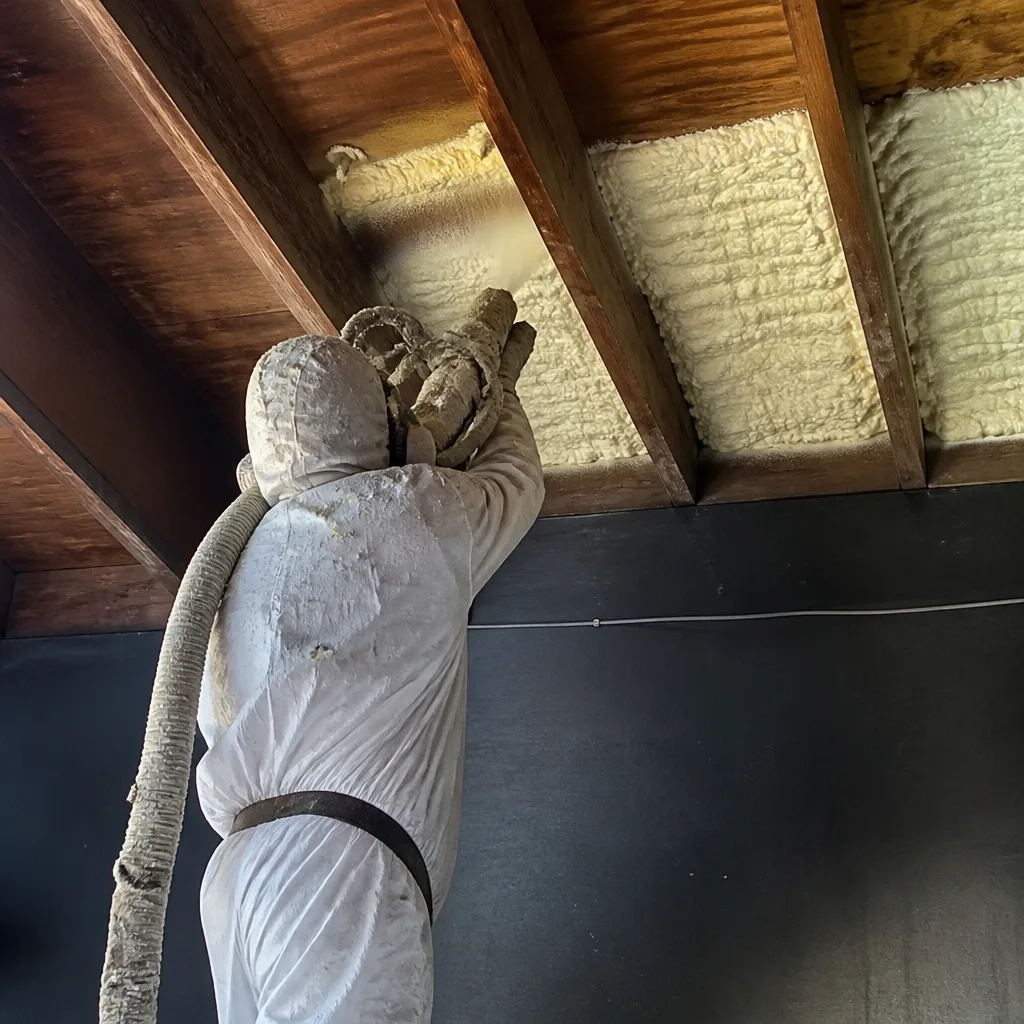
Open Cell Spray Foam is what we recommend for attic roof decks and ceilings in El Monte because it expands more than closed-cell, costs less per board foot, and still stops the stack effect that pulls hot attic air into living space. For a single-story stucco home where the attic is the single biggest source of summer heat gain, open-cell foam along the underside of the roof deck turns the entire attic into conditioned space.
Attic Deck Sealing
El Monte attics in summer hit 140 – 150°F. That heat radiates through the ceiling into every room below. Open-cell foam applied directly to the underside of the roof sheathing drops attic temperatures dramatically and lets ductwork run more efficiently. We use Icynene open-cell for attic decks because it’s forgiving on older framing and expands into the irregular gaps between rafters.
Garage Ceiling and Bonuses
Garage conversions and attached garages are common in El Monte’s multi-generational homes. Foaming the garage ceiling separates that unconditioned space from living areas above or beside it. Cost for a standard two-car garage ceiling runs $2,800 to $4,500. If the garage was converted without permits, we’ll still foam the ceiling and wall cavities where codes allow it.
For a full attic deck treatment on a 1,200-square-foot home, expect $5,500 to $9,500 depending on roof pitch, deck condition, and whether old insulation needs removing first.
Trusted Brands We Service in El Monte
Fountain Valley Insulation installs Icynene and Demilec spray foam because those two manufacturers produce the most consistent open-cell and closed-cell products for retrofit work. We also work with CertainTeed and GreenFiber for blown-in applications where spray foam isn’t the right fit. That matters in El Monte, where a mixed approach often fits the house better than one material everywhere. We match the material to your home, not the other way around. If you’re in 91732 and want to know whether closed-cell wall foam or open-cell attic foam makes more sense for your house, call us before you buy anything.
Common Spray Foam Insulation Problems We See in El Monte Homes
- Legacy rock wool under new foam. In 1950s attics, old rock wool sits loose between ceiling joists. Applying foam over it traps heat against the material and it crumbles, creating voids that kill R-value. We remove or encapsulate legacy insulation first, every time.
- Stucco without wall sheathing. El Monte’s stucco exteriors often have no plywood or OSB behind them. Foam expands against the back of the stucco, and if applied too aggressively in hot weather, it can crack plaster on the interior. We control expansion rates by applying in lifts and monitoring cure time.
- Blocked soffit vents before attic sealing. In rental properties where tenants or handymen blocked soffit vents for pest control, foaming the roof deck without addressing ventilation causes moisture to sit in the attic. That leads to mold. We inspect venting before any attic foam job in 91731 and 91735.
- Uneven wall cavities in older framing. 2×4 walls from the 1950s aren’t consistent. Stud spacing varies, fire blocking sits in odd places, and old knob-and-tube wiring sometimes runs through cavities we need to foam. We map each wall with an inspection camera before we start filling.
Pricing for Spray Foam Insulation in El Monte, CA
Closed-cell spray foam runs $2.10 to $3.40 per board foot in El Monte. Open-cell runs $0.85 to $1.60 per board foot. Translated to real jobs: a full wall cavity retrofit on a 1,200-square-foot stucco ranch runs $8,500 to $14,000, an attic deck on the same home runs $5,500 to $9,500, and a rim joist package runs $900 to $2,200. What changes the number: how much old insulation has to come out first, whether the crew can access walls from the interior without moving tenants, and how irregular the framing is. We give free estimates, and the quote covers removal of legacy rock wool when it’s present. Call (833) 390-3099 and we’ll walk the house with you.
We Also Serve Cities Near El Monte
Fountain Valley Insulation works throughout the San Gabriel Valley and nearby communities. We serve El Monte and surrounding areas including South El Monte, North El Monte, Temple City, and Rosemead. If you’re in one of those cities with a 1950s stucco home that’s baking all summer, Spray Foam Insulation is our specialty and the fix is the same: remove what’s failing, seal the shell, and stop paying for conditioned air that leaks out before you feel it.
Serving El Monte, CA — Our Local Coverage Area
We’re based in the El Monte area and know this community well. Use the map below to see our service coverage — if you’re nearby, we can almost certainly help.
FAQs About Spray Foam Insulation in El Monte
No, you should not apply spray foam directly over old rock wool. The legacy rock wool in El Monte’s 1950s attics has degraded over sixty-plus years, and foaming over it traps heat against a material that crumbles and loses R-value. We remove the old rock wool first, then apply open-cell foam to the roof deck or closed-cell to the wall cavities. Call (833) 390-3099 for a free attic inspection and we’ll tell you exactly what’s up there before quoting anything.
Interior-applied closed-cell foam is the best approach for stucco walls with no insulation. Drilling through stucco from the outside invites moisture intrusion and the stucco has no sheathing behind it to anchor foam properly. We work from the interior, drilling small access holes through the plaster or drywall, filling each 2×4 cavity with closed-cell foam, and patching back clean. It’s the only practical retrofit for El Monte’s post-WWII tract homes.
Spray foam stops air movement, which fiberglass batts don’t. El Monte summers hit 95 – 105°F regularly, and the dominant heat gain is through the attic and walls. Open-cell foam on the attic deck drops attic temperatures from 140°F down to near living-space temperature, while closed-cell foam in the walls stops hot air from moving through the cavities. Homeowners in El Monte typically see cooling cost reductions of 25 – 35% after a full retrofit.
Closed-cell is better for rental walls because it’s more durable and adds structural rigidity, which matters when tenants come and go. Open-cell is better for rental attic decks where you need to seal and insulate on a tighter budget. For multi-generational rental homes in 91731 and 91734, we usually recommend closed-cell walls paired with open-cell attic decks. That combination balances performance and cost without sacrificing either.
Inspect the soffit vents and make sure nothing is blocking them. In El Monte rental properties, we frequently find vents sealed with plywood or insulation by well-meaning tenants trying to keep pests out. Foaming the roof deck without functioning ventilation traps moisture and leads to mold. We check venting before any attic foam job and fix blocked vents as part of the prep work. Call (833) 390-3099 for an estimate and we’ll let you know if your attic venting is ready.
Written by Nate Calloway, Owner of Fountain Valley Insulation, serving El Monte and the San Gabriel Valley.