Fast, Reliable Spray Foam Insulation Across Midway City
Spray foam insulation in Midway City runs about $2.50 to $6.50 per square foot installed, with most whole-attic jobs in the 92655 zip code landing between $4,800 and $9,200 depending on foam type and cavity depth. We get crews to Midway City within one to two business days for estimates, and most spray foam jobs are done same week. Nate Calloway runs Fountain Valley Insulation, and his crews know the difference between a Midway City low-slope attic and a big Fountain Valley tract attic. That matters more than you’d think. Call (833) 390-3099 for a straight answer on your project.
Why Fountain Valley Insulation Is Midway City’s Preferred Spray Foam Insulation Company
Midway City homeowners keep calling us back because we actually understand what these 1950s and 60s homes throw at you. A lot of insulation contractors treat every attic like it’s the same, and that’s exactly how Midway City attics get ruined. We hear from customers near Bolsa Avenue and Magnolia Street regularly, and the recurring theme is damp, shallow attics that other companies either over-quoted or under-prepared for.
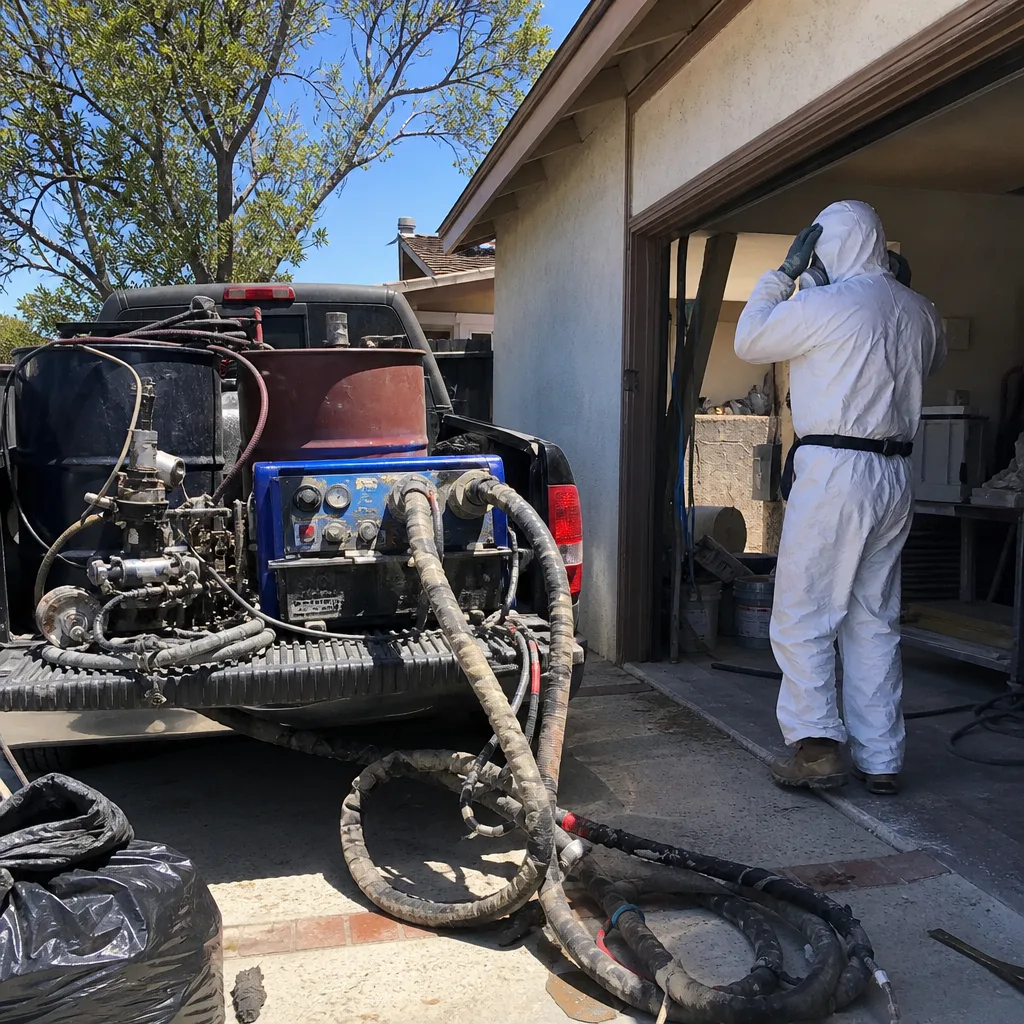
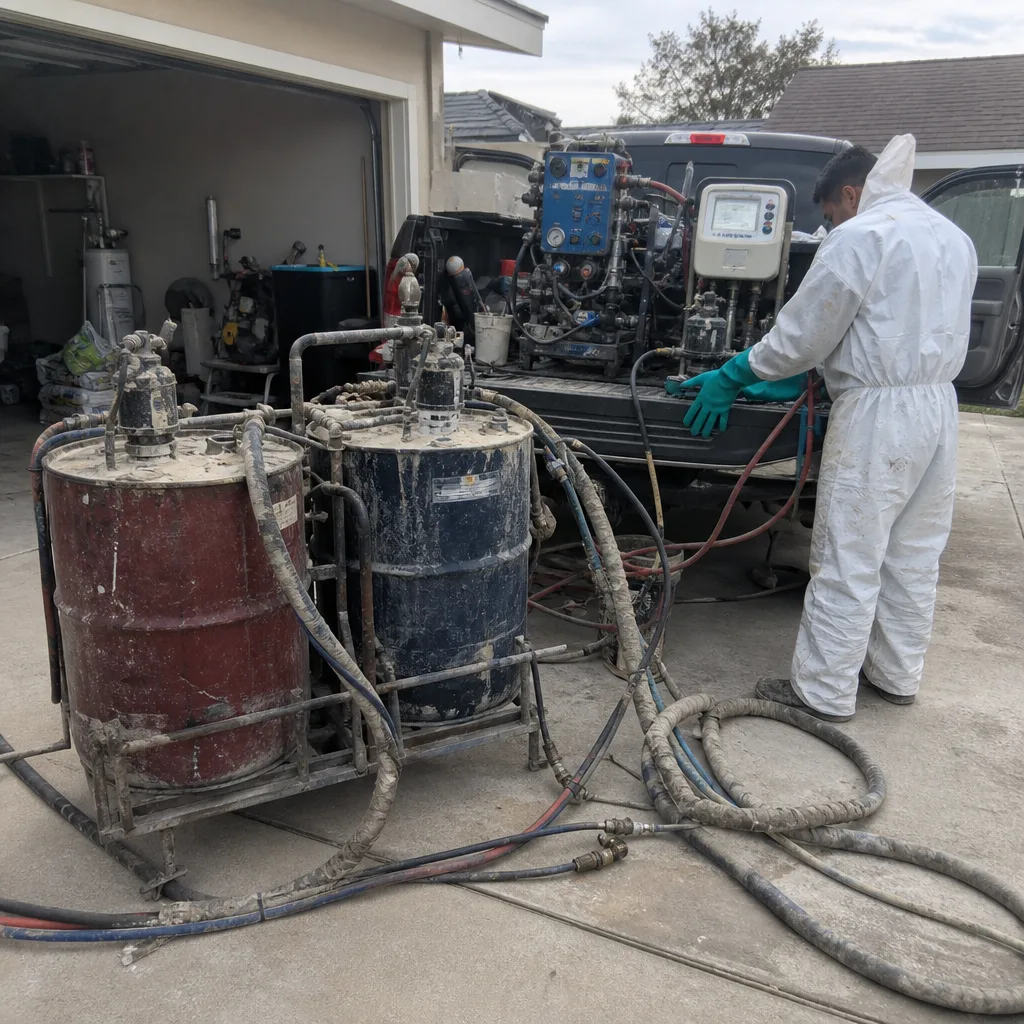
Nate and his team carry the right equipment for small cavities. That sounds minor until you watch a full-size spray rig try to navigate a two-foot attic ridge. We run reduced-output guns and smaller blowers for exactly this kind of access, so you’re not paying for a crew to stand around while equipment doesn’t fit. Our Spray Foam Insulation crews also know Midway City building patterns well enough to spot problem areas before they start spraying, which saves you from moisture traps and rework. The combination of coastal-specific technique and honest material guidance is why homeowners in Westminster and Garden Grove call us for their Midway City properties too.
Closed Cell Spray Foam Insulation in Midway City
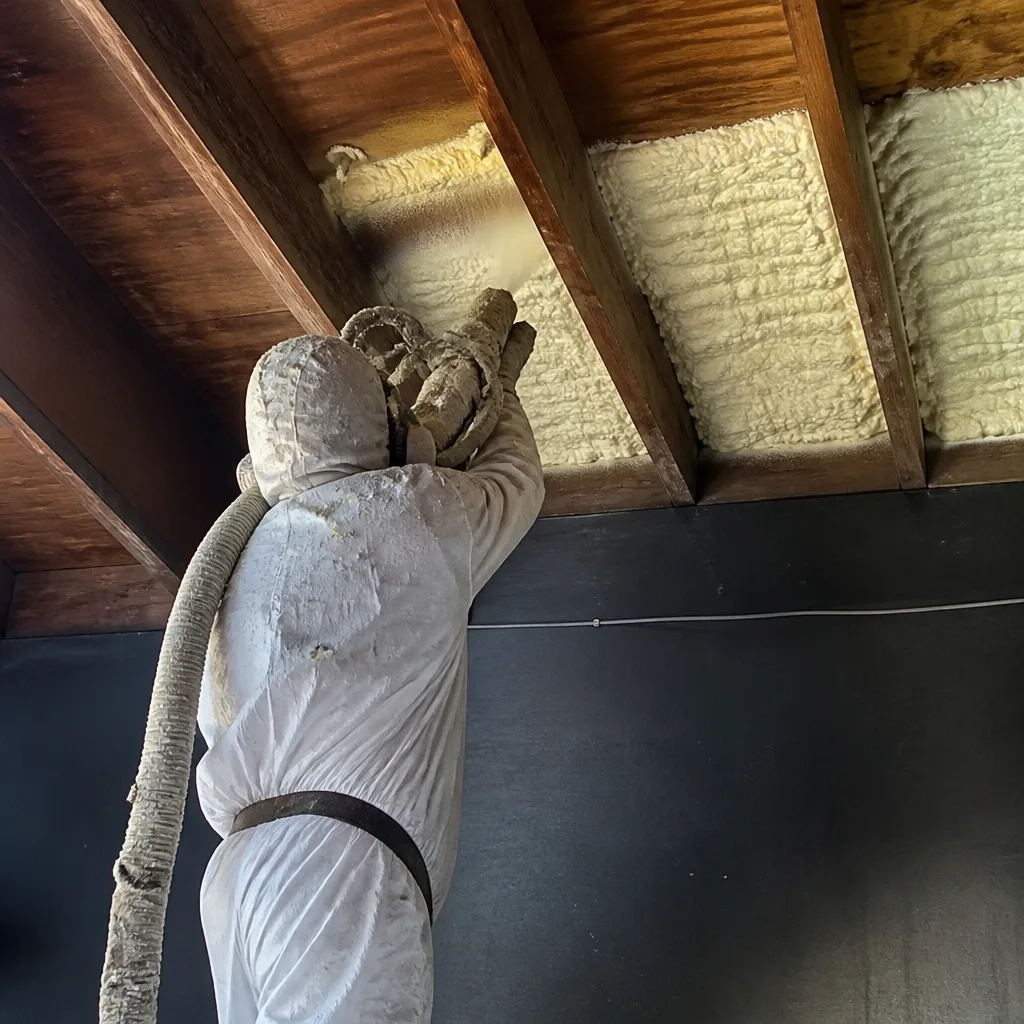
Closed Cell Spray Foam Insulation is the workhorse choice for Midway City’s low-pitch roofs and shallow attic cavities, because at roughly R-6.5 to R-7 per inch it delivers serious thermal resistance even when you only have three inches of space to work with. In Midway City’s 1950s – 60s tract attics, which often measure only two to three feet at the ridge, closed-cell must be applied with a reduced-output gun and in multiple thin lifts to avoid trapping marine-layer moisture against the original rock wool or bare roof sheathing. That detail is the difference between a sealed attic and a rotting one. For a typical Midway City attic between 800 and 1,200 square feet, closed cell runs $5.00 to $6.50 per square foot.
Moisture Control in the Marine Layer
The coastal marine layer that settles over 92655 most mornings means condensation is your real enemy, not heat. Closed cell’s density acts as its own vapor barrier, which is a genuine advantage when you’re sealing against persistent dampness. Applied correctly in thin passes, it locks out the drifting moisture that saturates old rock wool in these neighborhoods.
Structural Benefit on Older Framing
Older Midway City tract homes benefit from closed cell’s rigidity, which adds racking strength to roof decks that have softened over decades. It’s not a structural repair, but it does stiffen the assembly. For homes near the coast where framing has seen decades of humidity cycling, that’s a real plus.
Open Cell Spray Foam in Midway City
Open Cell Spray Foam fits specific situations in Midway City, mainly interior wall cavities and flat roof assemblies where you want air sealing plus sound damping without the higher material cost. It runs $2.50 to $4.00 per square foot installed, and because it expands more than closed cell, it fills irregular 1950s framing bays well. But open cell in Midway City needs a vapor barrier strategy, because without one, this foam will absorb marine moisture and sag or drip during spring mornings.
Sound Control in Compact Tract Homes
Midway City’s small lots put houses close together, and street noise from Bolsa Avenue or Magnolia Street isn’t theoretical. Open cell reduces sound transmission through walls and ceilings more effectively than batts. For interior walls between bedrooms and living spaces, it’s a strong pick.
When to Think Twice
Open cell is not the right material for a low-slope roof deck that stays damp from the marine layer. We tell customers outright: if there’s no proper vapor barrier or ventilation plan, closed cell is the safer call for that assembly. Spray foam over unsealed knob-and-tube wiring or older recessed fixtures, common in 1950s tract homes, also creates fire risk and code violations, so those get addressed before any foam goes down.
Trusted Brands We Service in Midway City
We stock and install Icynene and Demilec spray foam systems for Midway City homes, and these two names matter if you’ve done any research. Icynene’s open-cell formulations are among the most consistent in the industry, while Demilec’s closed-cell products perform exceptionally in coastal humidity conditions like what 92655 sees year-round. Because we’re not tied to one brand, we recommend based on your attic’s height, moisture history, and roof pitch, not what the truck happens to carry. For Midway City homeowners interested in recycled-content options elsewhere in the home, we also install GreenFiber blown-in products. The right material for the right cavity beats one material forced everywhere.
Common Spray Foam Insulation Problems We See in Midway City Homes
- Moisture trapped against original rock wool. Closed-cell sprayed too thick in a single pass seals in decades of marine-layer dampness, and the sheathing underneath can rot within a few years. We remove failed material first, then apply in thin lifts.
- Open-cell used in low-slope assemblies without a vapor barrier. Morning dampness soaks through, condensation drips onto ceilings, and the foam sags or loses R-value. This is the most common avoidable mistake we correct in 92655.
- Foam over unsealed wiring and fixtures. Many 1950s Midway City tract homes still have original knob-and-tube or older recessed lights. Spray foam over these without proper sealing creates a fire risk and fails inspection.
- Shallow ridge equipment problems. Standard spray rigs can’t reach the far eaves of a two-foot attic. We use reduced-output guns and smaller blowers so the entire cavity gets coverage, not just the accessible center.
Pricing for Spray Foam Insulation in Midway City, CA
We Also Serve Cities Near Midway City
Our crews cover Midway City and the surrounding Orange County area daily, including Westminster, Garden Grove, Fountain Valley, and Huntington Beach. If you own a rental or family property in one of these cities, we can schedule it on the same route as your Midway City job. Read more about our full coverage area on the Midway City service page.
Serving Midway City, CA — Our Local Coverage Area
We’re based in the Midway City area and know this community well. Use the map below to see our service coverage — if you’re nearby, we can almost certainly help.
FAQs About Spray Foam Insulation in Midway City
Will spray foam insulation make my Midway City attic feel more humid or trap moisture?
No, correctly installed closed-cell spray foam reduces attic humidity in Midway City by air-sealing against the marine layer, but it must be applied in thin lifts with a reduced-output gun to avoid trapping existing moisture against old rock wool. If your attic already holds damp original insulation, we remove it before spraying. Open-cell foam without a proper vapor barrier can create humidity problems in low-slope assemblies, so we don’t install it that way. Call (833) 390-3099 and we’ll check your attic’s moisture profile before recommending anything.
Can you spray foam my low-pitch roof attic that’s only 2 – 3 feet high at the ridge?
Yes, we spray low-pitch and shallow attics in Midway City regularly using smaller blowers and reduced-output guns that reach the far eave corners without clogging. Closed-cell is almost always the right choice here because its higher R-value per inch works with the limited cavity depth. The key is applying it in multiple thin passes, not one thick lift. Most Midway City tract homes from the 1950s and 60s fall into this category, and we’ve done dozens of them.
What brands of spray foam do you install for Midway City homes?
We install Icynene and Demilec spray foam systems in Midway City, two of the most recognized names in the category. Icynene handles open-cell applications well, and Demilec’s closed-cell formulations perform strongly in the persistent coastal dampness around 92655. Because we also carry GreenFiber and other blown-in options, you get a recommendation based on your attic and budget, not a brand pitch.
How does the coastal salt air affect spray foam insulation in Midway City?
Salt air itself doesn’t degrade cured spray foam, but the moisture that rides along with it is the real issue, and Midway City gets more persistent morning dampness than inland Orange County cities. The foam’s job here is both thermal and moisture control, which is why proper application technique and vapor barrier choices matter more than in your average Westminster attic. Closed-cell foam, applied correctly, seals against that moisture. Applied wrong, it traps it. That distinction drives how we approach every Midway City job.
Is spray foam a good choice for older Midway City tract homes with original rock wool?
Yes, spray foam is a strong choice for Midway City’s older tract homes, but the original rock wool has to come out first, especially if marine-layer dampness has saturated it. We regularly remove failed rock wool from 1950s and 60s attics near Bolsa Avenue and Magnolia Street, check for soft sheathing, and then apply closed-cell foam in thin passes. The result is a tighter, drier attic, but skipping the removal step will trap moisture and cause rot.
Written by Nate Calloway, Owner at Fountain Valley Insulation, serving Midway City and surrounding Orange County communities.