
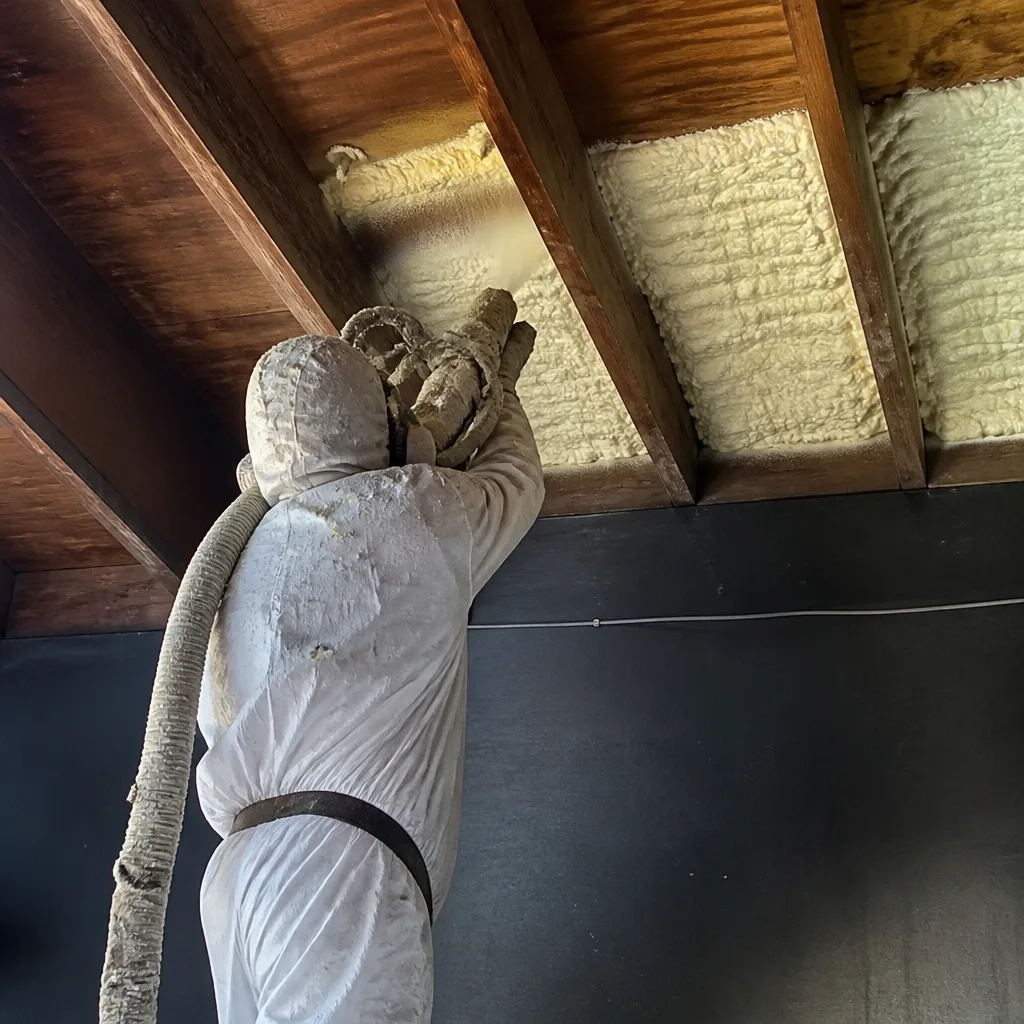
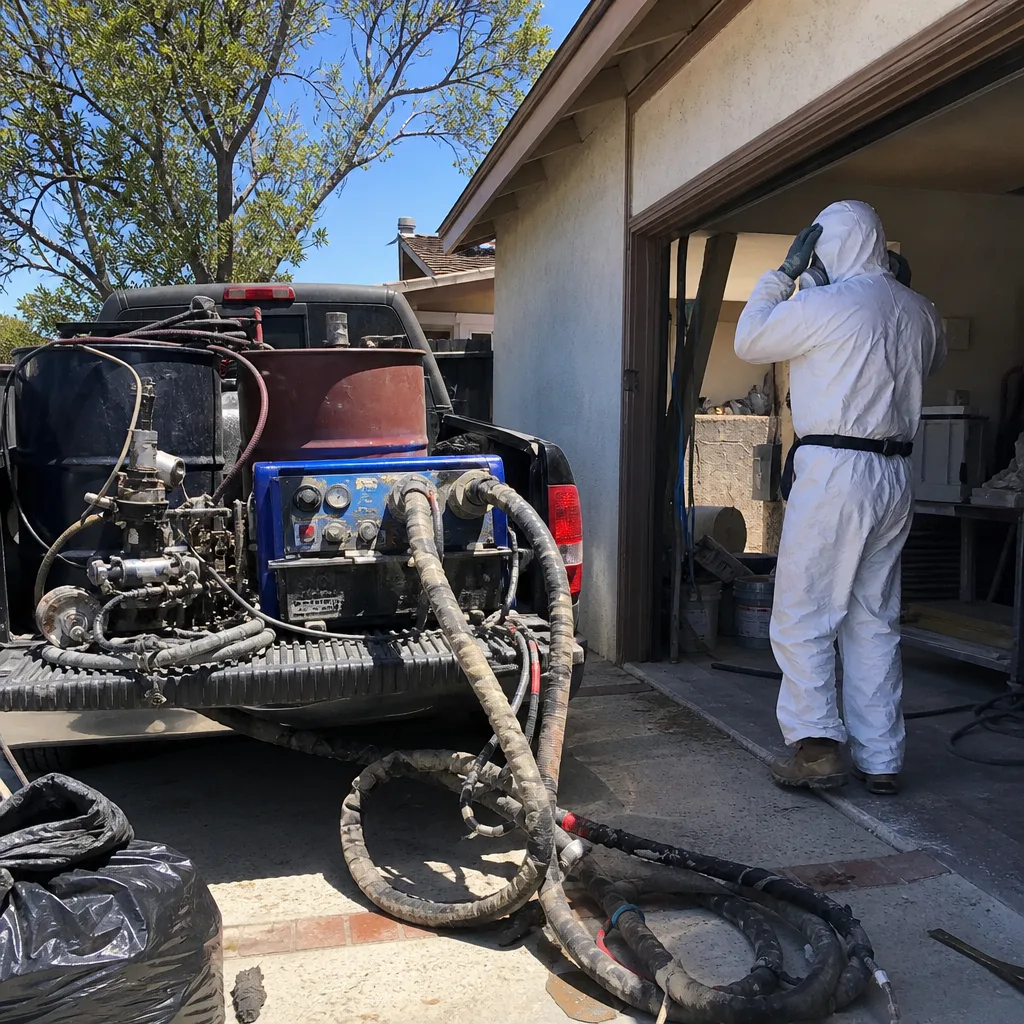
Fast, Reliable Spray Foam Insulation Across Fountain Valley
Spray foam insulation in Fountain Valley is almost always a retrofit job, not new construction. The city is fully built out, and nearly every home dates to the 1960s-70s tract boom, which means we’re typically working in tight, low-clearance attics that original builders under-insulated to meet old Title 24 standards. Our crews know these attics well: the settled fiberglass batts, the unsealed duct runs, the recessed can lights that let conditioned air escape. We match the material to your home, not the other way around. If you’re in Fountain Valley and want a straight answer about whether spray foam fits your house, call (833) 390-3099.
Key Takeaways:
- Fountain Valley spray foam work is retrofit-focused because the city has no new subdivisions.
- Most jobs involve a 1960s-70s tract attic with original insulation that has settled well below current code.
- HOA architectural review often applies to visible exterior changes like vents or penetrations.
- We carry Icynene and Demilec, two premium spray foam lines most local contractors don’t stock.
- Closed-cell and open-cell options exist, and the right pick depends on your roof pitch and ventilation path.
Why Fountain Valley Insulation Is Fountain Valley’s Preferred Spray Foam Insulation Company
Fountain Valley homeowners call us because we understand what these tract attics actually look like. A house off Slater Avenue built in 1972 has a different attic profile than one near Mile Square Park from 1968. The framing spacing, the roof pitch, the original duct layout – these details shape how foam should be applied. We’ve worked in the Green Valley area, the neighborhoods around Talbert Avenue, and the ranch-style streets near the Santa Ana River. Our crews know where the low-clearance attics sit and how to move through them without damaging ceiling drywall.
We also handle the HOA piece directly. Fountain Valley’s tract associations often require architectural review before any exterior penetration or vent change. Homeowners don’t always know this until a violation letter arrives. Nate Calloway, who leads Fountain Valley Insulation, has walked more than a few jobs through that review process with clear photo documentation showing no exterior changes. When a homeowner submits that to their association, the job clears without rework.
Response time matters here because summer attic heat makes an uninsulated house uncomfortable fast. We schedule Fountain Valley work on a timeline that respects that, and estimates are free. Call (833) 390-3099 and you’ll get a straight answer about your attic, not a sales script.
Rim Joist Spray Foam in Fountain Valley
Rim joist spray foam in Fountain Valley is one of the highest-impact air-sealing jobs we do on these 1960s-70s tract homes. The rim joist is the perimeter framing where your floor meets the foundation wall, and on the original builds it was rarely sealed. That gap lets outside air move into the conditioned space and pulls cooled air out. In Fountain Valley’s marine-influenced climate, that means warm summer air infiltrating while your AC runs, plus dust and moisture from the crawl space. A typical rim joist spray foam job in Fountain Valley runs $1,200 to $2,800 depending on the home’s footprint and how accessible the joist bays are.
Sealing the Perimeter Correctly
We apply closed-cell foam in the rim joist bays because it air-seals and insulates in one pass. We don’t spray over debris, old batt fragments, or rodent droppings; the bays get cleared first. On Fountain Valley homes with a crawl space, this is often paired with crawl space sealing, which we cover below.
What We Check Before Spraying
On these older tract homes the rim joist area often hides an original sill plate that was never sealed. We check for termite damage and dry rot at the sill before foam goes in. If we find an issue, we tell you before we spray. We don’t bury problems under foam.
Crawl Space Spray Foam Insulation in Fountain Valley
Crawl space spray foam insulation in Fountain Valley is a retrofit decision that has to account for the marine layer. The city sits a few miles inland, so morning dampness is common, especially in spring and early summer. Crawl spaces here are vented to the outside on most original tract homes, and that venting pulls moist air under the house. The right foam approach is to seal the crawl space perimeter and rim joists, then condition the space. A typical crawl space spray foam job in Fountain Valley runs $3,500 to $7,500 for the full perimeter and rim joist treatment on a standard ranch-home footprint.
Closed-Cell on Foundation Walls
We use closed-cell foam on the crawl space perimeter walls because it blocks moisture migration and adds structural rigidity. The foam needs to bond to a clean concrete or masonry surface, so we knock off loose debris and check for efflorescence before spraying. Open-cell foam is the wrong product here; it can absorb moisture over time.
Handling the Marine-Layer Question
Fountain Valley’s morning dampness does not have to rule out crawl space foam, but it rules in a moisture check. If the crawl space has standing water or a high water table, we address drainage and grading first. Foam in a properly sealed crawl space actually reduces humidity swings because outside air stops cycling through.
Trusted Brands We Service in Fountain Valley
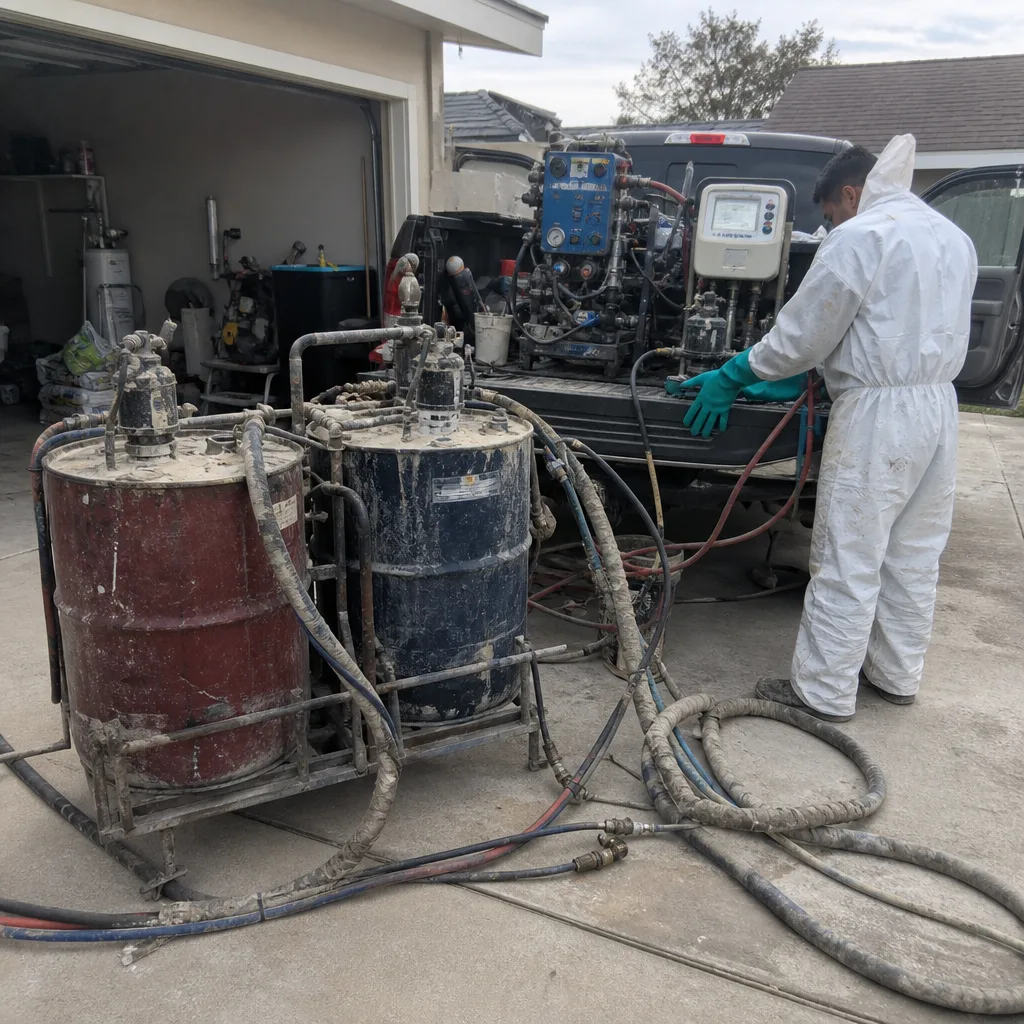
We’re not tied to one manufacturer. We carry Icynene and Demilec for spray foam, two of the most recognized names in the category and brands most general insulation contractors in Fountain Valley don’t stock. We also work with Owens Corning and GreenFiber where fiber-based options fit the job better. That matters because a one-brand contractor will sell you what’s on the truck, not what your attic actually needs. When we quote a Fountain Valley job, we can show you why Icynene open-cell fits one roof deck and Demilec closed-cell fits another. Ask us why we carry what we carry. You’ll get a direct answer.
Common Spray Foam Insulation Problems We See in Fountain Valley Homes
- Foam sprayed over settled 1970s batts: We see this too often. A previous contractor sprays closed-cell foam directly over the original compressed fiberglass without clearing it or air-sealing around recessed can lights and HVAC platforms. That leaves voids and defeats the R-value upgrade the homeowner paid for.
- HOA violation notices for unapproved vents: Fountain Valley tract associations watch exterior changes closely. A crew that adds or alters a roof vent or exterior penetration without architectural review triggers a violation notice and forced rework at the homeowner’s expense.
- Condensation in low-pitch attics: Foam sprayed thick against a low-pitch roof deck without checking the marine-layer ventilation path can trap morning dampness. We’ve opened attics in Fountain Valley where that exact condition caused condensation on the underside of the roof sheathing and early mold growth.
- Foam in the wrong place around can lights: Original 1970s recessed can lights are not air-tight and often not rated for insulation contact. Spraying foam directly against them creates a fire hazard and blocks the thermal cutoff. We build a safe clearance and air-seal the fixture properly before foaming the surrounding ceiling line.
On a low-pitch ranch attic near Green Valley, we opened the gable and found the original fiberglass batts settled to half their rated depth. The batts had been blown aside around the recessed cans and the HVAC platform. We cleared the settled material, air-sealed around the fixtures, sealed the rim joist and platform with closed-cell foam, and capped the ceiling line. Our tech documented the work with photos. The homeowner submitted those to their HOA’s architectural committee to show no exterior changes were made and the vent configuration stayed within community standards. That’s how Fountain Valley retrofit work should go.
Pricing for Spray Foam Insulation in Fountain Valley, CA
Fountain Valley spray foam pricing tracks the city’s older housing stock. Rim joist sealing typically runs $1,200 to $2,800. A full attic roof deck with open-cell foam on a standard 1,400-square-foot ranch runs $4,500 to $8,000. Closed-cell attic applications run higher, usually $7,000 to $12,000, because the material costs more per board foot. Crawl space perimeter foam runs $3,500 to $7,500. Square footage, roof pitch, access clearance, and whether we’re removing existing insulation all move the number. Estimates are free, and we give a line-item number before any work starts. Call (833) 390-3099 for a quote specific to your house.
We Also Serve Cities Near Fountain Valley
Our crews work throughout the surrounding Orange County communities. If you’re in Fountain Valley, we’re local and can usually schedule within the week. We also handle spray foam and Spray Foam Insulation jobs in Midway City, Huntington Beach, Costa Mesa, and Westminster. Each city has its own housing stock, but the retrofit fundamentals stay the same: match the foam to the attic, seal the air leaks, and respect the HOA.
Serving Fountain Valley, CA — Our Local Coverage Area
We’re based in the Fountain Valley area and know this community well. Use the map below to see our service coverage — if you’re nearby, we can almost certainly help.
FAQs About Spray Foam Insulation in Fountain Valley
Usually yes, if the work changes any exterior vent, penetration, or roofline. Foam applied purely inside the attic with no exterior changes generally does not need review. We document the job with before and after photos so you can submit them to your Fountain Valley association and show compliance. Call (833) 390-3099 if you need help figuring out what your specific HOA requires.
No, not properly. The original batts in Fountain Valley tract homes are typically compressed, dusty, and blown aside around can lights and HVAC platforms. Spraying foam over them leaves voids and traps the old material. We remove the settled fiberglass, air-seal the ceiling plane and fixtures, then apply foam to a clean surface. That’s the only approach that delivers the R-value you’re paying for.
Only if the crawl space has active moisture intrusion or the foam is applied without sealing the perimeter first. We check for standing water, grading issues, and vent configuration before spraying. A correctly sealed crawl space actually reduces humidity swings because outside air stops cycling through. The marine layer does not disqualify crawl space foam; it just demands a proper moisture check first.
We install Icynene and Demilec spray foam, two premium lines with different applications. Icynene open-cell works well for attic roof decks where breathability matters. Demilec closed-cell fits rim joists, crawl space walls, and any area needing moisture resistance and structural strength. We don’t push a single brand. We’ll tell you which one matches your Fountain Valley attic. Call (833) 390-3099 for specifics.
Yes, but the approach changes. Low-pitch roofs and tight framing in Fountain Valley’s tract homes mean our crew moves carefully, often working from a crawl board and applying foam in controlled lifts. We check the ventilation path first, because foam against a low-pitch deck can trap moisture if the marine-layer airflow isn’t accounted for. This is standard work for us, not a special case.
Written by Nate Calloway, Owner at Fountain Valley Insulation, serving Fountain Valley since the company’s founding.
Ready to stop fighting a hot attic and rising energy bills? Call (833) 390-3099 today for a free estimate on spray foam insulation in Fountain Valley. We’ll walk your attic, tell you what you actually need, and quote a price that sticks.