Fast, Reliable Spray Foam Insulation Across Apple Valley
If your Apple Valley home was built between the 1980s and early 2000s, there’s a good chance your attic insulation is quietly failing, even if it looks fine from the hatch. Spray foam insulation in Apple Valley typically runs $2,800 – $7,500 for a standard attic application, and most jobs are completed in one to two days. We’re Fountain Valley Insulation, led by Nate Calloway, and we’ve spent years learning how Apple Valley’s high-desert climate punishes older insulation. Call (833) 390-3099 for a free estimate that accounts for your home’s actual condition, not a generic square-footage formula.
Why Fountain Valley Insulation Is Apple Valley’s Preferred Spray Foam Insulation Company
Most insulation contractors push one product. We don’t. Fountain Valley Insulation carries eight manufacturer brands and three installation methods, which means when we walk into a 1990s ranch off Bear Valley Road or a newer build near Sitting Bull Road, we’re matching material to the home rather than forcing a square peg. Apple Valley homeowners regularly tell us they chose us because we could explain the difference between open-cell and closed-cell foam, when Rockwool makes more sense than fiberglass, and why a two-way climate strategy matters here more than in Victorville or Hesperia.
Nate Calloway built our approach around one principle: the right material for the right cavity, every time. That’s why we stock spray foam specialists Icynene and Demilec alongside Rockwool, CertainTeed, and GreenFiber. When you call us about a Apple Valley attic, we’re not reading from a script. We’re talking about your specific roofline, your wall cavities, and what three decades of desert heat has already done to whatever insulation is up there.
Our crews respond to Apple Valley addresses in the 92307 and 92308 ZIP codes on a daily basis. We know the difference between a home near the fairgrounds and one out near the mesa, and we know that afternoon sun on a west-facing wall off Navajo Road hits differently than the same wall in Spring Valley Lake. That local familiarity shortens diagnosis time and keeps your project moving.
Spray Foam Attic Insulation in Apple Valley
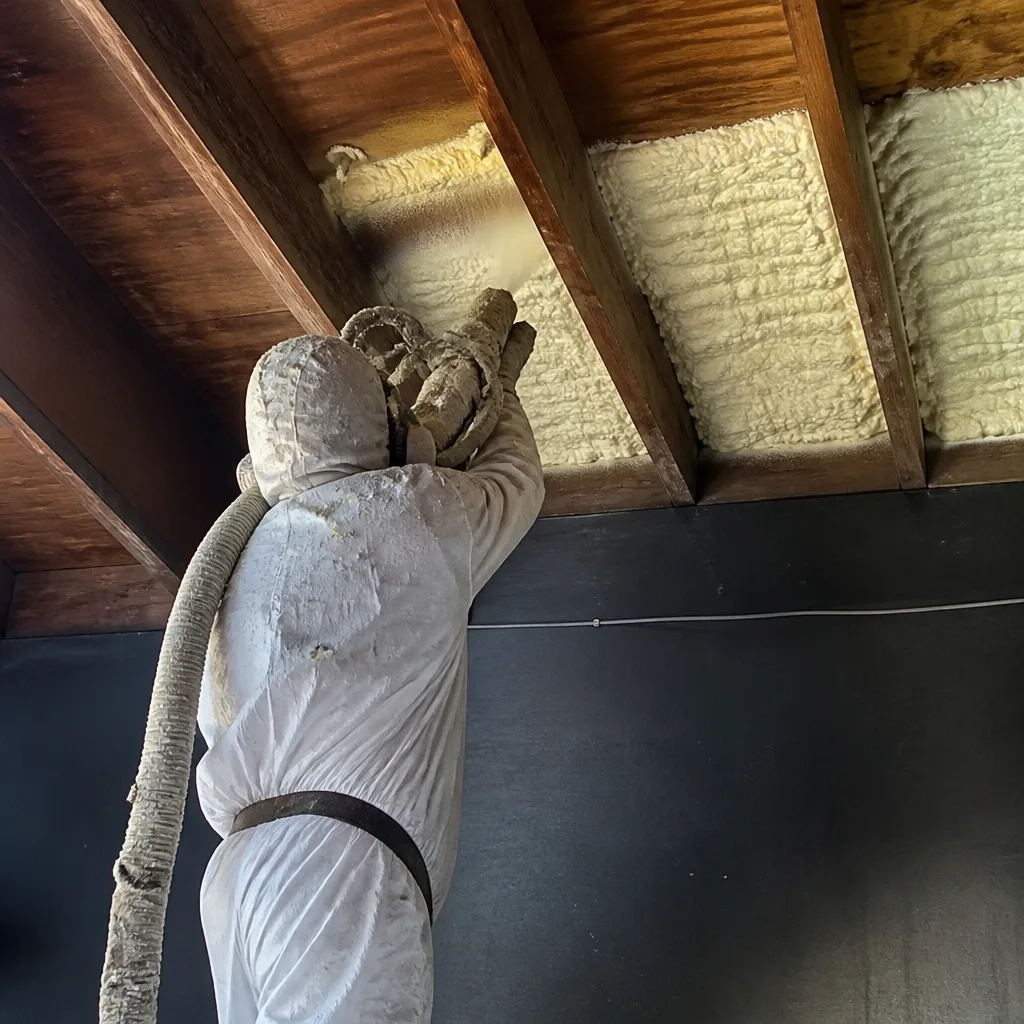
Spray Foam Attic Insulation in Apple Valley is the highest-impact upgrade for homes with settled, heat-aged blown-in fiberglass or sagging batts. In this area’s climate, the attic is where you win or lose the energy battle. Summer attic temperatures in Apple Valley routinely exceed 140°F, while winter nights drop below freezing. A single insulation strategy doesn’t cover both. Closed-cell spray foam applied to the attic deck creates an air-impermeable barrier that stops summer heat gain and winter heat loss in one pass. For a typical Apple Valley attic of 1,200 – 1,800 square feet, closed-cell spray foam insulation runs $4,200 – $7,500, while open-cell spray foam runs $2,800 – $4,800.
Full Attic Deck Foam
We apply closed-cell spray foam directly to the underside of the roof deck, moving the home’s thermal boundary from the attic floor to the roofline. This is ideal for Apple Valley homes with ductwork in the attic, which is common in slab-on-grade ranch styles. Ducts running through a 140°F attic lose significant cooling capacity. Encapsulating the attic brings the ducts inside the conditioned space, so the cool air your AC produces actually reaches your living room instead of warming up in the attic chase.
Radiant Barrier Capping
After spray foam, we often add a radiant barrier under the roofline or above attic insulation. In Apple Valley’s intense sun, radiant barriers reflect a meaningful portion of solar heat before it ever reaches the insulation layer. On 100°F-plus days, this layer alone can reduce attic temperatures by 10 – 15°F. It’s a low-cost addition that extends the life of your spray foam and reduces the cooling load on older AC units working overtime against desert heat.
Spray Foam Wall Insulation in Apple Valley
Spray Foam Wall Insulation in Apple Valley addresses a failure mode we see constantly in 1980s – 2000s wood-frame homes: fiberglass batts that have sagged away from the top plate, leaving convection channels that pull hot air straight into living space. On slab-on-grade homes, especially west-facing walls off roads like Navajo or Apple Valley Road, the afternoon heat load turns those cavities into radiators. Closed-cell spray foam wall insulation for a typical Apple Valley exterior wall cavity runs $1.40 – $2.10 per board foot installed, with most wall-retrofit projects falling between $3,000 and $6,500 depending on wall area and access.
Slab-On-Grade Wall Retrofit
Slab-on-grade construction means your wall cavities sit directly on concrete, and heat moves upward and inward. Old fiberglass batts in these cavities are often damp, compressed, or pulled away from the studs. Closed-cell spray foam expands to fill the entire cavity, adheres to the sheathing, and blocks air movement in a way batts never could. It also adds structural rigidity to older wood-frame walls, which matters when desert winds kick up and wall systems flex.
Top Plate Air Sealing
We always air-seal top plates when doing wall work in Apple Valley. The gap between the top of the wall and the attic floor is a primary air leakage point in older slab-on-grade homes. Our crews foam those seams before insulating, which stops the convection loop that makes west-facing rooms unbearable by late afternoon. This detail is often skipped by insulation installers who don’t understand how badly high-desert heat exploits thermal bypasses.
Trusted Brands We Service in Apple Valley
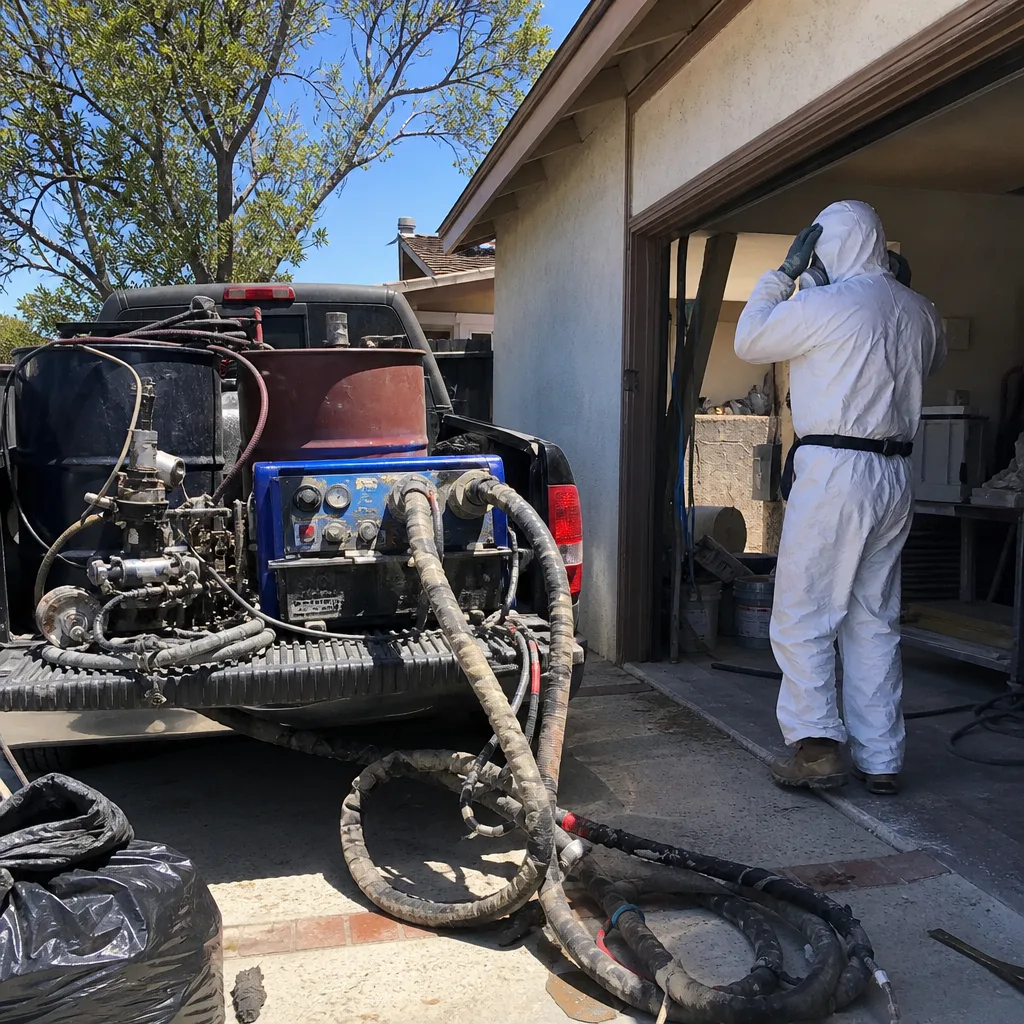
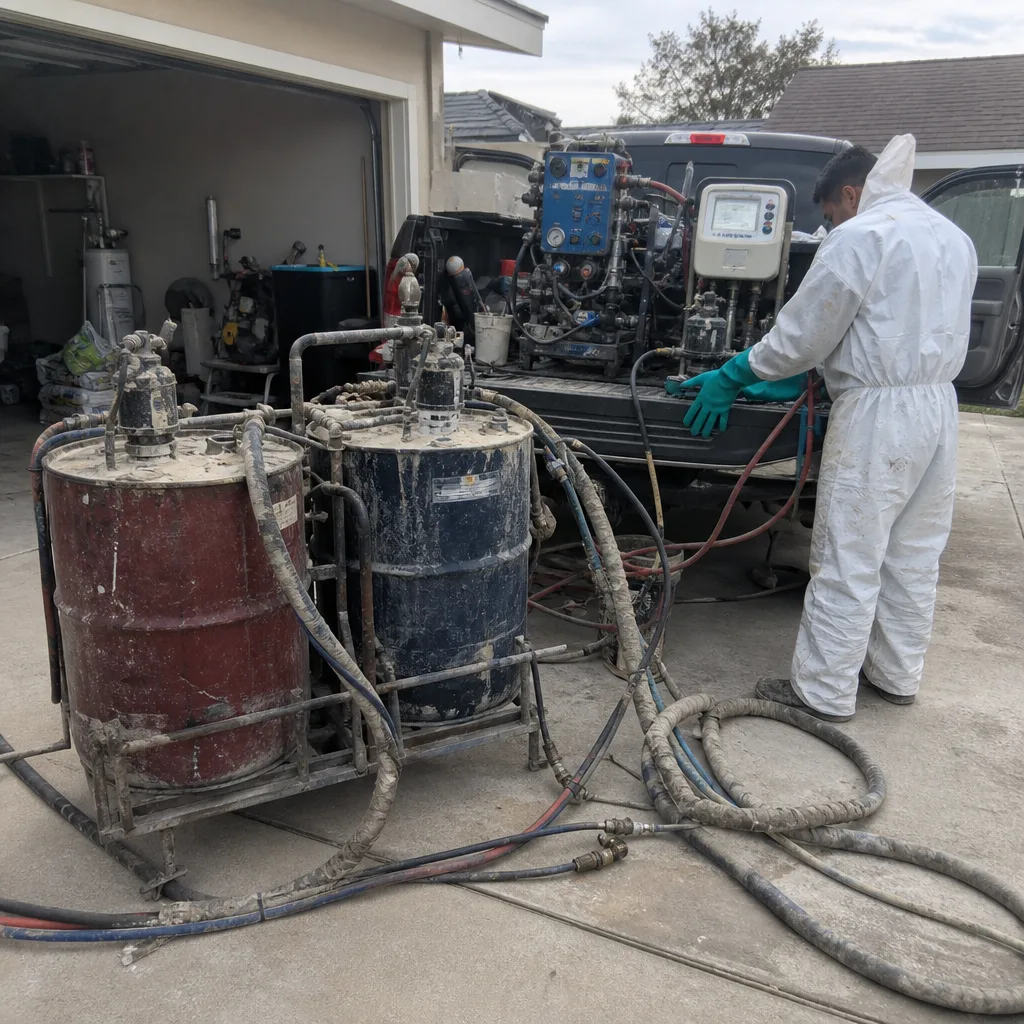
We carry spray foam from Icynene and Demilec, two of the most respected names in the category, and we pair them with complementary materials like Rockwool mineral wool and CertainTeed fiberglass where appropriate. For Apple Valley customers, this means you’re never locked into a single product line. Need fire-resistant mineral wool for a garage wall adjacent to a workshop? We have Rockwool. Want recycled-content fiber for a low-impact attic job? GreenFiber is on our truck. We stock enough inventory for fast turnaround on Apple Valley jobs, and since we service this area regularly, we’re not ordering parts from out of state when your project starts. Spray Foam Insulation is one of three installation methods we offer, alongside blown-in and attic batt systems.
Common Spray Foam Insulation Problems We See in Apple Valley Homes
- Settled attic fiberglass from the 1980s – 2000s. Decades of 100°F-plus desert heat cycling compacts blown-in fiberglass several inches. What was R-38 in 1994 is often delivering R-19 or less today, while looking level and normal from the attic hatch.
- Sagging wall batts in wood-frame cavities. In slab-on-grade homes, fiberglass batts pull away from the top plate over time. The convection gap lets summer heat pour into living spaces, particularly on west-facing walls that take the brunt of the afternoon sun.
- Ductwork sweating in unconditioned attics. High-desert diurnal swings mean metal ducts in the attic cool down at night and warm up by midday. The temperature differential causes condensation and dust-moisture buildup, which degrades duct insulation and reduces cooling efficiency.
- One-season insulation thinking. Contractors who treat Apple Valley like a mild coastal market insulate for winter warmth and ignore the dominant summer heat load. In this two-way climate, insulation must block solar heat gain in July and retain heat on freezing January nights.
Pricing for Spray Foam Insulation in Apple Valley, CA
Here’s what spray foam insulation actually costs in Apple Valley. Closed-cell attic deck spray foam runs $4,200 – $7,500 for a standard 1,200 – 1,800 square foot attic. Open-cell attic spray foam runs $2,800 – $4,800. Wall cavity spray foam runs $1.40 – $2.10 per board foot installed, with most wall-only Apple Valley projects landing between $3,000 and $6,500. Rim joist spray foam is the most affordable entry point at $900 – $2,200, while a garage ceiling runs $1,800 – $3,400. Material choice, access difficulty, and the amount of old insulation needing removal all move the number. We provide a written quote with line-item pricing before any work begins. Call (833) 390-3099 for a free estimate, and we’ll give you real numbers for your Apple Valley home, not a vague range.
We Also Serve Cities Near Apple Valley
Fountain Valley Insulation works throughout the High Desert. Beyond Apple Valley, we regularly install spray foam in Mountain View Acres, Spring Valley Lake, Victorville, and Hesperia. If you’re anywhere in the Victor Valley area and dealing with a baking attic or uneven room temperatures, we’re already working nearby and can usually schedule within the week.
Serving Apple Valley, CA — Our Local Coverage Area
We’re based in the Apple Valley area and know this community well. Use the map below to see our service coverage — if you’re nearby, we can almost certainly help.
FAQs About Spray Foam Insulation in Apple Valley
No, looking fine at the hatch doesn’t mean performing fine. In Apple Valley’s 1980s – 2000s homes, blown-in fiberglass has typically settled and compacted several inches under years of summer heat cycling, so the labeled R-value no longer matches reality. The only way to know is a depth-and-density check across the entire attic, not just the spot near the access point. Call (833) 390-3099 and we’ll inspect it properly.
Yes, it’s often the best option. Slab-on-grade wood-frame homes from the 1980s and 1990s are prone to wall batt sagging and top-plate air leakage, which closed-cell spray foam fixes by filling the entire cavity and sealing the seams. It also adds rigidity to older wall systems, which matters in Apple Valley’s wind and thermal conditions.
No, not in most cases. Apple Valley’s high-desert air is dry year-round, so vapor management is far less critical here than in coastal or valley-floor California markets. We steer Apple Valley homeowners toward air-sealing and heat-deflection details rather than moisture-driven specs. Closed-cell foam acts as its own vapor retarder, and open-cell foam works with the dry climate rather than against it.
Measure the depth and check for compaction. Original 1990s blown-in fiberglass rated at R-38 should measure roughly 11 – 13 inches deep. If your attic measures 6 – 8 inches, or if the material feels dense and matted rather than fluffy, it has lost significant R-value. We also look for dust accumulation, moisture staining, and animal activity, all of which degrade insulation performance faster in Apple Valley’s dusty, windy environment. We’ll measure and tell you what’s actually there.
Yes, that’s the whole point. Closed-cell spray foam creates an air barrier that blocks summer heat gain from your baking attic and prevents winter heat loss during freezing nights. In Apple Valley’s two-way climate, single-purpose insulation underperforms. Foam addresses both extremes in one installation, which is why we recommend it for homes with settled attic fiberglass and leaky wall cavities. Call (833) 390-3099 to talk through your specific home.
Contact Fountain Valley Insulation for Spray Foam in Apple Valley
If your Apple Valley home has a baking attic, west-facing walls that won’t cool down, or insulation that’s been in place since the Reagan administration, let’s talk. Nate Calloway and our crew will inspect what’s actually in your cavities, explain your options across Icynene, Demilec, Rockwool, and the rest of our eight-brand lineup, and give you a written quote for the right fix. We match the material to your home, not the other way around. Call (833) 390-3099 for a free estimate, or reach out to schedule an attic inspection in Apple Valley, Mountain View Acres, Spring Valley Lake, Victorville, or Hesperia.
Written by Nate Calloway, Owner at Fountain Valley Insulation, serving Apple Valley and the High Desert since our founding.