

Fast, Reliable Attic Insulation Across Studio City
If your Studio City home runs hot upstairs in July and your AC never seems to shut off, the answer is usually sitting right above your ceiling. Attic insulation in Studio City typically runs $1,450 to $3,200 for a full blown-in upgrade on a standard 1,200 to 1,600 square foot ranch, depending on existing depth, access, and whether we’re air-sealing first. Most jobs are done in a single day.
We work in Studio City every week. The 91604 hills off Laurel Canyon, the mid-century ranches along the Tujunga Wash, the newer infill in 91614. Each pocket of this city ages differently, and the right insulation approach changes with it. Call (833) 390-3099 and we’ll tell you what your attic actually needs, not what’s easy to sell.
Why Fountain Valley Insulation Is Studio City’s Preferred Attic Insulation Company
Studio City homeowners call us because we carry materials most insulation contractors don’t stock. We’re not locked into one brand or one method. When a 1958 ranch off Ventura Boulevard needs a batt top-up in a low-clearance attic, we don’t force spray foam. When a hillside post-and-beam off Coldwater Canyon needs air-sealing plus loose-fill, we can do both in one visit.
Our reputation in Studio City is built on straight answers. We’ve worked on enough of these homes to know that a south-facing kneewall in the canyon hills fails years before the main attic floor does. We check that first. We also know the Tujunga Wash ranches carry original rock-wool or thin fiberglass batts that have compressed flat, and that adding six inches on top without fixing the air leaks underneath wastes your money. Nate Calloway runs our crews, and when you call for an estimate, you’re talking to people who’ve pulled 60-year-old batts out of Studio City attics and know exactly what’s underneath.
Insulation Contractors in Studio City
Insulation Contractors in Studio City deal with a specific set of problems: original 1940s – 1960s batts that are past their service life, west- and south-facing kneewalls that bake in valley heat, and attics that were never properly air-sealed in the first place. A full attic insulation replacement with air-sealing on a typical Studio City ranch runs $1,800 to $3,600. A top-up over existing but degraded batts runs $1,200 to $2,000. If you’re calling about a master bedroom that’s hot by 2 p.m., the fix usually involves more than just adding material.
Air-Sealing Before Insulation
Most Studio City attics leak. Top plates, recessed light fixtures, plumbing chases. In older homes along the Tujunga Wash, these gaps are wide open and have been letting radiant heat pour into the living space for decades. We seal those penetrations before we blow or install anything. Skipping this step is why some homeowners add insulation and wonder why their upstairs is still hot in August.
Kneewall and Low-Clearance Work
Hillside homes on the south side of Studio City often have low-clearance attics and roof decks that make access tight. Kneewalls on west- and south-facing roof planes take direct sun all afternoon. We inspect and treat those surfaces separately, because a partial-attic inspection that misses a baked kneewall gives you a false sense of what’s actually failing.
Attic Ventilation in Studio City
Attic Ventilation in Studio City is not optional. The heat bowl effect between the Santa Monica Mountains and the San Fernando Valley means summer afternoons run 10 to 15°F hotter here than in Sherman Oaks or Encino. A poorly vented attic in Studio City holds that heat through the evening and forces your AC to work against it all night. Ventilation upgrades – ridge vents, soffit vents, baffles – typically run $600 to $1,400 when bundled with an insulation job, depending on roof configuration and how many vents we need to cut.
Ridge-to-Soffit Venting for Valley Heat
Studio City summers don’t just heat the attic. They heat everything the attic touches. Ridge-to-soffit venting lets the hot air escape at the top while drawing cooler air in at the bottom. On the 1940s and 1950s ranches along Ventura Boulevard and the surrounding streets, the original venting is often just a couple of gable vents that don’t move enough air. Adding a proper ridge-and-soffit loop makes a measurable difference.
Baffles and Clearance Work
Hillside homes with deep eaves and dense tree cover have a different problem: insulation shoved into the eave line blocks the soffit vents. We install baffles to keep the airflow path open, especially on north-facing planes under canopy shade where condensation and moisture can hang around. It’s a small fix that protects the whole system.
Trusted Brands We Service in Studio City
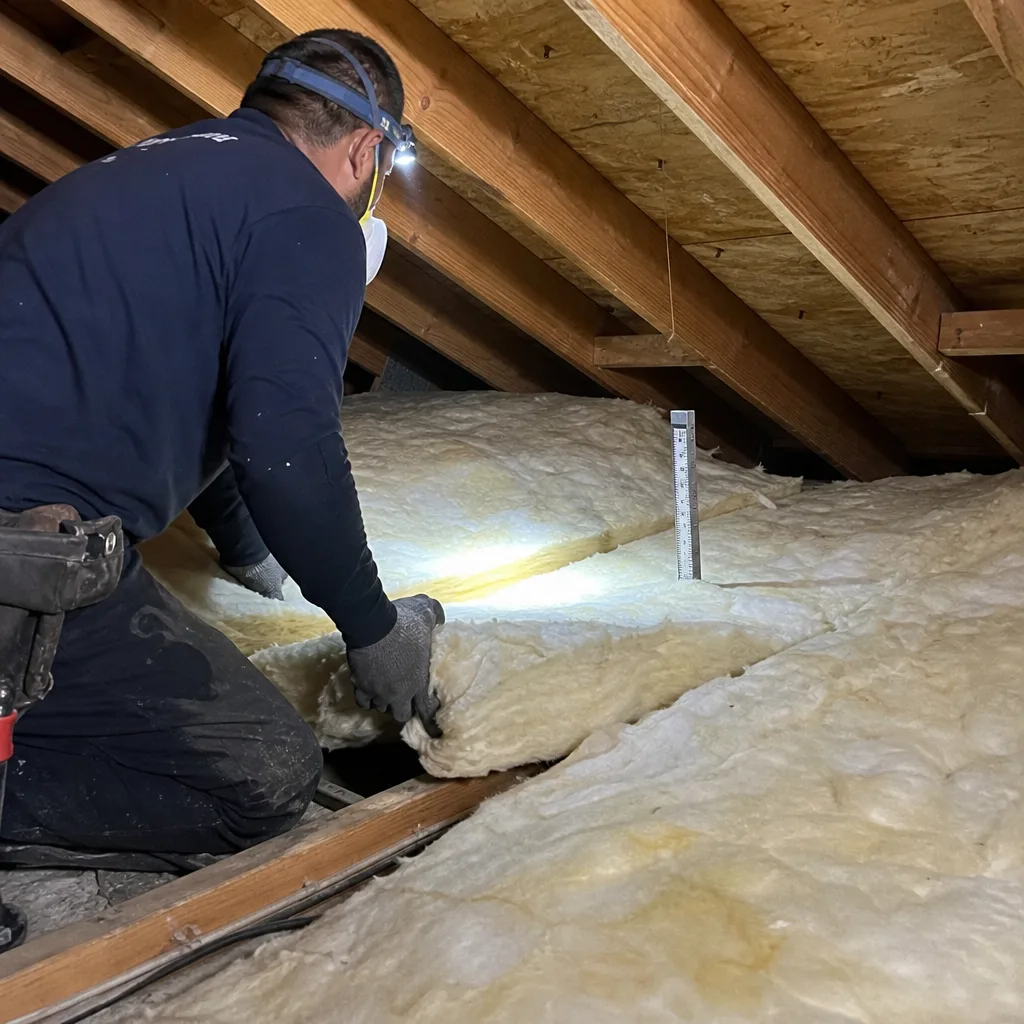
We install and service materials from Rockwool, CertainTeed, Icynene, and Demilec, and we stock local parts for Studio City jobs so turnaround stays fast. Rockwool mineral wool makes sense in hillside homes where fire resistance and moisture resistance matter. CertainTeed batts work well in vented ranch attics. Icynene and Demilec cover spray foam jobs where air-sealing is the top priority. Ask us why we carry spray foam, mineral wool, and recycled fiber. Most local contractors carry one fiberglass line and call it a day.
Common Attic Insulation Problems We See in Studio City Homes
- Baked kneewalls in the canyon hills. On streets off Laurel Canyon and Coldwater Canyon, dense tree canopy shades north-facing roof planes while west- and south-facing kneewalls bake all afternoon. The batt facing on those kneewalls degrades and separates years before the rest of the attic shows wear.
- Compressed original batts in Tujunga Wash ranches. The 1940s – 1960s single-story homes along the Wash carry thin fiberglass or rock-wool batts that have slumped off the joist bays. By now, most are compressed to half their original R-value.
- Skipped air-sealing in low-clearance attics. Hillside homes under roof decks make it hard to reach top plates and recessed fixtures. Gaps get skipped, and hot attic air leaks straight into living space.
- Blocked soffit vents under deep eaves. Mature tree cover and deep eave lines in the hills mean soffit vents get buried or blocked. The attic stops ventilating and turns into a heat trap by mid-afternoon.
Pricing for Attic Insulation in Studio City, CA
Here are honest ranges for Studio City work. Blown-in attic insulation on a standard 1,200 – 1,600 square foot ranch runs $1,450 to $3,200. Attic batt insulation for the same footprint runs $1,800 to $3,800, more if we’re pulling out old material. An attic insulation top-up runs $1,200 to $2,000. Full replacement with air-sealing and old-batt removal runs $2,500 to $4,500. Attic baffles and ventilation prep run $600 to $1,400. Hillside access, low clearance, and roof-deck complications push toward the higher end. Call (833) 390-3099 for an exact quote. Estimates are free.
We Also Serve Cities Near Studio City
Our crews cover Studio City and the surrounding area, including North Hollywood, Universal City, Sherman Oaks, and West Hollywood. If you’re just over the city line, we can usually schedule you within the same week. Our Attic Insulation team handles the same brands and methods across the San Fernando Valley, and our Studio City page has more detail on what we see in this specific market.
Serving Studio City, CA — Our Local Coverage Area
We’re based in the Studio City area and know this community well. Use the map below to see our service coverage — if you’re nearby, we can almost certainly help.
FAQs About Attic Insulation in Studio City
Yes, but only if the original batts aren’t compressed, moldy, or separated from the joists. In Tujunga Wash ranches, the old batts have usually slumped flat and stopped working entirely. Blowing loose-fill over them without air-sealing first wastes material and money. In those cases, we recommend pulling the old batts and starting clean. Call (833) 390-3099 and we’ll tell you what your attic actually needs after we inspect it.
Because those walls take direct afternoon sun while the north-facing roof planes sit in deep shade under tree canopy. The west- and south-facing kneewalls in the Laurel Canyon and Coldwater Canyon hills bake all summer, and the batt facing degrades and separates under that heat load years before the main attic floor shows any wear. It’s the first place we check on any Studio City hillside home. If your kneewalls are failing, insulating the attic floor alone won’t fix the problem.
In most Studio City homes, yes. The valley heat bowl means your attic collects heat faster than it can shed it, and adding insulation without fixing ventilation just traps that heat against your ceiling. Ridge-to-soffit venting with new baffles is standard on our Studio City jobs. Expect to spend $600 to $1,400 on ventilation work when bundled with insulation.
If the remodel included a building permit, the attic insulation almost certainly had to meet California Title 24 minimums at the time of inspection. But many remodels meet the ceiling R-value on paper while the kneewalls, air-sealing, and ventilation get ignored. We verify the whole assembly, not just the floor R-value. For additions and new two-story infill in 91614, we install to current Title 24 requirements from the start.
We install Rockwool mineral wool, CertainTeed fiberglass, Icynene spray foam, Demilec spray foam, and GreenFiber recycled loose-fill. We match the material to your attic, not the other way around. If you’re not sure which one fits your home, call (833) 390-3099 and we’ll walk you through it.
If your Studio City attic is over 20 years old, it’s probably not doing what you think it is. Call (833) 390-3099 for a free estimate and a straight answer about what’s actually happening above your ceiling.
Written by Nate Calloway, Owner at Fountain Valley Insulation, serving Studio City and the San Fernando Valley.