

Fast, Reliable Attic Insulation Across West Hollywood
Most West Hollywood “attic insulation” requests are not what they sound like. In the dense courtyard buildings below Sunset, the attic is often a framed ceiling cavity over a top-floor unit, not an open space you can walk through. That changes everything about the work. Fountain Valley Insulation handles these enclosed rafter bays, top-floor ceiling planes, and party walls in occupied rent-controlled buildings across West Hollywood every month. Call (833) 390-3099 and tell us what you’re dealing with. We’ll tell you straight whether you’re looking at injection, rigid board, or a true blown-in job. Given our hub page on Attic Insulation methods explains the broader approach, this page is specific to what actually happens in West Hollywood’s 90069 building stock.
Why Fountain Valley Insulation Is West Hollywood’s Preferred Attic Insulation Company
West Hollywood’s housing stock asks for a different skill set than the rest of LA County. Our crews work in 1920s Spanish Colonial courtyards off Havenhurst, mid-century dingbats stacked into the hillside above Sunset, and condos along the corridor toward La Cienega. We know which buildings have plaster-on-wood-lath ceilings, which have enclosed rafter bays, and which have actual attic hatches. That knowledge is the difference between a quote that makes sense and one that doesn’t. Nate Calloway set the company up around one idea: match the material and method to the building, not to whatever’s on the truck. That’s why we carry Owens Corning, Icynene, Demilec, and GreenFiber, and why we can switch from dense-pack injection to rigid board without switching contractors.
West Hollywood property owners also deal with pressure the rest of LA doesn’t. Rent control means tenants stay put. Occupancy means you can’t empty a floor to gut ceilings. We’re set up for unit-by-unit work where residents stay in place. We’ve done top-floor ceiling injections from the common hallway side, so no one moves out and no lath-and-plaster gets wrecked. That’s not a promise we make lightly; it’s how we schedule the job.
Response time to West Hollywood is same-day or next-day for estimates in most of 90069. If a top-floor unit is heat-soaking by noon, we’re not going to make you wait three weeks for a site visit.
Attic Ventilation in West Hollywood
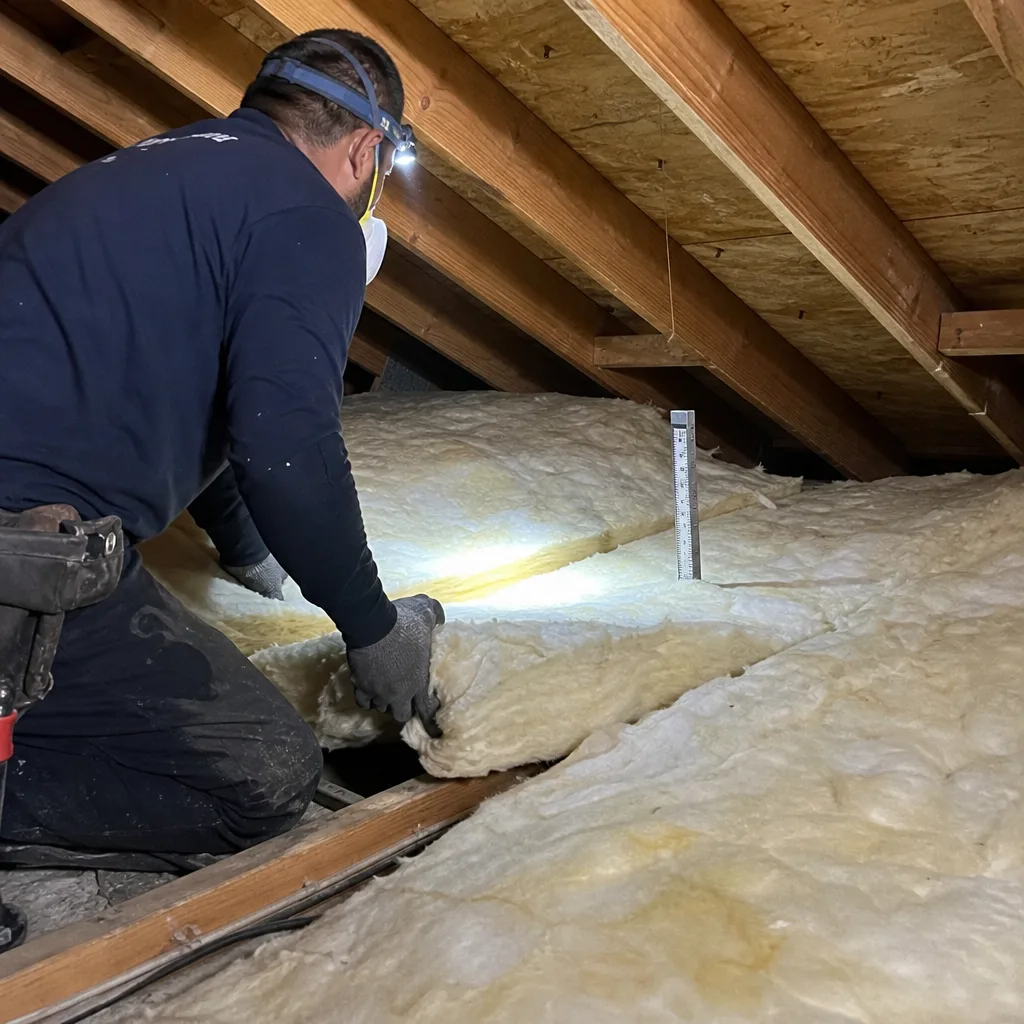
Attic Ventilation in West Hollywood usually means retrofitting airflow into buildings that were never designed for it. In the Spanish Colonial courtyards built between the 1920s and 1940s, top-floor ceilings were framed as enclosed rafter bays with no continuous ridge vent, no eave intake, and in many cases no ventilation at all. Heat gets trapped against the underside of the roof deck, then radiates down through plaster into the unit below. The fix is specific. We add venting at the eave and ridge where the roofline permits, install baffles to keep insulation from blocking the new air path, and in buildings where the roof form makes conventional venting impractical, we pair air-sealing with a radiant barrier to cut solar gain instead. A typical attic ventilation retrofit in West Hollywood runs $1,800 to $3,400, depending on the roof shape and how much access we have from the top floor.
Enclosed rafter bays and old plaster
Many WeHo buildings below Sunset have no soffit to cut into. The rafter tails are behind a stucco parapet, and the ceiling plane is wood lath with plaster keys. In those cases we work from the interior side or at the gable ends, and we do it without opening the whole ceiling. Baffles go into the joist bays from the access points we do have, preserving the plaster below. This is the piece most general insulation contractors get wrong; they either skip ventilation entirely or propose work that opens ceilings tenants can’t vacate.
When the roof form won’t vent
Flat and low-slope roofs are the norm on Mediterranean courtyard buildings and dingbats across West Hollywood. A ridge vent is not an option on a flat roof. For those buildings, the correct approach is insulation against the underside of the roof deck plus a radiant barrier, with air-sealing at every penetration. Ventilation gets replaced by minimizing the heat getting in the first place. We’ll tell you which applies before we write the quote, not after.
Radiant Barrier in West Hollywood
Radiant Barrier in West Hollywood addresses a problem the rest of the county barely thinks about: west- and south-facing stucco facades that bake in the afternoon sun and push heat through the top-floor ceiling plane. In a mild coastal climate like West Hollywood’s, cooling and solar gain drive energy decisions far more than heating. A radiant barrier installed on the underside of the roof deck, or on the attic-facing side of a top-floor ceiling, reflects a large share of the radiant heat before it reaches the living space. For a top-floor unit below Sunset with a hot plaster ceiling by 2:00 PM, a radiant barrier is frequently the highest-impact single change we make. Cost typically runs $1,600 to $3,200 in the 90069 market, depending on square footage and whether we’re working from an attic, a crawl space, or through an enclosed rafter bay.
Stucco walls and through-wall AC sleeves
West Hollywood’s hottest facades are not roofs; they’re perpendicular walls that collect sun all afternoon. Through-wall AC sleeves and window frames are the leak points. We air-seal around the sleeves first, then install the radiant barrier and insulation. Skipping the air-sealing makes the barrier far less effective, because hot air flows in around the unit even as the radiant heat gets reflected. This order of work matters, and it’s how we write every West Hollywood quote.
Pairing radiant barrier with dense-pack
In enclosed rafter bays, the radiant barrier goes up against the roof-facing side of the joist cavity, with dense-pack fiberglass or rock wool behind it. This doubles the comfort gain in July and August, when top-floor units on streets like Kings Road and Sweetzer start to heat-soak by late morning. We see clean, measurable drops in afternoon indoor temperature on the jobs where both are installed together.
Trusted Brands We Service in West Hollywood
We carry the products that match WeHo’s building types, not just what’s easy to source. For dense-pack into enclosed rafter bays, we use Owens Corning fiberglass; for rigid board behind stucco and above plaster ceilings, we spec Johns Manville or CertainTeed as needed. GreenFiber recycled-content insulation is on our trucks for owners who want the sustainability route, which fits a city like West Hollywood. Spray foam is available through Icynene and Demilec for buildings with air-sealing and thermal-bridge problems that batts alone will not solve. We stock these materials locally, so West Hollywood jobs don’t wait on a warehouse order from the Valley. Three installation methods, one crew, and no forced upsell to a brand we don’t actually need for your building.
Common Attic Insulation Problems We See in West Hollywood Homes
- Blown-in blanket specified on a building with no open attic. A generic assessment says “blow in 14 inches.” But top-floor units in 1920s-40s Spanish Colonial courtyards have plaster ceilings over enclosed rafter bays. Loose-fill just sits on the wrong side of the drywall and the solar gain keeps coming through. We see this missed constantly.
- West-facing stucco heat soaking through the ceiling. The hottest surface in the building is often the wall, not the roof. Ceiling insulation alone barely moves the cooling load when the stucco has been absorbing sun for six hours. Air-sealing and a radiant barrier on the right plane change the physics.
- Party walls with zero sound insulation. In old courtyard buildings below Sunset, the wall between units is often hollow plaster over wood lath. What gets called an “insulation” call is frequently a sound-control job. Dense-pack or acoustic batts in the shared wall fix it, done unit by unit so tenants stay home.
- Crews that try to open whole ceiling planes in occupied buildings. In rent-controlled stock, gutting a ceiling displaces tenants and damages 90-year-old plaster. The right approach is injection from hallway or closet access, preserving surfaces and occupancy. We plan the sequence before we touch the building.
Pricing for Attic Insulation in West Hollywood, CA
A blown-in single-family attic job in the hillside neighborhoods of 90069 typically runs $1,500 to $3,800. Top-floor ceiling dense-pack in a courtyard building is different: $2,800 to $6,500 depending on how many bays, how much access we have, and whether air-sealing at AC sleeves and window frames is included. Rigid board behind plaster or stucco adds $1,200 to $3,000. A full attic ventilation retrofit with baffles runs $1,800 to $3,400. Radiant barrier alone is $1,600 to $3,200. What changes the final number is access: buildings where we can work from a hallway or closet keep labor low; buildings where we’re cutting from below at every bay cost more. Call (833) 390-3099 for a free estimate and an itemized scope, so you know what you’re paying for before anyone picks up a hose.
We Also Serve Cities Near West Hollywood
Our crews run the same dense-pack and ventilation work into Beverly Hills, Century City, Hollywood, and Universal City. The building stock changes block by block, but the method stays consistent: match the material to the structure, not the other way around. If your property sits just outside West Hollywood, call us anyway. The issues in a 1930s courtyard building off Beverly Boulevard are the same as the ones off Havenhurst, and we’re already set up for them.
Serving West Hollywood, CA — Our Local Coverage Area
We’re based in the West Hollywood area and know this community well. Use the map below to see our service coverage — if you’re nearby, we can almost certainly help.
FAQs About Attic Insulation in West Hollywood
Yes. We inject dense-pack insulation into ceiling joist bays from the common hallway side, through closets, or via other access points, so the plaster ceiling stays intact and the tenant remains in place. Call (833) 390-3099 and we’ll walk the building with you to map the access points before quoting.
Usually the right scope is top-floor ceiling dense-pack, air-sealing at through-wall AC sleeves and window frames, and possibly a radiant barrier. In West Hollywood courtyard buildings, “attic insulation” as blown-in loose-fill is often the wrong specification because there’s no attic field to blow into. We’ll tell you which applies after a site visit.
It’s often the dominant comfort problem. The stucco facade absorbs heat for hours, and without a radiant barrier or air-sealing at penetrations, ceiling insulation alone won’t move the cooling load much. We see top-floor units drop 5-10 degrees in afternoon heat after a radiant barrier plus air-sealing job.
Yes. In the Spanish Colonial and Mediterranean courtyard buildings from the 1920s-40s, we add eave and ridge venting where the roof form allows, and pair baffles with insulation so airflow stays open. For flat and low-slope roofs where conventional venting doesn’t work, we switch to air-sealing and radiant barrier. We’ll explain which applies to your roof.
For dense-pack we spec Owens Corning fiberglass; for rigid board we use Johns Manville or CertainTeed. Rockwool is available where fire or moisture resistance is the priority, and GreenFiber handles recycled-content requests. Spray foam comes from Icynene and Demilec. Nate Calloway keeps eight brands on the roster so the material matches the building.
Call Fountain Valley Insulation at (833) 390-3099 for a free attic insulation estimate in West Hollywood. We’ll give you a straight answer on whether you need injection, rigid board, ventilation, or a radiant barrier, and we’ll quote the actual scope, not a generic number. Serving 90069 and the surrounding neighborhoods, from the flats below Sunset up to the hillside condos.
Written by Nate Calloway, Owner at Fountain Valley Insulation, serving West Hollywood and the surrounding areas.