

Fast, Reliable Attic Insulation Across Rolling Hills Estates
Attic insulation in Rolling Hills Estates is a moisture-control job first and a temperature job second. The Palos Verdes fog belt pushes marine air against ocean-facing roof planes, and on canyon-side lots we regularly find the same attic with soaked sheathing and compressed fiberglass on the west side while the east side stays bone dry. That’s not a generic heat-gain problem, and it can’t be solved with a one-size-fits-all R-value. Our crews work in Rolling Hills Estates every week, and we know the difference between a tract-home attic in the flatlands and a custom estate attic with vaulted, exposed-beam framing built in 1968. If your attic insulation is wet, thin, settled, or just not doing the job, call (833) 390-3099 and we’ll get a tech out to take a look.
Why Fountain Valley Insulation Is Rolling Hills Estates’s Preferred Attic Insulation Company
Rolling Hills Estates homeowners don’t call us for a commodity blow-in. They call because their attic has quirks: a cathedral ceiling over the living room, an addition from the 1980s that doesn’t match the original roofline, or a west-facing wall that sweats every June morning. We carry eight manufacturer brands, including CertainTeed, Icynene, Demilec, and GreenFiber, so we’re not locked into selling whatever single product happens to be on the truck. When we recommend something, it’s because it fits the space, the framing, and the moisture profile of the house. That’s the difference between a contractor who does insulation and a specialist who matches material to the building.
We also understand that Rolling Hills Estates is not a tract-home market. The half-acre and acre-plus lots mean big attics, irregular framing, and rooflines that were drawn for aesthetics, not for easy retrofits. Our crew lead, Nate Calloway, has worked on enough Palos Verdes Peninsula estates to know that a ranch home off Palos Verdes Drive North needs a different approach than a canyon-side house off Palos Verdes Drive East. We plan for the marine layer on this side of the hill, not for inland sun.
Attic Insulation Removal in Rolling Hills Estates
Attic insulation removal in Rolling Hills Estates is usually driven by one of three conditions: moisture damage from fog-driven condensation, rodent or pest contamination, or decades-old fiberglass that has settled into a thin, ineffective mat. The first sentence matters here: if your ocean-facing attic insulation is damp and moldy while the inland side looks fine, removing only part of the attic and blowing in new material over the rest will trap the problem, not fix it. In Rolling Hills Estates we often pull the entire affected side, air-seal the top plates and any ceiling penetrations, and then re-insulate with a material that can dry if it gets damp rather than one that holds water.
Wet or moldy insulation from coastal fog
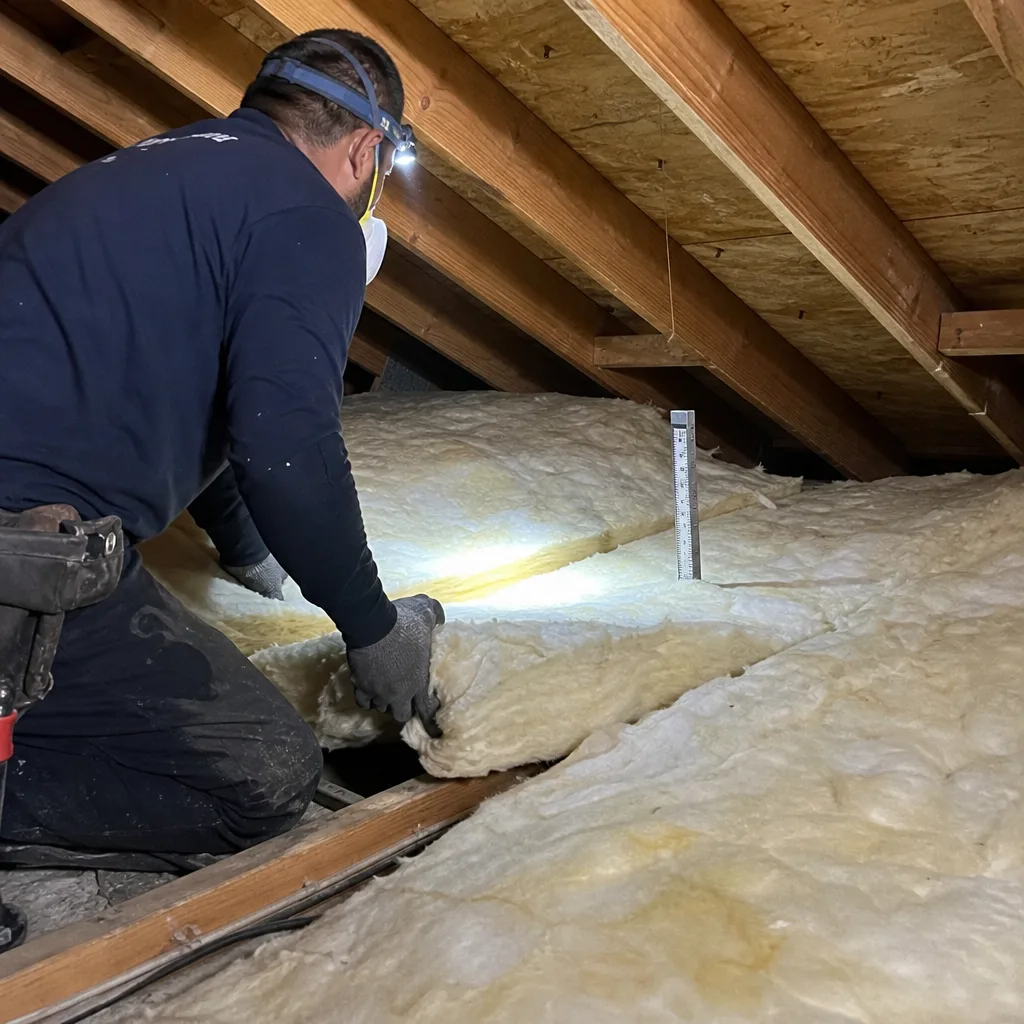
Marine-layer condensation is the big one on this side of the peninsula. When warm interior air hits cold sheathing on a fog-cooled roof plane, it condenses. Over a season or two, the fiberglass batts on that side are soaked, compressed, and growing mold. Pulling the wet material, treating the sheathing, and air-sealing before re-insulating is the only fix that lasts. A blow-and-go over the top just seals the moisture in and makes it worse.
Settled fiberglass and pest damage in older homes
Houses built in the 1950s through the 1970s in Rolling Hills Estates often have original rock wool or thin fiberglass that has been walked on, pushed aside by remodel crews, or chewed through by rodents. Removal in these attics usually runs $1,200 to $2,800 depending on attic size and access, and it’s the right first step if you’re planning to add insulation anyway. We vacuum the old material out, leave the deck clean, and then you can actually see what’s going on in your attic instead of guessing.
Insulation Contractors in Rolling Hills Estates
Insulation contractors in Rolling Hills Estates are not interchangeable, and the cheap quote usually doesn’t know what a salt-fog attic looks like. What a contractor should do here is inspect the existing insulation, check for moisture on both roof planes, look at the ventilation, and then recommend a material and depth that fits the framing and the climate. We handle that full scope. If the attic needs baffles before we blow anything in, we’ll install them. If the top plates need air sealing, that happens before insulation, not after. We don’t skip prep work to hit a lower number.
Custom estate attics and vaulted ceilings
Many Rolling Hills Estates attics have vaulted or cathedral sections where there’s no full-depth attic cavity, just a shallow rafter bay. Blowing 14 inches of loose-fill into a 6-inch cavity is a waste. Spray foam from Icynene or Demilec often fits these spaces better, sealing and insulating in one pass. For deeper, open attics, a blown-in product like GreenFiber or CertainTeed makes more economic sense. We’ll tell you which one actually fits.
Additions and multi-era framing
A home that started as a 1960s ranch and picked up a family room addition in the 1980s and a master suite in the 1990s rarely has consistent attic framing. Each era used different rafter spacing, different depths, different materials. A tract-home blow-in formula can’t cover that evenly. We assess each zone separately and adjust the material, depth, and method to match the framing. That’s what you’re paying a specialist for.
Trusted Brands We Service in Rolling Hills Estates
We install attic insulation from three product families: blown-in loose-fill (GreenFiber and CertainTeed), spray foam (Icynene and Demilec), and batts or blown mineral wool for fire- and moisture-resistant applications. Most insulation contractors in the South Bay carry one brand. We carry multiple because a canyon-side estate in Rolling Hills Estates might need closed-cell spray foam on an ocean-facing vaulted ceiling while a flatland ranch just needs a deep GreenFiber top-up at a different price point. Our trucks are stocked for same-week installs, and when you call about a Rolling Hills Estates attic retrofit we don’t have to order materials from out of state before we can give you a real answer. The difference is choice, and the choice is based on your house, not our inventory.
Common Attic Insulation Problems We See in Rolling Hills Estates Homes
- Ocean-facing roof planes running damp: On canyon-side lots the wind-driven salt fog off the Pacific finds every gap in the sheathing and top plates. We regularly pull wet, compressed fiberglass from the west-facing side of an attic while the east-facing side of the same attic tests dry and intact. One R-value for the whole attic misses this entirely.
- Settled original fiberglass in cathedral attics: Homes built from the 1950s through the 1980s often have R-11 or R-19 batts that are now 3 to 5 inches thick because they’ve been compressed by decades of foot traffic and gravity. In a vaulted ceiling, that’s effectively no insulation at all.
- Irregular framing from multi-era additions: Ranch homes on the flatter east side of Rolling Hills Estates frequently have additions layered on over decades. Each addition changed the roof pitch, rafter depth, or attic access. Uniform blow-in coverage over that framing always leaves thin spots and voids.
- Condensation on top plates and can lights: The marine layer keeps attic air humid even in summer. When interior air leaks upward through unsealed top plates and recessed light housings, it condenses against the cool sheathing. We see this on nearly every pre-1990 Rolling Hills Estates attic we open. Air sealing is a prerequisite, not an upsell.
Pricing for Attic Insulation in Rolling Hills Estates, CA
Here’s what our Rolling Hills Estates attic jobs actually cost, based on the projects we’ve done in this market. Attic insulation top-up to bring existing loose-fill up to a modern R-value runs $1,100 to $2,400 for a typical 1,200 to 1,800 square foot attic. Full attic insulation replacement, including removal of old settled material, runs $2,500 to $4,800 depending on attic size and access difficulty. Spray foam retrofits on vaulted or cathedral ceilings run $4,000 to $8,500, because the material cost and labor are higher on irregular framing. Air sealing and baffle installation add $400 to $1,100 depending on the number of penetrations. These are the prices you should expect in Rolling Hills Estates; anything lower on a bid sheet is likely skipping prep or material depth. Call (833) 390-3099 for a free estimate and we’ll give you a written number, not a ballpark.
We Also Serve Cities Near Rolling Hills Estates
Our Attic Insulation crews work throughout the Palos Verdes Peninsula and the nearby South Bay. If you’re in Manhattan Beach, Torrance, Lomita, or Palos Verdes Estates, we cover those attics too. Each of these areas has its own microclimate quirks, so when you call, tell us your cross streets and we’ll know what to expect before we arrive. Learn more about our work in the peninsula on our Attic Insulation in Rolling Hills Estates page, or call (833) 390-3099 to schedule.
Serving Rolling Hills Estates, CA — Our Local Coverage Area
We’re based in the Rolling Hills Estates area and know this community well. Use the map below to see our service coverage — if you’re nearby, we can almost certainly help.
FAQs About Attic Insulation in Rolling Hills Estates
You’re seeing the fog belt at work. On canyon-side lots, the ocean-facing roof plane stays cool and damp from marine-layer air and wind-driven salt fog, so any interior moisture that leaks upward condenses on that sheathing. The sheltered inland-facing side of the same attic warms up during the day and dries out. The wet side is usually the west- or southwest-facing plane. The fix is to pull the wet insulation, air-seal the top plates and ceiling penetrations, and re-insulate with a material that can dry rather than trap water. Call (833) 390-3099 and we’ll inspect your specific roof planes; the ocean-facing side is usually easy to spot if you know what you’re looking for.
Yes, that’s most of what we do in Rolling Hills Estates. Vaulted and cathedral ceilings mean shallow rafter bays and irregular framing, which usually makes spray foam the right fit where loose-fill won’t work. Multi-era additions mean different rafter spacing in different zones, so we treat each section of the attic as its own job rather than applying one depth across the whole footprint. Nate Calloway has walked enough Palos Verdes estate attics to know what works and what doesn’t before the truck even parks.
We do when it’s wet, moldy, rodent-damaged, or so compressed that it’s no longer performing. If the existing material is dry and reasonably clean, a top-up with new blown-in insulation is often the better value. In Rolling Hills Estates, the deciding factor is usually moisture: if one side of the attic has fog-driven condensation damage, we pull that side completely, air-seal it, and start fresh. You get a clean deck and an insulation layer that actually works.
We install GreenFiber and CertainTeed blown-in loose-fill, Icynene and Demilec spray foam, and mineral wool batts for fire- and moisture-resistant applications. The brand matters less than whether it fits your attic. A vaulted ceiling over an ocean-facing slope usually gets closed-cell spray foam. A deep, open attic on the flat side of the city usually gets a deep blow-in top-up. That’s the whole reason we carry multiple brands instead of selling you whatever the truck carries.
The fog means condensation, not heat, is your attic’s biggest enemy. Fiberglass and other air-permeable insulations lose performance when moisture wicks through them. On the ocean-facing planes of a canyon-side home in Rolling Hills Estates, we often recommend closed-cell spray foam or a vapor-aware assembly with air sealing first. The sheltered planes can usually take standard blown-in insulation. Your house has two different attic zones, even if it looks like one. Call (833) 390-3099 and we’ll tell you which product fits each plane, and what it’ll cost.
Written by Nate Calloway, Owner at Fountain Valley Insulation, serving Rolling Hills Estates and the Palos Verdes Peninsula with attic insulation, spray foam, and air sealing.