


Fast, Reliable Attic Insulation Across March Air Force Base
Attic insulation in March Air Force Base typically runs $1.65 – $3.40 per square foot for blown-in fiberglass or cellulose, and most homes here need more than a simple top-off. The real job on the base’s 1950s and 60s military housing is usually removal of failed batts plus re-insulation, which lands between $2,800 and $6,900 for a typical single-story bungalow. We work these attics regularly. Call (833) 390-3099 and tell us what you’re seeing up there.
March Air Force Base homes have a specific problem most contractors don’t plan for: narrow scuttle-hole access into low-pitch attics where original fiberglass batts have been flattened by decades of storage boxes and rodent traffic. The work takes longer here, but it’s predictable if you know these houses. We do.
Why Fountain Valley Insulation Is March Air Force Base’s Preferred Attic Insulation Company
We’re led by Nate Calloway, and our crews have spent enough time in March Air Force Base attics to know what’s waiting before the ladder goes up. The 92551 zip code is dense with former military family housing from the 1950s and 60s, much of it with the same construction fingerprint: wood-frame, low-pitch roofs, minimal vents, and a hallway-closet scuttle instead of pull-down stairs. That changes the job.
Homeowners in March Air Force Base keep calling us back because we plan for the scuttle. We bring compact equipment, protect the ceiling drywall, and we don’t pretend a blown-in top-off will fix compressed, contaminated batts underneath. When the existing insulation is done, we say so and we remove it. When a radiant barrier is the smarter move for a 140°F attic, we say that too.
We answer the phone at (833) 390-3099, we show up when we say we will, and our estimates are free. You’ll deal with a specialist who can explain material differences without talking over your head.
Radiant Barrier in March Air Force Base
Radiant Barrier in March Air Force Base is often the single highest-impact upgrade for homes where the attic hits 140°F in July and the ceiling still radiates heat after the sun goes down. A radiant barrier is a reflective foil layer installed under the roof deck that blocks radiant heat gain before it reaches your insulation, and in March Air Force Base’s hot-summer climate it can cut ceiling heat transfer by 30 – 40% when paired with adequate attic insulation. For older base houses with minimal venting, it does what extra batts can’t: it stops the heat at the source rather than trying to slow it through already-hot material. Typical installed cost for a radiant barrier on a 1,200 – 1,800 sq ft March Air Force Base home runs $1,450 – $3,200, depending on attic configuration and whether we’re working around existing ductwork.
When a Radiant Barrier Makes Sense
If your March Air Force Base attic already has reasonable insulation depth but the house still bakes on summer afternoons, the problem is likely radiant heat gain through the roof deck. That’s the scenario where a radiant barrier outperforms adding more insulation. On low-pitch roofs common to the base’s tract housing, installation is straightforward but detail-sensitive: seams must be lapped correctly and the foil needs an air gap to work as designed.
Older Home Considerations
For a 1958 bungalow with a cramped scuttle access, we install radiant barrier in sections, feeding rolls through the opening and fastening them to the rafters. Foil doesn’t compress like batts and won’t absorb rodent contamination the way fiberglass does, which matters in attics that have had activity. It’s not a replacement for insulation, but in a March Air Force Base attic it’s the difference between a ceiling that stays warm and one that stops holding heat.
Attic Cleaning Services in March Air Force Base
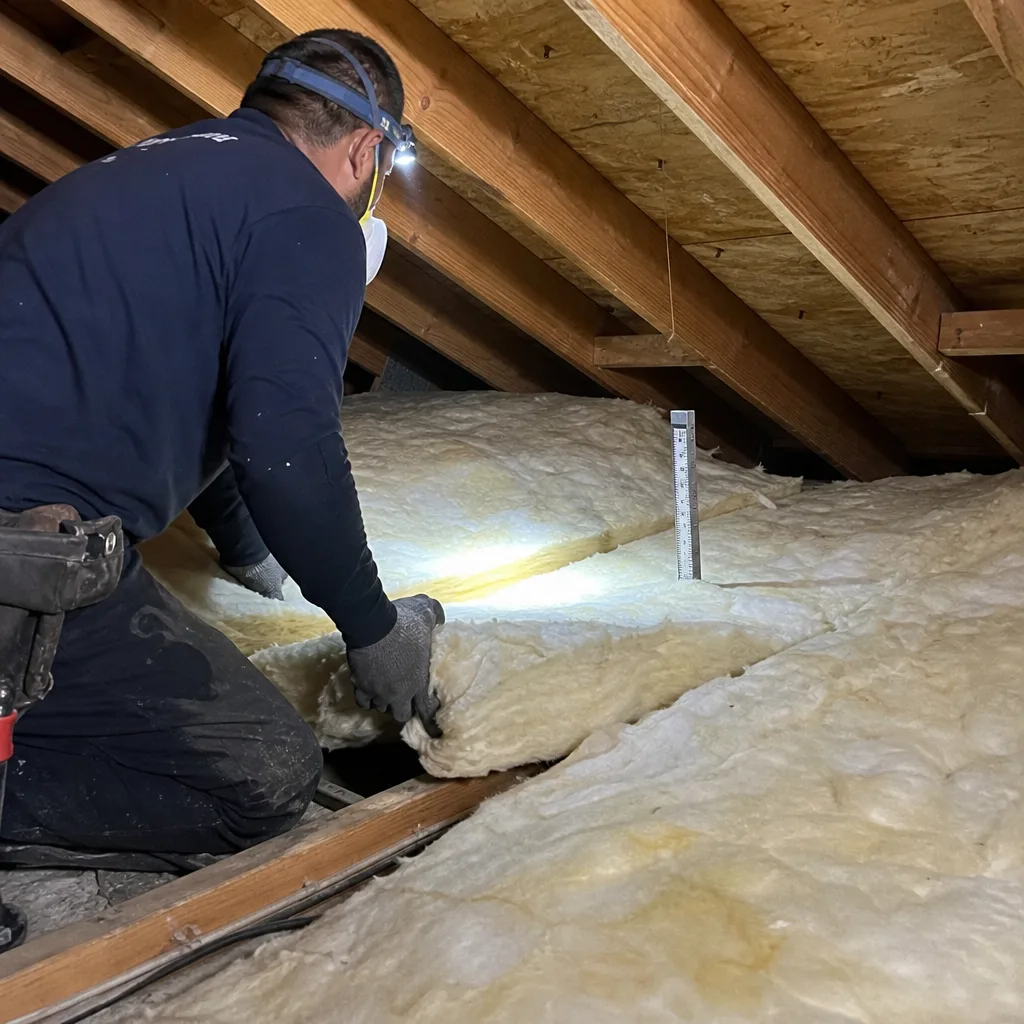
Attic Cleaning Services in March Air Force Base are not optional in homes where original 1960s fiberglass batts have been compressed by storage and tunneled through by rodents. We remove the failed material, bag it, sanitize the affected areas, and prep the attic for new insulation. On a typical 1,000 – 1,500 sq ft base house, full attic cleaning with old insulation removal runs $1,200 – $2,800, and it’s the step that makes re-insulation actually work. Blowing fresh insulation over contaminated, flattened batts is wasted money.
Rodent Remediation Before Insulation
In March Air Force Base attics where rats or mice have nested in the fiberglass, the odor stays until the material goes. We bag and remove soiled batts, treat the surfaces, and only then install new insulation. The same goes for batts that have been crushed flat by decades of Christmas boxes: they’re not insulating at their rated R-value, and covering them doesn’t restore it.
Scuttle-Hole Access Protections
March Air Force Base’s narrow scuttle openings mean our crews carry waste down by hand rather than through a wide stair. We lay protection over the ceiling and closet floor, and we pace the removal so the drywall doesn’t take scrapes. It’s slower work than an attic with pull-down stairs, but the alternative is cracked 1950s ceiling panels and a homeowner who has to patch drywall after the insulation crew leaves.
What happens when you call
- 1
A real person answersNo phone trees — you reach a local pro.
- 2
You get an upfront price rangeHonest numbers before anyone is dispatched.
- 3
A background-checked tech heads outLicensed & insured, dispatched right away.
- 4
You approve before work beginsNothing starts until you say go.
Trusted Brands We Service in March Air Force Base
Fountain Valley Insulation carries eight manufacturer lines, and for March Air Force Base attics we lean on the ones that fit these houses. CertainTeed blown-in fiberglass works well for the tight scuttle access and doesn’t settle the way old batts have. GreenFiber cellulose gives eco-conscious homeowners a recycled-content option with good coverage at lower cost. For spray foam applications where venting is poor, we install Icynene and Demilec open- and closed-cell systems, though that’s a fuller retrofit conversation. Ask us why we carry Rockwool, spray foam, and recycled fiber, because most contractors carry none of them. We stock the materials locally for 92551 jobs, so turnaround is days, not weeks.
Common Attic Insulation Problems We See in March Air Force Base Homes
- Compressed 1960s batts with dead R-value. The original fiberglass in these tract homes has been walked on, boxed on, and flattened. R-19 batts performing at R-8 won’t stop heat gain in a 140°F attic, and March Air Force Base cooling bills show it.
- Rodent-soiled insulation that can’t stay. Tunneling and nesting crush the material and leave urine and droppings embedded in it. A top-off over contaminated batts seals the problem in; removal and sanitation is the only fix that holds.
- Scuttle-hole-only access that limits equipment. Most March Air Force Base homes have a small ceiling hatch in a hallway or closet, not pull-down stairs, so crews must use compact blowers and hoses and protect the drywall around the opening. It changes material handling and scheduling.
- Minimal low-pitch venting that drives attic temps up. The base’s mass-produced roofs were built with scant eave or ridge vents, so heat builds hard in summer. Adding insulation without addressing radiant heat or ventilation often leaves rooms hot despite the upgrade.
Pricing for Attic Insulation in March Air Force Base, CA
Blown-in fiberglass for a 1,200 sq ft March Air Force Base attic typically runs $1,980 – $4,080 installed. If removal of old batts is required first, add $1,200 – $2,800 for attic cleaning and disposal. A radiant barrier installation on the same footprint runs $1,450 – $3,200, and the two combined often land between $3,400 and $6,900. The scuttle-hole access on these older homes adds a labor step most bids elsewhere don’t include. Every estimate is free, and we’ll give you a written number before any work starts. Call (833) 390-3099 for an exact quote.
We Also Serve Cities Near March Air Force Base
Our crews work March Air Force Base and the surrounding communities. If you’re in Moreno Valley, Woodcrest, Perris, or Good Hope, our Attic Insulation team covers those homes too. The same scuttle-hole and old-batt issues show up across this part of Riverside County, and we plan for them the same way.
Serving March Air Force Base, CA — Our Local Coverage Area
We’re based in the March Air Force Base area and know this community well. Use the map below to see our service coverage — if you’re nearby, we can almost certainly help.
FAQs About Attic Insulation in March Air Force Base
Not if the old batts are compressed or contaminated. In March Air Force Base, most original 1960s fiberglass has been flattened by storage and rodent activity, and covering it actually buries the problem rather than fixing it. The right move is removing the failed batts, cleaning the attic floor, and installing fresh insulation to full depth. On a 1958 bungalow we worked near the old base footprint, the six-inch pile of settled, soiled batts was doing almost nothing. We removed it all and blew in GreenFiber. The homeowner could feel the difference by mid-afternoon. Call (833) 390-3099 and we’ll tell you what your attic actually needs after looking at it.
It’s a mix of low-pitch roof design, minimal venting, and degraded insulation. March Air Force Base’s 1950s and 60s tract homes were built with scant eave and ridge vents, so heat has nowhere to go in summer, and the original batts have lost too much loft to block the radiant heat coming off the roof deck. Attic temperatures here routinely pass 140°F in July. A radiant barrier mounted under the roof deck stops heat before it loads the insulation, and it’s usually the most effective single fix we can make on these homes.
No, but it changes how the job gets done. On March Air Force Base houses with narrow scuttle access, we use compact blowing equipment and feed the hose up through the opening with padding around the frame to protect the ceiling drywall. Removal work is paced differently too: waste comes down in bags by hand rather than through a wide stair opening. We’ve done enough of these to handle it without cracking the 1950s drywall, and the timeline stays close to a standard attic. Call us at (833) 390-3099 and mention the scuttle size when you book so we bring the right gear.
Yes, if the attic is already insulated to a reasonable level and the house still heats up hard on summer afternoons. Radiant barrier works by blocking heat at the roof deck, which matters more on March Air Force Base’s under-vented, low-pitch roofs than adding more batts would. On a 1960s single-story with a cramped attic, we install the foil in sections through the scuttle. It costs $1,450 – $3,200 for most homes here, and it often delivers the cooling difference a homeowner has been chasing for years. Estimates are free, so call (833) 390-3099 and ask us to take a look.
Leaving it is the wrong call. Rodent-soiled batts carry urine, droppings, and nesting material embedded in the fiberglass, and every time the HVAC cycles or you open the scuttle, particulates move through the house. The material also isn’t insulating once it’s been tunneled and crushed. We remove the contaminated batts, sanitize the attic floor and framing, and install fresh insulation in the same visit. It’s the only way to clear the odor and restore the attic’s thermal performance. Call (833) 390-3099 for a free assessment.
Written by Nate Calloway, Owner at Fountain Valley Insulation, serving March Air Force Base and the surrounding Riverside County communities.