Insulation Company in March Air Force Base, CA
Blown in insulation is the most common request we get from homeowners in March Air Force Base, and it usually comes down to two things: high summer cooling bills and rooms that never hold a steady temperature. The base’s 1950s and 1960s military housing stock was built fast, with thin batt insulation that has now settled, compressed, or been torn up by rodents. Add attic temperatures that push past 140°F in July and August, and you have ceilings that radiate heat into living spaces all afternoon. Fountain Valley Insulation has served March Air Force Base since 2014, matching blown-in fiberglass and cellulose to the specific ceiling and scuttle-access challenges these older homes present. Call (833) 390-3099 for a free estimate.
Why March Air Force Base Homes Are Different
March Air Force Base is not a typical Riverside County suburb. The housing stock is dominated by mid-century military construction: 1950s through 1970s single-story tract homes and former family housing units built on a tight budget and a tight schedule. That means wood-frame construction, low-pitch roofs, and attics with minimal venting. Most of these homes still have their original batt insulation, and after 50 or 60 years, that material has settled to a fraction of its rated R-value. We regularly see batts compressed down to two or three inches where they should be nine or ten.
The other defining feature is access. Many March Air Force Base attics are reached through a narrow scuttle hole, not a pull-down ladder. The opening is often 22 by 30 inches, cut into a hallway ceiling. That changes how we work. Our installers use smaller equipment and take extra care around the drywall edges, because one wrong move with a hose can crack the ceiling below. The low-pitch roofs leave less headroom at the eaves, so getting even coverage requires patience and the right hose attachments. We also account for the climate: summer highs regularly exceed 100°F, winters bring occasional frost, and attic heat accelerates the breakdown of whatever insulation is up there. A properly installed blown-in layer makes an outsized difference in this specific climate.
Our Main March Air Force Base Services
Most March Air Force Base homeowners reach out to us about one of two projects. Here is what each involves locally.
Attic Insulation in March Air Force Base
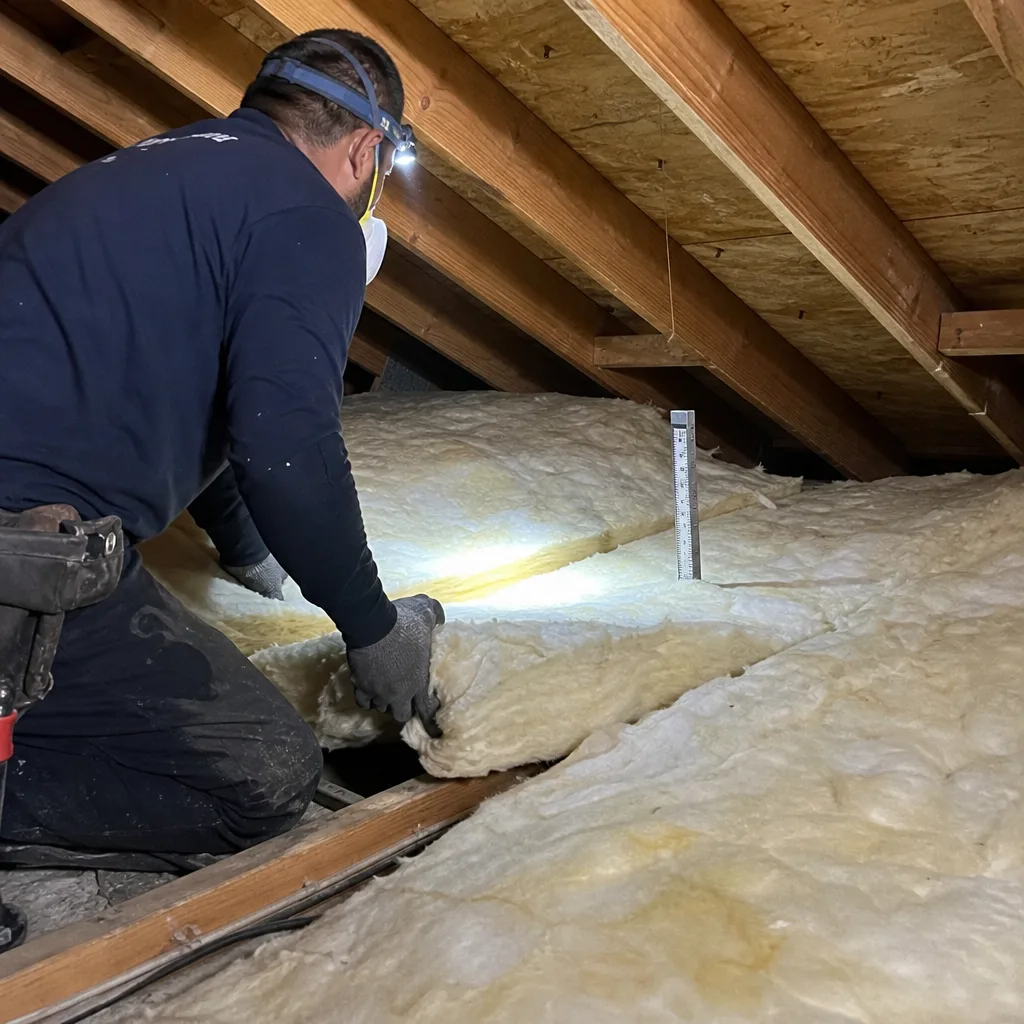
Attic work in March Air Force Base almost always starts with an assessment of what is already up there. In most of these 1950s and 1960s homes, that means old batt insulation that has settled, been compressed by storage, or been disturbed by pests. Then we look at the scuttle access and the venting situation, because many of these attics were built with minimal airflow. Adding blown-in insulation on top of existing batts is often the most practical approach, but we will tell you when full removal makes more sense. See our Attic Insulation in March Air Force Base page for a full breakdown of costs and methods.
Spray Foam Insulation in March Air Force Base
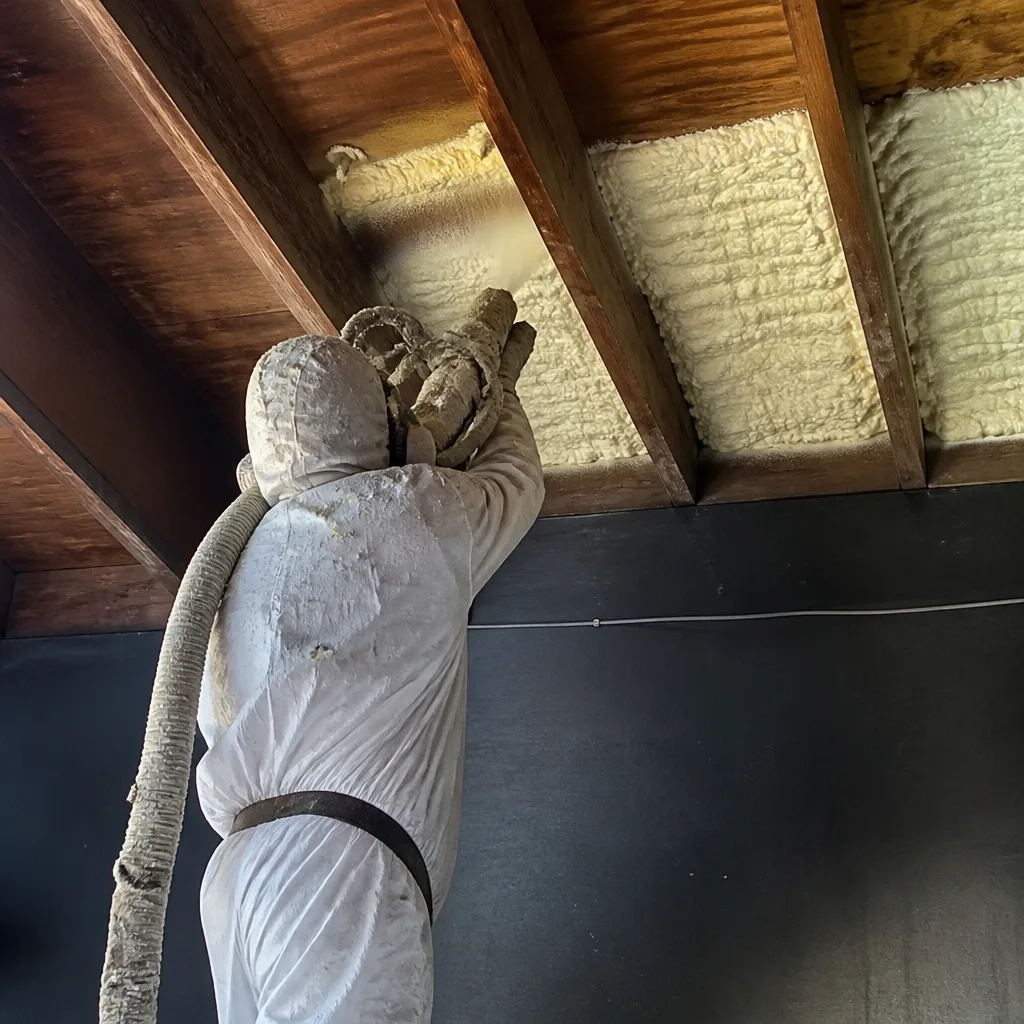
Spray foam changes the equation for March Air Force Base homes with hard-to-reach attic spaces and leaky building envelopes. Closed-cell foam, installed through our Icynene and Demilec partnerships, seals air gaps that fiberglass simply cannot address. This matters in a climate where attic temperatures climb so high that air leaks turn into heat highways. For some of the former military housing with complicated rooflines, spray foam is the only material that gets full coverage. Read our Spray Foam Insulation in March Air Force Base page for the full picture.
What happens when you call
- 1
A real person answersNo phone trees — you reach a local pro.
- 2
You get an upfront price rangeHonest numbers before anyone is dispatched.
- 3
A background-checked tech heads outLicensed & insured, dispatched right away.
- 4
You approve before work beginsNothing starts until you say go.
Blown In Insulation in March Air Force Base
Blown in insulation is the workhorse solution for March Air Force Base because it adapts to the realities of mid-century military housing. These attics are rarely uniform: trusses are irregular, old batts are uneven, and the scuttle access limits what equipment fits through. Blown-in fiberglass or cellulose flows around obstacles and fills gaps that batts leave open, which is why we recommend it for most of the 1950s and 1960s homes here. And because summer attic temperatures in March Air Force Base regularly exceed 140°F, a deep, even layer of blown-in material is one of the fastest ways to cut cooling costs. You can learn more about our general approach on our Blown In Insulation page.
Cellulose Insulation
Signs you need it
Your attic has old, dusty batt insulation that has settled flat, and your upstairs rooms heat up by mid-morning in summer.
What it costs in March Air Force Base
Expect to pay $1.10 to $2.40 per square foot for dense-packed or loose-fill cellulose in March Air Force Base attics.
How we do it
We access the attic through your scuttle hole, set up a blower hose outside, and layer recycled cellulose to the target depth while keeping clear of vent chutes.
Blown In Attic Insulation
Signs you need it
Rooms directly under the attic feel 10 to 15 degrees warmer than the rest of the house on hot afternoons, or your cooling bills have climbed year over year.
What it costs in March Air Force Base
Blown-in attic insulation for a typical March Air Force Base single-story home runs $1,500 to $3,700, depending on attic size and existing material.
How we do it
We prep the attic, mark the target depth, blow the material evenly across the entire attic floor, and verify coverage with a depth check before we leave.
Blown In Cellulose Insulation
Signs you need it
You want a recycled-content insulation option that also performs well in the heat, and your attic has irregular joist spacing that batts cannot fit cleanly.
What it costs in March Air Force Base
Blown-in cellulose runs $0.90 to $2.00 per square foot installed, with the final number tied to depth and whether we are topping up or starting fresh.
How we do it
We pull the hose up through the scuttle opening, blow GreenFiber cellulose in layers, and use depth markers to keep the coverage consistent across the whole attic.
Blown In Fiberglass Insulation
Signs you need it
Your attic has bare spots where old batts have shifted or been pulled away, and you need a fast, cost-effective full-coverage fix.
What it costs in March Air Force Base
Blown-in fiberglass typically costs $1.00 to $1.80 per square foot installed in March Air Force Base.
How we do it
We blow loose-fill fiberglass through the scuttle access using a smaller hose setup, working from the far end of the attic back to the opening for even coverage.
Loose Fill Insulation
Signs you need it
Your attic has areas where insulation is missing entirely, often around the perimeter where old batts have been pushed aside during wiring or HVAC work.
What it costs in March Air Force Base
Loose-fill material installation runs $0.90 to $2.40 per square foot in March Air Force Base depending on whether you choose fiberglass or cellulose.
How we do it
We set up the blower outside, run the hose through your scuttle, and fill the attic to a uniform depth while guarding the soffit vents so airflow stays intact.
What Blown In Insulation Costs in March Air Force Base
| Item | Typical range in March Air Force Base |
|---|---|
| Blown-in fiberglass (attic floor) | $1,500 – $3,700 |
| Blown-in cellulose (attic floor) | $1,500 – $3,700 |
| Per square foot, fiberglass or cellulose | $0.90 – $2.40 |
Does blown in insulation work in older March Air Force Base attics?
Yes. Blown-in material fills around irregular framing and old batts better than any other method, which is exactly what these 1950s and 1960s attics need. Call (833) 390-3099 and we will tell you what your attic can take.
Can you blow insulation through a small scuttle hole?
Yes. We use reduced-diameter hoses specifically for March Air Force Base homes with narrow scuttle access, and we protect the ceiling drywall around the opening throughout the job. Call (833) 390-3099 for a free assessment.
Brands We Service in March Air Force Base
We install and service insulation from Rockwool, CertainTeed, Icynene, Demilec, and GreenFiber across March Air Force Base. Most material is available for same-week scheduling. See our brands for the full lineup and what each product does best.
Pricing for Insulation Company in March Air Force Base, CA
| Service | Typical range in March Air Force Base |
|---|---|
| Blown-in attic insulation (full attic) | $1,500 – $3,700 |
| Blown-in fiberglass (per sq ft) | $1.00 – $1.80 |
| Blown-in cellulose (per sq ft) | $0.90 – $2.00 |
| Loose fill insulation (per sq ft) | $0.90 – $2.40 |
| Attic insulation (batt plus blown-in top-up) | $2,000 – $4,500 |
| Spray foam, open-cell (per sq ft) | $1.20 – $3.00 |
| Spray foam, closed-cell (per sq ft) | $2.00 – $4.50 |
| Air sealing package (with attic job) | $400 – $1,200 |
In March Air Force Base, two factors push prices toward the upper end of these ranges: narrow scuttle access that slows installation, and attics where old batts must be removed before new material goes in. You will always get a firm, upfront quote before any work starts, with no change orders mid-job.
Neighborhoods We Serve in March Air Force Base
We work throughout the 92551 ZIP code and the residential pockets across March Air Force Base. Most jobs in this area can be scheduled within the same week, and we plan routes to keep response time under two days for estimates.
- Arnold Heights
- Former base housing blocks east of Graeber Street
- Omni Circle area
- Vandenberg Village
- Residences along Riverside Drive
Service Area – Cities Near March Air Force Base
Beyond March Air Force Base, we handle insulation projects in the surrounding Riverside County communities. We regularly work in Moreno Valley, CA, Woodcrest, CA, Perris, CA, and Good Hope, CA, bringing the same brand choices and installation methods to each.
Serving March Air Force Base, CA — Our Local Coverage Area
We’re based in the March Air Force Base area and know this community well. Use the map below to see our service coverage — if you’re nearby, we can almost certainly help.
FAQs About Insulation Company in March Air Force Base
We typically schedule estimates in March Air Force Base within one to two business days, and installation within the same week in most cases. Summer is our busiest season, so calling early in the spring gets you the best scheduling flexibility. Call (833) 390-3099 to check current availability.
Most single-family homes in March Air Force Base do not require a permit for attic insulation, but some former military housing subdivisions have HOA rules about visible exterior changes. Since our work happens entirely inside the attic, it rarely triggers any approval requirement. We can confirm for your specific street when we visit.
Yes. We take on everything from a one-afternoon attic top-up on a 1960s bungalow to full whole-home insulation for a renovation, including air sealing and scuttle access improvements. Every quote is itemized, so you only pay for what your home actually needs. Call (833) 390-3099 for a free estimate.
What happens when you call
- 1A real person answersNo phone trees — talk to a local insulation pro.
- 2You get an upfront price rangeHonest numbers before anyone is dispatched. No surprises.
- 3A background-checked tech heads outLicensed & insured, typically within the hour.
- 4You approve before work beginsNothing starts until you say go.
What March Air Force Base Customers Say
"Installed baffles at the soffits so the new insulation didn't block the ventilation, which the previous contractor apparently never considered."
— Hector Vargas"Plastic laid from the front door to the attic hatch and they vacuumed the hallway afterward."
— David Tran"Attic was at maybe R-11 from the 1970s and blown in over the top would have just buried the problem. They removed the old material, air sealed the top plates and penetrations first, then blew in to R-49. The upstairs is a completely different house in August."
— Justin Chen