
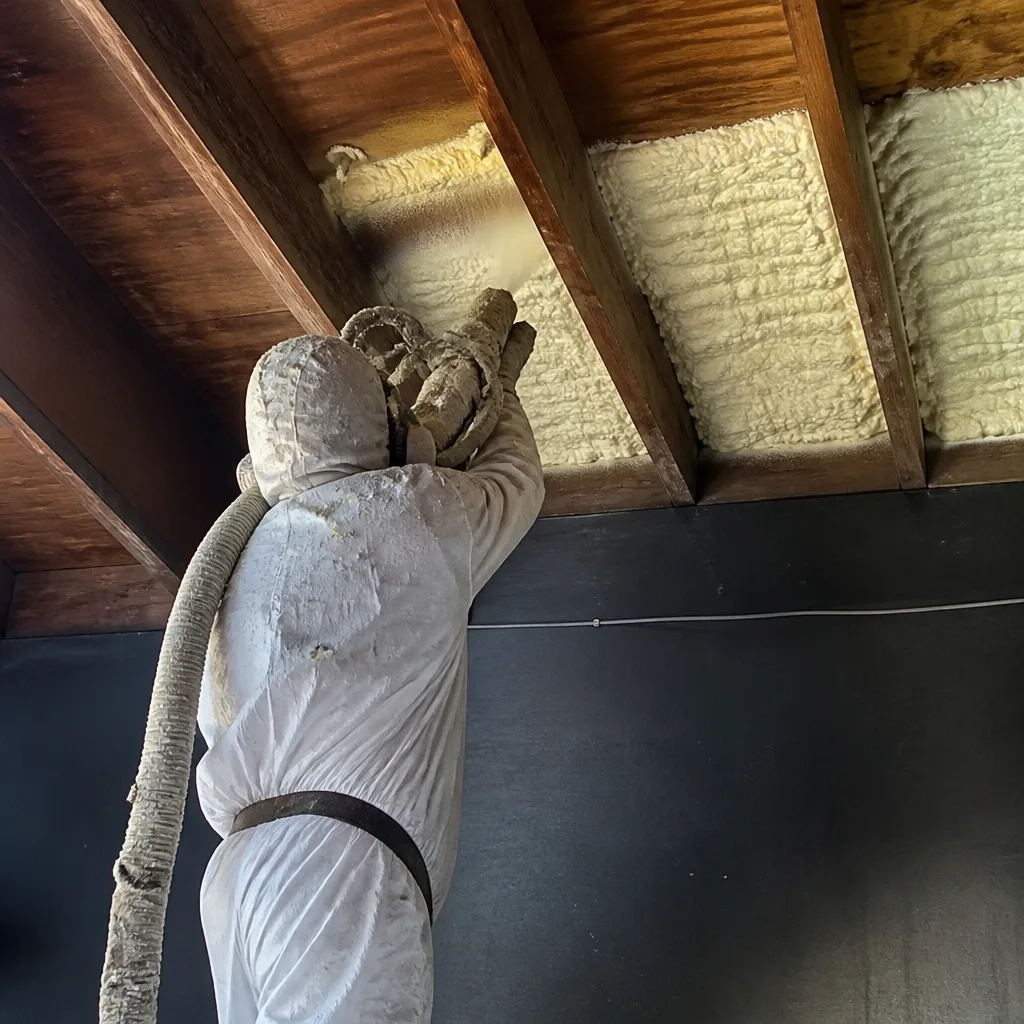
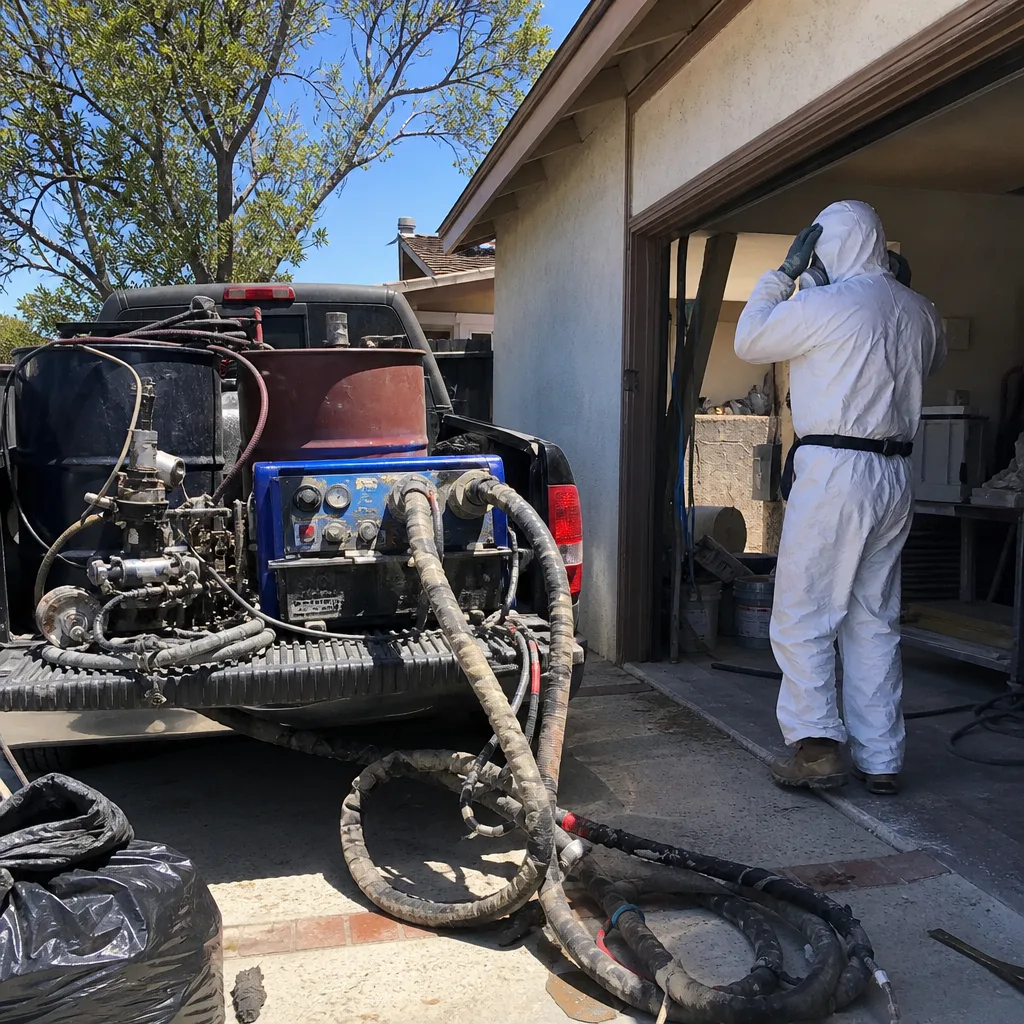
Fast, Reliable Spray Foam Insulation Across West Hollywood
Spray foam insulation in West Hollywood usually runs $2.50 – $6.50 per board foot installed, with most wall-cavity jobs in older courtyard buildings landing between $3,800 and $9,500 depending on access and square footage. We get to West Hollywood fast, often same-week for occupied units where tenants can’t be shuffled around. If you’re dealing with noise bleeding through a shared wall on Larrabee or Harper, or your west-facing stucco wall bakes your living room every afternoon, call (833) 390-3099 and we’ll talk through what’s actually going on before anyone quotes you a number.
Fountain Valley Insulation is led by Nate Calloway, and we work across West Hollywood’s dense low-rise housing stock every month. This isn’t the kind of city where you back a truck up to a single-family home and blow fiberglass into an attic. It’s 1920s Spanish courtyards, mid-century dingbats, occupied units, and walls that were built before insulation was a code word. We know the difference, and it changes how we spec every job.
Why Fountain Valley Insulation Is West Hollywood’s Preferred Spray Foam Insulation Company
Most spray foam contractors in the LA basin grew up doing track-home attics and new construction. That’s fine work, but it doesn’t translate cleanly to a rent-controlled courtyard building below Sunset where the plaster has to stay put and the tenant in 2B works nights and can’t have a crew tramping through. Our reputation in West Hollywood comes from doing exactly that kind of job: small injection ports, contained work areas, crews who understand that “quiet” is part of the spec. Owners and property managers call us back because the first job didn’t turn into a tenant complaint or a cracked wall.
Customers across 90069 and the surrounding blocks regularly mention two things: we showed up when we said we would, and we explained the material choice in plain language instead of pushing one product. That matters in a city where the “insulation” problem is often really a sound problem, sometimes an air-sealing problem, and only occasionally a thermal one. When you call, you get Nate’s team, not a call center. We answer questions about Icynene and Demilec foam the way a mechanic answers questions about your actual car, not a brochure.
Closed Cell Spray Foam Insulation in West Hollywood
Closed Cell Spray Foam Insulation is the workhorse for West Hollywood’s party walls, west-facing stucco facades, and any cavity where moisture from coastal air is a factor. Closed-cell foam cures rigid at about R-6.5 to R-7 per inch and acts as both an air barrier and a vapor retarder in a single pass. In pre-war plaster-on-wood-lath construction, that rigidity is an asset when applied correctly, and a liability when it isn’t. We see closed-cell specified on courtyard party walls below Sunset because it adds structural stiffness to old lath assemblies while sealing the air gaps that let sound and hot air travel between units.
A typical closed-cell wall injection in a West Hollywood courtyard unit runs $4.50 – $6.50 per board foot, with a single party wall in a one-bedroom unit usually landing between $3,800 and $6,200. The range shifts with stud-bay depth, access from one side versus two, and how much of the existing plaster and trim has to be protected.
Party Wall Sound Sealing
When we foam a shared wall between two occupied units, we inject through 3/8-inch ports spaced about 16 inches on center, working from the less-disrupted unit whenever possible. The foam expands into the hollow plaster-on-lath cavity and knits the two leaves together. The result is a wall that stops acting like a drum.
West-Facing Stucco Air Sealing
On dingbat and hillside condo buildings, the west and south stucco walls soak up afternoon sun and push that heat through unsealed stud bays. Closed-cell foam against those exterior walls, with proper drainage-plane detailing, cuts both air infiltration and radiant heat transfer through the assembly. The detail work around window frames and electrical boxes is where we spend most of our time on these jobs.
Open Cell Spray Foam in West Hollywood
Open Cell Spray Foam is the better fit when the job calls for sound control and air movement blocking without the rigidity or moisture-vapor characteristics of closed-cell. Open-cell cures at about R-3.5 to R-4 per inch and stays compressible, which makes it more forgiving against brittle plaster keys in 1920s and 1930s Spanish Colonial buildings. In West Hollywood, we spec open-cell for interior partition walls where acoustic separation matters more than maximum R-value per inch, and for ceiling cavities where access is tight and the assembly needs to breathe toward the interior.
Open-cell wall injection in West Hollywood typically runs $2.50 – $4.00 per board foot, with a standard unit-to-unit wall or ceiling cavity job falling between $2,800 and $5,500. It’s the more economical choice when thermal gain isn’t the driver and the building doesn’t have a moisture-migration problem from marine air.
Ceiling Cavities Under Occupied Units
In a three-story courtyard building where the middle unit’s ceiling is the floor above’s neighbor, open-cell foam absorbs footfall and voice transfer without adding structural load. It also air-seals the ceiling plane, so the cooling you pay for stays in your unit instead of drifting into the corridor or the unit above.
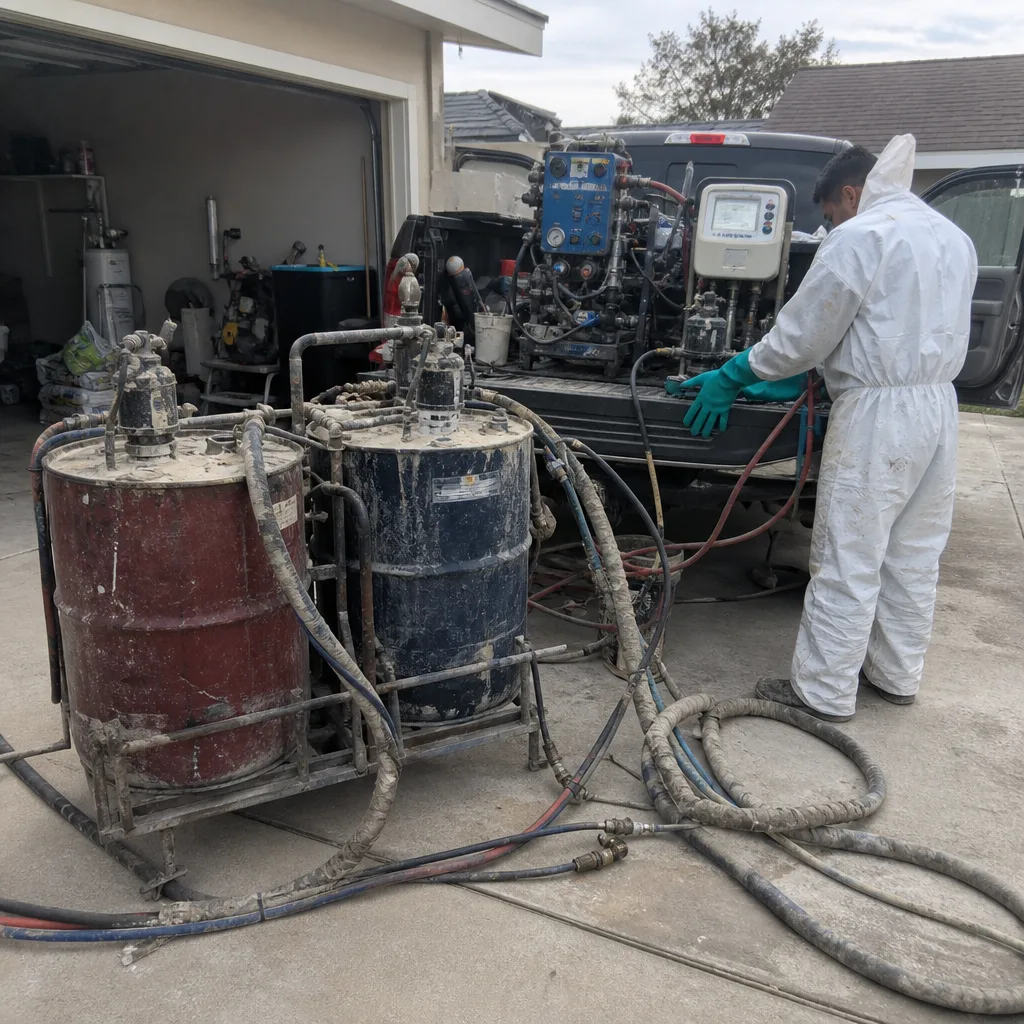
Interior Partition Sound Damping
For hollow interior walls between bedrooms, bathrooms, or kitchens inside a single unit, open-cell is often the right call. It fills irregular old-framing cavities fully without stressing the lath, and its acoustic performance on mid-frequency sound, like conversation and TV, is the best reason to pick it over blown-in alternatives.
Trusted Brands We Service in West Hollywood
We install spray foam through Icynene and Demilec, two of the strongest names in the category. Icynene’s open-cell formulations are our go-to for party-wall sound work in old courtyard buildings, while Demilec’s closed-cell systems handle the air-sealing and structural reinforcement jobs on west-facing stucco walls. We don’t carry one foam and force it into every situation. We carry GreenFiber for recycled-content blown-in options and Owens Corning for conventional batt work, so when foam isn’t the right answer in your West Hollywood building, we’ll say so and point you to the product that is. We stock the core materials and order what’s needed, so turnaround on occupied-unit work stays measured in days, not weeks.
Common Spray Foam Insulation Problems We See in West Hollywood Homes
- Over-thick single-pass foam behind old plaster: On west-facing walls that bake in the afternoon sun, amateurs spray closed-cell too thick in one pass. The exothermic reaction and expansion pressure crack the brittle plaster keys on wood lath. We pulse thin lifts and let each pass cool before the next, especially on sun-loaded walls where surface temperatures run hottest.
- Foam against stucco with no drainage plane: In hillside dingbats and older courtyard buildings, marine air and roof leaks put moisture behind the stucco. Closed-cell foam sprayed directly against that backside, with no gap or drainage mat, traps that moisture in the stud bays. We check the wall assembly before we commit to a closed-cell spec, and we won’t foam a wall that needs a drainage detail first.
- Unsealed through-wall AC sleeves: Nearly every west- and south-facing unit in West Hollywood has a through-wall AC or window unit. The sleeve is a thermal bridge and an air leak wrapped in one. Foam that doesn’t bond to both the sleeve and the rough opening leaves a gap where salty coastal air infiltrates. We see corroded fasteners and rusted lath around these openings regularly. The fix is a full saddle seal with closed-cell, not a cosmetic bead around the trim.
- Sound flanking around partition tops and base plates: Party walls get foamed, but the sound still bleeds through the open joist bays above the ceiling and under the base plates. We foam the wall, then check the top and bottom plates for flanking paths. Most contractors skip that step. It’s the difference between “better” and “quiet.”
Pricing for Spray Foam Insulation in West Hollywood, CA
Closed-cell spray foam in West Hollywood runs $4.50 – $6.50 per board foot installed. Open-cell runs $2.50 – $4.00 per board foot. A typical party-wall sound-sealing job in a one-bedroom courtyard unit lands between $3,800 and $6,200 for closed-cell and $2,800 to $5,500 for open-cell. Rim joist work on hillside buildings is usually $1,200 – $2,800 depending on linear footage and access. Garage ceiling foam jobs fall between $1,800 and $4,200. The two things that move pricing most in West Hollywood are access, because we’re often working in occupied units through small ports rather than open cavities, and plaster preservation, which slows us down on purpose. Estimates are free, and we price from the actual wall assembly we’re going to work against, not a square-foot chart. Call (833) 390-3099 and we’ll come look.
We Also Serve Cities Near West Hollywood
Our crews run Spray Foam Insulation jobs across the full metro corridor. West Hollywood is our densest courtyard-building market, but we’re in Beverly Hills for hillside condos, Century City for high-rise unit work, Hollywood for 1920s bungalow retrofits, and Universal City for newer hillside construction. If your building sits on the edge of West Hollywood and you’re not sure which service area you’re in, call us and we’ll sort it out.
Serving West Hollywood, CA — Our Local Coverage Area
We’re based in the West Hollywood area and know this community well. Use the map below to see our service coverage — if you’re nearby, we can almost certainly help.
FAQs About Spray Foam Insulation in West Hollywood
Yes, that’s the standard approach for our West Hollywood courtyard work. We inject foam through 3/8-inch ports drilled at 16-inch spacing, working one unit at a time while tenants stay in place. The ports are small enough that existing plaster, trim, and paint stay intact, and we contain the work area with plastic and negative-air dust control. The tenant in the adjacent unit may hear a low hiss and feel some tapping through the wall for a few hours, but no one has to vacate. Call (833) 390-3099 and we’ll walk you through the sequence for your specific building.
Yes, often more than any other single improvement. In pre-war plaster-on-wood-lath construction, the hollow cavity between units acts as an echo chamber and a thermal bridge. Closed-cell or open-cell foam fills that cavity completely, seals the air gaps, and damps the assembly. Owners typically report a dramatic drop in voice transfer and footfall noise after the party wall and ceiling cavity are foamed. The degree of improvement depends on flanking paths, which is why we inspect the joist bays and base plates before quoting a number. For a sound-specific assessment, call (833) 390-3099.
Closed-cell foam is rigid, adds structural stiffness, and acts as a vapor retarder at about R-6.5 per inch. That makes it the right choice for west- and south-facing stucco walls, party walls that need stiffening, and any cavity exposed to marine air. Open-cell foam is compressible, more forgiving against brittle plaster, and runs about R-3.5 to R-4 per inch. It’s the better fit for interior partitions where sound control is the priority and thermal gain is secondary. In West Hollywood’s mild coastal climate, cooling and solar gain drive decisions far more than heating, which means air-sealing and sound work matter more than maximum R-value. Call (833) 390-3099 and we’ll spec the right one for your wall, not the one that’s easier to spray.
Only if it’s applied wrong. Over-injection or a single thick pass behind old plaster-on-wood-lath can crack the keys and pop the finish, especially on west-facing walls that run hot in the afternoon. Our crews pulse thin lifts through small ports, monitor cavity pressure, and stop before the plaster tells us to. We’ve done dozens of units in 1920s and 1930s courtyard buildings below Sunset, including one on Larrabee where the plaster had to stay untouched and it did. The historical fabric is the reason we’re there, not a casualty of the job.
Through-wall AC sleeves are a direct opening from the outside to the inside, and in West Hollywood that outside air carries salt and moisture. An unsealed sleeve leaks hot afternoon air in, cooled air out, and salt vapor into the wall cavity where it corrodes fasteners and lath. Sealing the sleeve to both the wall assembly and the unit with closed-cell foam stops infiltration and blocks the thermal bridge. On a west-facing stucco wall, that one detail can move the needle on cooling load more than adding insulation to the whole wall. Call (833) 390-3099 for a quote on sealing all the sleeves in your unit or building, estimates are free.
Get Your West Hollywood Spray Foam Quote
If your courtyard building needs party-wall sound sealing, your hillside condo needs through-wall AC air-sealing, or you’re tired of a west-facing wall that heats up like a kiln every afternoon, call Nate Calloway and the team at Fountain Valley Insulation. We’ll inspect the actual wall assembly, tell you whether open-cell or closed-cell is the right call, and give you a straight number. Call (833) 390-3099 for your free estimate.
Written by Nate Calloway, Owner at Fountain Valley Insulation, serving West Hollywood and greater Los Angeles.