Fast, Reliable Spray Foam Insulation Across Valley Glen
Spray foam insulation in Valley Glen typically costs $2.50 to $6.50 per board foot installed, with most whole-attic retrofits on the postwar ranch homes here landing between $4,800 and $11,000. That’s the honest range, and we’ll tell you exactly where your job falls before any work starts. Fountain Valley Insulation runs crews into Valley Glen from our Fountain Valley shop, and we know the 91404 housing stock well enough to spot the problems most contractors miss. Call (833) 390-3099 and we’ll talk through what your attic actually needs.
Key Takeaways
- Valley Glen’s 1950s-60s ranch homes often have original fiberglass batts crushed to an inch or less, leaving attics at R-4 when they should be R-30 or higher.
- Closed-cell spray foam from Icynene or Demilec restores R-value in shallow attics without raising the roof line or adding bulky material.
- Air-sealing comes before insulation here. Single-pane windows, unsealed can lights, and open top plates defeat even the best spray foam.
- Garage ceiling spray foam is one of the highest-impact fixes for Valley Glen homes with converted garages or bonus rooms that run 10-15 degrees hotter.
- We answer calls from Valley Glen homeowners directly. Free estimates, straight pricing, no pushing a product that doesn’t fit.
Why Fountain Valley Insulation Is Valley Glen’s Preferred Spray Foam Insulation Company
Valley Glen homeowners don’t call us because we’re the closest shop. They call because we carry eight manufacturer brands, including Icynene and Demilec for spray foam, and we match the material to the house instead of forcing every job into one product line. That matters on these postwar ranches, where a shallow attic and a low-slope roof change what works. We’re not going to sell you closed-cell foam where open-cell is the better call, and we’ll tell you why before you spend a dollar.
Nate Calloway runs our operation, and he’s built the crew around one principle: the attic gets the same attention as any other part of the house. That means we look at venting, air leaks, existing insulation condition, and the specific roof assembly before recommending anything. On Valley Glen jobs, that up-front assessment is the difference between a foam job that performs and one that traps moisture during the first Santa Ana event.
We also know the area. We’ve worked off Hazeltine Avenue, around Oxnard Street, through the neighborhoods east of Van Nuys Boulevard near Valley Glen Community Park, and we understand the rhythm of these blocks: single-story, shallow attic, original framing. When we quote a Valley Glen home, we’re quoting for the house you actually have, not a generic square-footage number.
Garage Spray Foam Insulation in Valley Glen
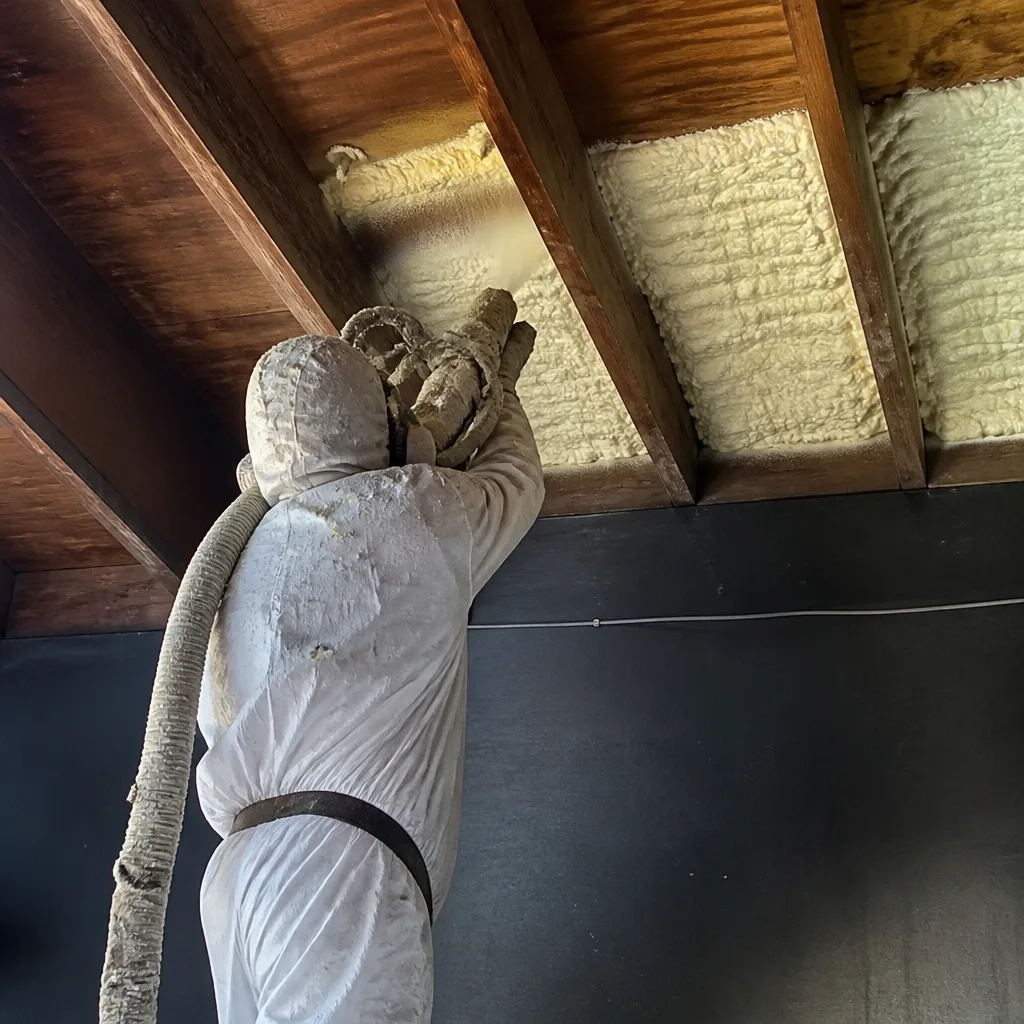
Garage Spray Foam Insulation in Valley Glen is one of the most common requests we field from homeowners whose attached garages or converted bonus rooms turn into ovens by 11 a.m. — though some customers start with a Reflectix repair in Valley Glen before upgrading to foam. The typical Valley Glen ranch has a garage that shares a wall and ceiling with living space, and the ceiling cavity above it is usually uninsulated or holding a thin layer of 60-year-old fiberglass. We spray the garage ceiling deck and the shared wall cavities with closed-cell foam to stop that heat transfer at the source. Most garage ceiling jobs in Valley Glen run between $1,800 and $3,400 depending on square footage and whether we’re also doing the rim joists.
Converted Garage and Bonus Room Comfort
Valley Glen’s housing stock includes a surprising number of converted garages and add-on rooms, many done without permits and almost all done without insulation. These spaces sit on slab, face direct afternoon sun, and have no thermal break from the attic above. Spray foam on the ceiling and knee walls changes that fast. We can usually bring a converted garage from 10-plus degrees hotter than the main house to within 2 or 3 degrees of the rest of the home.
Rim Joist Air Sealing Below the Garage Ceiling
We often find the rim joist band at the top of garage walls completely unsealed, letting 100-degree attic air pour straight into the garage. Closed-cell foam along the rim joist spans costs far less than a full ceiling spray and addresses the air movement first. In Valley Glen, fixing the rim joist band before insulating the ceiling is the sequence that actually works.
Closed Cell Spray Foam Insulation in Valley Glen
Closed Cell Spray Foam Insulation in Valley Glen is the right material for the shallow attics and low-slope roofs that dominate the 91404 housing stock. At roughly R-6.5 to R-7 per inch, closed-cell foam gives you real R-value in two inches of depth where fiberglass would need 12 or more. For postwar ranches with 6- to 8-inch attic cavities, that’s often the only way to hit code-level performance without reframing the roof. Closed-cell jobs here typically run $5,000 to $10,500 for a full attic deck on a 1,200- to 1,600-square-foot ranch.
Moisture Control in Low-Slope Valley Glen Roofs
Closed-cell foam acts as both an air barrier and a vapor retarder, which matters on the low-slope roofs common in Valley Glen tracts. When Santa Ana winds push dry, hot air across these roofs, open-cell foam alone can allow moisture to reach the sheathing. Closed-cell prevents that. We recommend it for most Valley Glen exterior assemblies, especially where the roof pitch is under 3:12.
Air Sealing Top Plates, Can Lights, and Open Chases
In a 1952 ranch off Hazeltine Avenue, our crew found the original three-inch fiberglass batts flattened to less than an inch under stored boxes and duct runs. The ceiling sat at roughly R-4. We removed the debris, air-sealed the top plates and can lights, then applied two inches of closed-cell spray foam to the attic deck and rim joists. That brought the assembly to about R-13 and cut the afternoon heat gain noticeably. On Valley Glen homes, that air-sealing step is what makes the foam actually perform.
Trusted Brands We Service in Valley Glen
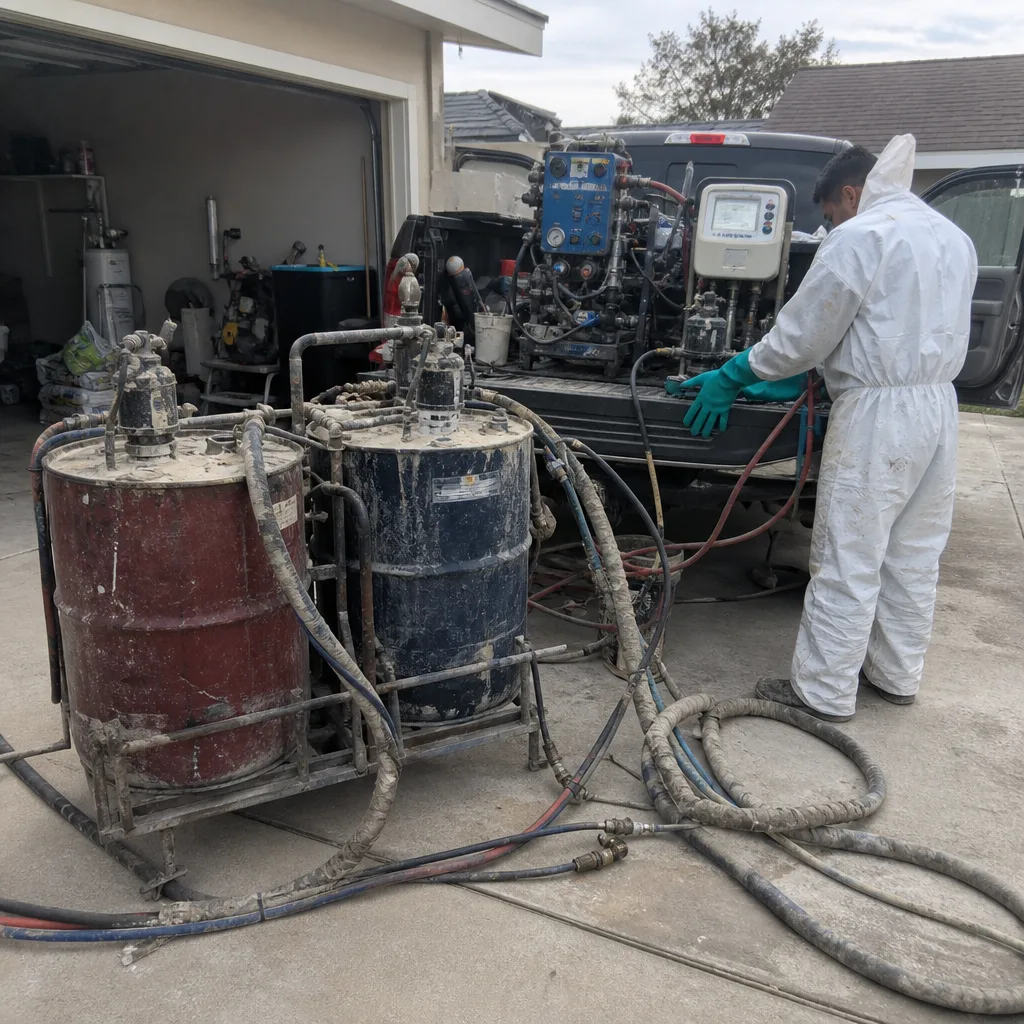
We install Icynene and Demilec spray foam systems, and we keep both open-cell and closed-cell material options available for Valley Glen jobs. Icynene’s closed-cell product delivers the high R-value per inch these shallow attics demand, while Demilec gives us a strong open-cell option where the budget calls for it. We also carry Spray Foam Insulation support materials and, for homes where foam isn’t the right fit, Valley Glen homeowners can look at our fiberglass and mineral wool options through Owens Corning and others. One shop, real material choices.
Common Spray Foam Insulation Problems We See in Valley Glen Homes
- Crushed original fiberglass batts. Decades of storage boxes, HVAC work, and foot traffic press 1950s batts down to an inch or less. Effective R-value drops to near zero, and the homeowner never sees it because the material still looks “there.”
- Unsealed can lights and top plates. The 1950s-60s tract homes here are full of can lights, and almost none are sealed. Hot attic air pours through these openings into living spaces, defeating even properly installed spray foam.
- Santa Ana wind ventilation issues. Poorly vented attics on low-slope roofs trap heat and moisture during Santa Ana events. Spray foam applied without balancing intake and exhaust vents can worsen condensation on the sheathing.
- Converted garage heat gain. Unpermitted garage conversions common in Valley Glen almost never include insulation. The ceiling and shared wall heat up all day and radiate into the room after sunset.
Pricing for Spray Foam Insulation in Valley Glen, CA
Here are the ranges we quote most often for Valley Glen work. Garage ceiling spray foam typically runs $1,800 to $3,400. Rim joist air sealing runs $900 to $1,700 on a standard ranch. A full attic spray with two inches of closed-cell on a 1,200-square-foot home lands between $4,800 and $7,200. Larger homes, deeper attics, and jobs requiring extensive air-sealing or debris removal push toward the $9,000 to $11,000 mark. What moves the number: attic depth, access, how much old material we have to remove, and whether you want open-cell or closed-cell. Call (833) 390-3099 and we’ll give you a specific number for your house, free.
We Also Serve Cities Near Valley Glen
Our crews cover the east San Fernando Valley and surrounding areas, including Van Nuys, Sherman Oaks, Encino, and North Hills. If you’re in one of those neighborhoods or just over the border from Valley Glen, we’ll bring the same material-first approach to your project. Call and ask about our schedule for your side of the Valley.
Serving Valley Glen, CA — Our Local Coverage Area
We’re based in the Valley Glen area and know this community well. Use the map below to see our service coverage — if you’re nearby, we can almost certainly help.
FAQs About Spray Foam Insulation in Valley Glen
No. Old fiberglass batts, especially the crushed, debris-filled material we find in Valley Glen attics, have to come out before spray foam goes in. The foam needs to bond directly to the attic deck, top plates, and framing to form an air seal. If you spray over old batts, you trap dust, rodent debris, and moisture under the foam and lose the adhesion that makes closed-cell work. We remove the old material, clean the deck, and then spray. Call (833) 390-3099 and we’ll tell you what’s actually under your attic floor.
It can if ventilation isn’t handled correctly, which is why we never spray a Valley Glen roof without checking the intake and exhaust balance first. The low-slope roofs and shallow attics here are prone to moisture issues during Santa Ana events when hot, dry air moves across the sheathing. Closed-cell foam acts as a vapor retarder and, applied properly with the right venting, actually reduces condensation risk. Applied wrong, it can trap moisture. This is exactly why we assess the whole roof assembly before quoting.
Spray foam air-seals, and fiberglass doesn’t. In Valley Glen’s summer, the biggest heat source isn’t conducted heat through the ceiling; it’s hot attic air moving through unsealed can lights, top plates, and wall chases. Closed-cell foam stops that air movement while also adding R-value. In a shallow attic where you can only fit a few inches of any material, two inches of closed-cell at R-13 outperforms eight inches of loose fiberglass at the same or lower effective R-value, because the fiberglass leaves the air leaks untouched. Call (833) 390-3099 for a real comparison on your house.
In most cases, yes. The heat you’re feeling comes through the uninsulated ceiling, the shared wall with the main house, and the rim joist band that’s almost certainly open to the attic. Spray foam on the garage ceiling deck and rim joists stops the bulk of that heat gain. We’ve seen Valley Glen converted garages drop from 10-plus degrees hotter to within 2 or 3 degrees of the main house after a single-day spray. Free estimates on this exact job: call (833) 390-3099.
For spray foam, we use Icynene and Demilec. Owens Corning makes excellent fiberglass and mineral wool products, but they aren’t a spray foam manufacturer. On Valley Glen ranch retrofits, Icynene closed-cell is our most common recommendation for shallow attics because of its high R-value per inch and its air barrier properties. Demilec open-cell is the right call when the roof pitch and budget point that direction. We’ll show you both and recommend based on your house.
If your Valley Glen home is fighting the East Valley heat with a 60-year-old attic, the fix starts with a look at what’s actually up there. Call (833) 390-3099 and ask for a free spray foam assessment. We’ll tell you what your house needs, what it doesn’t, and exactly what it costs.
Written by Nate Calloway, Owner at Fountain Valley Insulation, serving Valley Glen and the San Fernando Valley.