Spray Foam Insulation in Shadow Hills: What It Costs and Why Most Homes Here Need a Full Thermal Envelope, Not a Batts Top-Off
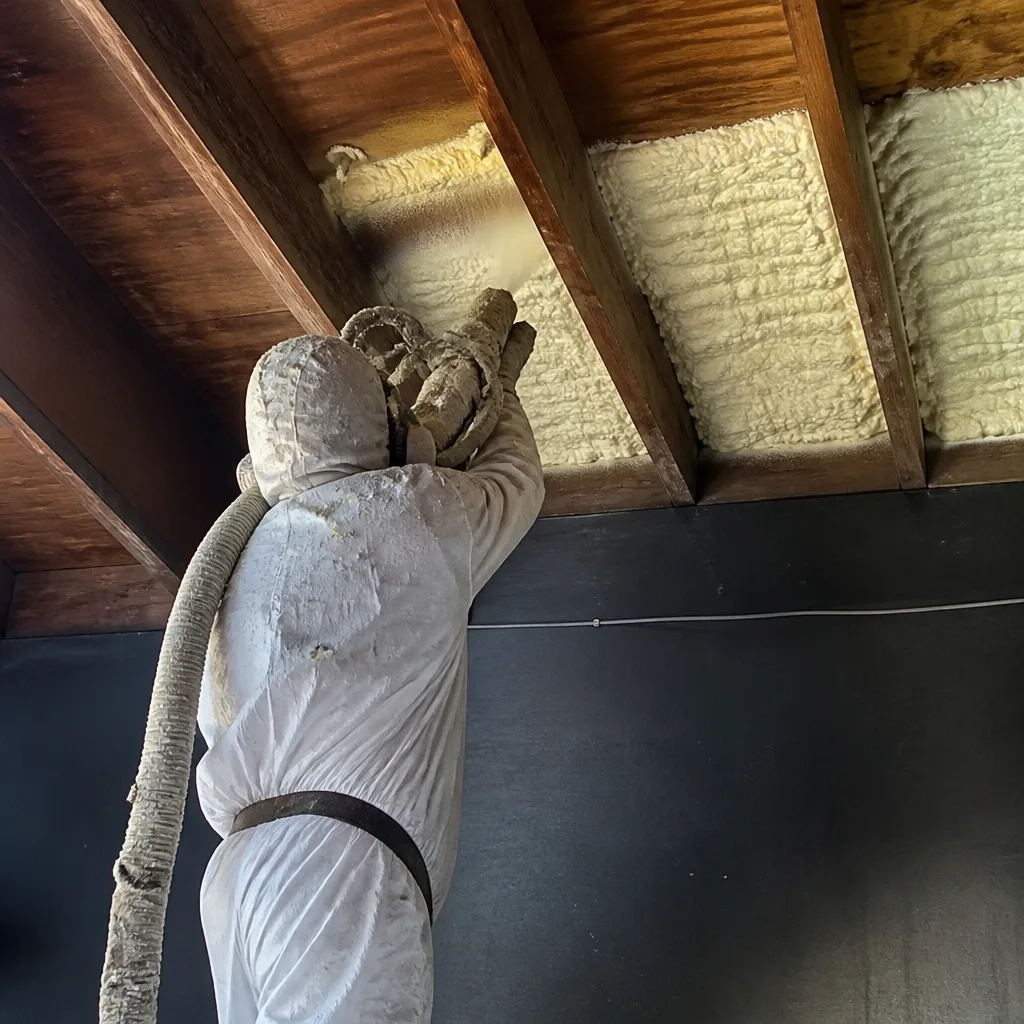
Spray foam insulation in Shadow Hills typically runs $4,800 to $14,200 for a full attic or roof deck application on a ranch-style home, with crawl space work landing between $2,400 and $6,800 and detached garage or barn projects between $1,900 and $5,400. Most Shadow Hills homes we see were built as weekend cabins on multi-acre lots, which means their attics and roof decks were never designed for full-time HVAC loads. That’s why our Spray Foam Insulation team treats almost every job here as a first-time thermal envelope, not a quick top-off.
Call (833) 390-3099 for a free estimate, and we’ll walk the property with you. We work throughout the 91040 zip code, from Sunland Boulevard up through the equestrian corridors near the Verdugo foothills.
- Full attic or roof deck spray foam in Shadow Hills: $4,800 to $14,200, based on square footage and whether the space is vented or unvented
- Crawl space spray foam in Shadow Hills: $2,400 to $6,800, depending on access clearance and whether we’re also air-sealing the rim joists
- Detached garage, barn, or guest structure: $1,900 to $5,400 per building, with multi-building discounts on acreage properties
- Why Shadow Hills is different: former weekend cabins with unvented attics, exposed beam ceilings, and outbuildings that each need their own thermal boundary
Why Fountain Valley Insulation Is Shadow Hills’s Preferred Spray Foam Insulation Company
We’re not a one-product contractor. We carry spray foam from Icynene and Demilec, two of the most recognized names in the category, alongside blown-in and batt options from brands most spray-foam-only crews don’t stock. That matters in Shadow Hills, where a detached barn off Sunland Boulevard might need a different material than the main house, and a west-facing low-slope roof deck needs a different foam depth than a shaded north wall. We match the material to the structure, not the other way around.
Nate Calloway leads our team, and he’s the one who signs off on every Shadow Hills estimate we send. When we look at a house in the 91040 zip code, we’re checking for the same things you live with: brutal San Fernando Valley afternoon sun on west-facing eaves, cold winter nights in the foothills, and critter pressure from surrounding horse properties. That local read is built into every quote.
Crawl Space Spray Foam Insulation in Shadow Hills
Crawl Space Spray Foam Insulation in Shadow Hills is often the single highest-impact upgrade we do on older ranch homes and owner-built structures from the 1960s and 1970s. Many of these crawl spaces were never sealed at the rim joist, and the temperature swings in the 91040 zip code pull outside air through gaps that let in dust from the surrounding horse properties and open hillsides. We apply closed-cell foam to the crawl space walls and rim joists, which blocks both the thermal leak and the air infiltration in one pass. On a standard 1,200 to 1,800 square foot crawl space under a Shadow Hills ranch, expect to pay $2,400 to $6,800, with tighter access adding to the labor.
Rim Joist Sealing on Older Ranch Homes
The rim joist is a band of exposed wood around the top of the crawl space wall, and it’s almost never sealed on homes from the 1950s through 1980s. We spray the rim joists from the interior, and on Shadow Hills acreage properties this also cuts down the dust and smell from adjacent stalls and corrals that gets drawn into the living space by stack effect.
Unvented Crawl Space Conversion
If you’re tired of musty air and cold floors in winter, converting the crawl space to an unvented, conditioned space with spray foam is the fix. We’ve done this on multiple properties near Shadow Hills where owners wanted the crawl sealed against both temperature swings and the rodent traffic that follows the horse feed and open hillsides.
Garage Spray Foam Insulation in Shadow Hills
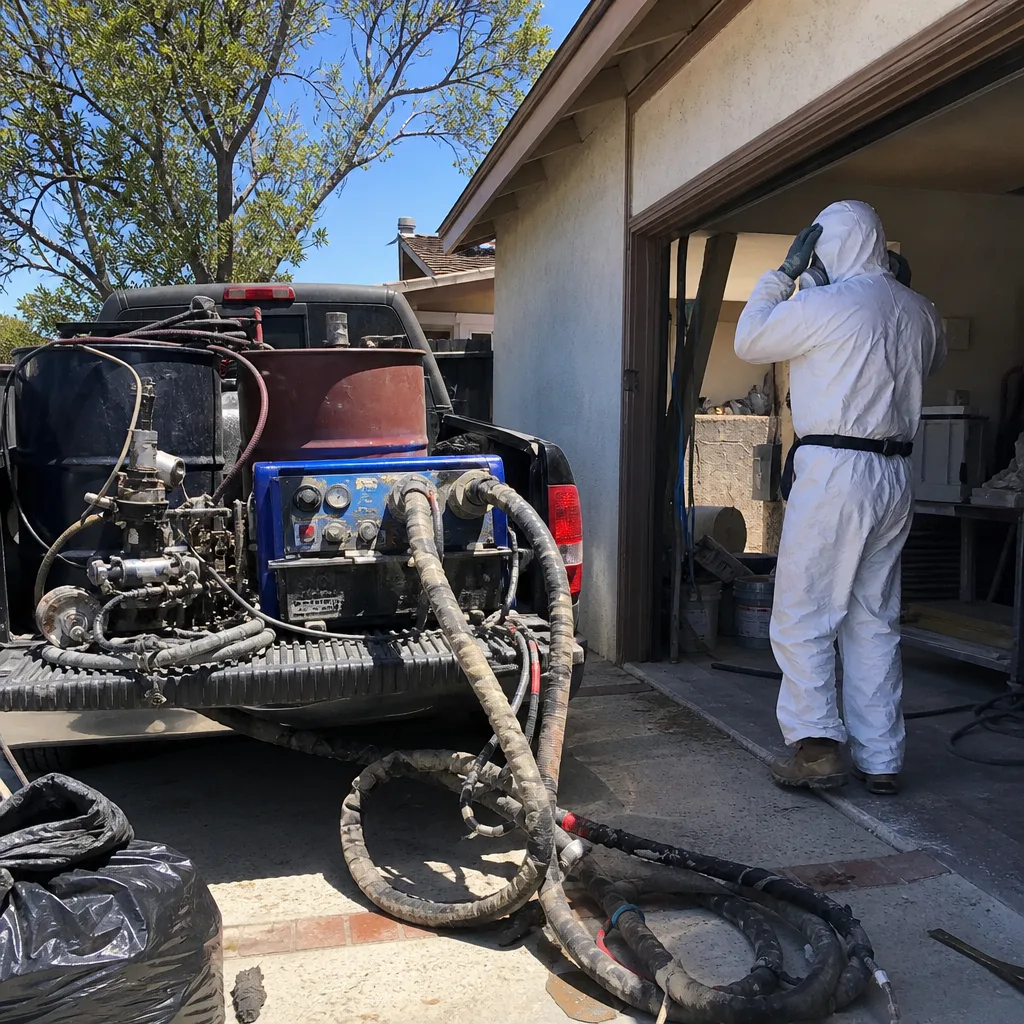
Garage Spray Foam Insulation in Shadow Hills goes beyond slapping foam between studs. Most garages here are detached, oversized, and opened to the elements every morning when you pull the truck out. That oversized vehicle door and the open framing above it create a separate thermal boundary from the main house, and it has to be treated as its own zone. We spray the walls and the ceiling cavity, then we air-seal around the door header, the man door, and any plumbing or electrical penetrations. A detached two-car garage in Shadow Hills typically runs $1,900 to $3,800, and a larger barn or shop with open framing can exceed $5,000.
Garage Ceiling Spray Foam for Shops and Barns
If you work in your garage or barn through a Shadow Hills summer afternoon, you know the ceiling radiates heat even after the sun drops. Closed-cell foam on the underside of that roof deck cuts the radiant load, and the ceiling stays cool enough to work under. We do this on detached studios and guest structures too, where thin open-cell just won’t hold up to the direct sun on a west-facing low-slope roof.
Detached Garage Thermal Boundary
Insulating a detached garage as if it were attached to the house is a mistake we see often in Shadow Hills. The garage has its own air leaks and its own thermal profile, and the door itself is the biggest leak when it faces the afternoon sun. We recommend treating each outbuilding separately, which is why our estimates on acreage properties often list multiple line items rather than one lump sum.
Trusted Brands We Service in Shadow Hills
We install Icynene closed- and open-cell foam and Demilec closed-cell foam across Shadow Hills homes, barns, and guest structures. We also stock CertainTeed and Rockwool products for projects where a hybrid approach makes more sense than pure spray foam, like supplementing an unvented attic with mineral wool to meet a specific fire-rating on an attached wall. We keep parts and material lead times short for Shadow Hills customers, so we’re often in and out in one or two trips on a standard ranch home. Ask us why we carry Rockwool, spray foam, and recycled fiber; most local crews carry none of them.
Common Spray Foam Insulation Problems We See in Shadow Hills Homes
- Spray-foamed-over rodent runs and gaps. Homes surrounded by horse properties and open hillsides have wildlife pressure that coastal LA never sees. If the first contractor skips air-sealing those runs before spraying, the critters carve a new channel through the foam within a season, and you’ve paid for insulation that no longer insulates.
- West-facing low-slope and exposed-beam roof decks baking in the foothills sun. A thin open-cell application that works in a coastal climate will shrink back and off-gas here. Closed-cell foam on the underside of that roof deck is the only approach that holds up under full afternoon exposure.
- Detached barns and guest structures insulated like attached rooms. These outbuildings have separate thermal boundaries and different air leakage profiles. Oversized vehicle doors and open framing mean the foam strategy has to change, and the standard one-thickness-for-everything approach leaves the structure hotter than before.
- Original 1960s and 1970s fiberglass batts that have slumped, tunneled, and shifted. We find batts that have slid down the rafter bays on older ranch homes, and the thermal gaps they leave are worse than no insulation because they make the owner think the house is insulated. New foam has to go up against a properly sealed surface, not over the old, compacted material.
Pricing for Spray Foam Insulation in Shadow Hills, CA
A full attic or roof deck spray foam job on a Shadow Hills ranch home runs $4,800 to $14,200. Crawl space work lands between $2,400 and $6,800. Detached garages, barns, and guest structures typically fall between $1,900 and $5,400 per building, and on multi-building acreage properties we often reduce the per-building cost when we can complete the work in a single visit. The biggest cost drivers are square footage, whether the attic is vented or unvented, access clearance in crawl spaces, and whether we’re also air-sealing rim joists, top plates, and penetrations before the foam goes in. Estimates are free, and we’ll give you a line-by-line breakdown for every building on the property. Call (833) 390-3099 to schedule a walk-through.
Shadow Hills Is Different. Here’s What That Means for Spray Foam.
Shadow Hills is a semi-rural, equestrian-zoned enclave of large-lot custom homes and horse properties tucked into the Verdugo Mountains foothills. The housing stock is dominated by 1950s through 1980s custom and owner-built ranch-style homes on multi-acre lots, many with vaulted or exposed-beam ceilings, additions of mixed vintage, detached garages, barns, and guest structures. That means a standard tract-home insulation template doesn’t apply here, and the work often spans multiple disconnected buildings, each with its own thermal boundary and its own air leakage profile.
Because so many Shadow Hills homes were originally built as seasonal weekend retreats, their unvented attics and exposed-beam ceilings were never designed for full-time HVAC loads. Spray foam here is often the first real thermal envelope the structure has ever had. And it usually has to be closed-cell foam in the roof deck rather than a top-off of the old batts. The roof deck carries the full force of San Fernando Valley radiant heat through the summer, and it has to hold up against cold foothills nights in winter. One material, applied correctly, handles both. That’s the core of what we do for Spray Foam Insulation in Shadow Hills.
On a multi-acre horse property off Sunland Boulevard, our crew opened an unvented attic above a 1970s owner-built ranch with exposed-beam ceilings and found the original fiberglass batts slumped and tunneled by rodents from the adjacent corral. We air-sealed the top plates and penetrations, then sprayed 2 inches of closed-cell Icynene against the roof deck to lock out the radiant heat and critter access in one trip. The owner stopped running the AC through the afternoon, and the beams stayed exposed and visible below. That job is a good picture of what spray foam in Shadow Hills actually requires: sealing first, then foam, then done.
We Also Serve Cities Near Shadow Hills
We work throughout the northeast San Fernando Valley and the Verdugo foothills. In addition to Shadow Hills, our spray foam crews cover Shadow Hills neighbors in Sunland, Tujunga, La Crescenta-Montrose, and Burbank. Same team, same brands, same one-trip approach.
Serving Shadow Hills, CA — Our Local Coverage Area
We’re based in the Shadow Hills area and know this community well. Use the map below to see our service coverage — if you’re nearby, we can almost certainly help.
FAQs About Spray Foam Insulation in Shadow Hills
Yes, and it’s the most common configuration we work on in the 91040 zip code. We spray closed-cell foam directly against the underside of the roof deck, also called a hot roof assembly, which turns the unvented attic into conditioned space. The exposed beams below stay fully visible, and the foam is applied above them, so the rustic look you want inside the house is untouched. Most of these attics also need air-sealing at the top plates and any penetrations before we spray. Call (833) 390-3099 and we’ll inspect your specific attic and give you a written quote.
Because most Shadow Hills homeowners live next to horse properties, corrals, or open hillsides, and the wildlife pressure is real. Gopher and pack rat runs, squirrel tunnel lines, and air gaps around top plates get hidden by insulation, but the animals just chew a new path through the foam if we don’t seal first. We seal the original entry runs and penetrations, then the foam locks the envelope so the structure stays tight. This is standard practice for us on every Shadow Hills project, and we’ll walk you through the sealed areas before the foam goes on.
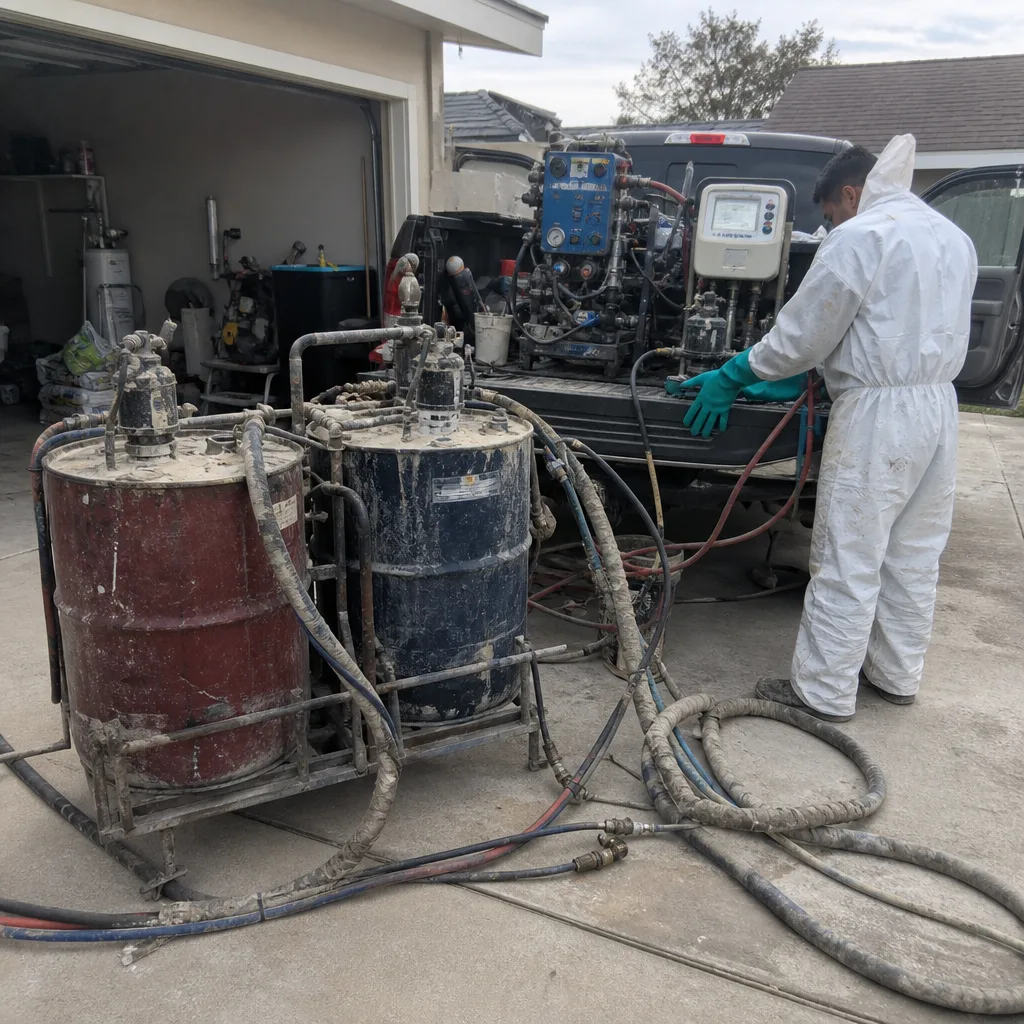
Yes. We treat each outbuilding as its own thermal zone, not as an extension of the main house. That changes the foam thickness, where we seal, and how we handle the oversized vehicle doors. On acreage properties with multiple buildings, we schedule the work so we can often complete several structures in one visit, which reduces the per-building cost. Call for a line-by-line estimate on each building.
Yes. Closed-cell spray foam creates a continuous air and thermal barrier with an R-value of roughly R-6.5 to R-7 per inch, and it blocks both the radiant heat gain from the San Fernando Valley sun and the real heating demand on cold foothills nights. That’s the combination most coastal spray foam approaches don’t have to deal with, and it’s exactly why we spec closed-cell on Shadow Hills roof decks rather than a lighter open-cell build.
In most cases, no. The old batts have usually slumped, compacted, or been tunneled by rodents, and the gaps they leave mean the foam would be sealing over a broken thermal layer. We remove the old material, air-seal the framing and penetrations, then apply the foam directly against the roof deck or attic floor. This is the right sequence for most of the 1950s through 1980s custom and owner-built homes in Shadow Hills.
Ready to Talk About Your Shadow Hills Property?
If you’re tired of running the AC through every summer afternoon and still feeling the heat radiate down from the ceiling, we’ll walk the property with you and show you exactly what’s happening, what we’d seal, and what we’d spray. Estimates are free, and we’ll price each building separately so you know what you’re paying for. Call (833) 390-3099 or reach out through the site to set up a visit.
Written by Nate Calloway, Owner at Fountain Valley Insulation, serving Shadow Hills and the northeast San Fernando Valley.