
Fast, Reliable Spray Foam Insulation Across Lomita
Spray foam insulation in Lomita typically runs $2.50 to $6.50 per square foot for open-cell and $3.50 to $9.00 per square foot for closed-cell, with most whole-attic jobs landing between $3,800 and $9,500 depending on foam type, access, and whether we’re removing old material first. We usually schedule Lomita jobs within 3 to 5 business days. The real question for Lomita homeowners isn’t just price. It’s whether the foam will hold up against the marine layer that rolls in off the coast most nights of the year. We’ve been working in the 90717 zip code long enough to know that answer matters more here than almost anywhere else in the South Bay. Call us at (833) 390-3099 for a real conversation about your attic, not a sales pitch.
Why Fountain Valley Insulation Is Lomita’s Preferred Spray Foam Insulation Company
Lomita’s housing stock asks more of an insulation contractor than newer tracts in Torrance or Redondo Beach do. These are not uniform, builder-grade attics. They are 70-plus-year-old voids with low-pitch sheathing, cramped eave lines, and decades of accumulated retrofit decisions, some good, some not. We know the difference. Homeowners in Lomita tell us they appreciate that we look at the roof before we quote the foam. A tight budget matters, but a rotted deck matters more.
Nate Calloway, who runs Fountain Valley Insulation, built the company around a simple idea: match the material to the house, not the other way around. We carry Spray Foam Insulation systems from Icynene and Demilec, two of the most tested names in the category, alongside Rockwool and GreenFiber for homes where spray foam is not the right answer. That flexibility lets us tell a Lomita homeowner when closed-cell foam is worth the premium, and when better ventilation plus blown-in fiber is the smarter dollar. Most contractors only sell what is on the truck. We keep eight brands available so the conversation stays honest.
Response time to Lomita is straightforward. We dispatch from Fountain Valley and can usually have a crew on site within 3 to 5 business days for quotes and scheduled work. For urgent moisture problems, like a ceiling stain spreading after a wet marine-layer stretch, call and we will tell you honestly whether it can wait a few days or needs attention sooner.
Spray Foam Insulation Contractors in Lomita
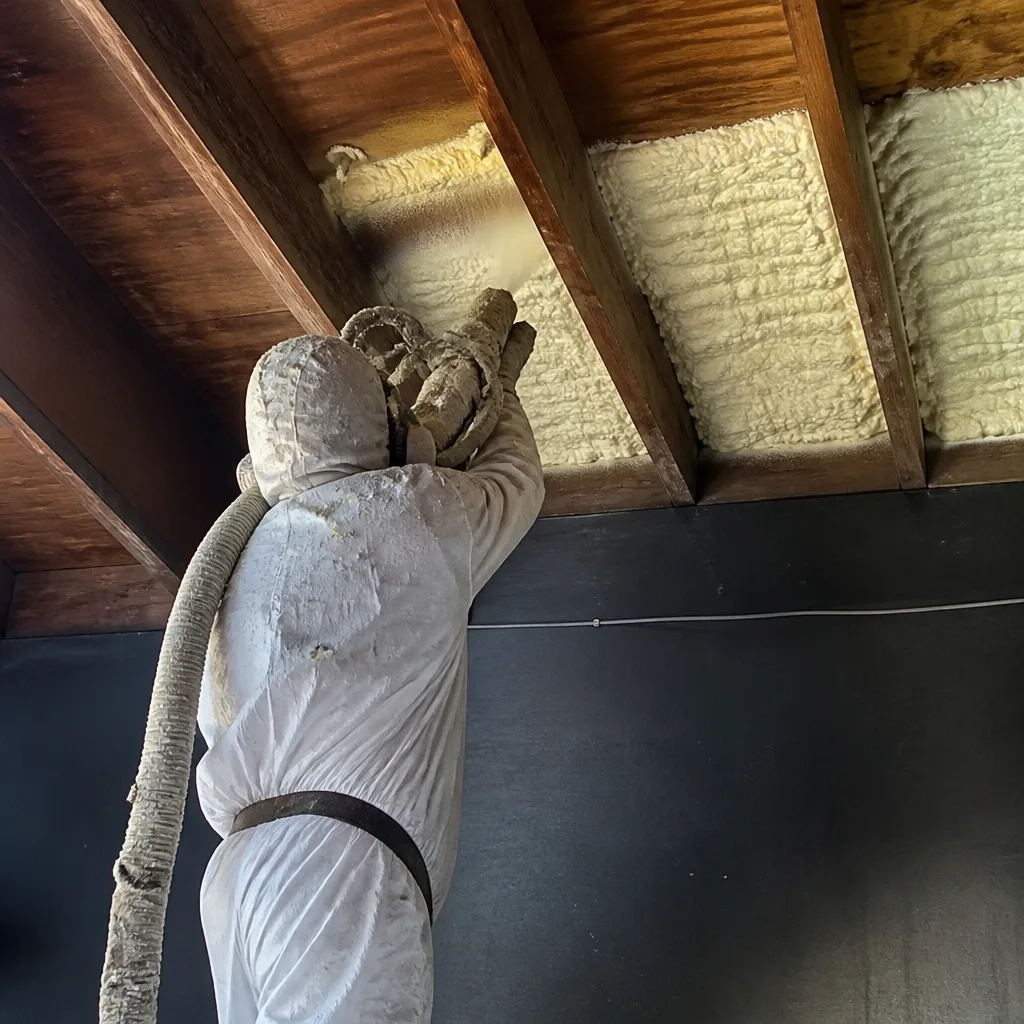
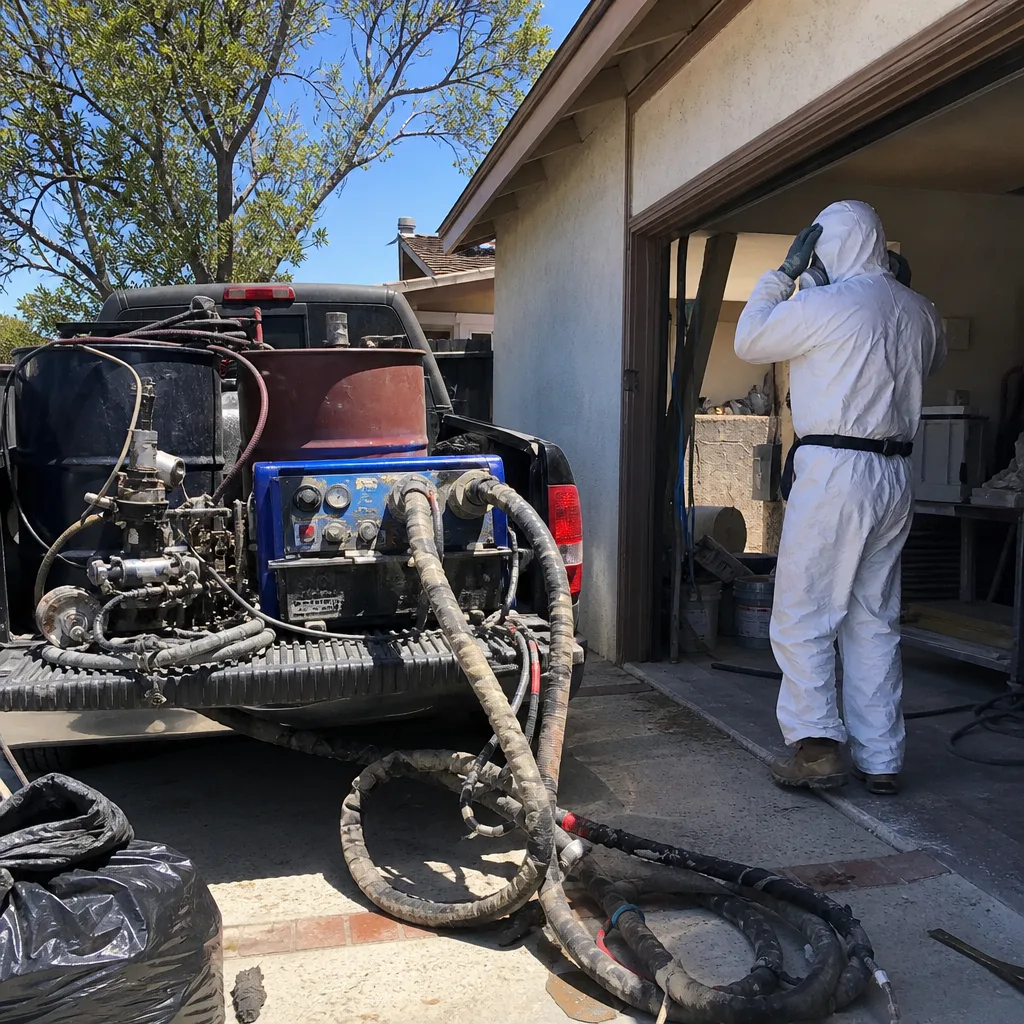
Spray Foam Insulation Contractors in Lomita handle a specific kind of retrofit: dense, post-war tract attics with minimal eave venting and roof decks that stay cool and damp much of the year. The job involves accessing the attic or wall cavity, removing or encapsulating failed material, preparing the surface, and applying open-cell or closed-cell foam at a controlled thickness. For a typical 1950s Lomita tract house with a 750 to 1,000 square foot attic, closed-cell foam applied to the roofline runs $5,000 to $8,500. Open-cell runs less, $3,200 to $5,500, but it absorbs moisture and is not always right for Lomita’s humidity. A good contractor here will tell you that before you sign anything.
Closed-Cell for Rim Joists and Roof Decks
In Lomita, rim joist sealing is one of the highest-return spray foam jobs we do. The cool, humid air that sits under post-war pier-and-beam crawl spaces condenses against rim boards. Closed-cell foam stops that transfer and adds structural rigidity. Most rim joist packages in the 90717 zip run $900 to $2,400 depending on linear footage and access.
When Walls Need Attention, Not Just Attics
Many Lomita stucco homes still have empty or barely insulated wall cavities. Open-cell foam can fill those bays without tearing off the stucco, but only when drainage and paint systems are in good shape. Closed-cell is safer for west-facing walls that take driving rain off the ocean. We inspect the outside before we decide.
Spray Foam Attic Insulation in Lomita
Spray Foam Attic Insulation in Lomita means working inside a roof assembly that behaves differently than attics just five miles inland. The marine layer sits over these low-pitch roofs much of the year. Foam applied directly to the sheathing creates an air barrier, yes, but it also traps moisture unless we add ridge and soffit venting above the foam, or install a ventilated air channel. That is the difference between a dry attic and a rot problem that shows up three years later. A full attic spray foam job with ventilation upgrades in Lomita typically runs $5,500 to $9,500 for closed-cell, or $3,800 to $6,200 for open-cell with proper air channels.
The Ventilation-First Approach
Before we quote foam for a Lomita attic, we look at the eave lines and ridge venting. Many of these roofs have minimal or nonexistent soffit venting. Closed-cell foam will seal the attic beautifully, but without added ridge and soffit ventilation, trapped moisture has nowhere to go. We will not sell foam without addressing that. It is the single most common mistake we see from competitors.
Removing Wet Fiberglass Before Foaming
Spraying over damp, compressed original fiberglass is a shortcut that fails in Lomita’s climate. The moisture stays trapped and migrates. We remove failed batts, inspect the sheathing, and only then apply foam. The cost of removal adds $1,200 to $2,200 to a typical attic job, but skipping it costs more later.
Trusted Brands We Service in Lomita
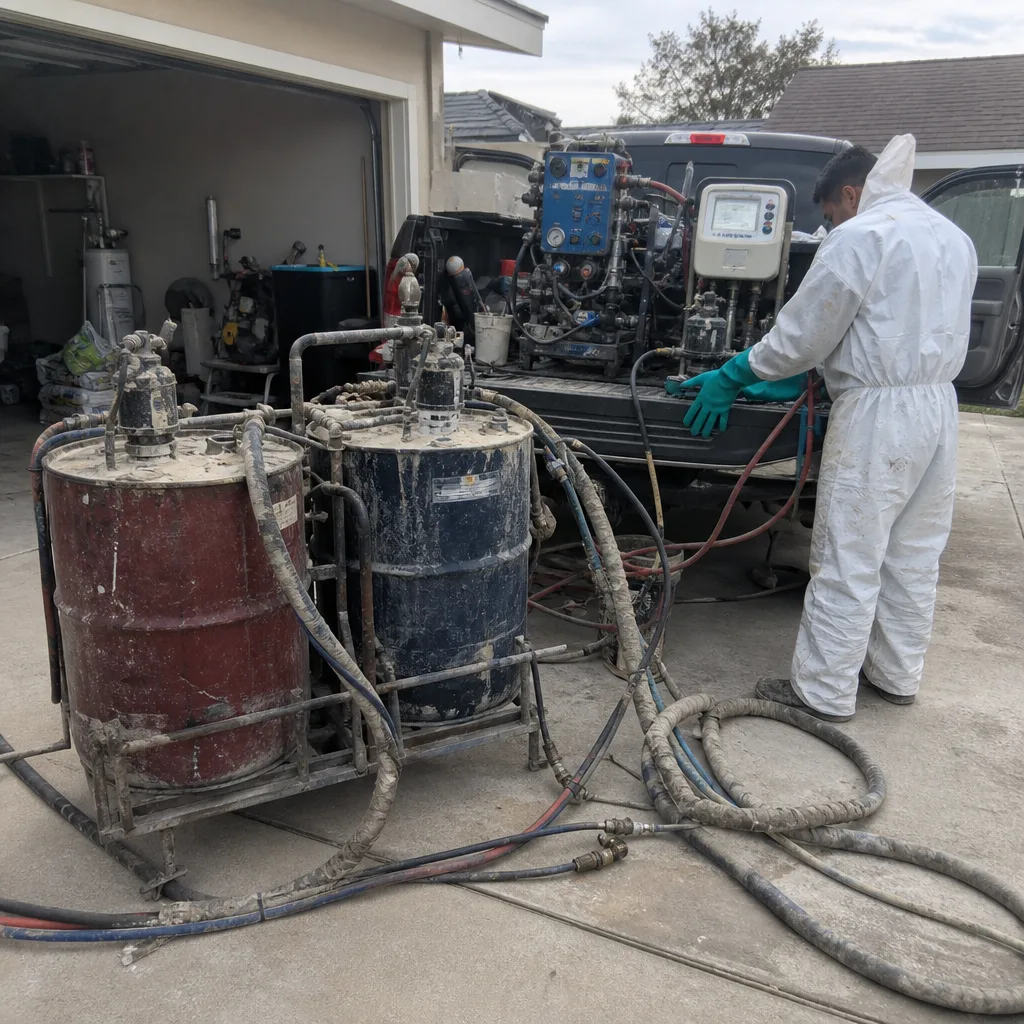
We install and service spray foam from Icynene and Demilec, two brands most general contractors do not carry. Icynene open-cell foam works well for interior sound and air-sealing applications in Lomita attics where ventilation has been properly added. Demilec closed-cell foam is our go-to for roof decks, rim joists, and exterior walls that face the ocean air. For homeowners who want a non-foam option with serious fire and moisture resistance, we also carry Rockwool mineral wool. Keeping these materials available for Lomita jobs means shorter turnaround and fewer delays when a specific product is the right call.
Common Spray Foam Insulation Problems We See in Lomita Homes
- Closed-cell foam sprayed directly to low-pitch sheathing without added venting. This is the single biggest problem in Lomita. The foam seals so well that marine-layer condensation trapped above it soaks the sheathing and rots it from the outside in. We see this on houses across the 90717 zip, especially on north-facing roof planes that never dry out.
- Foam applied over compressed, damp original fiberglass. Many 1950s tract attics still have the original batts. When they are damp and squashed flat, spraying over them seals in the moisture. Within a year or two, it migrates into wall cavities and shows up as peeling paint or a musty smell in the bedrooms below.
- Open-cell foam on stucco walls with cracked paint or failed weep screeds. Open-cell absorbs moisture. On Lomita’s west and north exposures, cool coastal air drives condensation into the foam layer and it loses R-value. Closed-cell or a drainage fix is the right call on those walls.
- Foam installed with no attention to the bathroom and kitchen exhaust fans. Lomita’s older tract homes often vent bath fans into the attic, not outside. Once you seal the attic with foam, that warm moist air has nowhere to go. We see condensation forming on the underside of the foam within months. The fix is ducting those fans to the outside before or during the foam install.
Pricing for Spray Foam Insulation in Lomita, CA
Here are realistic ranges for Lomita’s market. Closed-cell whole-attic spray foam with ventilation upgrades runs $5,500 to $9,500 for a typical 1950s tract house. Open-cell attic foam with air channels runs $3,800 to $6,200. Rim joist sealing runs $900 to $2,400. Garage ceiling spray foam, where the goal is separating a hot garage from living space above, runs $1,800 to $3,600. Roof deck foam on a low-pitch Lomita roof with added venting runs $6,000 to $10,500. The variables are square footage, access, whether we are removing old material, and whether the roof needs ventilation fixes first. We give free estimates. Call (833) 390-3099 and we will give you a real number, not a range pulled from a brochure.
One Lomita-specific note: if your roof already shows signs of moisture damage, like dark stains on the sheathing or a sagging deck, Reflectix repair in Lomita comes before the foam. That adds cost, but it also protects the foam investment. We will tell you if we see it.
We Also Serve Cities Near Lomita
Fountain Valley Insulation works across the South Bay and Harbor Gateway. In addition to Spray Foam Insulation in Lomita, we install and service spray foam in Torrance, Rolling Hills Estates, West Carson, and Manhattan Beach. Each of those cities has its own roof and moisture profile, and we adjust our ventilation and foam recommendations accordingly. Call us and tell us where you are.
Serving Lomita, CA — Our Local Coverage Area
We’re based in the Lomita area and know this community well. Use the map below to see our service coverage — if you’re nearby, we can almost certainly help.
FAQs About Spray Foam Insulation in Lomita
Because air barriers do not stop moisture from condensing on a cold roof deck. Lomita’s marine layer keeps roof sheathing cool and damp for long stretches, and when foam seals the attic, moisture trapped above the foam has no air path to dry out. We add ridge and soffit vents, or install an air channel between the foam and the sheathing, to give that moisture a way out. Without it, closed-cell foam can actually accelerate sheathing rot in a Lomita attic. Call (833) 390-3099 if you want us to look at your roof venting before you commit to foam.
No, not safely. If the original fiberglass is dry and clean, we still remove it in a retrofit because it prevents the foam from bonding to the sheathing and creates voids. In Lomita’s climate, that fiberglass is often damp or compressed from decades of marine-layer moisture, and foaming over it seals that moisture in permanently. We remove failed material first, inspect the deck and wall cavities, then apply foam to a clean surface. It costs more up front and saves the structure later.
Closed-cell foam is the safer choice for Lomita roof decks and exterior walls. It is naturally moisture-resistant and adds structural strength, which matters on low-pitch post-war roofs that see long damp stretches. Open-cell foam absorbs water and works in Lomita only when ventilation has been properly upgraded and the foam is protected from direct moisture contact. We recommend closed-cell from Demilec for most Lomita roof deck and rim joist work, and open-cell from Icynene for interior air sealing where moisture is not a concern. Call us for a specific recommendation for your house.
We add ventilation before we add foam. That usually means widening or adding soffit vents, installing a continuous ridge vent, and sometimes cutting in an air channel above the foam line. On the tightest Lomita attics where eave access is limited to a few inches, we may recommend closed-cell foam on the attic floor instead of the roofline, paired with Rockwool batts. That keeps the thermal boundary at the ceiling and avoids sealing the roof assembly entirely. The right call depends on your roof pitch, eave depth, and whether you use the attic for storage.
Yes, and it will also reduce the musty smell that tends to settle into older Lomita tract houses in spring and early summer. Closed-cell foam stops the cool, humid attic air from circulating down into your living space, which is a bigger comfort issue here than extreme heat. Most Lomita homeowners we work with notice a drier, more stable indoor feel within two to three weeks of a full attic foam and ventilation job, especially in the rooms directly under the roof.
Written by Nate Calloway, Owner at Fountain Valley Insulation, serving Lomita and the South Bay.