
Fast, Reliable Spray Foam Insulation Across Lakeland Village
Spray foam insulation in Lakeland Village is rarely a simple top-up job. Most of the homes here, especially the older lake cottages and ranch houses built in the 1960s and 1970s, were never properly insulated to begin with. That means we’re often filling bare wall cavities and shallow attic spaces from scratch, not adding a few inches over old fiberglass. Our crews work throughout the 92530 ZIP and the streets around Grand Avenue and Lakeshore Drive, and we know what these older wood-frame homes need to handle Inland Southern California summers. If you’re tired of rooms that spike past 90°F by mid-afternoon, call us at (833) 390-3099 for a free estimate.
Why Fountain Valley Insulation Is Lakeland Village’s Preferred Spray Foam Insulation Company
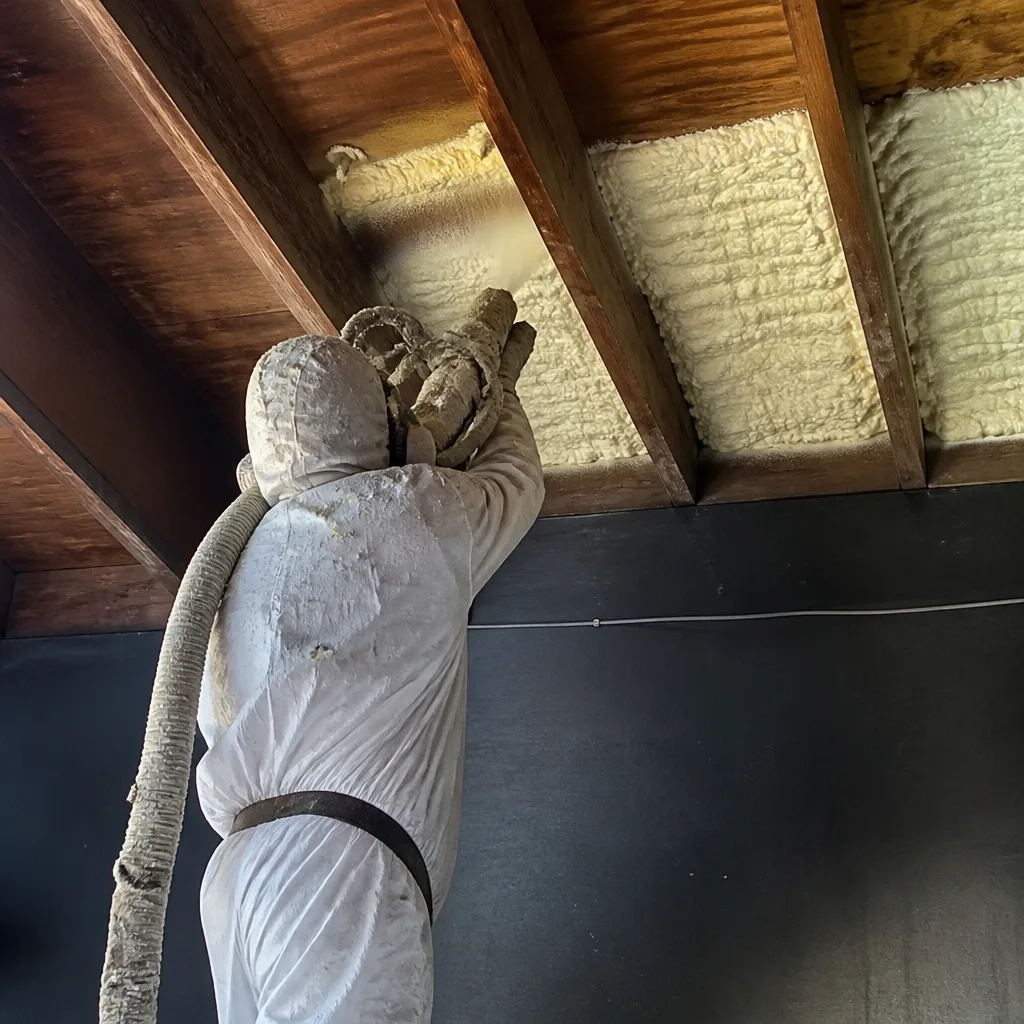
We carry eight manufacturer brands, but two matter most in Lakeland Village: Icynene and Demilec. These are the closed-cell and open-cell spray foam lines we use in older lake homes because they bond well to aged wood framing and handle the moisture conditions common near Lake Elsinore. Most insulation contractors in this area push one product. Nate Calloway built Fountain Valley Insulation around the idea that the material should match the house, not the other way around. If a 1968 cottage needs a full cavity fill, we spec closed-cell. If a homeowner wants to keep the attic usable for storage, we might recommend open-cell on the roofline. That’s a decision we make with you, not for you.
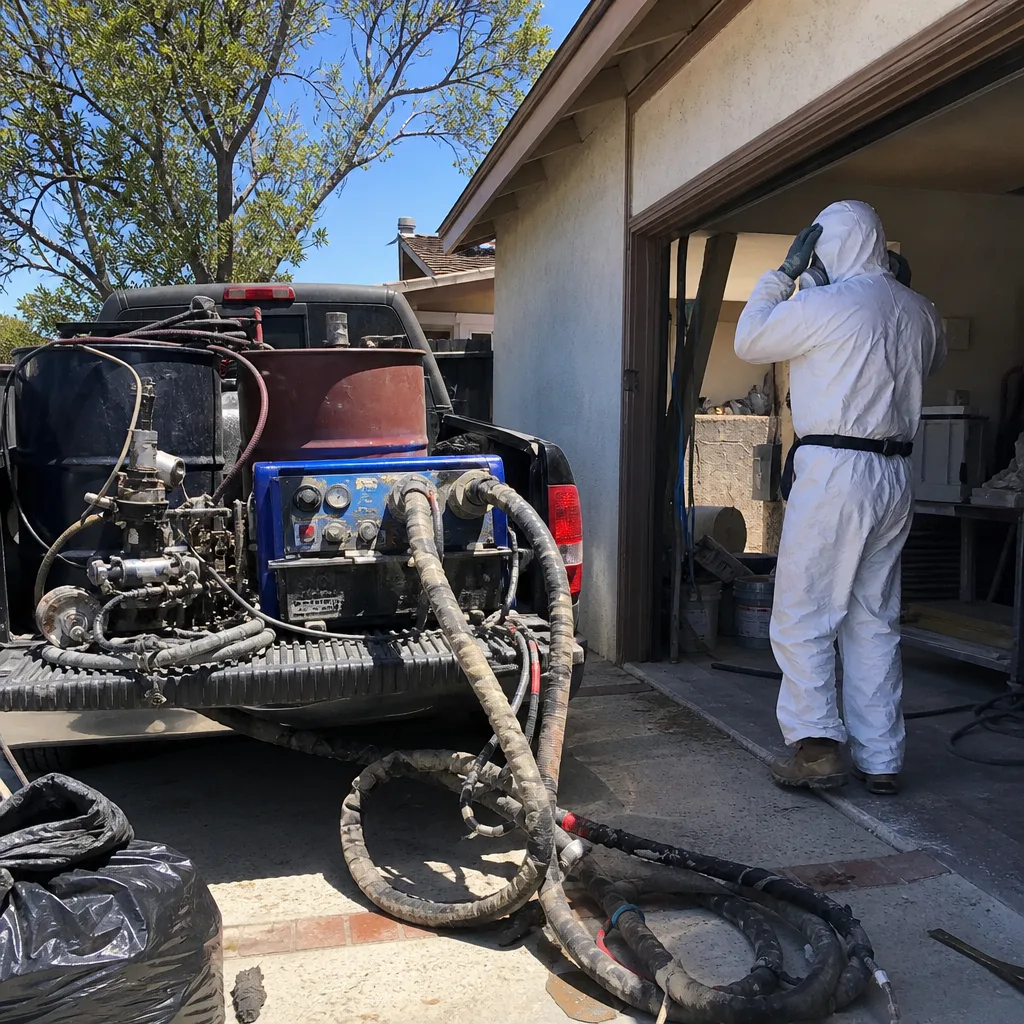
Our Spray Foam Insulation team works in Lakeland Village regularly, and we’re familiar with the specific wall assemblies and attic configurations these older homes present. We also install blown-in and attic insulation when those methods genuinely fit the situation, but for many of the uninsulated cabins here, spray foam is the only way to hit modern R-values without rebuilding walls. You won’t get a one-size-fits-all recommendation from us.
Spray Foam Wall Insulation in Lakeland Village
Spray Foam Wall Insulation in Lakeland Village usually means retrofitting a house that was built without insulation. Many of these lake cottages went up as seasonal retreats, so the exterior walls are nothing more than studs, sheathing, and siding. We’ve opened walls along Lakeshore Drive and in the neighborhoods east of Grand Avenue and found bare 2×4 cavities with maybe a thin, failing layer of kraft-faced fiberglass from a decades-old remodel. The job involves air-sealing first, then filling the cavities with closed-cell foam. For a typical single-story ranch in the 92530 ZIP, wall cavity spray foam runs $2,800 to $5,200 depending on wall area and access.
Air Sealing Before Foam
In old lake cabins, the sill plate is often the leakiest part of the wall. We’ve seen daylight at the bottom of the stud bays. Spraying foam into an unsealed cavity traps moisture against old wood, which is why we seal the sill and rim joist before filling walls. This step matters more in Lakeland Village than it does in newer subdivisions, because these homes were built for summer use and never detailed for year-round comfort.
Closed-Cell in 2×4 Walls
Most 1960s and 1970s ranch homes here have 2×4 framing. Closed-cell foam gives you R-6.5 to R-7 per inch, which means a 2×4 cavity can reach R-13 to R-14 in the wall depth you already have. That’s roughly twice what you’d get from fiberglass batts in the same space. For homeowners close to the lake, closed-cell also adds a measure of moisture resistance that open-cell doesn’t provide.
Rim Joist Spray Foam in Lakeland Village
Rim Joist Spray Foam in Lakeland Village is one of the most overlooked fixes in these older wood-frame homes. The rim joist, the band of framing where the floor meets the foundation wall, is usually uninsulated and hidden behind soffits or exterior siding. In lake cottages, that gap lets hot air pour into the crawlspace or basement during summer, and cold air creep in on winter nights. Sealing and insulating rim joists with closed-cell foam typically costs $900 to $1,800 for a single-story home, depending on linear footage and access.
Why Rim Joists Fail in Older Cottages
Original construction from the 1960s and 1970s rarely included rim joist insulation. Builders assumed a seasonal cabin didn’t need it. The result is a continuous thermal bypass around the entire perimeter of the house. Even if your walls are newly foamed, an uninsulated rim joist undercuts the whole job. Our crews find this on nearly every retro we do near Lake Elsinore.
Crawlspace and Sill Work
Many Lakeland Village homes sit on raised foundations with vented crawlspaces. That’s actually good news for rim joist access, because we can reach the band joist from underneath without tearing out drywall. We spray from the subfloor down to the sill plate, then seal any gaps around plumbing and electrical penetrations. The improvement in floor temperature alone usually surprises homeowners.
Trusted Brands We Service in Lakeland Village
For spray foam work in Lakeland Village, we install Icynene and Demilec products. Both are names homeowners might not recognize unless they’ve researched insulation, but they’re two of the most established brands in the spray foam category. We also carry Rockwool mineral wool and CertainTeed fiberglass for situations where spray foam isn’t the right call, like certain wall retrofits or batt applications. Because we stock materials for the 92530 area, we can typically schedule Lakeland Village jobs without the multi-week lead times some contractors quote. Ask us why we carry Icynene and Demilec, most local contractors carry none of them. We match the material to your home, not the other way around.
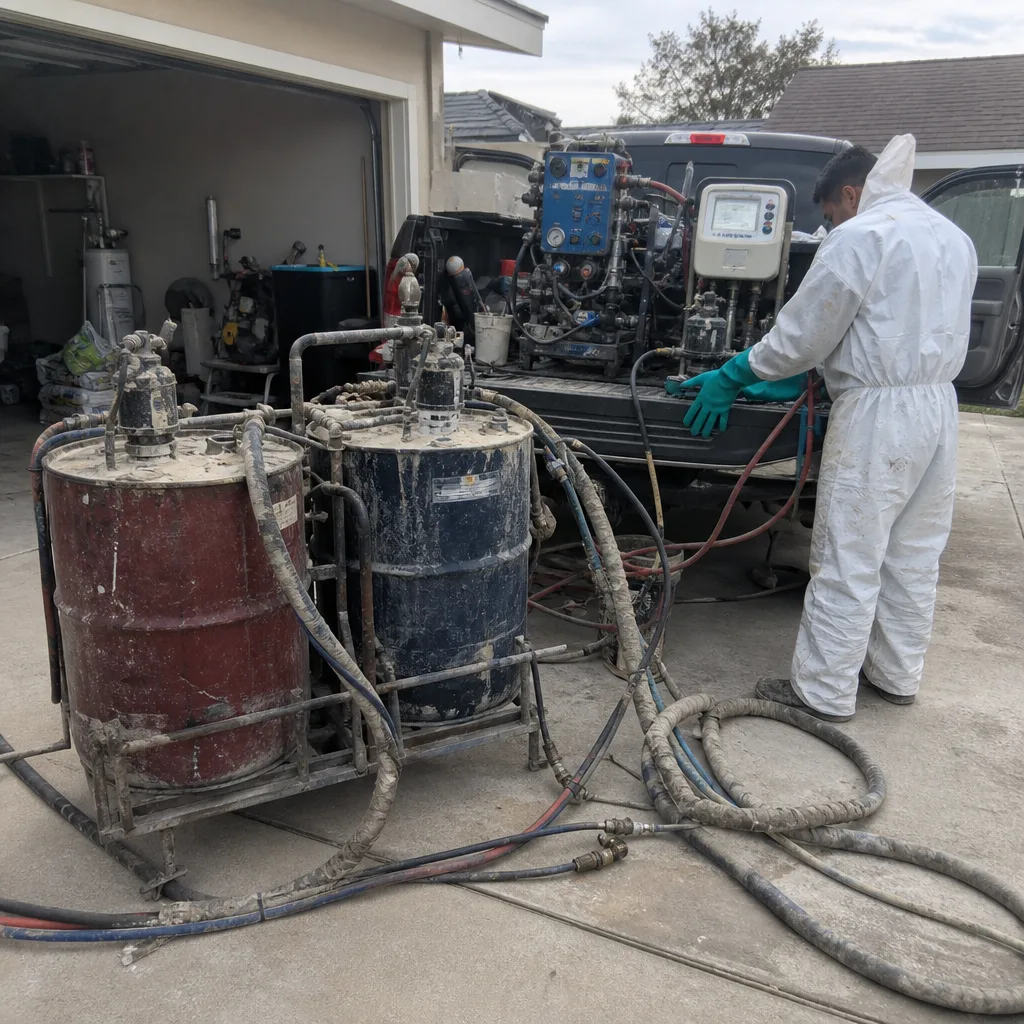
Common Spray Foam Insulation Problems We See in Lakeland Village Homes
- Foam applied over unsealed stud bays. We’ve corrected jobs where foam was sprayed directly over bare studs without air sealing at the sill and rim joist first. Moisture gets trapped against old wood, and in some cases it’s worse than no insulation at all.
- Shallow attics under-insulated by default. The 1960s and 1970s ranch layouts here often have 2×4 or 2×6 attic joists. Blown fiberglass can’t reach code-required R-values in that depth, so closed-cell foam on the roofline is the practical way to hit the numbers.
- Uninsulated rim joists hidden behind soffits. Nearly every older lake cottage we inspect has bare rim joists. It’s a thermal bypass that undermines wall insulation and makes floors cold in winter.
- Daylight at the sill plate. In several homes along the northwest shore of Lake Elsinore, we’ve found gaps wide enough to see through between the foundation and the framing. Air sealing here is step one before any foam goes in.
On a 1968 lake-cottage remodel near Lake Elsinore’s northwest shore in the 92530 ZIP, our crew opened an exterior wall to find bare studs and a single layer of failing kraft-faced fiberglass, with daylight visible at the sill plate. We air-sealed the framing and rim joist with closed-cell spray foam before filling the 2×4 cavities, then used open-cell foam in the shallow attic deck to reach code without lowering headroom. The homeowner reported the west-facing rooms holding temperature through a 104°F afternoon instead of spiking by mid-day.
Pricing for Spray Foam Insulation in Lakeland Village, CA
Spray foam pricing in Lakeland Village runs higher per square foot than fiberglass, but the material does more per inch. Here’s what homeowners in the 92530 ZIP should expect:
- Wall cavity spray foam: $2,800 to $5,200 for a typical single-story ranch
- Rim joist spray foam: $900 to $1,800 for a standard raised foundation
- Attic roofline spray foam: $3,200 to $6,500 depending on attic area and access
- Garage ceiling spray foam: $1,100 to $2,400 for a single or double bay
What moves the number is access, not square footage alone. A lakefront home with a tight crawlspace and low attic clearance costs more to work in than a ranch with a full-height foundation. We quote honestly and walk you through the line items. Call (833) 390-3099 for a free estimate, we’ll measure and give you a number you can plan around.
We Also Serve Cities Near Lakeland Village
Fountain Valley Insulation serves Lakeland Village and the surrounding communities, including Sedco Hills, Canyon Lake, Meadowbrook, and Wildomar. If you’re in one of these areas and dealing with an uninsulated older home or a shallow attic that needs a real solution, we’ll bring the same brand-matched approach we use here. One call covers the whole region.
Serving Lakeland Village, CA — Our Local Coverage Area
We’re based in the Lakeland Village area and know this community well. Use the map below to see our service coverage — if you’re nearby, we can almost certainly help.
FAQs About Spray Foam Insulation in Lakeland Village
Yes, closed-cell spray foam bonds directly to aged wood framing, and in most Lakeland Village cabins that’s exactly what we do. The key is air sealing first. We seal the sill plate, rim joist, and any visible gaps before filling the cavities so moisture doesn’t get trapped against the old lumber. Call (833) 390-3099 and we’ll inspect your walls and tell you what’s needed for a proper retro.
Because your attic joists are probably only 2×4 or 2×6, and blown fiberglass can’t hit code R-value in that depth. Closed-cell spray foam applied to the roofline gives you R-6.5 to R-7 per inch, so a 2×6 rafter bay reaches R-38 in the same space where fiberglass would top out around R-19. For shallow 1960s and 1970s ranch attics, foam is often the only practical option.
Lakefront and near-lake homes in Lakeland Village face higher humidity and occasional moisture intrusion from the lake side, so we lean toward closed-cell foam for exterior walls and rim joists in those properties. Closed-cell adds a moisture barrier that open-cell doesn’t provide. Get a free estimate and we’ll assess your specific exposure before recommending a material.
Rim joist spray foam is closed-cell foam applied to the band joist where your floor framing meets the foundation wall, and in older Lakeland Village cottages it’s almost always missing. That gap lets conditioned air escape and outside air pour in around the entire perimeter of the house. Sealing it makes a noticeable difference in floor temperature and overall comfort.
Yes, but the old fiberglass has to come out first. You can’t spray foam over existing batts and get proper adhesion or coverage. In most of the lake cottages we work on, the old fiberglass is so thin and degraded that removal is quick. We’ll handle the demo, then air seal and foam the cavity properly. Call (833) 390-3099 and we’ll walk you through the process.
Written by Nate Calloway, Owner at Fountain Valley Insulation, serving Lakeland Village and the Lake Elsinore area.