
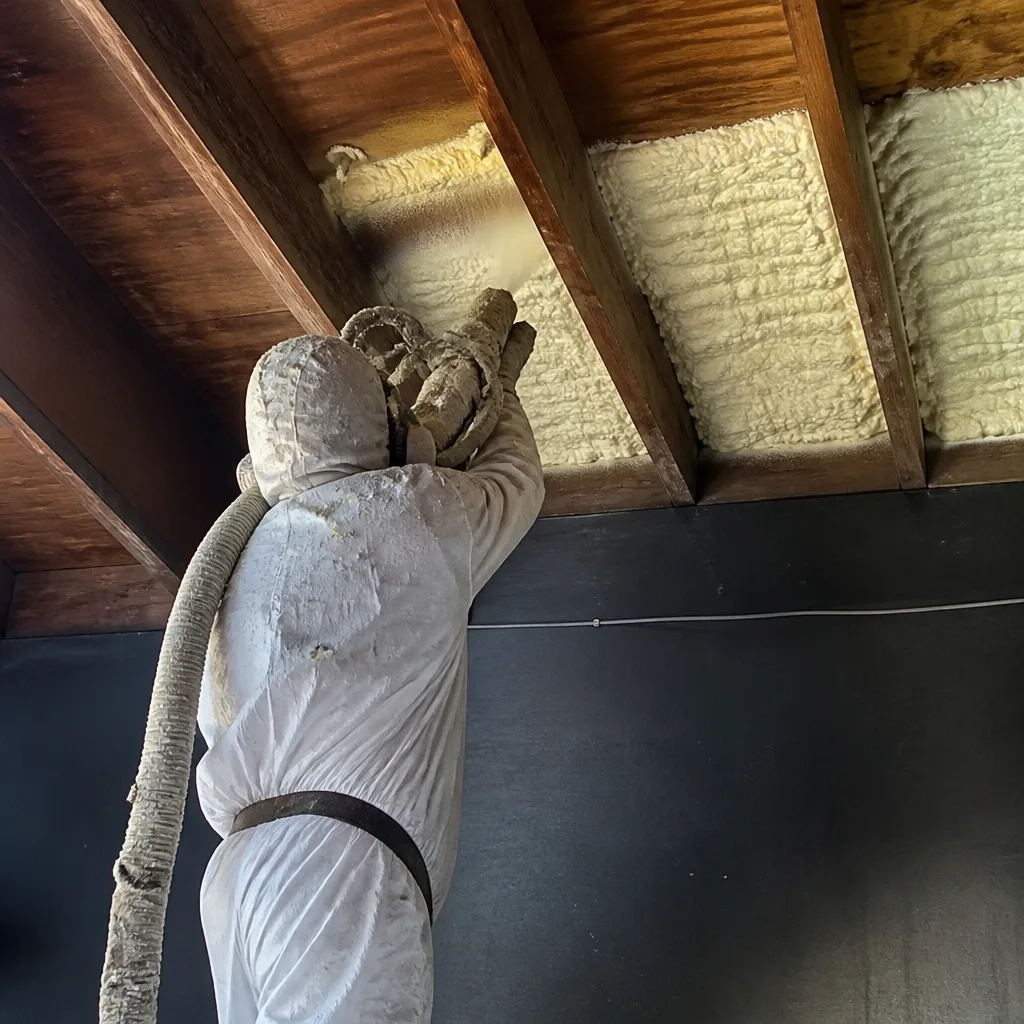
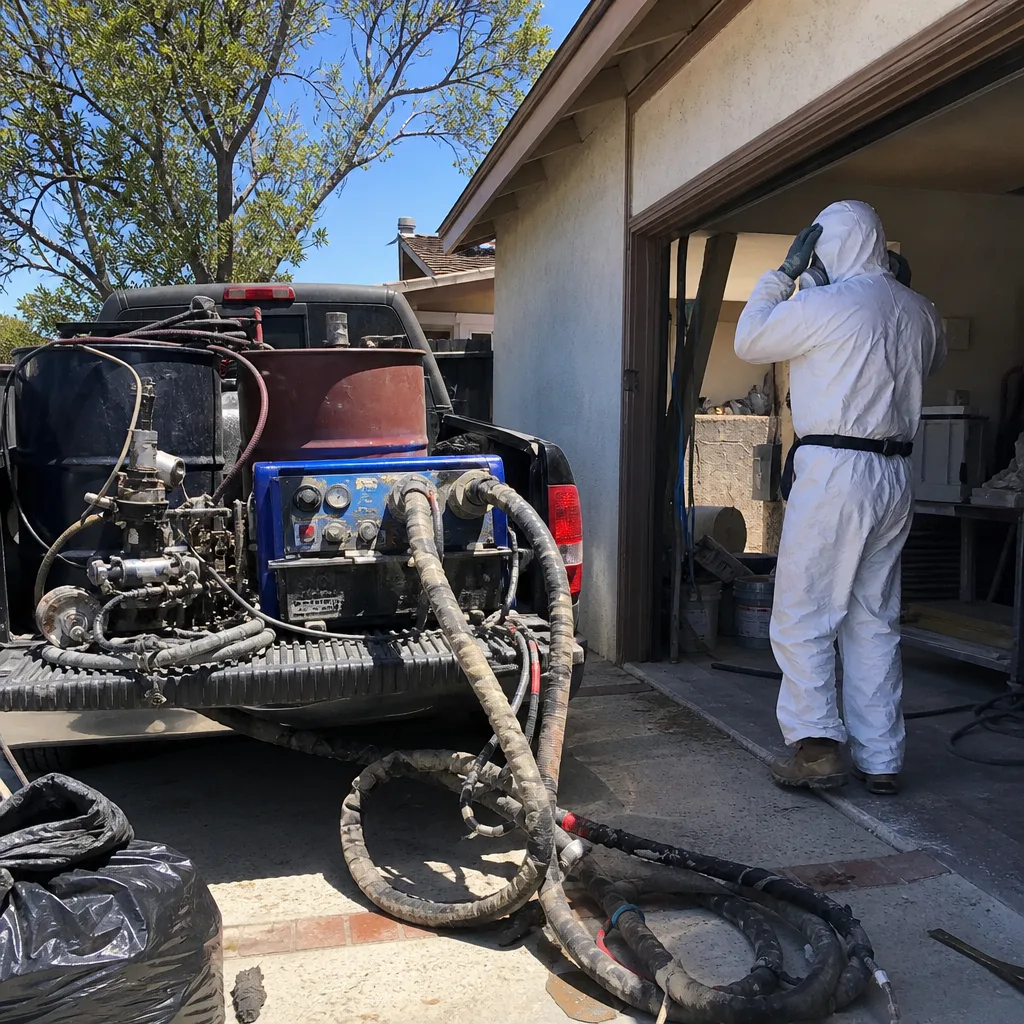
Fast, Reliable Spray Foam Insulation Across Downey
Spray foam insulation in Downey typically costs $2.40 to $5.10 per board foot for closed-cell and $0.85 to $1.90 per board foot for open-cell, with most attic jobs landing between $3,800 and $8,700. We serve all four Downey ZIP codes (90239, 90240, 90241, 90242) with crews that know the difference between a 1950s ranch off Downey Avenue and a 1990s addition near Stonewood Center. Our Spray Foam Insulation team responds to Downey calls within one business day for estimates. Call (833) 390-3099 and we’ll walk you through what your attic actually needs, not what’s on the truck.
Why Fountain Valley Insulation Is Downey’s Preferred Spray Foam Insulation Company
Downey homeowners call us because we carry both Icynene and Demilec spray foam lines, which means we’re not pushing one product on every attic. The 1940s and 1950s ranches that dominate neighborhoods around Furman Park and Downey Avenue have specific moisture and heat problems that newer homes in the 90240 ZIP simply don’t. Our crews have pulled enough soggy fiberglass out of these attics to know exactly what happens when winter fog meets an unvented roof deck.
We’ve worked throughout Downey, from the tree-lined streets north of Florence Avenue to the tighter post-war tracts south of Imperial Highway. Homeowners tell us the same thing: someone finally explained why their front bedroom is always ten degrees hotter than the kitchen. That’s what we do. We diagnose first, then recommend open-cell or closed-cell based on your roof assembly, your venting, and whether you’re fighting condensation or heat gain. It’s a different conversation than the one-price-fits-all contractors give you. And it’s the reason Downey residents keep our number.
Spray Foam Insulation Contractors in Downey
Spray Foam Insulation Contractors in Downey deal with a specific housing stock: slab-on-grade ranches and minimal-overhang bungalows built before anyone thought about attic air sealing. The job here isn’t just filling cavities. It’s assessing whether 70-year-old roof sheathing can handle the adhesive bond of closed-cell foam, whether the existing venting will trap fog condensation, and whether old batts need to come out before foam goes in. In Downey, a typical open-cell attic job runs $3,800 to $6,400. Closed-cell runs $5,200 to $8,700 depending on square footage and prep work.
Closed-Cell Spray Foam
For Downey’s pre-1970 attics with no vapor barrier, closed-cell is usually the right call. It acts as an air barrier, vapor retarder, and insulator in one pass. The moisture from coastal fog that rolls in during December and January never reaches the roof deck, which means no more condensation soaking your insulation.
Open-Cell Spray Foam
Open-cell works well in vented attics, where air still moves and moisture can escape. It’s softer, expands more, and costs less per board foot. But in an unvented Downey ranch with original sheathing, it can absorb condensation and lose R-value. We’ll tell you when it works and when it won’t.
Spray Foam Attic Insulation in Downey
Spray Foam Attic Insulation in Downey is the highest-impact upgrade you can make to a 1950s or 1960s ranch, because these attics are often vented poorly and sealed worse. You’re losing conditioned air through every recessed light, plumbing penetration, and top plate gap. In a city where summer afternoons hit 90°F and the South Coast Air Basin smog presses down, that leaky attic pulls hot, dirty air straight into your living space. A typical Downey attic insulation job, including air sealing and removal of failed batts, runs $4,100 to $7,900 for open-cell and $5,800 to $9,300 for closed-cell.
Air Sealing First
Before foam ever touches the roof deck, we seal the bypasses: top plates, wire penetrations, flue chases. In Downey’s smog zone, this is the difference between an attic that keeps heat and particulates out and one that just has foam in it. Dust from the 710 and 605 corridors settles in older attics fast. Foam bonds poorly to dusty surfaces, so we prep.
Radiant Barrier and Ventilation Checks
Downey summers are brutal on roofing. We check your existing venting before deciding on foam type, because closed-cell in a poorly vented attic without a vapor retarder can trap moisture. In the pre-1970 ranches off Downey Avenue, the original attics often have no vapor barrier at all. When winter fog rolls in off the coastal plain, condensation wets the old batts and compacts them. We find this constantly.
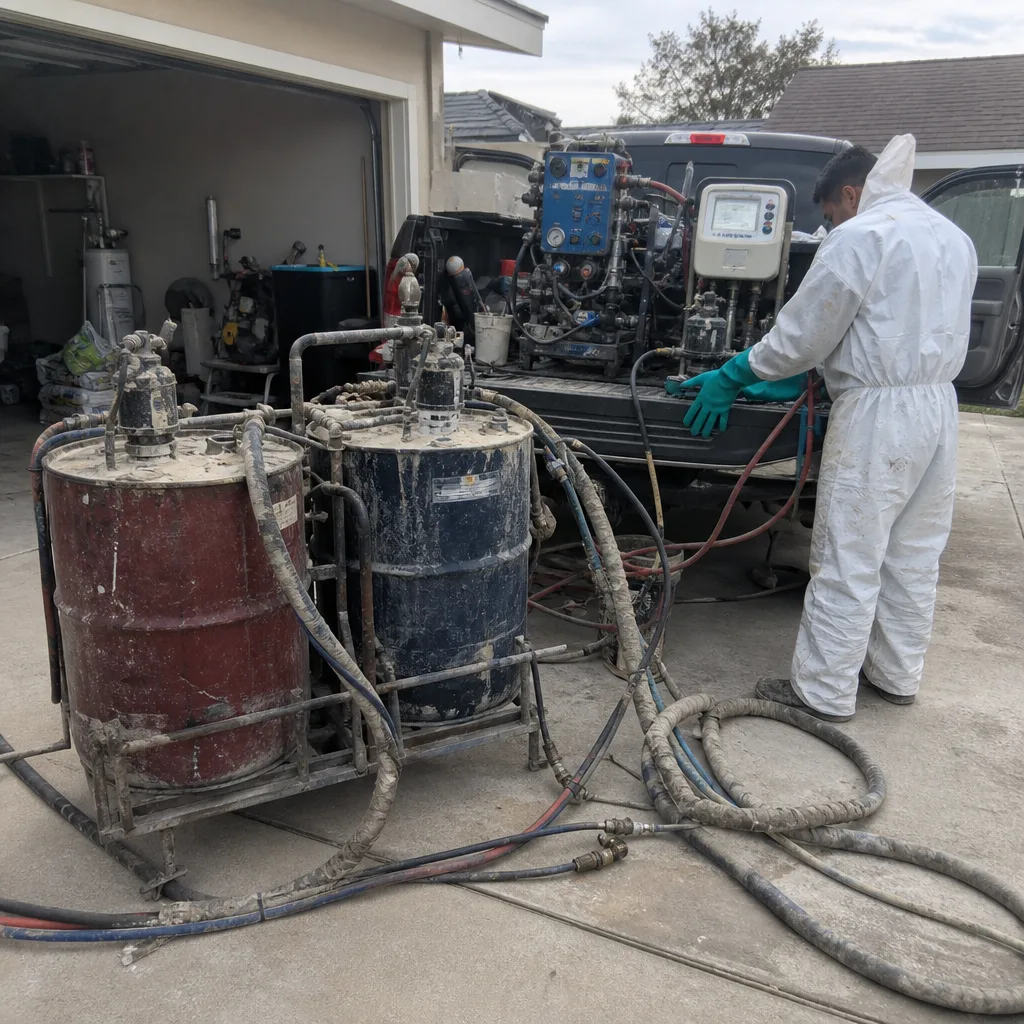
Trusted Brands We Service in Downey
We install Icynene and Demilec spray foam, two of the most recognized names in the category, and we stock the parts and materials needed to complete Downey jobs without waiting on a distributor. That means open-cell Icynene for vented attics and Demilec closed-cell for the unvented ranches that need a vapor barrier in one step. We also carry Owens Corning and GreenFiber for fiber-based applications, because not every Downey attic needs spray foam. Sometimes blown-in is the honest answer. We’ll tell you which one fits. Ask us why we carry these brands and most local contractors carry none of them.
Common Spray Foam Insulation Problems We See in Downey Homes
- Fog condensation soaking open-cell foam. In unvented pre-1970 attics near Furman Park and Downey Avenue, winter fog condenses on the underside of the roof deck and gets absorbed by open-cell foam, dropping its R-value within two winters. That’s why we spec closed-cell or a vapor retarder in these homes.
- Smog dust preventing proper foam adhesion. Downey sits in the South Coast Air Basin’s worst smog zone. Attics in 90240 and 90241 accumulate a fine grey dust on every horizontal surface. If foam is sprayed over that dust without cleaning and priming, it delaminates and leaves air gaps.
- Rusted attic fasteners hiding under foam. In the older ranches, decades of condensation have rusted the nails and screws holding the roof deck. Spray foam hides that corrosion. We inspect hardware before we spray and recommend replacement or coating where the rust is structural.
- Compacted, soggy fiberglass under new foam jobs. Homeowners near Downey Avenue have shown us attics where someone sprayed foam over failed batts. The old material stays wet underneath and the new foam can’t bond properly. We remove the failed insulation first, every time.
Pricing for Spray Foam Insulation in Downey, CA
Expect to pay $0.85 to $1.90 per board foot for open-cell and $2.40 to $5.10 per board foot for closed-cell in Downey. A 1,200-square-foot attic runs about $4,200 to $6,800 for open-cell and $6,300 to $9,200 for closed-cell, including removal of old batts and air sealing. Rim joist spray foam runs $1,800 to $3,400 for a typical 1950s Downey ranch. Garage ceiling spray foam runs $2,600 to $4,900. Roof deck spray foam on an unvented attic runs $6,500 to $11,000 depending on deck condition. These ranges reflect what we see across 90239, 90240, 90241, and 90242. Call (833) 390-3099 for a free estimate on your specific attic.
We Also Serve Cities Near Downey
Beyond our work in Downey, we cover Bell Gardens, Santa Fe Springs, Paramount, and Pico Rivera. If you’re in one of these neighboring cities and dealing with the same coastal fog and smog issues, we’ll bring the same material-first approach to your attic. Same crew standards, same brands, same straight answers.
Serving Downey, CA — Our Local Coverage Area
We’re based in the Downey area and know this community well. Use the map below to see our service coverage — if you’re nearby, we can almost certainly help.
FAQs About Spray Foam Insulation in Downey
No, if you choose the right foam. Closed-cell spray foam acts as its own vapor retarder and prevents fog condensation from reaching the roof deck. Open-cell in an unvented pre-1970 Downey attic can absorb moisture and lose R-value, so we recommend closed-cell or a separate vapor retarder in those homes. Call (833) 390-3099 and we’ll assess your attic’s venting and sheathing before recommending anything.
Spray foam seals the bypasses that let smog-laden air into your living space. The air sealing we do before foaming stops dust from the 710 and 605 corridors from being pulled through your attic into bedrooms and hallways. That’s a real, measurable improvement in a city with Downey’s air quality, and it’s something fiberglass batts alone never fix.
No. The old batts have to come out first. In many Downey homes, those batts are already wet from years of winter fog condensation. Spraying over them traps moisture, prevents adhesion, and hides the rot and rust underneath. We remove failed insulation, inspect the deck and fasteners, then apply foam to a clean surface. Anything less is a shortcut.
For Downey’s climate, we recommend R-38 to R-49 in vented attics with open-cell or R-20 to R-30 of closed-cell at the roofline for unvented attics. Downey’s Title 24 requirements call for R-38 minimum in new attic work. Closed-cell gives you more R-value per inch, which matters when the original roof framing is shallow. We’ll calculate what your attic can actually accommodate.
Yes. Homes near Furman Park, Downey Avenue, and the older sections of 90240 and 90241 have fasteners that have been rusting for 60-plus years from fog condensation and smog. We inspect every attic before spraying. If fasteners are corroded to the point of failure, we flag it and recommend replacement before foam goes in. Foam hides problems; it doesn’t fix them. Call (833) 390-3099 to schedule an inspection.
Written by Nate Calloway, Owner at Fountain Valley Insulation, serving Downey and the surrounding South Coast Air Basin communities.