
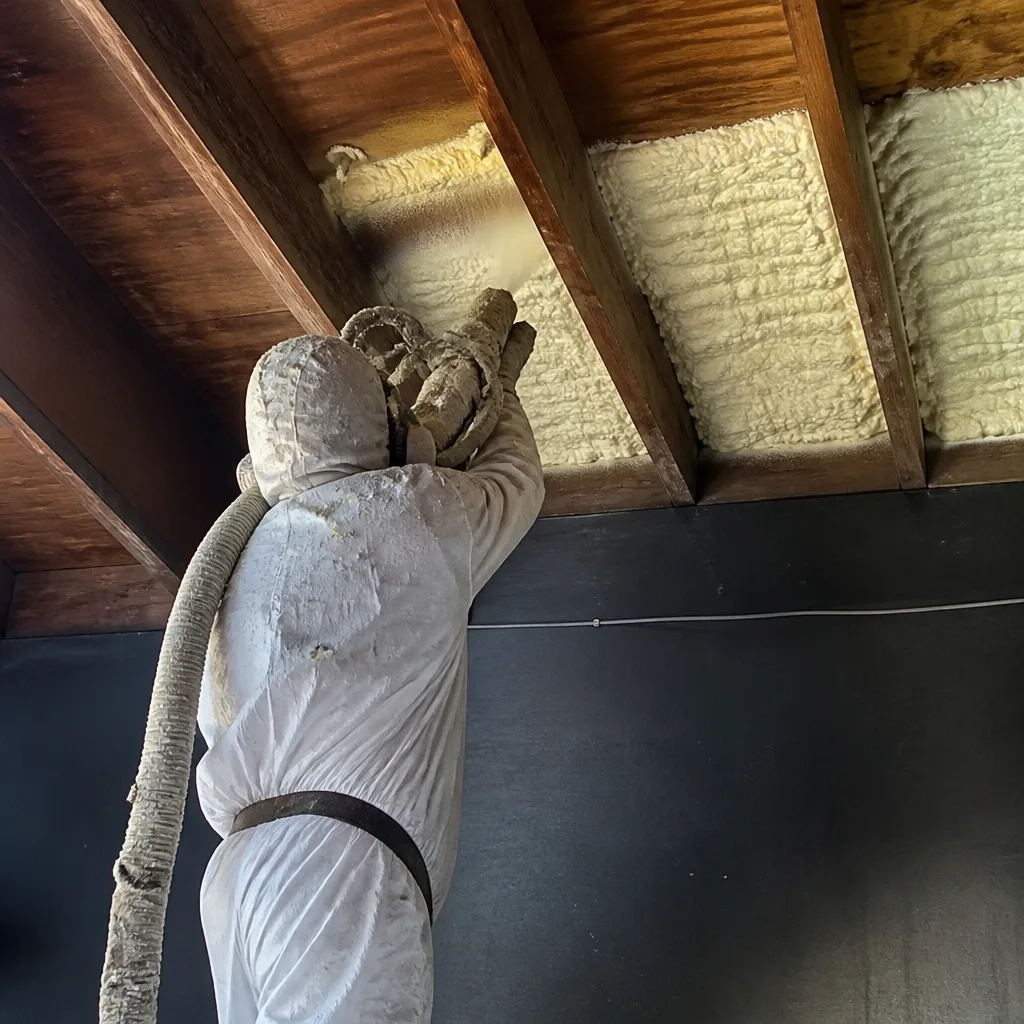
Fast, Reliable Spray Foam Insulation Across Culver City
Spray foam insulation in Culver City is about controlling condensation, not chasing R-value numbers. The marine layer that rolls in off Ballona Creek settles into wall cavities, roof decks, and crawl spaces, and older homes near downtown Culver City were never built to handle that kind of persistent moisture. We install open-cell and closed-cell spray foam from Icynene and Demilec across 90230, 90232, and the surrounding ZIP codes, and we schedule most Culver City jobs within a few days, not weeks. Call (833) 390-3099 for a straight answer on what your home actually needs.
Why Fountain Valley Insulation Is Culver City’s Preferred Spray Foam Insulation Company
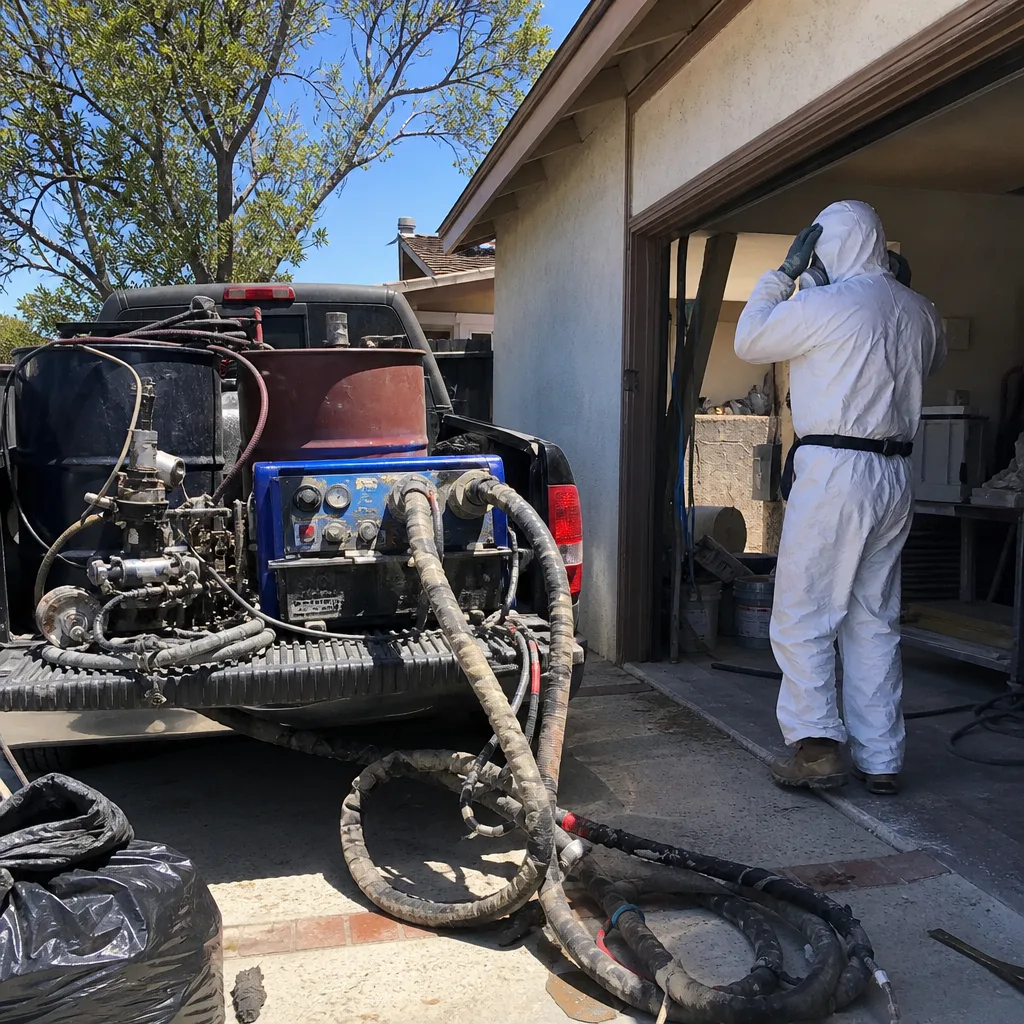
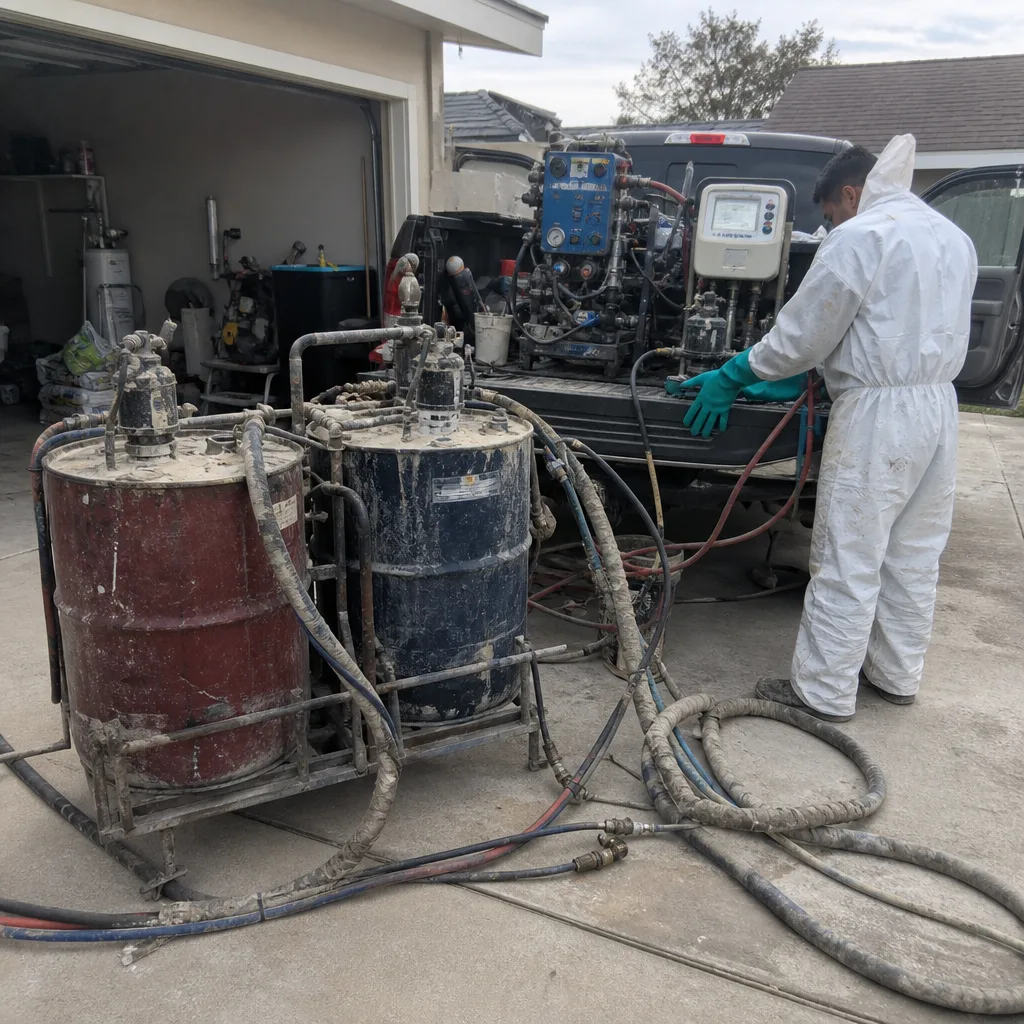
We carry eight manufacturer brands and three installation methods, but spray foam is where we spend most of our training time because it’s the product that punishes sloppy work. Our Spray Foam Insulation team runs Icynene and Demilec equipment that most general insulation contractors don’t stock, and we bring that capability into Culver City bungalows, mid-century tracts, and newer infill builds along Sepulveda and Washington. Nate Calloway built our operation around matching material to the house, not forcing every job into one product line.
Culver City homeowners call us for three reasons: uneven room temperatures, damp-smelling walls near the foundation, and garage spaces that turn into ovens by 2 p.m. We see those problems repeatedly in Fox Hills, near Veterans Memorial Park, and in the 1920s-to-1940s bungalow belt around downtown. The response time from our Fountain Valley shop to Culver City runs 30 to 45 minutes on most days. That’s close enough for a same-day assessment and close enough that we’re not treating your neighborhood like a distant outpost.
Local knowledge matters here. Culver City’s shallow attics, original single-pane windows, and uninsulated wall cavities mean spray foam choices have to account for ventilation and vapor movement, not just thermal performance. A contractor from the Valley might not think about marine-layer condensation the way we do, because they don’t deal with it the way we do. We’re already familiar with the housing stock along Culver Boulevard, Overland Avenue, and the east-side streets near the 405, so we’re not learning your neighborhood on your dime.
Crawl Space Spray Foam Insulation in Culver City
Crawl Space Spray Foam Insulation in Culver City is a moisture-control job first and an energy-efficiency job second. The marine layer that keeps Culver City evenings cool also keeps the ground damp, and that damp air rises into floor joists, subfloors, and the bottom of walls. Closed-cell spray foam applied to crawl space walls and rim joists creates an air and vapor barrier that stops that migration. For a typical 800 to 1,200 square foot crawl space in a Culver City bungalow, expect to pay $2,800 to $5,600, depending on access clearance and how much old fiberglass has to come out first.
Rim Joist and Foundation Sealing
The rim joist is the band of wood where floor framing meets the foundation wall, and it’s the most common air leak in any raised-foundation home. In Culver City’s 1920s and 1930s houses, those rim joists have settled, cracked, and separated over a century of wet-dry cycles. Closed-cell foam seals the gaps and adds structural rigidity. In a 1930s bungalow near downtown Culver City, our crew used Icynene spray foam to insulate a detached workshop with an oversized roll-up door, sealing gaps that let marine-layer damp air intrude and cause rust on tools. We also applied closed-cell foam in the shallow attic to prevent condensation on the roof deck, completing the job in one trip with heavy-duty equipment suited for the long service drive from Fountain Valley.
Vapor Control in Damp Crawl Spaces
Open-cell foam breathes. Closed-cell foam does not. In a Culver City crawl space where ground moisture is constant, closed-cell is almost always the right call because it stops water vapor instead of slowing it. We’ll tell you when the cheaper open-cell option will cause problems down the line, because trapping damp air in a sealed crawl space is how you get warped floors and musty rooms above. Ask us why we carry both, and which one your foundation actually needs.
Garage Spray Foam Insulation in Culver City
Garage Spray Foam Insulation in Culver City usually targets the ceiling and the wall shared with the living space. Most Culver City garages are attached, and the shared wall rarely has any insulation at all. That’s why the room next to the garage runs 8 to 12 degrees warmer than the rest of the house. Closed-cell foam on the garage ceiling and shared wall restores that temperature balance and cuts the hot-afternoon heat transfer from west-facing garage walls. A single-car garage in Culver City typically runs $1,400 to $2,600; a two-car garage with a cathedral ceiling runs $2,800 to $4,800.
Detached Workshops and Oversized Doors
Culver City has an unusual number of detached workshops and converted garages, especially in the older bungalow neighborhoods where a one-car garage became a wood shop or studio decades ago. Those spaces have oversized roll-up doors that leak air around the edges, and the foam has to integrate with the door hardware, not fight it. Oversized garage doors in Culver City workshops require heavier-duty openers and springs; foam insulation added without reinforcing the door hardware can strain the system. We account for that in the estimate.
Roof Deck and Cathedral Ceilings
Spray foam applied directly to the underside of a roof deck turns an unconditioned attic into a conditioned space. That’s valuable in Culver City garages with shallow attics, because it reclaims storage space and stops condensation from forming on the underside of the roof sheathing. Closed-cell foam here runs $3,000 to $6,000 for a typical two-car garage, and the payback comes in the form of a garage you can actually use year-round instead of a heat box from July through October.
Trusted Brands We Service in Culver City
We install spray foam from Icynene and Demilec, two of the most recognized names in the category, and we stock the associated sealants, baffles, and trim hardware for fast turnaround on Culver City jobs. For homeowners who want a comparison before committing, we also work with CertainTeed and GreenFiber on the non-foam side, so you’re getting a recommendation across brands, not a single-product pitch. Blown-in, spray foam, or attic batts – we’ll tell you which one actually fits your situation. We match the material to your home, not the other way around.
That matters in Culver City because the right call isn’t always foam. Some east-side mid-century tracts need blown-in attic insulation more than they need wall foam. Some newer builds along Sepulveda need dense-pack wall retrofits. We’ll tell you when foam is the best answer, and when a different material does the same job for less money.
Common Spray Foam Insulation Problems We See in Culver City Homes
- Marine-layer condensation in old walls. Spray foam applied without addressing the marine layer can trap moisture in wall cavities of older bungalows, leading to condensation and wood rot. We see this in 1920s homes near Culver Boulevard where original lath-and-plaster walls hide exactly what’s happening inside the cavity.
- Blocked attic ventilation in mid-century tracts. In mid-century tracts on the east side, shallow attics often lack proper ventilation; spraying foam without baffles can block airflow and cause overheating. The fix is baffles first, foam second.
- Strained garage door hardware on oversized openings. Oversized garage doors in Culver City workshops require heavier-duty openers and springs; foam insulation added without reinforcing the door hardware can strain the system. We check the door before we spray.
- Foam shrinkage gaps around rim joists. In homes with raised foundations, gaps between the rim joist and sill plate let damp air enter year-round. Closed-cell foam seals those gaps, but only if the installer stages the application properly. Half-done rim joist work is worse than none, because it directs moisture into a smaller area.
Pricing for Spray Foam Insulation in Culver City, CA
Culver City spray foam pricing runs $1,400 to $2,600 for a single-car garage, $2,800 to $5,600 for a typical crawl space, and $3,000 to $6,000 for a roof deck or cathedral ceiling. Whole-home wall retrofits run $8,000 to $18,000 depending on wall depth and access. What moves the number: how much old material has to come out, whether the attic needs baffles, and whether the crawl space has enough clearance for a technician to work upright. Estimates are free, and we’ll give you a written number before any work starts. Call (833) 390-3099 and we’ll schedule a walkthrough at your Culver City home.
We Also Serve Cities Near Culver City
Our service area includes Ladera Heights, Century City, Venice, and Beverly Hills, so if you’re on the edge of Culver City or just over the line, we’re still your crew. The same one-trip, heavy-duty approach applies everywhere we work.
Serving Culver City, CA — Our Local Coverage Area
We’re based in the Culver City area and know this community well. Use the map below to see our service coverage — if you’re nearby, we can almost certainly help.
FAQs About Spray Foam Insulation in Culver City
Yes, closed-cell spray foam is the most effective vapor and air barrier available for Culver City’s marine-layer conditions, because it stops damp air from entering wall cavities and roof decks rather than just slowing it. The key is proper application: foam sprayed without addressing existing moisture can trap it inside the cavity. Condensation control on the interior side of exterior walls is the primary reason we recommend closed-cell foam in Culver City, not raw R-value. Call (833) 390-3099 to talk through what your walls actually need.
Yes, we insulate detached workshops and garages with oversized doors regularly in Culver City, and we check the door hardware before applying foam so the added weight doesn’t strain the springs or opener. Oversized roll-up doors often need reinforcement or upgraded openers. We handle the full scope in one trip.
Spray foam slows heat gain from south- and west-facing walls during Culver City’s heat spikes, keeping indoor temperatures steadier without forcing your AC to work harder. Closed-cell foam on the roof deck is especially effective at stopping afternoon heat from entering through the attic. It’s not a substitute for ventilation, but it’s the strongest thermal barrier available.
For a 1920s bungalow near downtown Culver City with uninsulated walls, closed-cell spray foam or a dense-pack retrofit is almost always the right call, because those walls have no vapor barrier and closed-cell foam provides one. Open-cell foam can work in some wall assemblies, but it risks trapping marine-layer moisture in the cavity. We’ll assess the wall depth and existing sheathing before recommending an approach. Estimates are free: call (833) 390-3099.
Yes, we run one-trip operations for larger properties and outbuildings in Culver City, including detached workshops with long service drives, because we stock heavy-duty equipment that handles large spray volumes without needing a second trip for more material. Most rural or acreage-style jobs in the area are completed in a single day.
Get a Straight Answer on Spray Foam for Your Culver City Home
You deserve to know what your house actually needs, not what someone’s trying to sell this month. We’ll walk through your Culver City home, check the crawl space, attic, and garage, and give you a written recommendation with real numbers. Call (833) 390-3099 for a free estimate, or ask for Nate Calloway if you want to talk materials before we even show up.
Written by Nate Calloway, Owner at Fountain Valley Insulation, serving Culver City and the surrounding Westside communities.