
Fast, Reliable Spray Foam Insulation Across Crestline
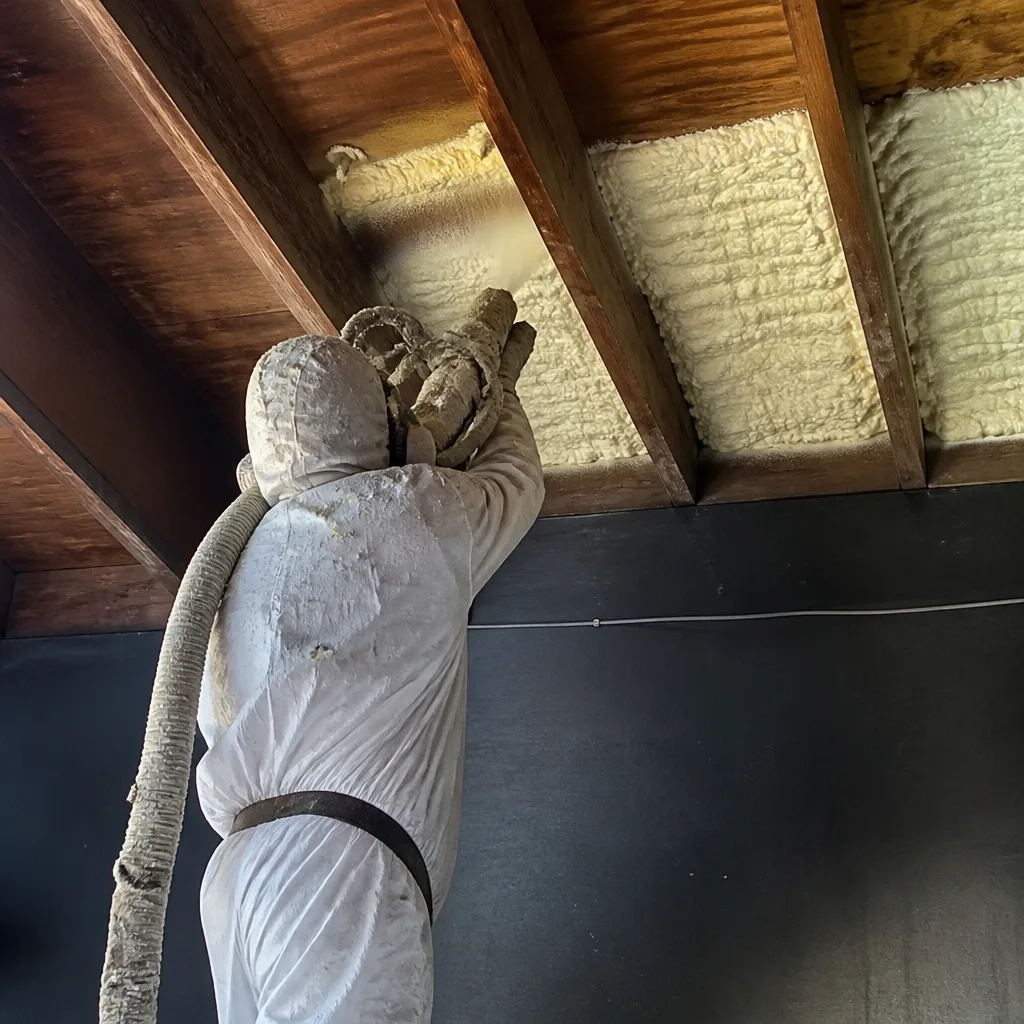
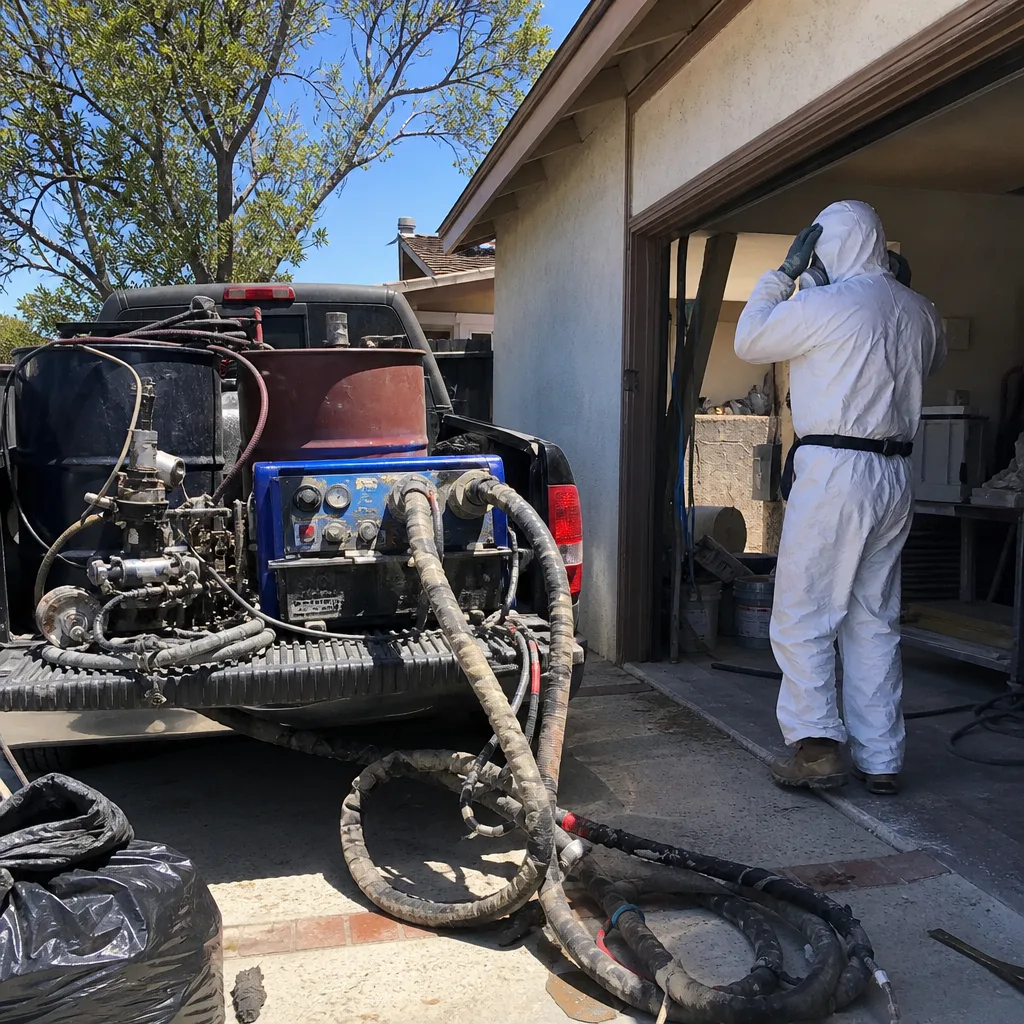
Spray foam insulation in Crestline does something that fiberglass batts rarely manage at 4,500 feet: it seals the air leaks that let ridge-line wind and sub-freezing air move through old cabin framing. Most Crestline homes we inspect were built as weekend retreats, not year-round residences, which means vented attics, exposed knee walls, and unsealed recessed-light penetrations are the norm. Those gaps are exactly what spray foam closes. If you’re tired of chasing drafts, ice damming at the eave line, or frozen supply lines every winter, call us at (833) 390-3099 for a free estimate. We know what these mountain cabins need because we work on them week in and week out.
Why Fountain Valley Insulation Is Crestline’s Preferred Spray Foam Insulation Company
Mountain work rewards contractors who understand what cold air actually does to a building envelope. A San Bernardino crew that mostly handles tract homes doesn’t see the same failure modes we do up here. Crestline cabins with vented attics and original open-cavity framing behave differently than anything in the flatlands. We carry spray foam lines from Icynene and Demilec because they’re the two names we trust for closed-cell and open-cell work in this climate. The local reputation we’ve built in Crestline comes from showing up on time and not treating every cabin like a standard suburban job.
When a Crestline homeowner calls us about a drafty knee wall or an attic that keeps forming ice dams, we don’t start by selling the most expensive option. We start by looking at where the air is actually moving. That’s the difference between a contractor who installs insulation and one who understands how a building breathes at elevation. We’ve earned repeat work throughout the 92325 ZIP code because the fix holds through the next winter, not just until the next cold snap.
Nate Calloway, our owner, has built the company around a simple premise: match the material to the home, not the other way around. That’s why we carry Spray Foam Insulation options from multiple manufacturers, not one brand we push on every job. For Crestline homes specifically, that often means closed-cell at the rim joist and a different approach entirely at the attic baffles.
Rim Joist Spray Foam in Crestline
Rim joist spray foam in Crestline is one of the highest-impact upgrades you can make on an older mountain home. The rim joist is the band of framing where your floor meets your foundation wall, and in a 1960s A-frame or mid-century cabin, it’s usually uninsulated or stuffed with a batt that’s lost its shape. At 4,500 feet, that band becomes a direct conduit for cold air to enter the floor system and rise through wall cavities. We seal it with closed-cell foam that both insulates and creates an air barrier. Most Crestline rim joist jobs run $1,800 to $3,400 depending on linear footage and access. The work typically takes one day, sometimes two when crawlspace access is tight.
How Cold Air Finds the Rim Joist
Crestline cabins sit on foundations that were rarely air-sealed when built. Floor joists run directly to the perimeter, and the gaps between framing and sill plate let wind-driven cold push straight into the conditioned space. Once that air enters the joist bays, it moves under floors, up interior walls, and out through recessed lights and ceiling penetrations. What feels like a draft from your floorboards is often a continuous air path that starts at the rim.
Closed-Cell at the Rim, Not Open-Cell
We specify closed-cell foam for rim joist work in Crestline because it performs better against moisture, which matters when snowmelt sits against foundation walls. Open-cell can hold water, and at this elevation the freeze-thaw cycle turns retained moisture into a problem. Closed-cell from Icynene or Demilec gives you about R-6.5 per inch and doubles as a vapor retarder, which is what you want at the rim.
Crawl Space Spray Foam Insulation in Crestline
Crawl space spray foam insulation in Crestline addresses a problem that most homeowners never see but feel every January. Mountain cabins with vented crawl spaces let sub-freezing air circulate directly beneath the floor deck, which is why so many Crestline homeowners deal with frozen supply lines and floors that never warm up. We spray closed-cell foam on crawl space walls and the rim band to convert the space from a cold, vented underbelly into a conditioned buffer zone. Typical Crestline crawl space projects run $2,200 to $4,800. The job usually takes one to two days, and we handle all prep work including cleaning, sealing, and addressing any existing moisture issues.
The Frozen Pipe Connection
Frozen pipes in Crestline cabins are rarely a plumbing failure. They’re an air-sealing failure. When cold air moves freely through a vented crawl space, supply lines that run through that space sit in a constant freeze chamber. Closed-cell foam on crawl space walls doesn’t just insulate; it stops the air movement that makes pipes freeze in the first place. We’ve seen this exact pattern on cabins throughout the Lake Drive area and along the Rim of the World corridor.
Moisture and the Mountain Crawl Space
Crestline gets real snowpack, and that means crawl spaces here face moisture pressure from meltwater, not just humidity. Before we spray anything, we check for standing water, drainage issues, and vapor problems. Closed-cell foam is the right product for this application because it won’t absorb water and can be installed directly against masonry walls. A wet crawl space with open-cell foam becomes a mold risk; a dry one with closed-cell becomes an asset.
Trusted Brands We Service in Crestline
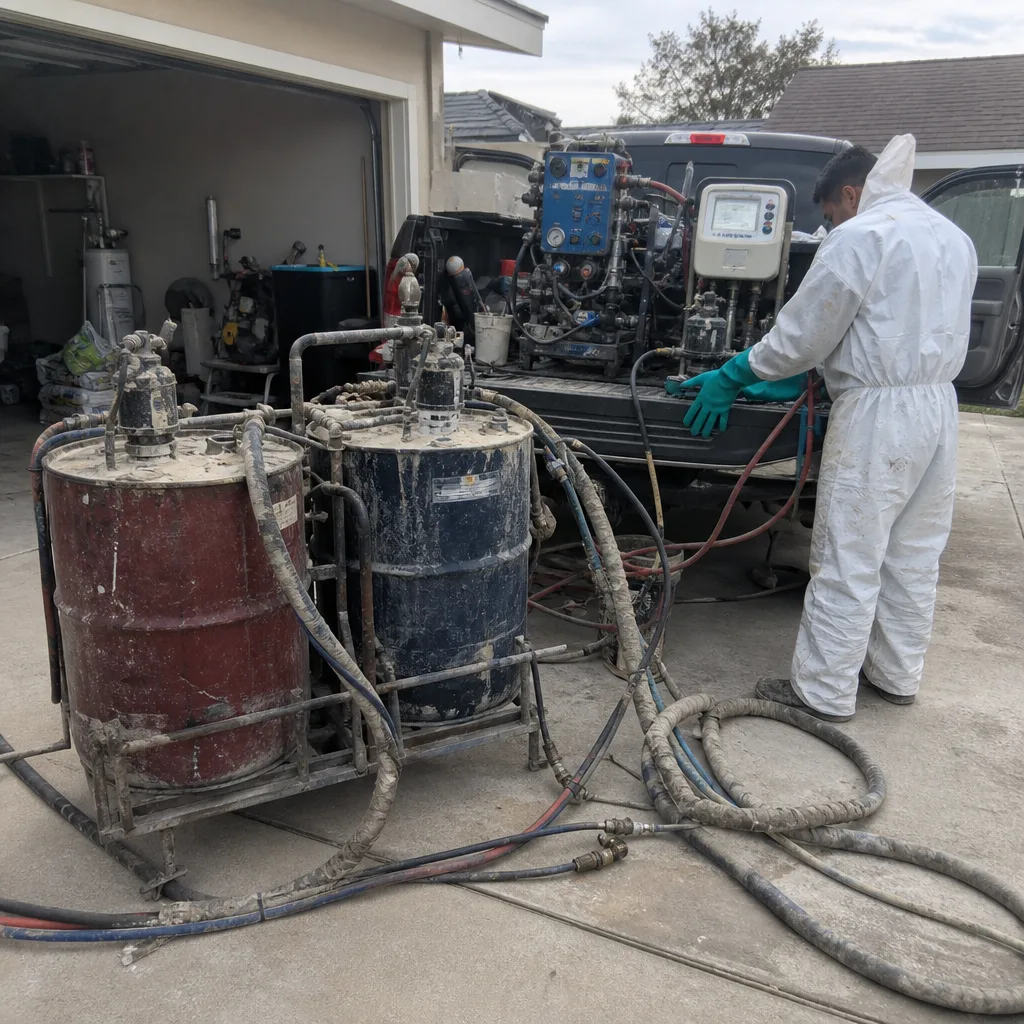
We’re not locked into one manufacturer, and that matters when you’re choosing spray foam for a Crestline cabin. We carry Icynene and Demilec for spray foam applications, and we also work with Rockwool and CertainTeed for jobs where a different material makes more sense. Eight trusted brands. Three proven methods. One specialist. Ask us why we carry Rockwool, spray foam, and recycled fiber options under the same roof – most contractors carry none of them. For Crestline customers, having access to multiple product lines means the recommendation you get is based on your home’s actual framing and exposure, not what’s sitting on our truck. We stock common components locally in the 92325 area, which means faster turnaround when weather windows are tight.
Common Spray Foam Insulation Problems We See in Crestline Homes
- Vented attics with sealed rims only. Homeowners sometimes have the rim joist foamed but leave the vented attic’s air path open. Ice damming still forms at the eave because warm interior air keeps leaking through ceiling penetrations. Closed-cell at the rim doesn’t fix what’s happening at the roof deck.
- Unsealed recessed lights above fresh attic foam. In older Crestline cabins, can lights were installed without air-tight housings. If those penetrations aren’t sealed before or during attic foam work, the stack effect keeps pulling mountain cold through the same cavities you just insulated.
- Wind-driven snow against unsealed knee walls. A-frame and chalet-style homes often have knee-wall framing with no continuous air barrier. Snow blows against the roof, melts, and sits against foam that was never bonded to a sealed substrate. That’s a durability problem, not just an R-value problem.
- Partial-year use without full air sealing. Vacation cabins used on weekends or seasonally still lose heat through the same paths. If you’re only sealing part of the envelope, you’re paying for insulation that can’t do its job while the cabin sits unheated.
Most Crestline cabins were built as weekend retreats with vented attics, recessed-can light penetrations, and framing left unsealed, so spray foam here is less about R-value stacking and more about closing the chimney-effect leaks that let ridge-line wind and sub-freezing air drive ice damming and frozen pipes at 4,500+ feet. That’s the core difference between insulating a Crestline home and insulating one 20 minutes downhill in San Bernardino.
We foamed the rim joist and sealed the can-light penetrations on a 1960s A-frame off Crestline’s Lake Drive area, where the original open-cavity framing and a wall of unsealed recessed lights had been feeding cold air straight into the knee walls. Using Icynene closed-cell at the rim and a GreenFiber top-off in the vented attic, we cut the draft path that had been icing the eave line every winter. The owner, converting the cabin to year-round living, stopped chasing frozen supply lines in the crawlspace.
Pricing for Spray Foam Insulation in Crestline, CA
Spray foam pricing in Crestline runs from about $1,800 for a small rim joist job to $8,000 or more for a full attic plus crawl space scope. Rim joist work alone typically lands between $1,800 and $3,400. Crawl space walls run $2,200 to $4,800. Attic roof deck foam, especially on an A-frame or steep-pitched cabin, starts around $3,500 and climbs based on square footage and whether baffles or ventilation adjustments are needed. What affects the number: access, framing condition, existing moisture, and whether we’re sealing penetrations alongside the foam. Call (833) 390-3099 and we’ll give you a straight number after walking the space. Estimates are free.
We Also Serve Cities Near Crestline
Beyond Crestline, we run crews to Crestline neighbors in Lake Arrowhead, Muscoy, San Bernardino, and Highland. If you’re anywhere along the Rim of the World or the lower mountain communities, call (833) 390-3099 and we’ll tell you when we can be there.
Serving Crestline, CA — Our Local Coverage Area
We’re based in the Crestline area and know this community well. Use the map below to see our service coverage — if you’re nearby, we can almost certainly help.
FAQs About Spray Foam Insulation in Crestline
Because at 4,500+ feet, the failure mode isn’t heat gain – it’s air movement driven by wind, snow, and sub-freezing temperatures. A San Bernardino tract home loses energy through poor attic insulation; a Crestline cabin loses energy through open framing, vented attics, and unsealed penetrations. Spray foam addresses both insulation and air sealing, which fiberglass batts alone cannot do. If you’re comparing bids, ask each contractor how they handle the rim joist and recessed-light penetrations. Then call us at (833) 390-3099.
Yes, and in fact that’s the house type where spray foam makes the biggest difference. The issue with 1960s A-frames isn’t just thin walls; it’s the open-cavity framing, the knee walls, and the lack of any continuous air barrier. Closed-cell foam can be applied to rim joists, crawl space walls, and roof decks even when the original construction was minimal. What it can’t do is fix a wet substrate or unvented space without proper prep. Call (833) 390-3099 for a free walkthrough and we’ll tell you what your specific framing will support.
It can, if the approach is wrong. Spraying closed-cell foam on a roof deck in a vented attic without addressing the venting path and ceiling penetrations can trap moisture and make ice damming worse at the eave. That’s why we look at the whole attic, not just the cavity you asked about. The fix often involves sealing can lights, baffles, and the rim joist in the same scope. A contractor who only sprays foam and walks away is leaving you with a problem. Call (833) 390-3099 and we’ll explain what your attic actually needs.
Yes, because unheated cabins still freeze. The rim joist is a direct cold-air path into the floor system, and when the cabin sits empty, the interior temperature drops until pipes freeze. Sealing the rim with closed-cell foam slows that heat loss dramatically and reduces the risk of frozen supply lines. For a weekend cabin, rim joist sealing is one of the cheapest forms of insurance you can buy. Call (833) 390-3099 for a quote – most rim joist jobs are done in a day.
We use Icynene and Demilec for spray foam applications, and we also carry Rockwool, CertainTeed, and GreenFiber for jobs where a different material fits better. For Crestline’s legacy cabin stock, we typically spec closed-cell Icynene or Demilec at the rim and crawl space, and we use GreenFiber or Rockwool in vented attics where air circulation needs to stay intact. Eight brands gives us options. Your cabin’s framing and exposure determine the recommendation. Call (833) 390-3099 and ask us directly.
Written by Nate Calloway, Owner at Fountain Valley Insulation, serving Crestline and the surrounding mountain communities. Our team works with eight manufacturer brands across three installation methods so homeowners get the right material for the home, not the other way around.
Ready to stop chasing drafts and frozen pipes? Call Fountain Valley Insulation at (833) 390-3099 for a free estimate on spray foam insulation in Crestline. We’ll walk your cabin, identify where the air is actually moving, and give you a straight number. Serving all of 92325 and the surrounding mountain communities.