
Fast, Reliable Spray Foam Insulation Across Artesia
Spray foam insulation in Artesia typically costs $2.50 to $5.60 per board foot for open-cell and $3.80 to $7.20 per board foot for closed-cell, with most rim joist jobs in the 90701 area running $1,400 to $2,600 and full attic air-seal packages landing between $3,200 and $6,800. We’re out in Cerritos, La Palma, and the 91 corridor weekly, so getting a crew to your Artesia street doesn’t take days. That matters here because so many of the homes in this city are 1950s and 60s stucco ranches where the attic and rim joist leak heat all summer long. Call (833) 390-3099 and we’ll tell you straight what your house needs before we quote a dollar figure.
Why Fountain Valley Insulation Is Artesia’s Preferred Spray Foam Insulation Company
Artesia’s housing stock has a personality. Block after block of single-story stucco ranches on tight lots, most built between 1955 and 1975, with shallow attics and original open-eave venting that hasn’t been touched in decades. We know what that means for spray foam work: vent balancing first, air-sealing second, and the foam is the tool that makes both work. Homeowners off Pioneer Boulevard and around Artesia Park have called us about rooms that won’t hold temperature, AC units that run nonstop through July, and attics you can feel radiating heat through the ceiling drywall.
Nate Calloway, who runs Fountain Valley Insulation, built the crew around one idea: carry the brands that actually solve the problem, not just whatever’s on the truck. For Artesia’s low-clearance attics, that usually means Icynene open-cell or Demilec closed-cell, depending on whether the home has a vented attic that needs to breathe or a rim joist that needs a moisture-and-air barrier. We install across all of Artesia, from the 90702 side near Cerritos up through the 90701 pocket along 183rd Street toward the 91. Response time is same-week for most jobs, and we carry sealed attics, hot knee walls, and drafty rim joists in our standard scope.
Read our reviews and you’ll see Artesia homeowners mention the same thing: we explain the difference between open-cell and closed-cell without pushing the more expensive option when it isn’t needed. That’s the job. A rim joist sealing in a 1963 ranch off Norwalk Boulevard shouldn’t cost the same as a cathedral ceiling fill in a new build, and we quote it that way. Your house tells us what it needs. We just listen.
Rim Joist Spray Foam in Artesia
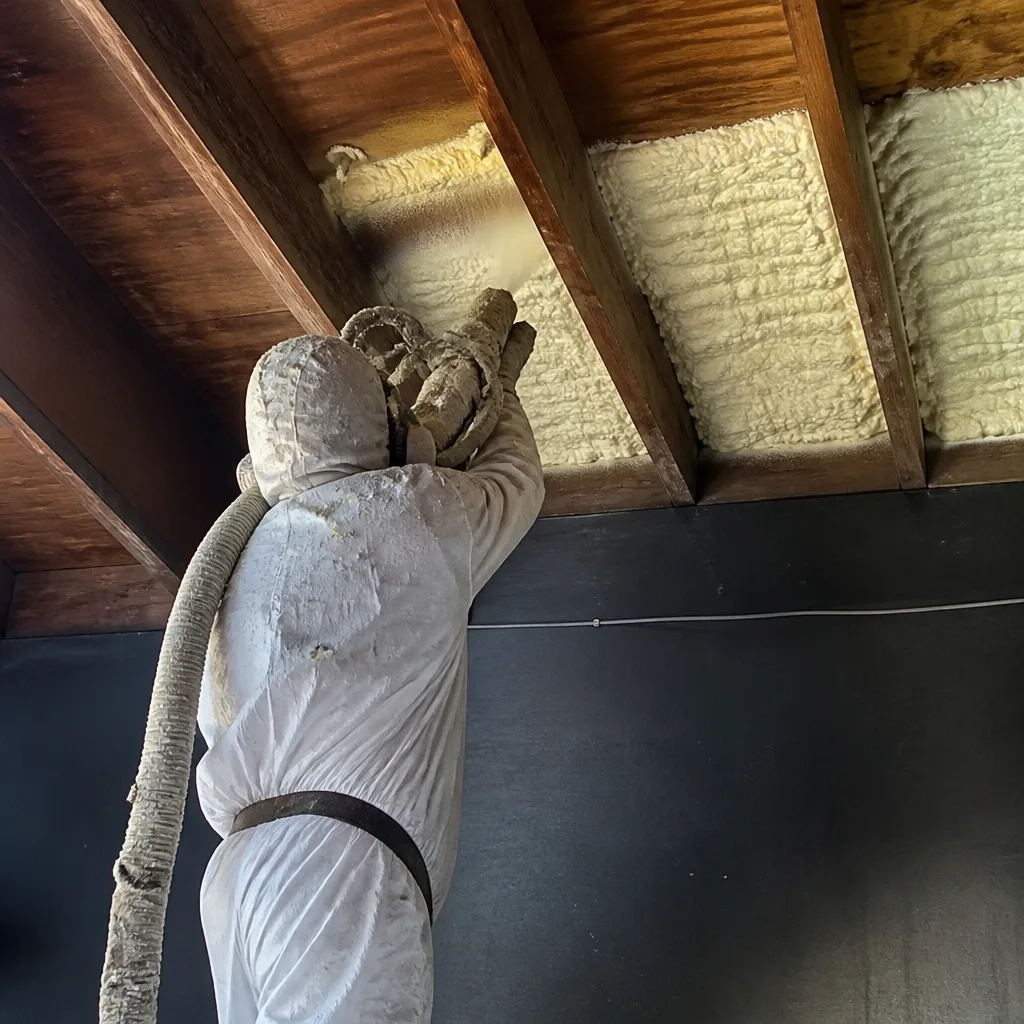
Rim joist spray foam in Artesia is one of the highest-ROI insulation jobs we do on the 1950s-70s ranches that fill the 90701 and 90702 ZIPs. The rim joist is the band of framing where your floor joists meet the foundation wall, and on these older stucco homes it’s almost always unsealed. That means hot outside air pours into the wall cavities and crawl space all summer, while in winter the same gaps pull heated indoor air out. It’s not a visible problem, but homeowners feel it as drafty floors, rooms that never match the thermostat, and AC bills that climb every June.
We seal the rim joist from inside the crawl space or basement side with closed-cell spray foam, typically Demilec. Closed-cell is the right call here because Artesia’s dry inland-basin climate still produces enough ground moisture under a raised foundation to make open-cell risky in contact with masonry. Closed-cell handles moisture, air, and thermal bridging in one pass. A full rim joist sealing on a standard Artesia ranch runs $1,400 to $2,600 depending on crawl depth and linear footage.
When a Artesia Ranch Needs It
You’ll know by the floors. Cold drafts near baseboards in January, warm spots along exterior walls in August, and a crawl space that smells musty after rain. Older Artesia homes often have fiberglass batts stuffed into the rim bays, and those batts sag and hold dust without sealing anything. They insulate in theory, not in practice. If your crawl space has open rim bays visible from below, the house is leaking air continuously.
What the Job Looks Like
We access the crawl space, clean the rim bay surfaces so foam can bond, and spray each bay flush. On a typical Artesia ranch, that’s 3 to 5 hours of work and it’s done the same day. The foam expands into every gap, hardens within minutes, and the house starts holding temperature immediately. Most homeowners report a difference in floor comfort within the first week.
Crawl Space Spray Foam Insulation in Artesia
Crawl space spray foam insulation in Artesia addresses the damp, drafty underside that most 1950s-70s stucco ranches here have never had properly sealed. Raised foundations on small lots mean shallow crawls where old fiberglass has sagged, rodents have nested, and the floor above feels cold in winter and clammy in summer. Sealing the crawl space perimeter and rim areas with spray foam converts that dead air space from a liability into a buffer zone between the dirt and your living space.
On Artesia homes, this usually runs $2,800 to $5,400 depending on crawl square footage and whether we’re doing the full perimeter or just rim joist and band areas. The low crawl heights common in 90701, some under 30 inches, add labor hours because spraying in tight spaces is slower work. But the result is a house that stops pulling unconditioned air up through the floor assembly, which matters more here than many homeowners expect.
Ventilation Before Foam
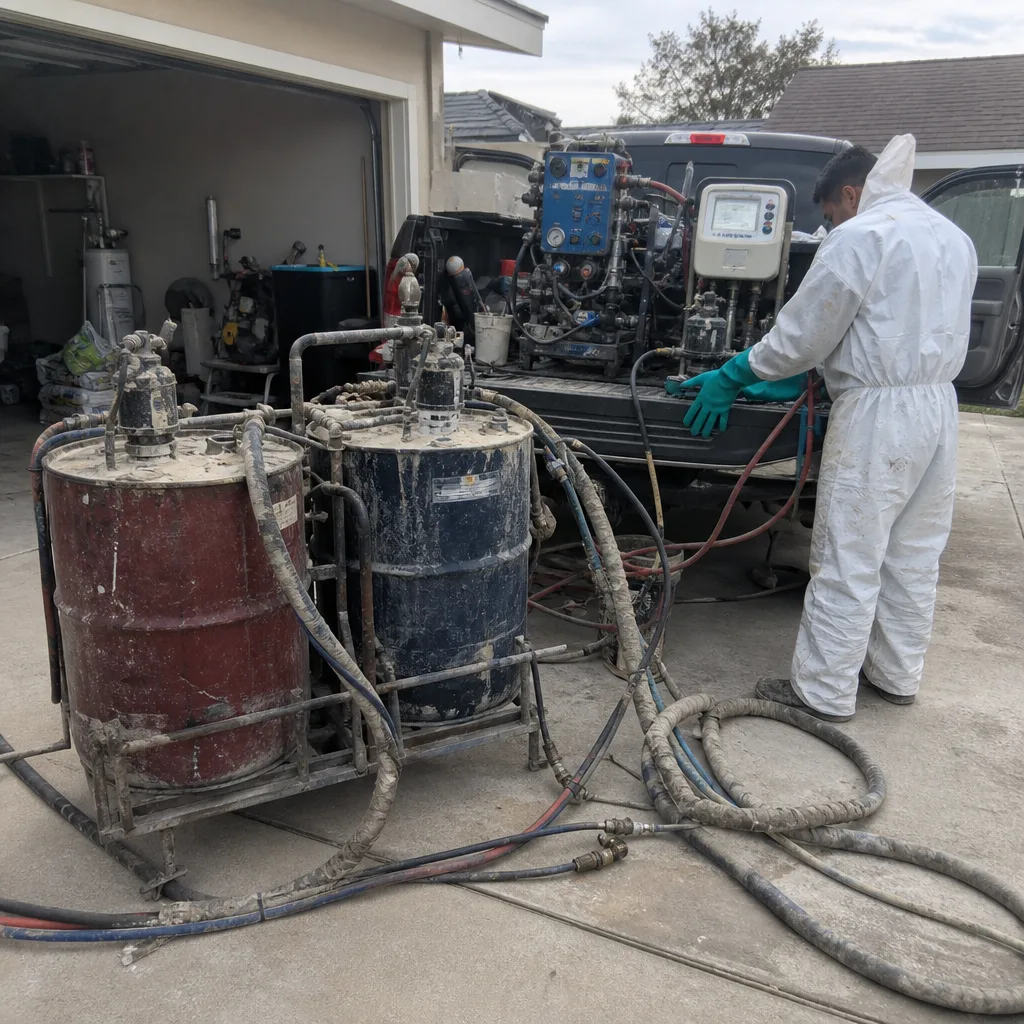
One thing we insist on before spraying crawl space foam in Artesia is checking that the existing crawl vents match the sealing approach. If you close the crawl entirely without addressing how the space exchanges air, moisture from the soil gets trapped. That’s how you get condensation on floor joists and, over time, rot. We look at the vent configuration and either leave the space vented or help you move toward a conditioned crawl, depending on what’s under your house.
Why Older Artesia Homes Need It
The combination of stucco exteriors, raised foundations, and unsealed floor assemblies on Artesia’s tract-era homes means floors are the single biggest draft source most homeowners have never seen. You can add attic insulation all you want, but if the crawl is leaking air upward through the walls and floor, the house will always fight itself. Crawl space spray foam closes that loop. It makes the attic work count.
Trusted Brands We Service in Artesia
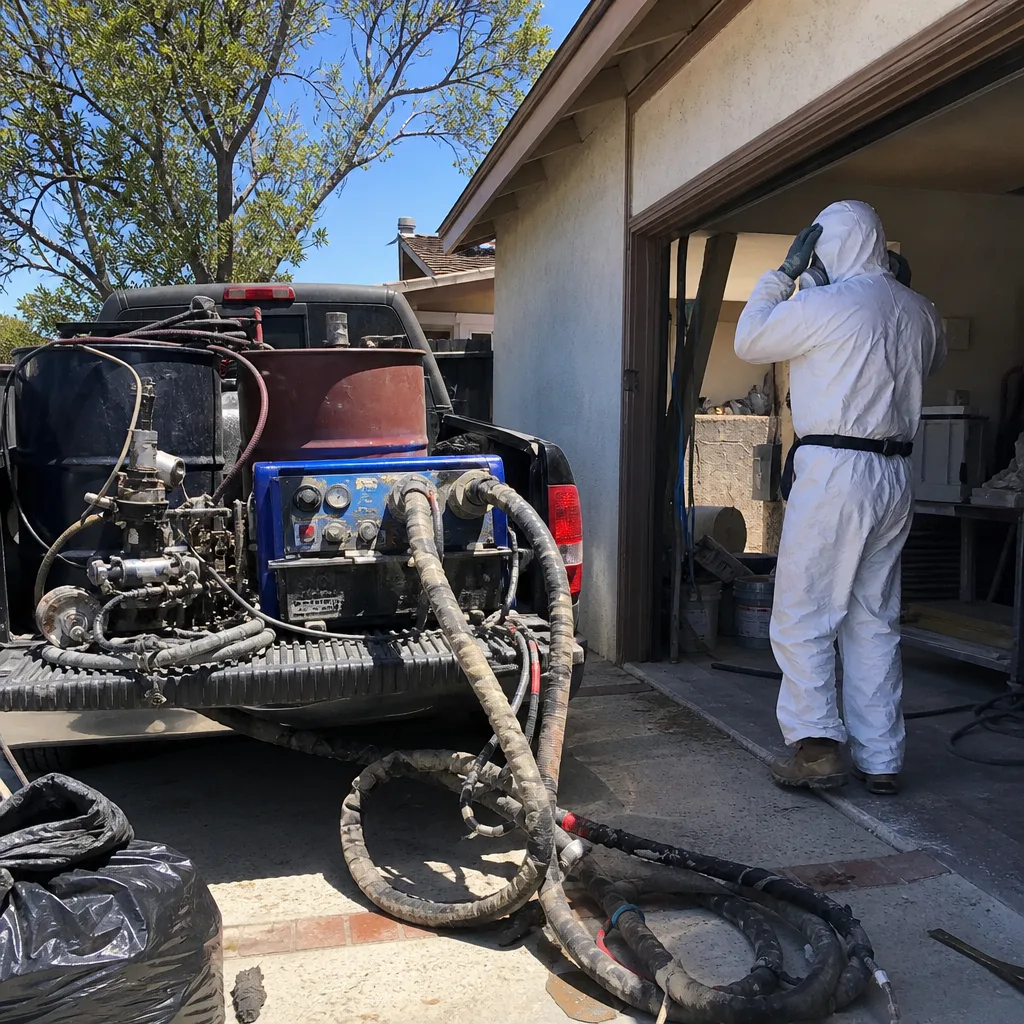
We carry Icynene and Demilec for spray foam work because they’re the two names in the category worth having on the truck. Icynene open-cell is what we use in shallow Artesia attics where the venting needs to stay functional; it air-seals without trapping the moisture that dry inland-basin days actually help dissipate. Demilec closed-cell is the workhorse on rim joists and crawl space perimeters, where moisture contact is real and the foam needs structural density. We also install CertainTeed products for the times when the right answer in an Artesia home is fiberglass or mineral wool rather than foam. The job decides the brand, not the other way around. We keep standard kits stocked for fast local turnaround, and anything specialized for your house is usually in within a couple days.
Common Spray Foam Insulation Problems We See in Artesia Homes
- Choked open-eave venting on shallow attics.Art’s older ranches have original soffit vents that decades of stucco patch, paint, and roofing work have partially closed off. A careless foam pass seals what little venting remains, and the attic turns into an oven that cooks the foam, the roof deck, and the rooms below.
- Unsealed top plates leaking hot wall air into the attic.On 1950s-70s ranch construction, the gap where interior and exterior walls meet the attic floor is usually wide open. That’s a direct chimney from the walls into the attic. Spray foam across the top plates closes it, and it’s a standard part of every Artesia attic job we scope.
- Low-clearance attics with incomplete knee wall coverage.90701 ranches often have shallow roof pitches and less than 4 feet of clearance at the eave edges. That’s where incomplete coverage shows up first: a band of uninsulated space at the knee wall and eaves that leaves a visible cold stripe on the ceiling in winter and a heat signature in summer.
- Rim joist bays that were never touched, even after attic upgrades.We see homes with R-38 blown-in attic insulation and original, wide-open rim bays below. The previous contractor fixed what was easy to see and ignored what wasn’t. The homeowner still has drafty floors and blames the insulation, when the rim joist was the real problem all along.
Pricing for Spray Foam Insulation in Artesia, CA
Spray foam pricing in Artesia breaks down by project type more than by square foot alone. Rim joist sealing on a standard 1950s-70s ranch runs $1,400 to $2,600, with crawl depth and bay accessibility moving the number within that range. Full attic air-sealing with open-cell on the top plates, knee walls, and any rim-to-attic transitions lands at $3,200 to $6,800 for most Artesia homes. Crawl space perimeter work is $2,800 to $5,400 depending on square footage. Closed-cell consistently costs more per board foot than open-cell because it’s denser and handles moisture. The most common mistake we see is homeowners comparing insulation bids that don’t include air-sealing; foam without proper sealing isn’t insulation, it’s decoration. We quote the whole scope so you’re comparing real numbers. Call (833) 390-3099 for a free estimate on your specific house, not a generic price list.
We Also Serve Cities Near Artesia
Our crews work throughout southeast LA County, so if you’re in Artesia or just outside it, we’ve likely been on your street before. We regularly handle Spray Foam Insulation jobs in Cerritos, La Palma, Hawaiian Gardens, and Norwalk. Same crew, same brands, and the same straight answer about what your house actually needs. Call (833) 390-3099 and tell us your cross streets.
Serving Artesia, CA — Our Local Coverage Area
We’re based in the Artesia area and know this community well. Use the map below to see our service coverage — if you’re nearby, we can almost certainly help.
FAQs About Spray Foam Insulation in Artesia
Yes, we spray foam attics in Artesia with clearance as low as 18 inches at the eave edges. The work is slower and more physically demanding in tight spaces, but open-cell foam is applied with a wand that reaches into low areas where batts can’t sit properly. We don’t ask you to solve the access problem; we work around it.
If your Artesia home was built before 1980, the rim joist is almost certainly unsealed or filled with sagging fiberglass batts that don’t stop air movement. Spray-foaming the rim joist is the highest-impact, lowest-disruption job we do on these houses. It stops the floor drafts, cuts the air exchange that drives summer humidity and winter chill, and makes the rest of your insulation actually work.
If you can feel hot air in the attic on a summer day and find dust streaks along the insulation near the walls, your top plates are leaking. In Artesia’s 1950s-70s ranches, this is nearly universal unless someone has already sealed them. The telltale sign is a room-specific heat pattern: bedrooms along outside walls that won’t cool even when the AC runs constantly. Air-sealing comes before adding R-value, always.
For open-cell in a vented attic, Artesia’s inland-basin dryness works in your favor and a separate vapor retarder is usually unnecessary. Closed-cell foam is a vapor retarder by itself, which is why we use it on rim joists and crawl space work. The climate here reduces the moisture-pressure problem you’d worry about in coastal cities, but ground moisture under a raised foundation still needs to be handled, which is where closed-cell earns its cost.
Yes. Sealing the crawl space perimeter and rim joists with closed-cell spray foam stops the air movement that makes floors cold in winter and the house hard to regulate in summer. On 90701 ranches with shallow, cramped crawls, the work takes a skilled hand, but the result is immediate. Call (833) 390-3099 and we’ll give you a straight number for your crawl.
Written by Nate Calloway, Owner at Fountain Valley Insulation, serving Artesia and southeast LA County with spray foam, blown-in, and attic insulation.