


Fast, Reliable Attic Insulation Across Walnut
If your Walnut home was built between the 1960s and the 1990s, there’s a good chance your attic is working against you every summer. Most attic insulation in Walnut’s tract subdivisions and hillside custom builds has simply outlived its usefulness: sagged fiberglass batts, compressed to a fraction of their stamped R-value, letting radiant heat pour into living space while your AC runs nonstop. We replace, top off, and retrofit attic insulation across all of Walnut’s 91788, 91789, and 91795 zip codes, and we do it with materials matched to how San Gabriel Valley heat actually behaves. Call (833) 390-3099 and we’ll come assess exactly what’s happening above your ceiling.
Why Fountain Valley Insulation Is Walnut’s Preferred Attic Insulation Company
Walnut isn’t a one-size-fits-all market. The tract homes south of Valley Boulevard, the estate properties up in the hills, the newer builds off Grand Avenue near Mt. San Antonio College – each has a different attic profile, and each needs a different material strategy. We’re a multi-brand specialist and a full service Attic Insulation team, which means we reach for the right product rather than whatever happens to be on the truck. For Walnut’s older tract homes, that’s often a top-off with GreenFiber or a Rockwool upgrade. For the custom hillside houses, it’s frequently a radiant barrier paired with blown-in coverage. Nate Calloway runs every job with this one rule: we match the material to your home, not the other way around.
Our crews know Walnut’s streets. We’ve worked attics off Lemon Avenue, through the ridge communities above the 60, and in the subdivisions west of Nogales Street. We know what original 1970s batts look like after 40 years of 100°F summers. And we can usually get to a Walnut home within one business day for an assessment.
Why Walnut’s Summer Heat Changes the Insulation Conversation
Walnut sits inland in the eastern San Gabriel Valley, and that changes everything about how an attic should be insulated. Summer temperatures regularly climb into the 90s and often past 100°F in July and August. By mid-afternoon, an uninsulated attic in Walnut can reach 130°F or higher, and that heat doesn’t stay in the attic. It radiates down through the ceiling, superheats upstairs bedrooms, and forces your AC to cycle on and off constantly. Winter cold is barely a factor here. The insulation job that makes sense for a coastal LA bungalow or a Big Bear cabin is not the job that makes sense for Walnut. Here, you build against heat gain, and you treat the attic as a first line of defense against cooling costs.
The older the tract home, the more true that is. Walnut’s 1960s through 1990s subdivisions were built to a code that assumed far milder loads than the 95 – 105°F days this area now gets. The original 1970s and early 80s fiberglass batts in many of these homes have sagged, compressed, and degraded from repeated heat cycling to the point where they’re running at a fraction of the R-value printed on their paper backing. So the attic looks insulated. It isn’t. That gap between what the label promised and what the material still delivers is the single biggest driver of high summer AC bills in Walnut.
Radiant Barrier in Walnut
Radiant Barrier in Walnut is one of the most cost-effective retrofits you can make to a 1970s or 80s tract home, because it attacks the problem at its source: the underside of the roof deck. In an unshielded Walnut attic, the sun heats the roofing and the sheathing, and that sheathing then radiates heat down onto whatever insulation is under it, degrading it faster and raising the ambient temperature of the whole space. A radiant barrier stapled to the underside of the rafters blocks much of that radiant transfer before it ever reaches the insulation or your ducts. In a 100°F Walnut afternoon, that can drop attic temperatures by 20 to 30 degrees before the AC even switches on.
We install radiant barrier as a standalone job or as part of a full attic refit. For Walnut homes with original ductwork in the attic, we almost always recommend it as part of the package. Exposed ducts in a 130°F attic are losing cooling capacity every minute. The barrier changes the environment the ducts live in.
Radiant barrier installation in Walnut typically runs $1.50 to $2.50 per square foot for the foil material and labor, with most tract homes landing between $1,400 and $2,600 for full coverage. Hillside custom homes with complex roof geometry trend toward the upper end. Pairing it with a blown-in top-off usually gets the biggest immediate change in comfort per dollar.
Radiant Barrier for Tract Homes
The typical Walnut tract roof is a simple gable or hip with a standard 4/12 to 6/12 pitch, which means a clean install with no complicated valleys to work around. Those jobs go quickly. We can usually have a single-story tract attic done in half a day.
Radiant Barrier for Hillside Custom Homes
Homes up in the Walnut hills often have vaulted ceilings, skylights, and uneven attic access. That calls for a more careful barrier layout and sometimes a hybrid approach: barrier on the underside of the rafter bays where accessible, and dense blown-in coverage over the living-space ceiling where the roof geometry makes barrier impractical. We’ll tell you which makes sense for your roof before we start.
Attic Cleaning Services in Walnut
Attic Cleaning Services in Walnut are often the step nobody planned for but the step that matters most. In tract attics that have gone decades without attention, the original fiberglass batts have decomposed into dusty, compressed mats. Rodent droppings, construction debris from the original build, and years of fine Valley dust accumulate on top. None of that gets fixed by simply blowing more insulation over it, and if there’s old or damaged wiring up there, it’s a fire risk. We vacuum out the old material, inspect the attic floor and framing, and leave you a clean cavity ready for whatever new system we’re installing.
On a tract street in the Walnut hillside subdivisions, our crew opened an attic hatch to find exactly that scene: original 1970s low-R batts flattened to a few inches and dust-filled, with radiant heat already pushing attic temps past 130°F by afternoon. We vacuumed out the compressed material with our attic cleaning service, sealed the top plates, then blew in GreenFiber loose-fill to a Title 24-recommended R-value and added an Owens Corning radiant barrier under the roof deck. The homeowner’s upstairs rooms stopped baking by mid-afternoon, and the AC stopped short-cycling on 100°F days.
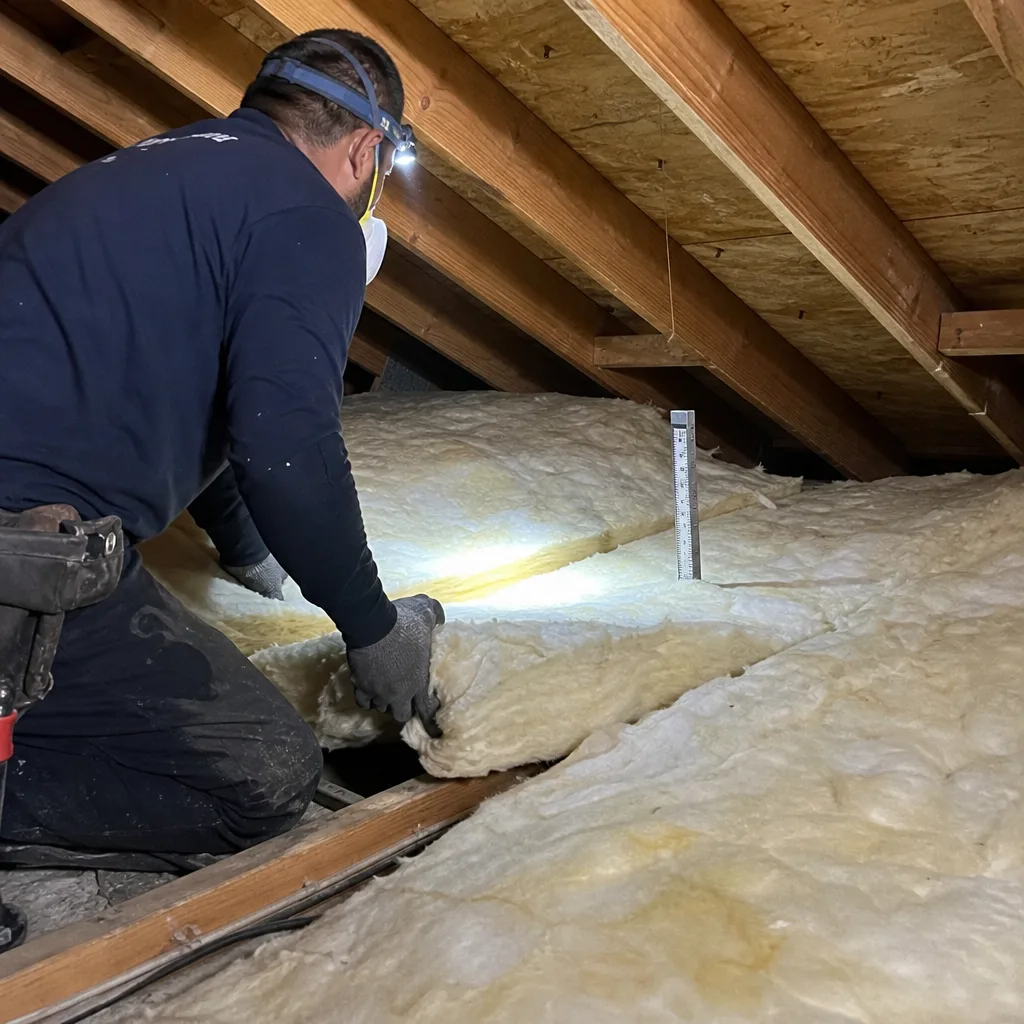
Attic cleaning in Walnut typically runs $400 to $900 depending on attic size, access, and how much debris and old material needs to come out. Homes with rodent activity or damaged insulation that requires full removal trend toward the upper end. It’s not glamorous work, but skipping it means putting new insulation over old problems.
When to Clean Before You Insulate
If the attic has never been touched, if you’ve had pests, or if the existing batts are visibly compressed and brittle, clean first. You cannot top off insulation over a compromised base and expect the R-value to hold. The new material will settle into the gaps and the heat will find its way through.
Cleaning Paired With a Top-Up
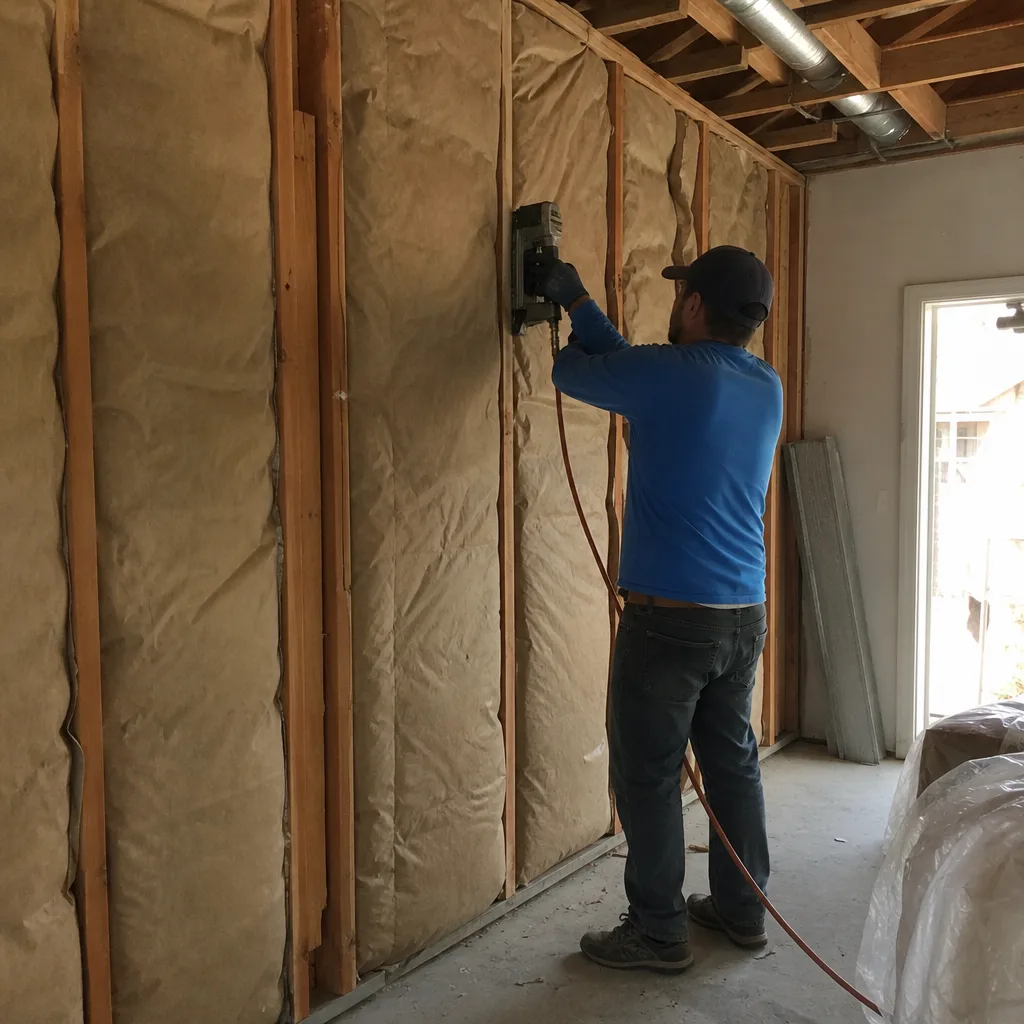
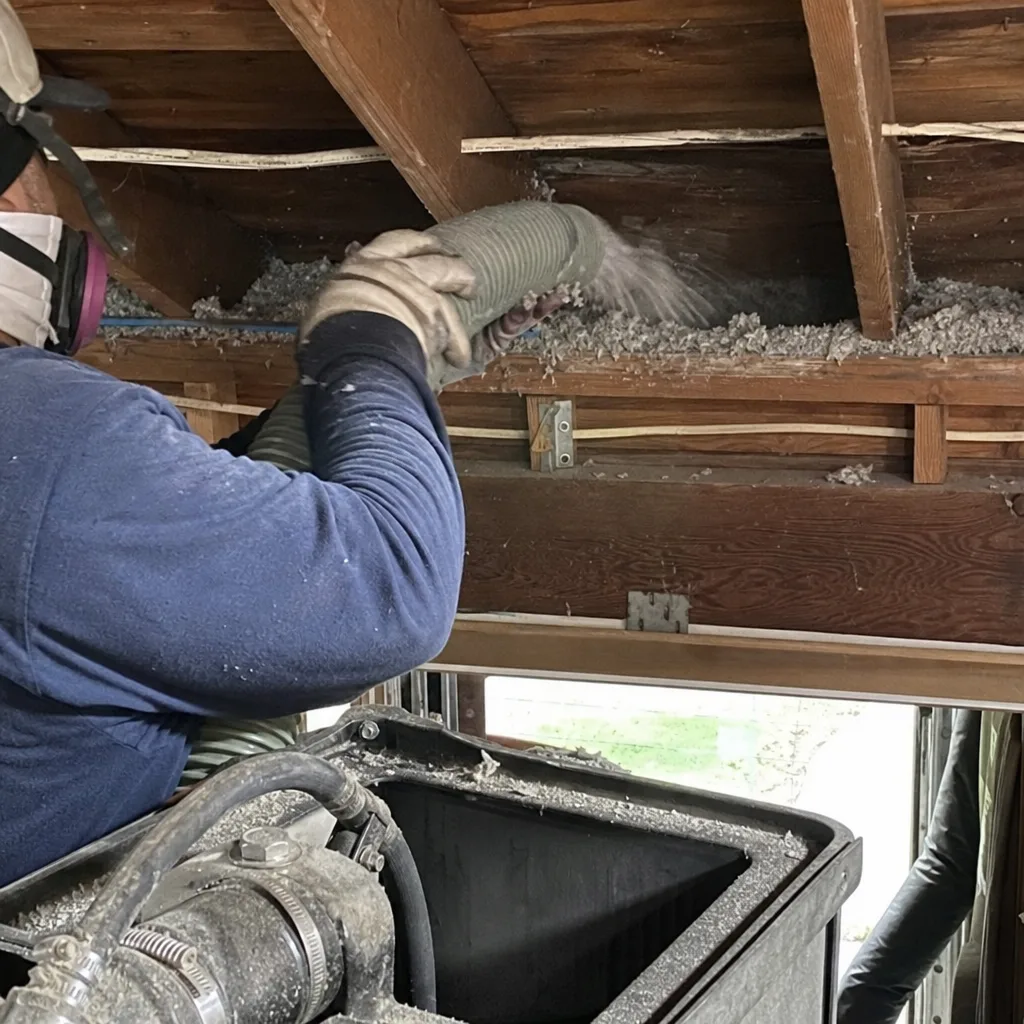
For Walnut owners whose attics are in decent shape but under-insulated, we can do a lighter clean – basically debris removal and a surface vacuum – then blow in new material directly over the existing. That keeps the job cost down and still gets the R-value up to current recommendations.
What happens when you call
- 1
A real person answersNo phone trees — you reach a local pro.
- 2
You get an upfront price rangeHonest numbers before anyone is dispatched.
- 3
A background-checked tech heads outLicensed & insured, dispatched right away.
- 4
You approve before work beginsNothing starts until you say go.
Trusted Brands We Service in Walnut
We carry and install eight manufacturer lines, which is genuinely unusual among attic insulation contractors in the San Gabriel Valley. For Walnut homeowners, the brands that matter most tend to be GreenFiber for recycled-content blown-in loose fill, Rockwool for fire-resistant, moisture-resistant mineral wool batts, and Owens Corning for radiant barrier and fiberglass systems. We also work with Icynene and Demilec closed- and open-cell spray foam for sealed attic assemblies in newer hillside builds. Having all of these options under one roof means we don’t have to steer you toward whatever brand we happen to stock. Ask us why we carry Rockwool, spray foam, and recycled fiber – most contractors carry none of them.
Common Attic Insulation Problems We See in Walnut Homes
- Sagged 1970s and 80s fiberglass batts: In tracts along Valley Boulevard and off Lemon Avenue, the original batts have compressed to a fraction of their labeled R-value. The paper backing is long gone, the material is dusty, and heat passes straight through.
- Ductwork baking in an overheated attic: Uninsulated original ducts in a 130°F Walnut attic lose cooling before air ever reaches a register. The AC runs longer, the upstairs never cools, and the bill climbs every summer.
- No radiant barrier on older roof decks: Homes built before barrier became standard practice in the 1990s radiate heat down onto whatever insulation exists, degrading it faster and keeping the whole attic hotter than it needs to be.
- Undersized top-up jobs from previous owners: We regularly find attics where a prior owner blew a thin layer of loose-fill over severely compressed batts. It looks like insulation. It tests nowhere near Title 24-recommended R-values.
Pricing for Attic Insulation in Walnut, CA
Here’s what attic insulation in Walnut actually costs, based on the jobs we do most often in the 91788 and 91789 areas. A standard blown-in top-up over existing insulation for a 1,200 to 1,600 square foot tract home runs $1,100 to $2,300. Full removal of old material and a clean blown-in install runs $2,400 to $4,500 depending on attic size and access. Radiant barrier alone lands between $1,400 and $2,600 for most Walnut homes. Spray foam in an attic is a heavier investment, typically $4,000 to $8,000 for a sealed attic assembly in a custom hillside build. Attic cleaning as a standalone sits at $400 to $900. Call (833) 390-3099 for an exact quote, estimates are free, and we’ll tell you which of those jobs your attic actually needs rather than the most expensive one on the board.
We Also Serve Cities Near Walnut
Our crews work throughout the eastern San Gabriel Valley. In addition to Attic Insulation in Walnut, we serve South San Jose Hills, Rowland Heights, West Covina, and Pomona. If your home sits in one of those neighboring communities and you’ve got the same attic problems we describe here, the fix is usually the same: clean it, seal it, and insulate it for how this valley actually heats up.
Serving Walnut, CA — Our Local Coverage Area
We’re based in the Walnut area and know this community well. Use the map below to see our service coverage — if you’re nearby, we can almost certainly help.
FAQs About Attic Insulation in Walnut
Because your attic is a solar oven from May through October. In Walnut, summer temperatures regularly hit the high 90s and pass 100°F, and an uninsulated or under-insulated attic can reach 130°F or hotter by mid-afternoon. That heat radiates down through the ceiling into your living space, which is why upstairs rooms in 1970s tracts never seem to cool off. Winter in Walnut is mild enough that heat loss barely registers. The insulation job that pays off fastest here is the one built against radiant heat gain and attic temperature, not the cold-climate framing you’d use north of the Grapevine. Call (833) 390-3099 if you want us to check exactly what’s happening above your ceiling.
Usually no. The original fiberglass batts in a 1970s Walnut tract attic have been exposed to 40 or 50 years of inland heat cycling, and most of them are compressed, dusty, and running far below their stamped R-value. Blowing new material directly over them gives you a temporary improvement, but the old material below is still failing, and the new layer settles into the gaps. The right move is usually removal and a clean blown-in install, or a full clean with a top-up if the old batts are still in reasonably intact shape. We’ll tell you which applies after one look at the attic floor. For an exact assessment, call (833) 390-3099.
Yes, in most cases. Radiant barrier and attic insulation do two different jobs. The insulation slows conductive heat transfer through the ceiling. The barrier blocks radiant heat coming off the underside of the roof sheathing before it ever reaches the insulation. A Walnut attic with decent insulation but no barrier will still run 20 to 30 degrees hotter on a 100°F day than one with a barrier installed. That extra heat shortens the life of whatever insulation you have and heats up any ductwork running through the attic. Barrier is one of the lowest-cost, highest-impact upgrades for older Walnut homes. Ring (833) 390-3099 and we’ll give you a per-square-foot price for your roof.
It’s often the biggest part of the fix. If your ducts are uninsulated or have degraded insulation, they’re losing cooling capacity every foot they run through a 130°F attic. That means the air coming out of your registers is warmer than the air leaving the AC unit, and the system runs longer to compensate. A combination of attic insulation, radiant barrier, and duct insulation brings the attic environment back under control, which lets your existing AC do its actual job. In some Walnut homes, that’s the difference between a unit that short-cycles all day and one that satisfies the thermostat in a normal run. We diagnose it on site. Call (833) 390-3099 to schedule the walkthrough.
We do, because the roof geometry and attic layout are completely different. The custom homes in the Walnut hills often have vaulted ceilings, multiple roof planes, skylights, and trapezoidal attic spaces that make a standard blown-in job impractical in spots. Those homes usually need a hybrid approach: radiant barrier where the rafter bays are accessible, dense blown-in coverage over the flat ceiling sections, and sometimes closed-cell spray foam for hard-to-reach or unusually shaped areas. The materials and methods get matched to the house, which is why we carry eight brands and three installation methods rather than pushing a single product. Call (833) 390-3099 and we’ll come up to your house and map out what actually makes sense.
Written by Nate Calloway, Owner at Fountain Valley Insulation, serving Walnut since day one.