


Fast, Reliable Attic Insulation Across San Gabriel
Attic insulation in San Gabriel isn’t a one-material job. Most of the homes we work in here were built between the 1920s and 1970s, and what’s sitting in their attics right now is usually settled rock wool or thin fiberglass batts that stopped doing real work years ago. If you’re in the 91775, 91776, or 91778 zip codes and your upstairs rooms spike in the afternoon while the AC runs nonstop, the attic is where your problem lives. Fountain Valley Insulation brings eight manufacturer brands and three installation methods to every San Gabriel job, so we match the material to your home, not the other way around. Call (833) 390-3099 for a free estimate and a straight answer about what your attic actually needs.
Why Fountain Valley Insulation Is San Gabriel’s Preferred Attic Insulation Company
San Gabriel homeowners call us because we don’t show up with a single product and a script. We carry Owens Corning, Johns Manville, Knauf, Rockwool, CertainTeed, Icynene, Demilec, and GreenFiber, and we’ll tell you which one fits your roof pitch, your duct layout, and your cooling bills. Nate Calloway built this company around the idea that the right material matters more than the brand on the truck.
Our crews know the older tracts north of Las Tunas Drive, the postwar ranch additions with inconsistent coverage, and the stucco bungalows where attic heat gain is the real enemy. We’ve spent enough time in San Gabriel attics to know what’s up there before we even open the hatch: settled 1960s rock wool, unsealed kneewall gaps, and furnace closets baking in August heat. That local knowledge changes the way we spec a job. Same-week scheduling is typical for San Gabriel, and we stock the materials needed for most attic upgrades locally, so we’re not waiting on a warehouse in another county. The work gets done in one trip, and the estimate is free.
Attic Ventilation in San Gabriel
Attic Ventilation in San Gabriel is the difference between an insulation job that works and one that doesn’t. A vented attic pushes out the superheated air that builds up under a roof baking in 100°F+ valley sun. Without it, that heat radiates down into your living space all night, and your new insulation ends up thermally saturated. The job here typically involves checking existing soffit and gable vents, clearing blocked airflow, and in many older San Gabriel homes, adding baffles before blown-in insulation goes in so the eaves don’t get clogged.
A typical attic ventilation correction in San Gabriel runs $400 to $1,200 depending on attic size and how much of the existing venting is blocked or undersized. If your roof has ridge vents that were never properly opened or soffit vents painted over decades ago, the fix is straightforward but essential before adding insulation.
Air Sealing the Attic Hatch and Kneewalls
In a San Gabriel bungalow, the attic hatch and kneewall gaps are where conditioned air escapes straight into a 140°F attic. We seal those openings before we add any material. It’s the least glamorous part of the job and the one that most affects your bill.
Baffles and Soffit Vent Prep
Blown-in insulation without baffles means soffit vents get buried and airflow dies. For San Gabriel’s older one-story homes with shallow eaves, we install baffles at every rafter bay that needs them before the insulation goes in. It costs more upfront and pays back every summer.
Radiant Barrier in San Gabriel
Radiant Barrier in San Gabriel is not a luxury add-on. In this climate, it’s often the single highest-impact upgrade you can make to an older attic. A radiant barrier is a reflective foil stapled to the underside of the roof rafters. It bounces radiant heat back out instead of letting the roof deck radiate it into the attic and then into your ceilings. In a San Gabriel August, that attic air can hit 140°F without one. With a radiant barrier, the attic stays measurably cooler, and your insulation actually gets to do its job.
A radiant barrier installation in San Gabriel typically runs $1,500 to $3,500 for an average single-story home, depending on attic square footage and rafter layout. Pairing it with blown-in insulation is the standard spec for our San Gabriel jobs where the roof is the dominant heat source. We recommend it specifically for older stucco bungalows and one-story tracts where cooling load, not heating, drives the energy bill.
Under-Rafter Radiant Barrier for Low-Pitch Roofs
Many San Gabriel homes have low-pitch roofs that turn the attic into an oven by noon. Stapling the radiant barrier directly under the rafters works better here than floor-laid products, which collect dust and lose reflectivity fast.
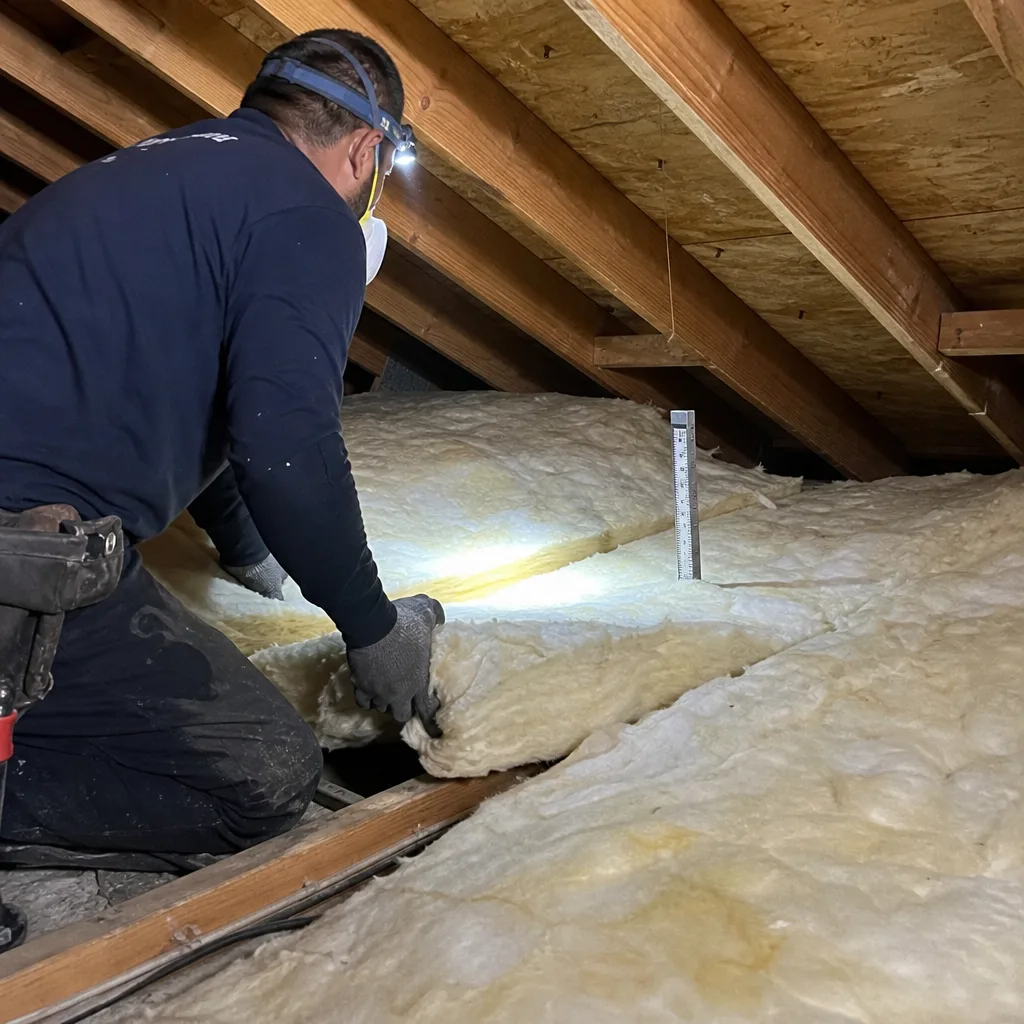
Dust-Resistant Barrier for Older Attics
Older attics mean decades of dust, and dusty surfaces kill radiant barrier performance. We use perforated, dust-shedding foil products on San Gabriel retrofits. It’s a small detail that keeps the barrier effective for years instead of months.
Trusted Brands We Service in San Gabriel
We stock and install Owens Corning, Icynene, and GreenFiber products for San Gabriel customers, among the eight brands we carry. That means if your project calls for premium spray foam, we’re not subcontracting it out, and if you want recycled-content blown-in fiber, GreenFiber is on our truck, not a special order. San Gabriel homeowners get honest recommendations across the full lineup. Ask us why we carry Rockwool, spray foam, and recycled fiber. Most contractors carry none of them.
Common Attic Insulation Problems We See in San Gabriel Homes
- Settled 1960s rock wool north of Las Tunas Drive. The original insulation in these tracts has compacted to three inches or less. It looks like it’s still there, but it’s doing almost nothing against a 100°F summer.
- Unsealed furnace closets and central returns baking in the attic. We find return boxes sitting dead-center in 140°F attic air, leaking hot air into the system and cancelling the cooling work your AC is doing.
- Inconsistent coverage in postwar ranch additions. Builders in the 1950s and 60s often insulated the original section and skimped on the added wing. Knee-wall gaps, missing batts, and bare spots over additions are common.
- Missing or blocked attic ventilation. Painted-over soffit vents, never-opened ridge vents, and clogged gable vents trap heat. Insulation gets blamed, but ventilation is usually part of the problem.
Pricing for Attic Insulation in San Gabriel, CA
A typical attic insulation upgrade in San Gabriel runs $2,200 to $5,800 for a standard single-story home. Blown-in insulation over an existing thin layer runs $1,800 to $3,400, while a full removal of old rock wool plus air sealing and new blown-in insulation is $3,500 to $6,000. Radiant barrier adds $1,500 to $3,500. Attic ventilation correction runs $400 to $1,200. What moves the number is attic square footage, how much old material has to come out, and whether we’re air-sealing and adding a radiant barrier at the same time. Call (833) 390-3099 for a free estimate. We’ll walk your attic with you if you want us to, and give you a written scope with actual numbers before any work starts.
We Also Serve Cities Near San Gabriel
Beyond San Gabriel, we run the same crews and the same brand lineup to San Gabriel neighbors in East San Gabriel, San Marino, Alhambra, and Rosemead. If you’re in one of those cities and dealing with the same valley heat, the same fix applies. Call and we’ll schedule a look.
Serving San Gabriel, CA — Our Local Coverage Area
We’re based in the San Gabriel area and know this community well. Use the map below to see our service coverage — if you’re nearby, we can almost certainly help.
FAQs About Attic Insulation in San Gabriel
You can, but we don’t recommend it. That settled rock wool has compacted into a dense mat that blocks airflow and hides air leaks. We typically remove it, air-seal the hatch and kneewall gaps, then blow in new insulation to current R-value. Call (833) 390-3099 and we’ll tell you what your attic actually looks like before we quote anything.
In San Gabriel, more insulation alone often isn’t enough. The problem here is radiant heat gain from a roof baking in 100°F+ sun. A radiant barrier reflects that heat before it ever reaches your insulation. For older stucco bungalows and one-story tracts, we spec radiant barrier as a standard part of the attic upgrade, not an upsell.
Yes, and it’s one of the most common issues we find in San Gabriel homes. An uninsulated return box in a 140°F attic pulls hot air straight into your cooling system. We insulate and seal the return box and the duct connections before we add attic insulation. Skipping that step means your new insulation is fighting a losing battle. Call (833) 390-3099 and we’ll check yours.
We map the attic first, noting where the original section ends and the addition begins. Then we fill bare spots, seal kneewall gaps, and bring the whole attic up to a consistent R-value rather than just adding material over the bad spots. It’s a common fix for San Gabriel’s ranch-style homes, and it usually resolves the hot-room, cold-room problem in one trip.
We carry Owens Corning, Icynene, GreenFiber, and five other brands: Johns Manville, Knauf, Rockwool, CertainTeed, and Demilec. That means we’re not limited to one material or one supplier. For most San Gabriel attics, we recommend Owens Corning blown-in fiberglass plus a radiant barrier. For spray foam needs, Icynene and Demilec. For recycled-content options, GreenFiber. Call (833) 390-3099 and we’ll tell you which one fits your house.
If your San Gabriel attic is still running on 1960s rock wool and a 140°F August oven, the fix is not mystery. Call Fountain Valley Insulation at (833) 390-3099 for a free estimate. We’ll come out, look in your attic, and tell you exactly what’s up there and what it’ll take to fix it. No script, no single-product pitch. Just the right material for your home.
Written by Nate Calloway, Owner at Fountain Valley Insulation, serving San Gabriel since our founding.