

Fast, Reliable Attic Insulation Across San Fernando
Attic insulation in San Fernando costs $1,450 – $3,200 for a typical 1,000 – 1,500 sq ft single-story home, with blow-in loose-fill on the lower end and spray foam on the higher end. Most jobs take one day, and we respond to the 91340 and 91341 ZIPs within 24 – 48 hours for estimates. If your home sits near San Fernando Road or up toward the 118, you already know the heat problem: attics here hit 140 – 150°F in summer without breaking a sweat.
Fountain Valley Insulation works across San Fernando regularly, and we know these post-war stucco tracts better than most. The attics on these streets are small, tight, and under-ventilated. That changes what works. We match the material to your home, not the other way around. Call (833) 390-3099 for a free estimate.
Why Fountain Valley Insulation Is San Fernando’s Preferred Attic Insulation Company
Homeowners across San Fernando call us because we carry eight manufacturer brands, not one. That matters in a city where most houses were built between 1940 and 1975, with original plank sheathing and tiny hip roofs that trap heat. A single-brand contractor can only sell you what’s on their truck. We can actually choose.
Nate Calloway, our owner, built Fountain Valley Insulation around the idea that an installer should be brand-agnostic and honest about the tradeoffs. Owens Corning, Johns Manville, Knauf, Rockwool, CertainTeed, Icynene, Demilec, and GreenFiber are all in our lineup. If you need fire-resistant mineral wool near a flue chase, we install Rockwool. If you want recycled-content loose-fill, GreenFiber is on the menu. If you need closed-cell spray foam on an unvented roof deck, we use Icynene or Demilec. Most San Fernando contractors carry none of those three.
Our response time to San Fernando is typically next-day for estimates and same-week for installs. We know the lots, the access issues, and the building quirks on blocks near Cesar Chavez Learning Academies and along Brand Boulevard. That local familiarity keeps the job moving.
Radiant Barrier in San Fernando
Radiant barrier in San Fernando is one of the highest-payback upgrades you can put in a house with a low-slope or hip roof, and it’s frequently the difference between a space that still radiates heat at 8 p.m. and one that doesn’t. It’s a reflective foil product stapled under the rafters that bounces radiant heat back out, and in this city’s 140 – 150°F attics, it can cut ceiling surface temps dramatically. The labor for a typical 1,000 – 1,300 sq ft attic runs $800 – $1,500 installed, depending on roof geometry and whether we’re also air-sealing and adding loose-fill in the same trip.
San Fernando’s post-war stucco tracts were built with plank sheathing and often no attic ventilation sized for the actual roof area. The roofs soak up solar gain all afternoon. Radiant barrier isn’t a replacement for insulation, but it’s a strong complement when the heat source is the sun, not the winter cold. We install it under hip and low-slope rafter bays where standard baffles won’t do much.
What We Install Under the Rafters
We staple perforated radiant barrier foil to the underside of your rafters, shiny side facing the roof deck. Perforated means it breathes, so it won’t trap moisture against the sheathing. This goes in after any air-sealing work, and it’s the first thing we recommend for a San Fernando attic that already has some insulation but still cooks in summer.
When Radiant Barrier Beats More Insulation
If your attic floor is already insulated to code minimum and the house still scorches, the heat isn’t coming from below. It’s the sun. Adding another R-19 worth of fiberglass won’t stop radiant heat from warming the attic air to 150°F. Radiant barrier deals with the actual mechanism at play in San Fernando.
Attic Cleaning Services in San Fernando
Attic cleaning services in San Fernando usually start with an inspection for rodent activity, old debris, mold, and failed insulation, and most cleanouts on these older compact attics run $500 – $900. Heat, dust, and decades of neglect turn a lot of San Fernando attics into a layered problem: old wiring, dropped soffits, and settled batts mixed with rat droppings and roof dust. We handle it in one sequence: remove, sanitize, air-seal, then insulate over a clean surface.
Anyone blowing new loose-fill over a filthy or infested attic is sealing the problem in. We don’t do that. When the attic is clean and you can see the top plates and can penetrations, the air-sealing work actually works. In a neighborhood where every house has recessed cans and original plank subceilings, that prep work isn’t optional.
Removal of Settled or Contaminated Batts
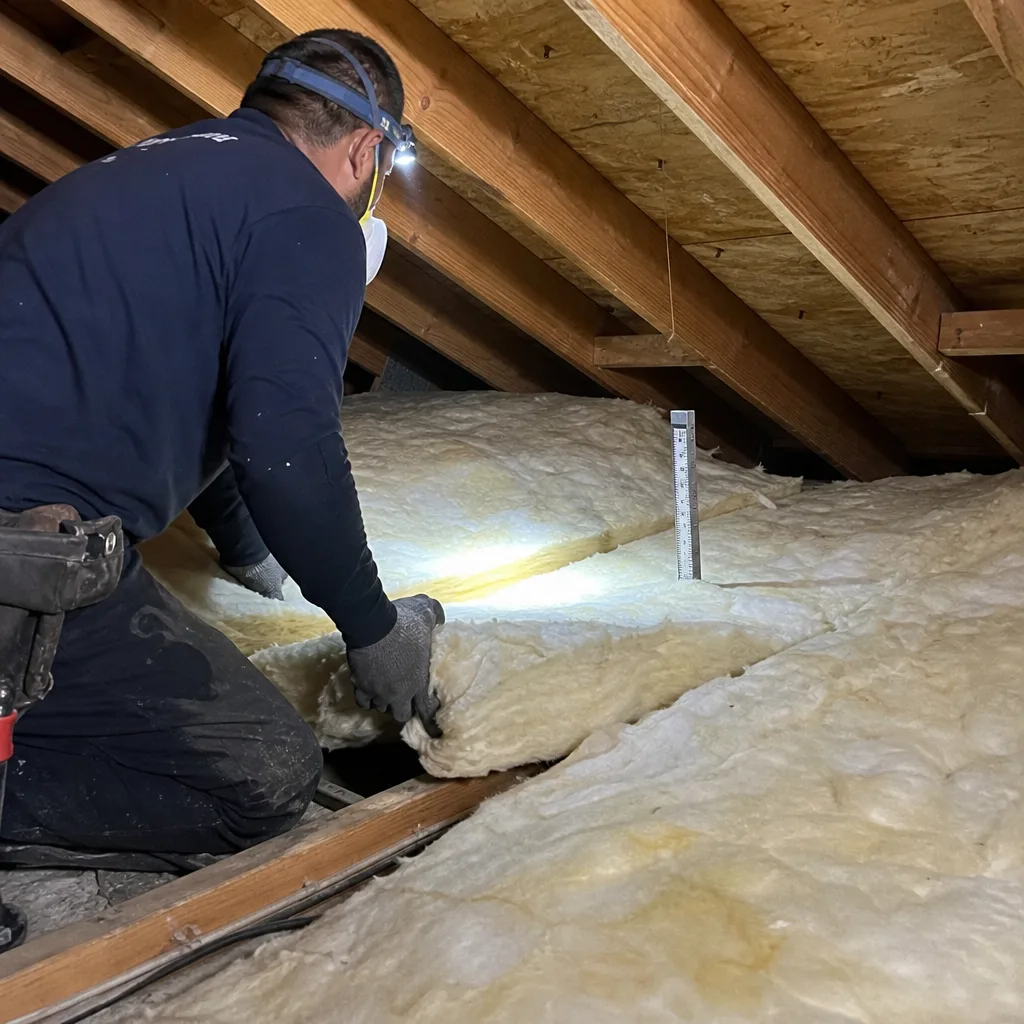
We bag and remove old fiberglass that’s been compressed by heat, chewed through by rodents, or soaked by a past roof leak. San Fernando’s 140-degree attics bake old batts until they’re brittle and flat, and they’re not doing what the label claims anymore. Once the deck and joist cavities are clear, we can spot the real problems.
Air-Sealing Pass Before New Insulation
Before any loose-fill goes down, we seal recessed light cans, top plates, flue chases, and plumbing penetrations. On these older stucco homes, that’s where most conditioned air leaks into a superheated attic. Skipping it means you’re paying to cool the roof.
What happens when you call
- 1
A real person answersNo phone trees — you reach a local pro.
- 2
You get an upfront price rangeHonest numbers before anyone is dispatched.
- 3
A background-checked tech heads outLicensed & insured, dispatched right away.
- 4
You approve before work beginsNothing starts until you say go.
Trusted Brands We Service in San Fernando
Fountain Valley Insulation installs, troubleshoots, and services insulation systems built on Owens Corning, Johns Manville, Knauf, Rockwool, CertainTeed, Icynene, Demilec, and GreenFiber. For San Fernando customers, that means we’re not tied to one product line when it’s the wrong fit. We stock loose-fill for blow-in top-ups, Rockwool batt stock for fire-rated cavities, and both Icynene and Demilec spray foam in open- and closed-cell formulations. Most local contractors carry one fiberglass line and call it a day. We stock multiple options and will tell you exactly why one makes sense for your roof pitch and your 1960s plank sheathing.
Ask us why we carry Rockwool, spray foam, and recycled fiber. Most contractors carry none of them.
Common Attic Insulation Problems We See in San Fernando Homes
- Heat-collapsed batts. Original fiberglass in these post-war homes has baked under decades of 140 – 150°F attic heat, settling to half its labeled thickness. Effective R-value collapses long before the homeowner realizes there’s a problem.
- Unsealed recessed cans and top plates. The ceilings in San Fernando’s older stucco houses leak conditioned air straight into the superheated attic. Any new loose-fill added without first sealing those bypasses underperforms immediately.
- Under-ventilated hip roofs. Small hip and low-slope roofs on these compact lots don’t move enough air, so heat bakes asphalt shingles from underneath. That causes shingles to fail early even after new insulation goes in.
- Original plank sheathing with old wiring. Many attics near Brand Boulevard and Fifth Street still show original plank decking and knob-and-tube-era wiring. Work has to be done carefully, with wiring protected and air-sealing done around it, not through it.
Pricing for Attic Insulation in San Fernando, CA
A typical attic insulation top-up in San Fernando runs $900 – $1,400 for loose-fill blown over existing material, once we’ve confirmed there’s no air-sealing work needed. Full attic insulation replacement with removal of degraded batts, air-sealing, and new blow-in runs $1,800 – $3,200 for a standard 1,000 – 1,300 sq ft attic. Radiant barrier adds $800 – $1,500 installed. Attic cleaning runs $500 – $900. Spray foam for an unvented roof deck is the premium option, usually $3.50 – $6.00 per board foot in the San Fernando area, and it’s often the right call for cramped, low-pitch roof cavities where venting is a fight.
Older homes with knob-and-tube wiring or heavy debris add labor, and attic access through a small hallway scuttle changes the job. We quote it straight, and estimates are free. Call (833) 390-3099 to get a real number.
We Also Serve Cities Near San Fernando
Our Attic Insulation team works throughout the northeast Valley, and we regularly take calls from North Hills, Shadow Hills, Northridge, and Van Nuys as well as San Fernando. Highway access makes response quick, and the housing stock is similar in all of these older tracts: hot attics, settled insulation, and under-ventilated roofs.
Serving San Fernando, CA — Our Local Coverage Area
We’re based in the San Fernando area and know this community well. Use the map below to see our service coverage — if you’re nearby, we can almost certainly help.
FAQs About Attic Insulation in San Fernando
Your attic typically runs hotter because of your roof geometry, not your insulation. San Fernando’s small hip roofs and low-slope planes soak up direct solar load and don’t have enough ventilation to shed it. Add thin plank sheathing and a lack of soffit baffles, and the attic hits 140 – 150°F while your neighbor across the hill sits 20 degrees cooler. Call (833) 390-3099 and we’ll tell you what’s actually driving it.
No, and in these homes that’s the single most common mistake. Blowing new loose-fill over heat-collapsed, rodent-affected batts without air-sealing first means the new insulation underperforms from day one. The top plates and recessed cans leak conditioned air straight into the attic, and the old material stays compressed. Remove, seal, then insulate. That’s the order.
Radiant barrier is usually worth it here because San Fernando’s heat problem is radiant, not conductive. The sun beats on the roof deck all day, and no amount of floor insulation changes that. A perforated foil under the rafters reflects heat before it loads the attic air. Install extra R-value too, but the barrier is what changes the 8 p.m. wall of heat.
Not if it’s done correctly. We work around original wiring rather than burying it blindly, and light loose-fill doesn’t stress plank sheathing the way heavy compressed material can. The bigger risk is insulation installers who don’t recognize knob-and-tube-era wiring or who staple radiant barrier through old knob-and-tube runs. We check, we flag, and we route around. Call us for a quote at (833) 390-3099.
Because in San Fernando it’s been baked. Original fiberglass batts in these 1940s – 1970s stucco tracts compress under repeated 140 – 150°F attic heat until the trapped air is squeezed out, and that trapped air is what gave the batt its R-value. What’s left is a thin, dense blanket that no longer insulates. Replacement is the fix, and it’s the most common upgrade we do in the 91340 and 91341 ZIPs.
Written by Nate Calloway, Owner at Fountain Valley Insulation, serving San Fernando and the surrounding Valley communities.