


Fast, Reliable Attic Insulation Across Quail Valley
Attic insulation in Quail Valley isn’t a one-material-fits-all job. Most homes in the 92587 ZIP code were built from the 1980s onward with stucco exteriors and tile roofs, but their attic systems rarely match what the climate actually demands. Summer days push past 100°F, and unconditioned attics become ovens that radiate heat into living space for hours after sunset. We inspect what’s already up there, identify where the heat is moving through, and install the right material for the space, whether that’s blown-in cellulose, batt insulation, or spray foam. If your attic is running hot or your upstairs rooms never seem to cool down, call (833) 390-3099 and we’ll take a look.
Why Fountain Valley Insulation Is Quail Valley’s Preferred Attic Insulation Company
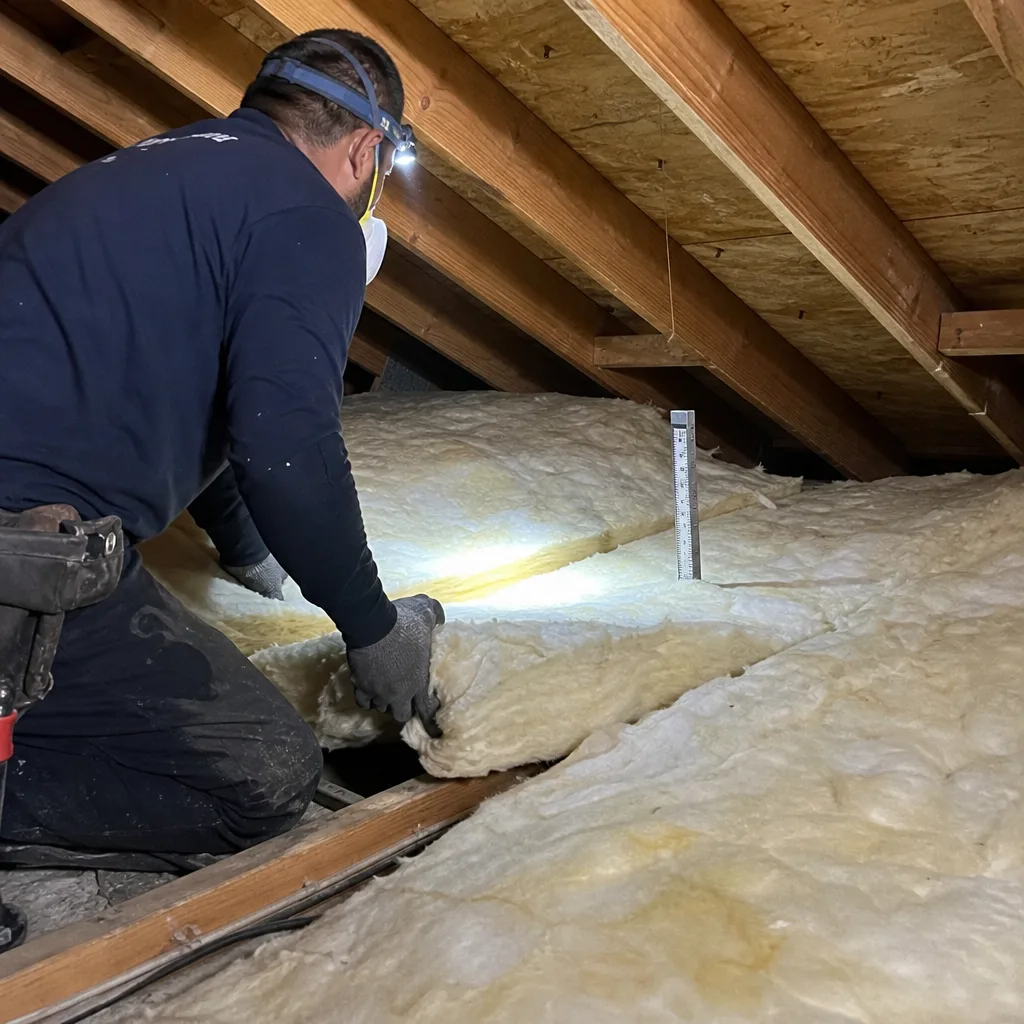
Quail Valley homeowners deal with a specific set of attic problems that coastal contractors don’t see. The heat load is relentless. Tile roofs hold heat. Original 1980s fiberglass batts sag and compress in 100°F+ attic temperatures, silently dropping from R-19 or R-30 down to R-11 or worse. We see this constantly in homes off Goetz Road and along the former golf course fairways. Our team knows what failing attic insulation looks like in this climate, and we’ve removed enough collapsed batts and heat-baked fiberglass to know exactly what replacement works here.
Nate Calloway, who leads our install crews, has walked attics across Quail Valley and Canyon Lake and can tell you within five minutes whether your insulation is still doing its job. We don’t upsell. We match material to the house. That’s why homeowners call us back when they move or renovate.
Response time to Quail Valley is same-day for estimates in most cases, and installations are typically scheduled within the week. We work around HOA review schedules rather than pretending they don’t exist.
Attic Mold Removal in Quail Valley
Attic mold removal in Quail Valley is a two-part job: stopping the moisture source, then removing the contaminated material. Poorly vented attics in this climate trap warm air that condenses against the underside of the roof deck at night. Tile roofs, common throughout Quail Valley, hold heat and complicate airflow. Mold follows moisture, and once it starts in insulation, you can’t clean it, you remove it. A typical attic mold removal in Quail Valley runs $1,200 to $3,400, depending on the square footage affected and whether the contamination reaches the roof sheathing.
What We Actually Remove
We remove contaminated insulation, bag it on site, and dispose of it properly. If mold reached the sheathing, we treat it before new insulation goes in. Skipping that step means the new material gets contaminated within a season. Quail Valley’s hot, dry summers slow mold growth, but winter condensation gives it a starting point every year.
Why Ventilation Matters Here
Most attics in Quail Valley were vented for a smaller heat load than they actually face. Our Attic Insulation team checks baffles, ridge vents, and soffit airflow before we install anything. Mold removal without a ventilation fix is just buying time, and we’ll tell you that straight.
Attic Insulation Removal in Quail Valley
Attic insulation removal in Quail Valley is more common than homeowners expect, and it’s usually because of age, compression, or contamination. We see original 1980s fiberglass batts that have slumped off the roof deck. We see loose-fill that’s collected dust and lost loft from decades of thermal cycling. A full attic insulation removal in Quail Valley typically costs between $800 and $1,800, depending on attic access, material type, and depth. If rodent activity or mold is involved, the price shifts accordingly.
When Removal Beats Top-Up
You can’t blow new insulation over mold, rodent droppings, or soaked material. You also shouldn’t top up insulation that’s compressed to R-11 and full of gaps. In Quail Valley’s summer heat, a half-dead attic system costs you money every single day. Removal gives us a clean substrate to work from, and it’s the only way to air-seal top plates and close the thermal bypasses that let 130°F attic air into the house.
What Happens After Removal
Once the old material is out, we inspect the attic floor for gaps, wiring clearance, and venting issues. Then we discuss what goes back in. For most Quail Valley homes, that’s GreenFiber cellulose, Rockwool mineral wool, or a spray foam solution depending on the structure and the homeowner’s priorities.
Trusted Brands We Service in Quail Valley
We carry eight manufacturer brands, which means we don’t have to push one product on every house in Quail Valley. Rockwool mineral wool gives homeowners a fire-resistant, moisture-resistant option that fiberglass can’t match. CertainTeed brings proven batt and blown-in systems. Icynene and Demilec cover closed-cell and open-cell spray foam for attics that need air sealing as much as thermal resistance. We keep common materials staged for Quail Valley jobs so we’re not waiting on a warehouse shipment when your attic is already torn apart.
Common Attic Insulation Problems We See in Quail Valley Homes
- Sagging and compressed 1980s batts. Fiberglass installed during the original build has been baking in 100°F+ attic heat for decades. It slumps, loses loft, and the R-value drops well below what the label says. Homeowners assume the attic is still insulated. It isn’t.
- Expansive clay soil shifting the structure. The 92587 ZIP sits on some of the most expansive clay in the region. Foundations move, framing racks slightly, and gaps open at top plates. Hot inland air channels straight from the attic into living space through those gaps, and no amount of new insulation fixes an unsealed top plate.
- HOA review stalls turning into violation notices. Quail Valley’s architectural review board can require material and aesthetic approval before insulation work is signed off. Homeowners who skip that step end up with a rework order and a bill. We document everything for the ARB file from the start.
- Underfloor insulation compression from soil movement. This one surprises people. As the clay under the slab expands and contracts seasonally, underfloor insulation in raised sections gets compressed or shifted. An attic retrofit is often the right time to check what’s happening below, because both systems work together to keep the house stable temperature-wise.
Pricing for Attic Insulation in Quail Valley, CA
Here’s what attic insulation work in Quail Valley actually costs. Attic insulation top-up, adding new material over existing, runs $1,400 to $2,600 for a typical 1,500-square-foot attic. Full attic insulation replacement with removal of old material lands between $2,200 and $4,800. Attic baffle and ventilation prep work adds $300 to $900 depending on how many rafter bays need attention. Blown-in cellulose is the most common choice in Quail Valley because it handles the summer heat load well and fills irregular attic cavities, but Rockwool and spray foam make sense for specific structures. We give free estimates with a written breakdown. Call (833) 390-3099 and we’ll measure your attic, not guess from a satellite photo.
We Also Serve Cities Near Quail Valley
Our Quail Valley team also handles attic insulation work in Sun City, Canyon Lake, Meadowbrook, and Romoland. If you’re just outside the 92587 boundary, we still cover the area, and the same brands, pricing, and HOA documentation process apply.
Serving Quail Valley, CA — Our Local Coverage Area
We’re based in the Quail Valley area and know this community well. Use the map below to see our service coverage — if you’re nearby, we can almost certainly help.
FAQs About Attic Insulation in Quail Valley
In most Quail Valley communities, yes. Insulation work that changes attic venting, visible roof components, or exterior aesthetics can trigger architectural review requirements. We document material spec sheets and installation details for ARB files as standard practice, so you’re not scrambling if the board asks for paperwork. Call (833) 390-3099 and we’ll flag what your specific community requires before we start.
Quail Valley’s summer attic temperatures routinely exceed 130°F on tile roof homes, and that sustained heat breaks down fiberglass binders and accelerates settling. Coastal attics rarely see that kind of thermal cycling. Add in the dry air pulling moisture out of materials and you get dust, compression, and R-value loss faster than a Huntington Beach attic would ever see.
The clay under your foundation expands when wet and shrinks when dry, which moves the structure over time. That movement racks framing and opens gaps at top plates where the walls meet the attic floor. Those gaps let hot attic air pour into the house. Insulating without air-sealing those joints is like patching a roof and leaving the skylight open.
Yes, and in Quail Valley it’s often the right call. We remove contaminated or compressed material, treat any mold on the sheathing, air-seal the attic floor, and then install the new system. Trying to install over mold or failing batts just buries the problem. A full removal and replacement on a typical Quail Valley home runs $2,200 to $4,800.
We install materials from eight manufacturers, including Rockwool, CertainTeed, Icynene, Demilec, Johns Manville, Knauf, Owens Corning, and GreenFiber. Most Quail Valley homes get either blown-in GreenFiber cellulose or Rockwool batts, but we’ll recommend what fits your attic, your HOA requirements, and your energy goals. Call (833) 390-3099 for a free estimate and a straight answer on material choice.
Written by Nate Calloway, Owner at Fountain Valley Insulation, serving Quail Valley and the Inland Empire.