

Fast, Reliable Attic Insulation Across Portola Hills
Attic insulation in Portola Hills isn’t a one-material job. The canyon-facing slopes above Live Oak Canyon create a heat profile that most flat-side Orange County homes never experience. Your attic gets baked by inland Santa Ana heat, and your vents sit in wind corridors that push hot air and embers directly into the roof cavity. That’s why we’re running crews to Portola Hills every week. If your upstairs rooms won’t hold temperature in July, call us at (833) 390-3099 and we’ll come assess what’s actually happening under your concrete tile roof.
Why Fountain Valley Insulation Is Portola Hills’s Preferred Attic Insulation Company
We’ve spent enough time in Portola Hills attics to know what the developers left behind. The 1980s and 1990s tract builds along Saddleback Ranch Road and the streets off Glenn Ranch Road shipped with R-11 to R-19 fiberglass batts, and on hillside lots that face Live Oak Canyon, that insulation has been fighting a losing battle since day one. Our team has pulled compressed batts that measure closer to R-9 after three decades of Santa Ana heat cycling.
What separates us from a general insulation contractor is the brand roster. We install blown-in insulation, attic batt insulation, and spray foam from manufacturers like Owens Corning, Icynene, and Demilec. That means we’re not pushing whatever product is in the truck. We’re matching material to the attic conditions on your specific lot, whether that’s a steep canyonside roof line or a townhome off Ridgeline Drive with shared firewall considerations.
Our response time to Portola Hills is consistently same-week, and most attic assessments in the 92610 ZIP take under an hour. We know the road patterns, we know the HOA guidelines, and we know where the wind hits hardest in this community. Nate Calloway built Fountain Valley Insulation around a simple principle: the right material for the right house, installed correctly the first time.
Radiant Barrier in Portola Hills
Radiant Barrier in Portola Hills is one of the highest-impact upgrades you can add to a hillside attic. Here’s the physics: your concrete tile roof absorbs sun all afternoon, then radiates that heat downward into your attic. A radiant barrier staples to the underside of your roof deck and reflects that heat back before it ever reaches your insulation or your living space. In a canyon-side home where the attic already runs 20 to 30 degrees hotter than outdoor air, that’s not a nice-to-have. That’s the difference between an upstairs that holds 72 and one that fights to stay under 80 from June through September.
In Portola Hills specifically, a radiant barrier install typically runs $1.75 to $2.60 per square foot of roof deck area for residential attics. For a standard 1,800 to 2,400 square foot attic space in this community, that lands between $2,800 and $5,600 depending on roof pitch, access, and whether we’re also air sealing and upgrading venting at the same time.
When a Hillside Attic Needs the Reflective Layer
Homes on canyon-facing slopes get direct sun exposure from mid-morning through late afternoon with no shade canopy. We see attics in Portola Hills that hit 140 degrees in July. Adding R-value without a radiant barrier is like sealing one hole in a boat with three leaks: the heat still pours in through radiation, and your insulation just absorbs it and passes it through more slowly over the evening hours. That’s why our attic insulation top-up work on canyonside homes often pairs fiberglass or blown-in insulation with a radiant barrier as standard practice.
Barrier Plus Air Sealing: The Portola Hills Sequence
We never install a radiant barrier without checking the venting and sealing first. On a home off Saddleback Ranch Road, our crew found open chases pulling hot canyon air straight into the attic. No amount of insulation was going to fix that until we sealed the canyonside roof-line penetrations and swapped in ember-resistant venting. Then we blew Owens Corning fiberglass back up to a proper R-value, then installed the radiant barrier to cut the afternoon heat gain. The homeowner told us the upstairs rooms stopped baking within the first hot week.
Attic Cleaning Services in Portola Hills
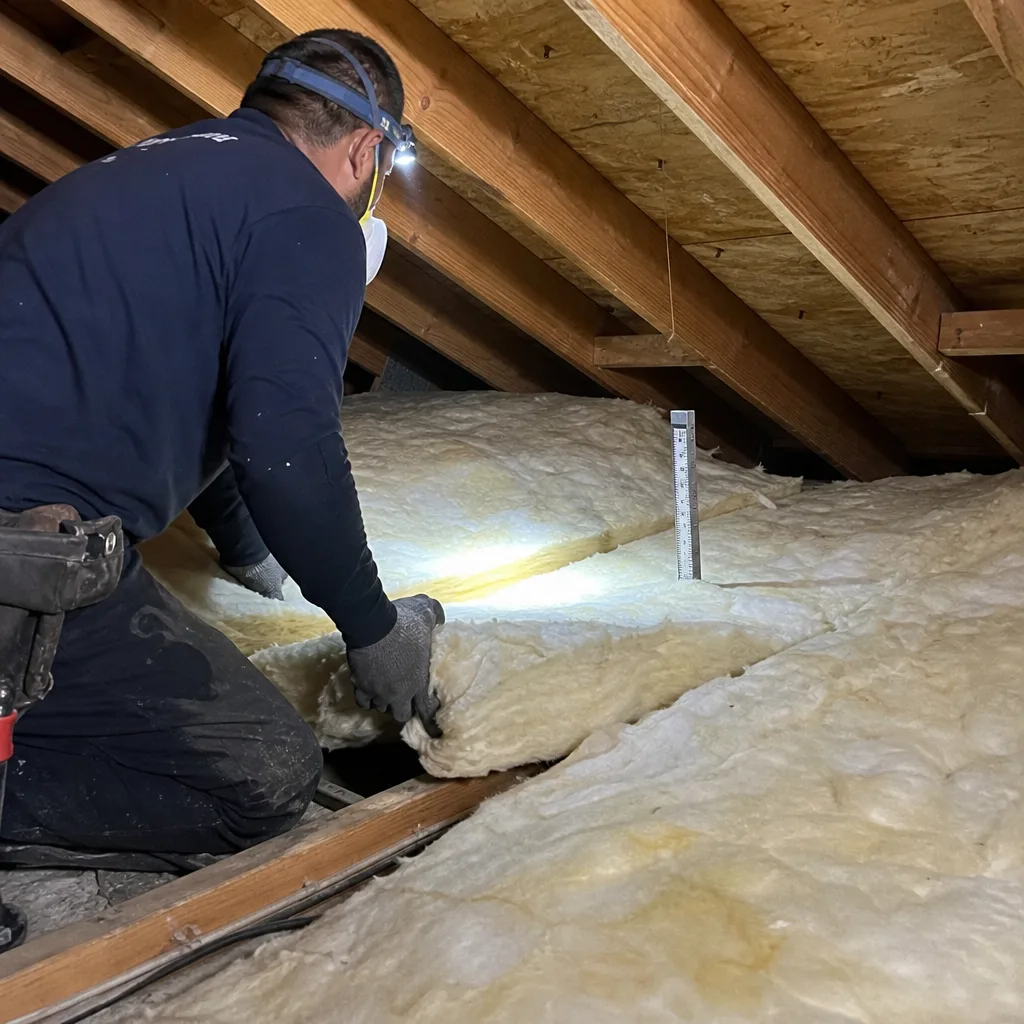
Attic Cleaning Services in Portola Hills start from a different baseline than most of Orange County. Your attic here isn’t just dusty. It’s likely carrying two to three decades of rodent activity, blown-in debris from Santa Ana wind events, and the fine grit that gets pulled through canyon-facing eave gaps. We’ve pulled nesting material from attics off Live Oak Canyon Road that measured several inches deep. Before any insulation work makes sense, that space needs to be clean and dry so the new material actually performs.
Full attic cleaning in the 92610 ZIP generally runs $750 to $1,500 depending on attic size, access difficulty, and the volume of existing insulation that needs removal. That price includes debris removal, old insulation extraction when needed, and sanitization before new material goes in.
The Cleaning-Before-Insulation Order
You don’t want new blown-in fiberglass or Rockwool dropped on top of rodent-contaminated material. The odor persists, the moisture stays trapped, and the R-value of your new insulation gets compromised by the compaction and debris layer underneath. In Portola Hills townhomes with shared attic spaces, this also matters for fire safety: old nesting material is combustible, and building codes for attached housing require a clean cavity before any insulation work proceeds.
Vent and Chase Clearing on Hillside Lots
Canyonside roof lines face a particular problem: wind-driven debris and ember-sized particulate collect in eave gaps and around vent screens. Our cleaning crews inspect every vent and chase while the attic is open, then clear blockages and flag any gaps that need air sealing before the insulation goes back. This is the Portola Hills difference: a clean attic with sealed penetrations beats a deeper pile of insulation on a leaky frame every time.
What happens when you call
- 1
A real person answersNo phone trees — you reach a local pro.
- 2
You get an upfront price rangeHonest numbers before anyone is dispatched.
- 3
A background-checked tech heads outLicensed & insured, dispatched right away.
- 4
You approve before work beginsNothing starts until you say go.
Trusted Brands We Service in Portola Hills
We carry Owens Corning fiberglass, GreenFiber recycled cellulose, and premium spray foam from Icynene and Demilec. That gives Portola Hills homeowners genuine choices: a rock wool option for fire-resistance on wildfire-exposed canyonside lots, recycled-content cellulose for anyone prioritizing sustainability, and closed-cell spray foam for attic roof decks where air sealing and R-value need to happen together. We stock materials for Portola Hills jobs and can typically have your attic insulated within a week of the assessment.
Common Attic Insulation Problems We See in Portola Hills Homes
- Settled builder-grade batts from the 1980s and 1990s. Original R-11 to R-19 fiberglass has compressed over 30 to 40 years of heat cycling. On canyon-facing slopes we regularly measure effective R-values in the single digits before any upgrade work begins.
- Unsealed canyonside roof lines and eave gaps. Santa Ana winds push hot air and embers through penetrations that were never sealed at build. The attic becomes a wind tunnel instead of a thermal buffer, and no insulation upgrade fixes that on its own.
- No radiant barrier under concrete tile. Concrete tile soaks up heat all day and radiates it into the attic all night. Homes without a radiant barrier run attics 20 to 30 degrees hotter than necessary, even when the R-value is adequate on paper.
- Attic spaces never cleaned before previous work. Rodent debris, wind-blown grit, and old nesting material from decades of canyon exposure sit under or mixed into the insulation. We find this in most original-condition Portola Hills attics, and it sabotages both insulation performance and indoor air quality.
Pricing for Attic Insulation in Portola Hills, CA
Attic insulation in Portola Hills runs a real range depending on what your specific attic needs. A basic blown-in attic insulation top-up on a standard 1,800 square foot home starts around $1,600 to $2,400 with fiberglass. If we’re doing an attic batt insulation replacement with Rockwool for fire-resistance on a canyonside lot, expect $2,800 to $4,500. A full spray foam attic roof deck job using Icynene or Demilec materials lands between $5,500 and $9,000 depending on roof geometry. When you add radiant barrier, attic cleaning, and air sealing into the same visit, a complete Portola Hills attic package typically runs $4,500 to $8,500 all-in. Call (833) 390-3099 for a free estimate and we’ll give you exact numbers for your specific attic, not a vague range that leaves you guessing.
We Also Serve Cities Near Portola Hills
Our Attic Insulation crews work across the Saddleback foothills. We serve the same canyonside and planned-community housing stock in Foothill Ranch, Lake Forest, Mission Viejo, and Trabuco Canyon. If you’re looking for Attic Insulation in Portola Hills or any of the surrounding communities, one call covers the whole area.
Serving Portola Hills, CA — Our Local Coverage Area
We’re based in the Portola Hills area and know this community well. Use the map below to see our service coverage — if you’re nearby, we can almost certainly help.
FAQs About Attic Insulation in Portola Hills
Yes. The original fiberglass batts in most 1980s and 1990s Portola Hills homes were installed at R-11 to R-19, and they’ve been settling and compressing for 30 to 40 years under concrete tile roof heat. On canyonside lots we regularly measure effective R-values of R-9 or lower. That’s less than half what the current building code recommends for an attic, and it means your cooling system is working against a thermal leak all summer. Call (833) 390-3099 and we’ll come measure what’s actually in your attic before you spend a dollar.
Because your attic sits in a wind corridor. Portola Hills homes on slopes above Live Oak Canyon face Santa Ana winds that drive embers straight through eave gaps and vent screens into the attic cavity. That’s not an insulation problem in the R-value sense; it’s a fire-hardening and air-sealing problem. Fiberglass and cellulose both perform thermally, but a canyonside home needs ember-resistant venting and sealed penetrations alongside the insulation. We pair those upgrades together so your attic isn’t an ember collection point.
It helps more here than almost anywhere in the county. Your concrete tile roof absorbs afternoon sun and radiates heat down into the attic for hours after sunset. A radiant barrier reflects that heat at the roof deck before it reaches your insulation. On canyonside lots with direct sun exposure all afternoon, we’ve seen radiant barrier installs drop attic temperatures by 20 degrees or more in peak summer. If your upstairs rooms run hot in July even with working AC, this is the first upgrade we’d recommend.
We remove the existing insulation when it’s compressed or contaminated, extract all debris, sanitize the cavity, then inspect every vent and eave gap before new material goes in. In Portola Hills attics we specifically look for rodent nesting, Santa Ana wind-blown grit, and open chases along canyonside roof lines. Cleaning adds $750 to $1,500 to the job depending on attic size and condition, but skipping it means your new insulation underperforms from day one.
It can be, especially if the builder installed minimum-code insulation. We see newer homes in the 92610 ZIP with R-30 fiberglass in the attic but no radiant barrier, no air sealing on canyonside penetrations, and no ember-resistant venting. A builder’s warranty doesn’t cover thermal underperformance on a hot hillside lot. If you’re already scheduling maintenance, spend 45 minutes with our team and we’ll tell you whether an attic insulation top-up or barrier install would pay for itself on your cooling bills.
Call Fountain Valley Insulation at (833) 390-3099 for a free attic assessment in Portola Hills. We’ll tell you what’s in your attic, what it’s actually doing for your house, and what it would cost to make it right.
Written by Nate Calloway, Owner at Fountain Valley Insulation, serving Portola Hills and the Saddleback foothills.