

Fast, Reliable Attic Insulation Across Monterey Park
Attic insulation in Monterey Park typically runs $1,400 – $3,800 for a full retrofit, and radiant barrier work adds $800 – $1,600 depending on attic size. Most jobs take one day. If you live in a 1950s ranch off Garvey or a 1980s condo near Atlantic, you already know the problem: upstairs rooms bake in August, the AC runs nonstop, and the attic hatch feels like a heating vent. We get it. Fountain Valley Insulation works across Monterey Park’s 91754, 91755, and 91756 neighborhoods with crews who know these low-pitch, cramped attics well. Call (833) 390-3099 and we’ll schedule a free attic assessment the same week.
Key takeaways:
- Full attic insulation retrofit in Monterey Park: $1,400 – $3,800
- Radiant barrier adds $800 – $1,600 and often matters more than extra R-value in our hot, dry summers
- Most 1950s-70s ranch homes here were built with little to no insulation and unvented attics
- We service all three Monterey Park ZIP codes with no trip-charge surprises
- One-day installs are standard, even in low-pitch, cramped attic cavities
Why Fountain Valley Insulation Is Monterey Park’s Preferred Attic Insulation Company
Monterey Park homeowners call us because we don’t push one product. That matters here more than most places. A 1955 ranch near Barnes Park has a different attic than a 1990s townhome near Garvey, and the same R-30 blanket doesn’t fix both. Our crews have spent enough time in Monterey Park attics, crawling under mature tree canopies and working around original stucco exteriors, to know what each home actually needs. We carry eight manufacturer brands and three installation methods, which means the recommendation you get is the one that fits your attic, not the one parked on our truck.
Nate Calloway built Fountain Valley Insulation around a simple principle: the space dictates the material. That’s why we stock Owens Corning radiant barrier, GreenFiber cellulose for blown-in retrofits, and Icynene spray foam for sealed cavities. We’ve worked in Monterey Park’s single-story tracts long enough to recognize the signs of original 2×4 framing, settled mineral wool, and attic hatches that leak air like an open window. The feedback from homeowners is consistent: after we upgrade the attic, the back bedrooms finally match the front of the house.
Response time to Monterey Park is usually one to three business days for an assessment. We schedule around the city’s street patterns and parking limits near Atlantic and Garvey, so appointments don’t get pushed by traffic or permit issues. When you call (833) 390-3099, you talk to someone who can tell you whether your attic needs baffles, radiant barrier, or a full blown-in retrofit, not a call center.
How Monterey Park’s Climate Shapes Attic Insulation Work
Monterey Park sits on the warm, dry inland edge of the LA basin. Summer highs regularly push into the 90s, and the smog layer holds heat close to the ground. Your attic absorbs that heat all afternoon, and a poorly vented low-pitch attic can reach 140°F or more by 4 p.m. That’s not an exaggeration. In a 1950s ranch with original stucco walls and no radiant barrier, the heat load doesn’t just sit upstairs, it radiates down through the ceiling into the living space. Adding insulation alone helps, but if the attic can’t vent, you’re just wrapping a heat-soaked box. That’s why our Attic Insulation team always checks ventilation and radiant heat gain before recommending an R-value target. In Monterey Park, the venting is often the real problem.
Winter is mild enough that heating is a secondary concern. Your furnace might run a few hours in January, but it’s the six-month cooling season from May through October that drives most comfort complaints and electricity bills here. For homes in 91754 and 91755 especially, where the grid of mature trees shades some blocks but not others, the difference between a shaded roof and an exposed one can mean a 20°F attic temperature swing. We factor that specific exposure into every recommendation.
Radiant Barrier in Monterey Park
Radiant Barrier in Monterey Park is a foil-backed material installed under the roof deck that reflects radiant heat before it can soak into the attic insulation. For older ranch homes with low-pitch, often unvented attics, this single upgrade can cut ceiling temperatures more than adding another foot of fiberglass. If your attic has original skip sheathing or exposed rafters under a composition shingle roof, the barrier goes in cleanly and makes a measurable difference by the next heat wave. Cost runs $800 – $1,600 for most Monterey Park attics, depending on square footage and how much of the roof deck is accessible.
Low-Pitch Attic Retrofit
Most 1950s and 60s tract homes in Monterey Park have attics with less than four feet of peak clearance. That means every inch matters. We install radiant barrier on the underside of the roof deck, not on the attic floor, so it works in low-clearance spaces where bulky insulation creates airflow issues. The barrier reflects heat upward and out, keeping the air below cooler and the insulation drier.
Ventilation Upgrades
Many Monterey Park attics have gable vents or small static vents that don’t move enough air in August. When we add radiant barrier, we also check whether the attic needs baffles or a ridge vent to let hot air escape. An unvented low-pitch attic with a new radiant barrier but no exhaust path still traps heat. The two go together here.
Attic Cleaning Services in Monterey Park
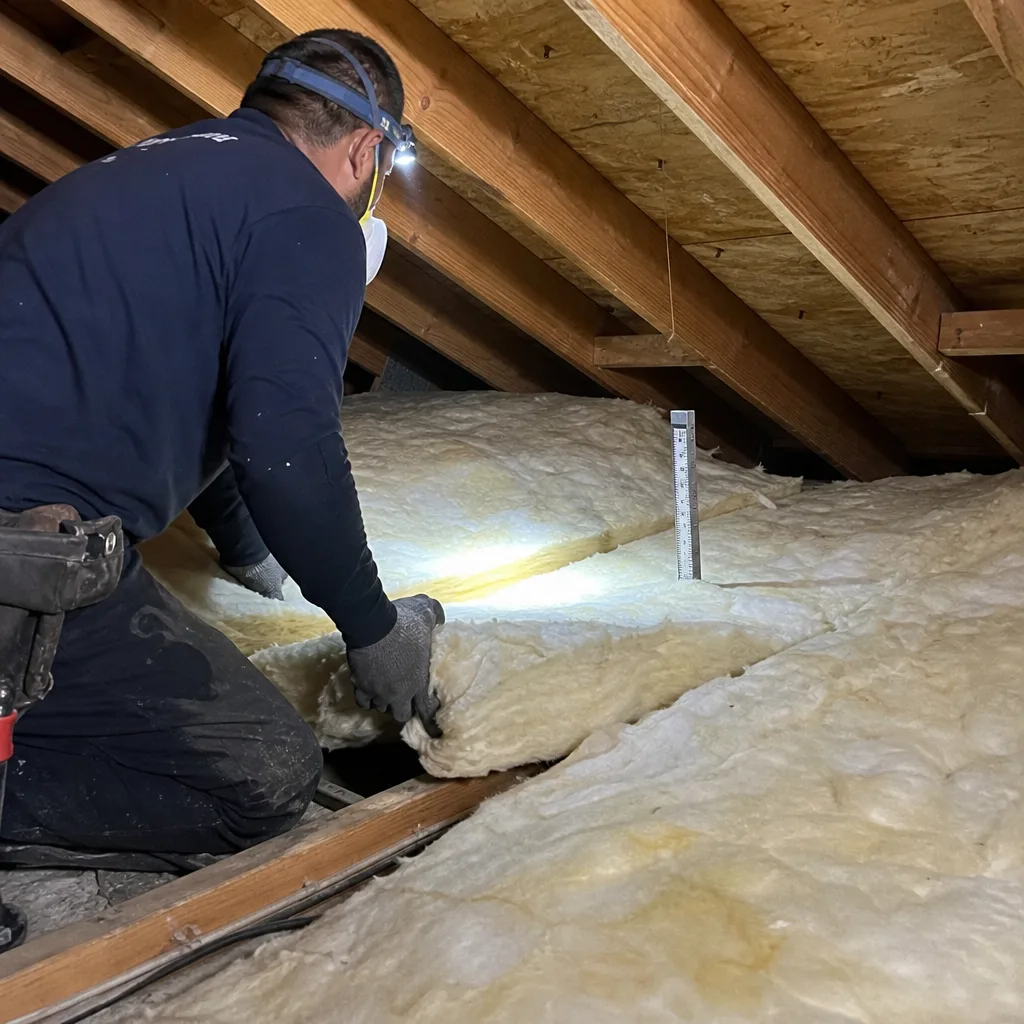
Attic Cleaning Services in Monterey Park start at $450 – $900 for a standard single-story attic, which includes debris removal, dust extraction, and a basic inspection of the existing insulation. Older homes in 91754 often have decades of rodent droppings, dust from original cellulose, and debris from roof repairs under the insulation. You can’t just blow new insulation over that and call it done. We clean first, then install. Rodent-contaminated insulation needs to come out before new material goes in, period.
Insulation Removal and Disposal
If your 1960s-era attic still has original fiberglass batts that have settled and compacted, or blown-in material that’s been compromised by pests or water, we remove it with a commercial vacuum system. The old material gets bagged and hauled off. In Monterey Park’s single-story homes, this is usually a half-day job, and it sets the stage for a clean, high-performing new install.
Pre-Insulation Prep
Cleaning is step one before any blown-in or batt retrofit. We clear debris, treat for pests if the homeowner requests, check for roof leaks, and make sure the attic is ready for new material. Skipping this step is how you end up with new insulation installed over old problems. It happens all the time out here, and homeowners don’t find out until the smell or the heat comes back.
What happens when you call
- 1
A real person answersNo phone trees — you reach a local pro.
- 2
You get an upfront price rangeHonest numbers before anyone is dispatched.
- 3
A background-checked tech heads outLicensed & insured, dispatched right away.
- 4
You approve before work beginsNothing starts until you say go.
Trusted Brands We Service in Monterey Park
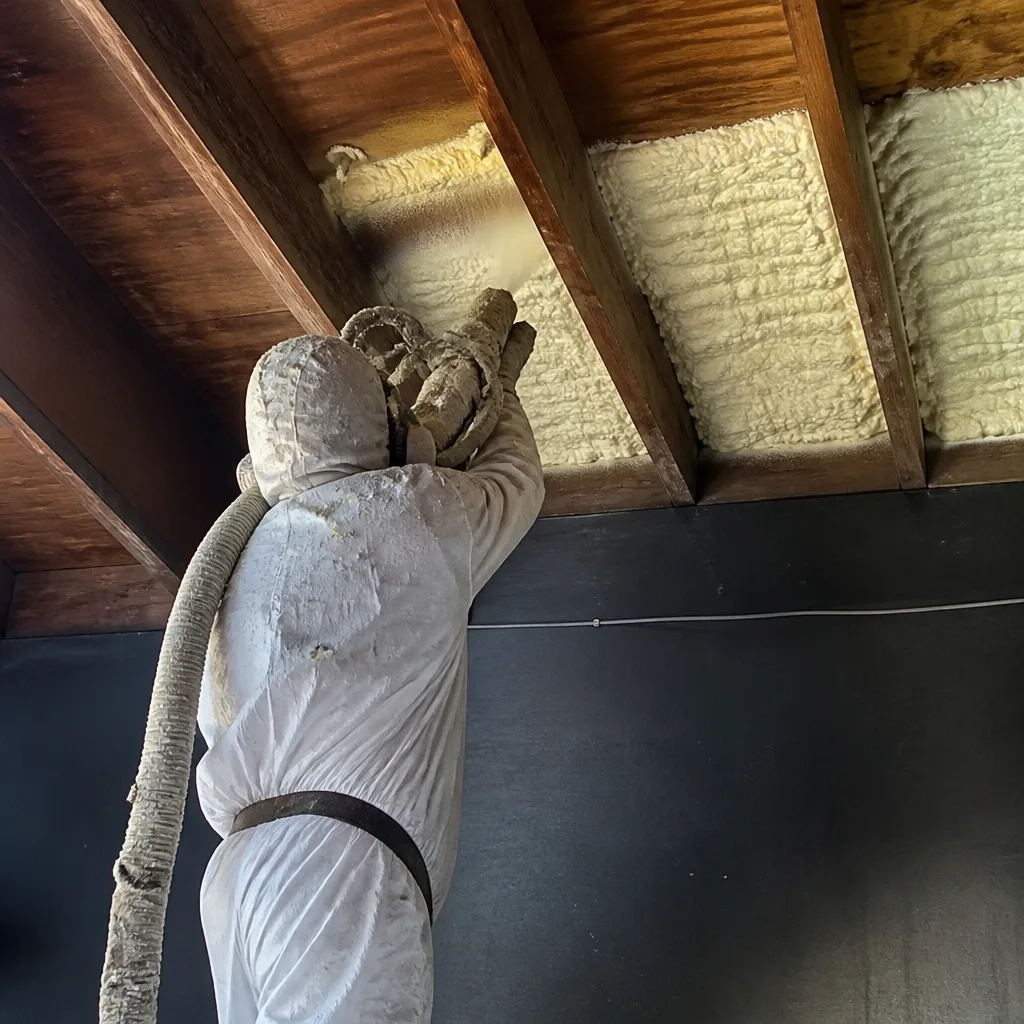
We stock and install Owens Corning, GreenFiber, and Icynene products for Monterey Park homes, and we keep material on hand for fast turnaround. Blown-in jobs using GreenFiber cellulose are the most common retrofit on older ranch homes because the material fills irregular joist bays and tightly packed cavities without needing a full gut. Owens Corning radiant barrier and fiberglass batts fit the low-pitch attics and infill townhomes near Garvey and Atlantic. Icynene spray foam is the right call for cathedral ceilings and sealed attic conversions where you truly need an air barrier, not just insulation. If you have a brand preference, ask us. We’ll tell you whether it actually fits your attic or if another material makes more sense for the space.
Common Attic Insulation Problems We See in Monterey Park Homes
- Original 1950s-70s mineral wool that’s settled to almost nothing. Many ranch homes on the grid near Barnes Park and around Garvey still have the original insulation, and it’s often less than R-11 after decades of settling. That’s below any modern code, and the upstairs shows it.
- Unvented or poorly vented low-pitch attics. The original gable vents or static roof vents on these older homes just don’t move enough air in the summer. Attic temps spike 30 – 40°F above outdoor air, and added insulation without better venting turns the attic into an oven.
- Builder-grade attic hatches and pull-down stairs that leak air. In the 1980s-90s infill and condo pockets near Garvey and Atlantic, the attic access is often a thin plywood hatch or uninsulated pull-down stair. It leaks conditioned air year round and undercuts any insulation work you do.
- Original stucco walls with no wall insulation. The afternoon sun heats the stucco like a clay brick, and that heat radiates into the home through uninsulated 2×4 framing. Attic insulation helps, but we always tell Monterey Park homeowners the truth: if the walls are empty, attic work alone won’t fix every hot room.
Pricing for Attic Insulation in Monterey Park, CA
A full blown-in attic insulation retrofit on a typical 1,200 – 1,800 sq ft ranch in Monterey Park runs $1,800 – $3,200, including prep and cleanup. Attic batt insulation for accessible low-pitch attics runs $1,400 – $2,600. Top-up work, where we blow new material over existing insulation to raise the total R-value, runs $700 – $1,400. Attic insulation replacement, where we remove old material first, runs $2,200 – $3,800. Radiant barrier adds $800 – $1,600. Attic cleaning and prep before any of this: $450 – $900. Size, access difficulty, and whether your attic needs baffles or venting improvements all move the number. Call (833) 390-3099 for a free estimate, and we’ll give you a line-item price for your specific attic, not a vague range.
We Also Serve Cities Near Monterey Park
Our crews regularly work in Monterey Park and the surrounding San Gabriel Valley communities. If you’re in South San Gabriel, Alhambra, East San Gabriel, or East Los Angeles, give us a call. Many of those neighborhoods share the same 1950s-70s housing stock and attic challenges, and we’re familiar with all of them.
Serving Monterey Park, CA — Our Local Coverage Area
We’re based in the Monterey Park area and know this community well. Use the map below to see our service coverage — if you’re nearby, we can almost certainly help.
FAQs About Attic Insulation in Monterey Park
No. In most low-pitch, unvented Monterey Park attics, adding R-value without addressing ventilation or radiant heat gain just traps more heat. You need baffles or a ridge vent to let hot air escape, and in many cases a radiant barrier on the roof deck does more for ceiling temperature than another 12 inches of fiberglass. We’d recommend a free attic assessment to see exactly what your attic needs. Call (833) 390-3099 and we’ll check it out.
Yes. All of our attic retrofit work happens from inside the attic or from the roof deck. The stucco exterior, roofline, and street view of your home remain untouched. For the 1950s-70s ranch homes in Monterey Park, this is the standard approach, and it’s why we work carefully in these cramped, low-pitch cavities rather than cutting into walls.
Often yes. Those units tend to have smaller, tighter attics with builder-grade hatches and pull-down stair covers that leak air. The framing is usually 2×4 with blown-in fiberglass that’s underperforming. We typically recommend air-sealing the hatch, adding insulation to the hatch, and topping up the existing material rather than a full replacement.
We carry Owens Corning, GreenFiber, and Icynene, along with five other manufacturer lines. For the older ranch homes in Monterey Park, GreenFiber cellulose is our most common blown-in choice because it packs tightly into irregular joist bays. Owens Corning radiant barrier handles the heat-load problem specific to low-pitch, unvented attics. Icynene spray foam is the right fit for sealed cavities and cathedral ceilings. We’ll tell you which material actually fits your attic.
Cleaning comes first. In homes built before 1980, especially where original cellulose or mineral wool has been sitting for decades, you’ll usually find settled material, dust, pest debris, and sometimes water staining. Blowing new insulation over that wastes the upgrade and can trap odors or moisture. We clean the cavity, remove compromised material if needed, and only then install new insulation. The cleaning usually runs $450 – $900 and takes half a day.
Written by Nate Calloway, Owner at Fountain Valley Insulation, serving Monterey Park and the San Gabriel Valley with material-matched attic insulation solutions.