

Fast, Reliable Attic Insulation Across Long Beach
Attic insulation in Long Beach typically runs $1,500 to $4,200 for a full removal and reinstall, with top-up jobs starting around $800. Most Long Beach homes we service get same-week scheduling, and our crews regularly reach shoreline bungalows and inland tract homes within a day or two of the first call. The real issue here isn’t just heat. It’s marine moisture. Long Beach’s coastal fog and salt air change what insulation works, and our Attic Insulation team matches the material to your specific block, not the other way around. Call (833) 390-3099 for a straight answer on your attic.
Why Fountain Valley Insulation Is Long Beach’s Preferred Attic Insulation Company
Long Beach homeowners call us because we carry eight manufacturer brands and we don’t push one product on every house. A 1920s Craftsman bungalow in Rose Park needs something different than a 1970s tract home in Los Altos or a mid-century apartment block near Bixby Knolls. Our crew lead, Nate Calloway, has walked attics across the 90813, 90814, and 90815 zip codes enough to know the failure patterns block by block: salt-crusted nails near the 710, thin blown-in fiber settled flat in older balloon-frame houses, and vapor barrier mistakes along the fog belt that trap moisture against roof decking. Long Beach customers routinely tell us the same thing: the estimate was clear, the crew worked fast in tight spaces, and the temperature evened out within a week.
We’re based in Fountain Valley, close enough that a Long Beach job never feels like an out-of-area contractor showing up late. Our response time to most Long Beach neighborhoods runs 24 to 48 hours for estimates, and emergency removal jobs get prioritized. When a Shoreline-flats attic is actively dripping condensation onto stored boxes, waiting a week isn’t acceptable, and we treat it that way. You get a specific scope, a specific material recommendation, and a price before any work starts.
Attic Mold Removal in Long Beach
Attic mold removal in Long Beach is most common in the 90803 and 90802 shoreline flats, where decades of marine-layer fog condensing on cool roof decking creates exactly the dark, musty growth homeowners find on sheathing and rafters. The problem isn’t the mold alone. It’s the trapped moisture behind it. In Long Beach, mold removal means more than spraying a treatment. We pull the affected insulation, treat the decking and framing, identify where damp air is getting trapped, and correct the ventilation or barrier detail so it doesn’t return. A typical attic mold remediation with insulation removal in Long Beach runs $1,800 to $3,500 depending on square footage and how far the growth has traveled into the decking.
Shoreline-Flats Condensation Pattern
Homes within a few blocks of Ocean Boulevard and the beach in 90803 show a pattern our crews see block after block: rusted nails, saturated batts against the roof deck, and mold starting at the eaves where fog air lingers. The fix is never just new insulation. We treat the decking, address the vapor movement, and reinstall a vapor-permeable assembly so damp air escapes instead of rotting the roof from underneath.
When Mold Signals a Bigger Ventilation Problem
If the attic has soffit vents painted over by a previous paint job, or a bathroom fan venting into the attic instead of outside, mold removal alone won’t hold. We inspect the whole airflow path in Long Beach attics before recommending remediation, because a shortcut here just means paying for mold removal twice.
Attic Insulation Removal in Long Beach
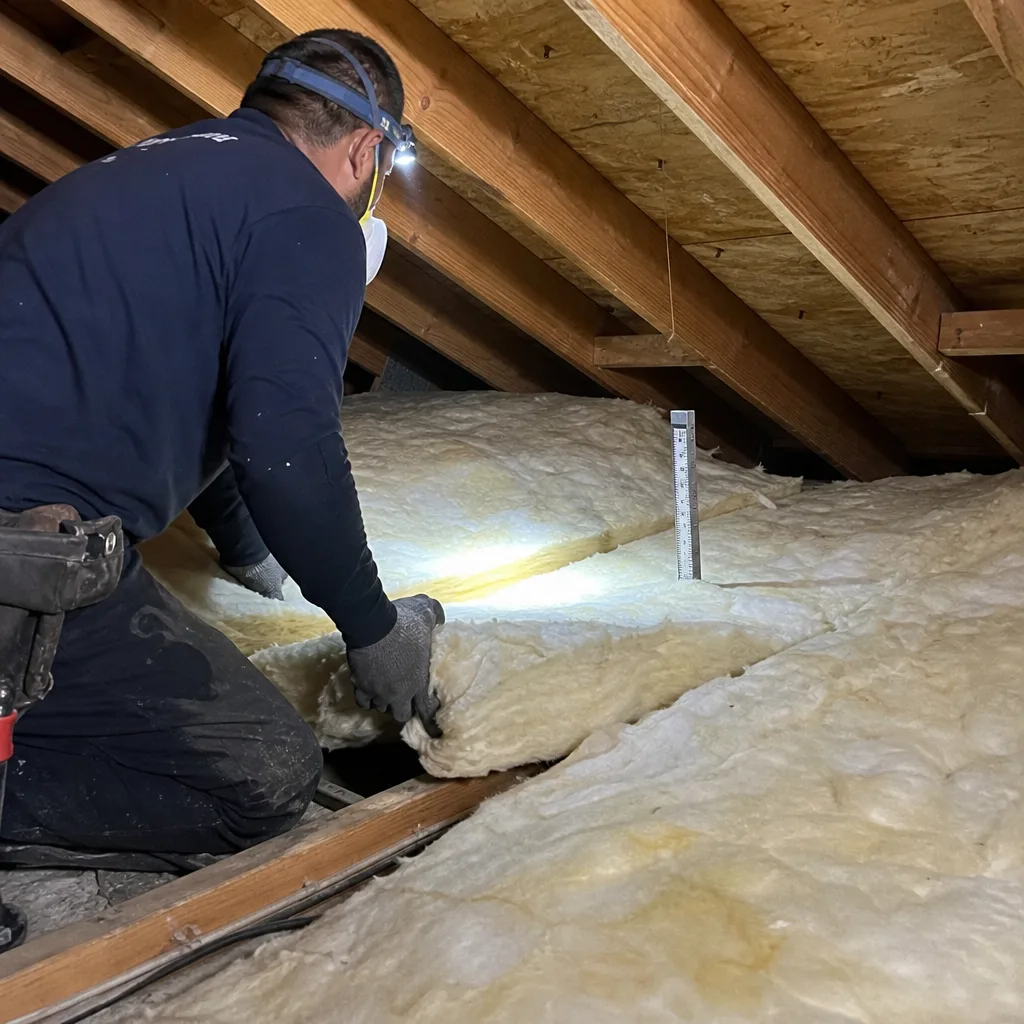
Attic insulation removal in Long Beach typically costs $1,200 to $2,800 for a standard 1,000 to 1,500 square foot attic, and it’s the right first step when old fiber has settled, rodents have nested, or moisture has saturated the existing material. In dense 90802 to 90804 apartment blocks and townhomes with shared attic spaces and original knob-and-tube era detailing, skipping removal before adding new insulation compounds moisture and mold problems. We always recommend removing old, failed, or contaminated insulation before installing new material. Blowing new fiber over wet, moldy batts just seals the problem in.
Tight Access and Alley-Load Removal
Long Beach’s early-1900s bungalows often have attic hatches too narrow for standard equipment and alley-load access that makes haul-out tricky. Our crews are set up for exactly this: compact removal vacuums that fit through tight hatches, and a process that works around limited parking near the 90813 and 90815 corridors. The work gets done without leaving debris in your planting beds or on your neighbor’s side of the alley.
Before You Add Insulation Over Old Material
Some contractors in Long Beach will offer to blow new fiber right over existing material and call it a top-up. Sometimes that’s fine. But if the old insulation is damp from fog-belt moisture, or if rodents have been living in it, adding more on top creates a bigger removal job later. We tell you which situation you have, and removal is only recommended when it’s actually needed.
Trusted Brands We Service in Long Beach
We stock and install across eight manufacturer lines, which means a Long Beach attic gets the material that fits its specific moisture profile, not whatever is on the truck that day. For fog-belt homes near the 710, we often specify Rockwool mineral wool batts for their vapor-permeable, moisture-resistant performance. For inland Long Beach homes dealing with sun load and radiant heat, we frequently recommend CertainTeed blown-in fiber combined with proper baffles and ventilation. For homeowners prioritizing recycled content, GreenFiber offers a strong environmental profile without sacrificing R-value. And for tight or complex cavities where air sealing and moisture control matter most, Icynene and Demilec spray foam give us closed-cell and open-cell options most general contractors in Long Beach don’t carry. Ask us why we carry spray foam, mineral wool, and recycled fiber, because most local contractors carry none of them.
Common Attic Insulation Problems We See in Long Beach Homes
- Fog-belt condensation and rusted decking. Homes in the 90803 and 90802 shoreline flats draw marine fog into the attic where it condenses on cool roof sheathing. Over years, this rusts the nails, saturates the insulation, and feeds mold growth along the eaves.
- Narrow hatches and cramped cavities. Early-1900s bungalows and Spanish Revival homes in neighborhoods like Rose Park and Belmont Heights have tiny attic accesses and irregular framing. Crews that won’t work in those conditions leave uninsulated gaps that short-circuit the whole job.
- Shared attic spaces in dense apartment blocks. The 90802 to 90804 corridor has a lot of mid-century apartment buildings and townhomes with shared or semi-shared attic areas. Adding insulation without a proper removal and inspection first can spread moisture problems across multiple units.
- Inland radiant heat and poor ventilation. Past the 710 in 90805 and 90808, homes bake under direct sun, and attics with inadequate ventilation hit extreme temperatures. Radiant barrier and airflow work matter as much as the insulation itself in those zones.
Pricing for Attic Insulation in Long Beach, CA
For a typical 1,000 to 1,500 square foot Long Beach attic, here’s where pricing lands. Full removal and reinstallation with blown-in fiber runs $2,500 to $4,200. Removal alone runs $1,200 to $2,800. A top-up over existing, dry insulation runs $800 to $1,600. Batt insulation installation runs $1,500 to $3,000 for standard roofs, and spray foam in Long Beach runs $3,500 to $7,500 depending on cavity complexity and open-cell versus closed-cell. Attic mold remediation including insulation removal runs $1,800 to $3,500. Square footage, access difficulty, and whether the attic has shared walls or multiple cavities all move the number. Call (833) 390-3099 for a free estimate tailored to your specific Long Beach attic.
We Also Serve Cities Near Long Beach
Our crews cover the full Long Beach area plus Signal Hill, Lakewood, Carson, and West Carson. If you’re just over the city line, we still show up with the same material-matched approach and same turnaround. One call covers it.
Serving Long Beach, CA — Our Local Coverage Area
We’re based in the Long Beach area and know this community well. Use the map below to see our service coverage — if you’re nearby, we can almost certainly help.
FAQs About Attic Insulation in Long Beach
The 90803 and 90802 shoreline flats sit in a marine fog belt where cool, damp air moves into attics at night and condenses on roof decking that’s been cooled by ocean air. Inland Long Beach homes, especially past the 710 in 90805 and 90808, don’t get the same fog load and mostly deal with heat instead of trapped moisture. The fix for fog-belt homes is a vapor-permeable assembly, not a vapor barrier. Call (833) 390-3099 and we’ll tell you which zone your block is in.
Yes. Our crews work with compact removal vacuums and hand-carried material that fit through the narrow hatches and cramped, irregular cavities common in Long Beach’s early-1900s housing stock, including Rose Park, Belmont Heights, and the Craftsman blocks of 90813. We prepare for alley-load access and tight clearances before we arrive.
Access determines setup time and sometimes the equipment we can use. In dense Long Beach blocks, especially the 90802 to 90804 corridor, parking restrictions and tight alleys mean we plan material staging and haul-out routes before we show up. The work still gets done in one visit; we just don’t leave a mess or block a neighbor’s garage.
Rusted nails in the roof decking, saturated or flattened batts, dark staining at the eaves, and a musty smell that gets stronger after foggy nights are all signs. Those homes, especially in 90803 and 90802, need the old material pulled before new insulation goes in. Trimming the work short just means paying for removal later.
Yes. Homes in 90805 and 90808 get less marine fog and much more direct sun load, so radiant barrier and ventilation matter as much as R-value. The 710 is a rough dividing line for our crews: west of it, moisture management leads the conversation; east of it, heat rejection does. We recommend different materials for each side.
Written by Nate Calloway, Owner at Fountain Valley Insulation, serving Attic Insulation in Long Beach and nearby communities.