

Fast, Reliable Attic Insulation Across Indio
Attic insulation in Indio isn’t a winter-upgrade job. It’s the single highest-impact change you can make to stop a 110°F July day from turning your ceiling into a radiant heater by mid-morning. Our crews work the Coachella Valley daily and know exactly what a 1970s stucco tract home off Arabia Street needs versus a 2015 build up in the 92203 north side. If your attic is cooking your ductwork and your AC can’t keep up, call us at (833) 390-3099. We’ll tell you straight what’s worth doing and what isn’t.
Why Fountain Valley Insulation Is Indio’s Preferred Attic Insulation Company
Most insulation contractors sell one product and make your house fit it. We don’t work that way. Fountain Valley Insulation carries eight manufacturer brands including Owens Corning, Icynene, Demilec, and GreenFiber, so the conversation in Indio starts with what your attic actually needs, not what we happen to have on the truck.
Our Attic Insulation team understands the desert attic problem differently than a company running calls from the coast. We know that original fiberglass batts in a mid-century Indio home compress to half their rated depth within a couple decades. We know that flex duct strung through a 140°F attic bakes until the outer jacket splits. And we know that radiant barrier matters more here than R-value ever will. That’s the kind of local knowledge that comes from working these attics week after week, not from a training manual.
Homeowners around the 92201, 92202, and 92203 ZIP codes call us because we explain material differences in plain language. Radiant barrier, blown-in, batts, spray foam – each has a job, and we’ll tell you which one fits your attic, your duct layout, and your budget. Nate Calloway built this company around that honest-match approach, and it’s why Indio customers keep referring us to neighbors fighting the same afternoon heat soak.
Radiant Barrier in Indio
Radiant barrier is the most overlooked attic upgrade in Indio, and it’s often the one that makes the biggest difference. This isn’t insulation in the traditional sense. It’s a reflective material installed at the roofline or over existing insulation that stops radiant heat before it enters the attic space. On a near-cloudless August afternoon when the sun is hammering your roof deck, a properly installed radiant barrier keeps attic temperatures dramatically lower, which means your duct runs aren’t baking and your ceiling isn’t radiating heat into the living space by late morning.
In Indio the spec is heat rejection, not winter R-value. Most national insulation advice is written for cold climates where the goal is trapping heat inside. Our goal here is the opposite: keeping solar gain out of the hottest space in your house. A legacy stucco home without radiant barrier can see attic temperatures climb past 150°F by 10 a.m. in July, and no amount of fiberglass on the attic floor fixes that. The heat is coming from above, so it has to be blocked from above.
When a Radiant Barrier Makes Sense
If your Indio home was built before 2000 and you’re running the AC hard from noon to midnight, a radiant barrier is almost certainly worth doing before or alongside an insulation top-up. The combination of radiant barrier plus fresh batts is what actually changes how your house feels at 4 p.m.
Typical radiant barrier installation for a single-story Indio attic runs $1,800 to $3,400 depending on roofline complexity and access. Paired with batt replacement or a blown-in top-up, expect the full project to land in the $3,200 to $5,800 range.
Attic Cleaning Services in Indio
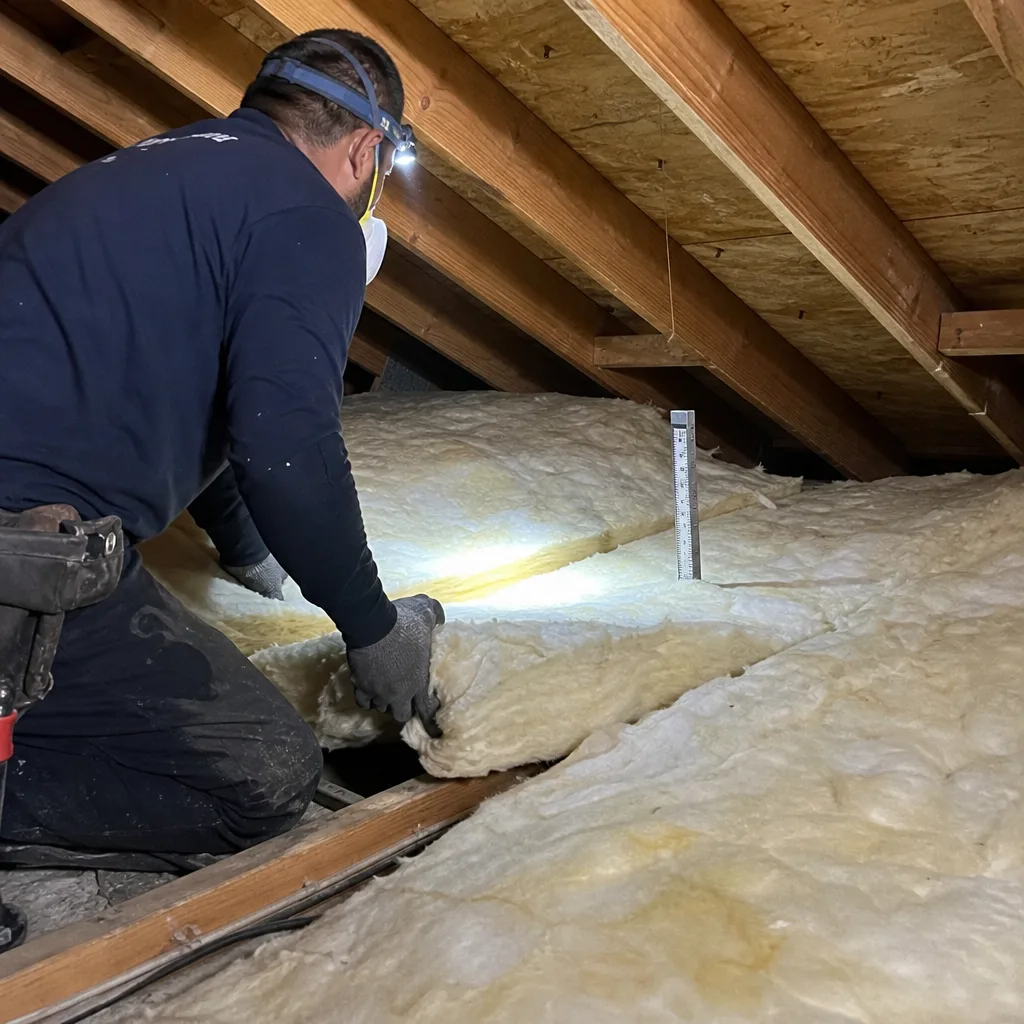
Attic cleaning services in Indio are a prerequisite for any insulation upgrade done right. Decades of desert dust, rodent activity, and degraded fiberglass settle into attic floors and ductwork, and laying new material over that mess just seals the problem in. We pull the old contaminated insulation, seal entry points, vacuum the attic floor, and prep the space before any new material goes down. It’s dusty, hot work – and it’s exactly what an Indio attic needs before fresh batts or blown-in.
In the Coachella Valley the dry air means insulation doesn’t rot the way it does in humid climates, but it does break down into fine particulate that migrates through ceiling penetrations and into your indoor air. If you’re noticing more dust on furniture than you used to, or the air smells stale when the AC first kicks on, the attic is a likely contributor. Cleaning solves that at the source.
Rodent and Pest Remediation Prep
Roof rats and pack rats are common in Indio’s desert subdivisions, and they love an undisturbed attic. Before we install anything, we check for droppings, nesting material, and chewed duct jackets. If we find activity, the cleanup and exclusion work happens first, then insulation goes back in over a clean, sealed space.
A full attic cleaning for a typical 1,400 to 1,800 square foot Indio home runs $900 to $1,800 before new insulation. It adds a half day on the front end but makes every dollar spent on new material work better.
What happens when you call
- 1
A real person answersNo phone trees — you reach a local pro.
- 2
You get an upfront price rangeHonest numbers before anyone is dispatched.
- 3
A background-checked tech heads outLicensed & insured, dispatched right away.
- 4
You approve before work beginsNothing starts until you say go.
Trusted Brands We Service in Indio
We stock and install Owens Corning batts, GreenFiber blown-in recycled fiber, and spray foam from Icynene and Demilec. That matters in Indio because different homes need different materials. A tight attic with complex rooflines may benefit from open-cell spray foam from Icynene. A straightforward trussed attic over a 1980s tract home usually calls for fresh Owens Corning batts plus radiant barrier. And homeowners who want recycled-content insulation get GreenFiber, a brand most local contractors don’t even mention. When you call us, you get material choices explained honestly – including which ones aren’t worth paying for in your situation.
Common Attic Insulation Problems We See in Indio Homes
- Compressed, sagging original batts. Fiberglass batts installed in mid-century to 1990s Indio tracts lose their loft over 20 to 30 years, settling to half their rated depth. Bare ceiling drywall then radiates heat straight into living space by late morning, which explains why the AC runs nonstop and the house still feels warm.
- Original flex duct baking in 140°F+ attics. Duct runs strung through the hottest space in the house absorb heat through old, cracked jackets. Fresh insulation on the attic floor can’t fix this – the ducts themselves need encapsulation or rerouting to stop the heat gain driving afternoon energy bills.
- Missing radiant barrier on legacy builds. Near-cloudless Indio solar load drives attic temps to 150°F in homes built without any reflective roof decking. Whatever R-value remains in aging batts gets overwhelmed, and the living space pays for it every summer afternoon.
- Rodent damage and desert dust buildup. Roof rats and pack rats chew duct jackets and nest in old insulation, while fine dust accumulates layer by layer. Both reduce insulation effectiveness and push contaminants into indoor air through ceiling penetrations.
Pricing for Attic Insulation in Indio, CA
A blown-in attic insulation top-up for a typical Indio single-story runs $1,600 to $3,200. Full batt replacement with old insulation removal and attic cleaning lands between $3,500 and $6,500 depending on square footage and access. Radiant barrier installation adds $1,800 to $3,400. Spray foam from Icynene or Demilec is the premium option, starting around $4,500 for an attic seal in a smaller home and running $7,000 to $12,000 for full roofline encapsulation on larger properties. What moves the number: attic size, existing insulation condition, duct layout, and whether rodent remediation is needed first. Call (833) 390-3099 for a free estimate – we walk the attic, take measurements, and give you a firm number before any work starts.
We Also Serve Cities Near Indio
Our crews work throughout the Coachella Valley. In addition to Attic Insulation in Indio, we run daily routes through Bermuda Dunes, La Quinta, Indian Wells, and Palm Desert. If you’re just outside Indio proper, give us a call – chances are we have a crew in your area the same week. Scheduling across the valley keeps response times short and pricing honest.
Serving Indio, CA — Our Local Coverage Area
We’re based in the Indio area and know this community well. Use the map below to see our service coverage — if you’re nearby, we can almost certainly help.
FAQs About Attic Insulation in Indio
Indio’s summer highs routinely exceed 110°F, and the attic is where most of that heat enters your home. A poorly insulated attic can hit 150°F by mid-morning, which turns your ceiling into a radiant panel and forces the AC to fight heat coming from above, not just through walls. In cooler climates insulation is about keeping warmth in during winter. Here it’s about keeping solar heat out during a five-month cooling season, which means the material choices and installation priorities are completely different. Call (833) 390-3099 and we’ll explain what actually matters for a desert attic.
Most homes built before 2000 in Indio benefit more from radiant barrier than from added R-value alone. The intense, near-cloudless solar load on the roof deck is the primary heat driver, and batt insulation on the attic floor can’t block it. Radiant barrier installed at the roofline reflects that heat before it enters the attic, keeping both the airspace and your duct runs cooler. If your legacy tract home hasn’t had a radiant barrier added, it’s usually the first thing we recommend. We’ll assess your specific roof and attic configuration during a free estimate.
No. Original flex duct in a legacy Indio attic absorbs heat through the jacket, so even well-insulated attic floors can’t stop conditioned air from warming as it travels from the air handler to your registers. The fix is duct encapsulation – wrapping the runs with insulation – or rerouting them to a cooler path. We routinely find ducts baked to cracking point in 140°F attics, and this is exactly why we inspect the duct layout before recommending any insulation package. Insulating the attic floor while ignoring baking ducts won’t solve your afternoon heat problem.
If your batts are compressed, sagging, or rodent-damaged, and the duct runs haven’t been touched since the home was built, a full retrofit usually costs less in the long run than piecemeal repairs. Pulling degraded material, cleaning the attic, sealing entry points, adding radiant barrier, and installing fresh batts or blown-in gives you a clean baseline that lasts 20 plus years. A top-up over compromised existing insulation just buries the problem. We’ll show you exactly what’s up there and what each option costs, then let you decide with real numbers in hand.
The dry desert weather actually works in your favor. Insulation in Indio doesn’t face the moisture and vapor-retention issues that drive mold and degradation in humid climates, so we skip the vapor barriers and moisture-prevention steps that coastal jobs require. What the dry climate does cause is dust accumulation and rodent activity, which is why attic cleaning before installation matters more here. The bigger climate factor is heat – which means we focus on radiant barrier, duct encapsulation, and proper air sealing rather than winterization. If you’d like a straight answer about your specific attic, call (833) 390-3099.
Written by Nate Calloway, owner of Fountain Valley Insulation, serving Indio and the Coachella Valley with brand-matched attic insulation solutions.