

Fast, Reliable Attic Insulation Across Fountain Valley
Attic insulation in Fountain Valley usually means a retrofit into a 1960s or 70s tract home with original batts that have settled to half their rated depth. We run crews across Fountain Valley five days a week and can typically get someone to your house within two to three business days. If your cooling bills climb every July and your second floor never catches up to the thermostat, the attic is almost always the first place to look. Call (833) 390-3099 and we’ll walk you through what’s actually going on above your ceiling.
Key takeaways: Fountain Valley’s housing stock is fully built out, so every job is an upgrade, not new construction. Original 1970s insulation in these low-pitch tract attics routinely measures R-11 or less when it should be R-49 under current Title 24 guidance. And HOA exterior rules often limit what you can do with vents or radiant barriers, which shapes the solutions we recommend.
Why Fountain Valley Insulation Is Fountain Valley’s Preferred Attic Insulation Company
We’ve worked enough attics in Fountain Valley to know what’s behind your access hatch before we open it. The homes west of Magnolia Street and the neighborhoods running toward Mile Square Park were built fast, and the insulation standards of 1972 were not what they are now. We match the material to your home, not the other way around.
Nate Calloway runs the company and still walks jobs personally. That means the person answering your questions about Rockwool versus blown-in fiberglass is the same person who will stand next to you at the estimate, not a call-center script. Fountain Valley homeowners tell us the same thing over and over: they appreciate that we carry multiple brands and will tell them honestly when a cheaper material will do the job fine.
We stock materials locally for Fountain Valley jobs, which means a crew can start within days of your approval, not weeks. And because the city is geographically compact, a crew can hit a job off Slater Avenue in the morning and be at another one north of Ellis Avenue by early afternoon. That keeps our scheduling tight and your wait time short.
Insulation Contractors in Fountain Valley
Insulation Contractors in Fountain Valley spend the bulk of their time doing what we do: pulling back old batts, air-sealing top plates and can lights, and blowing new material into low-clearance attics where access is tight and precision matters. If your house was built before 1980 and you’ve never touched the attic insulation, you are almost certainly running below the attic R-values that California’s Title 24 energy code has targeted for decades. A typical blown-in retrofit in Fountain Valley runs $1,800 to $3,400 depending on square footage and how much prep the attic needs.
Retrofit Into Existing Tract Attics
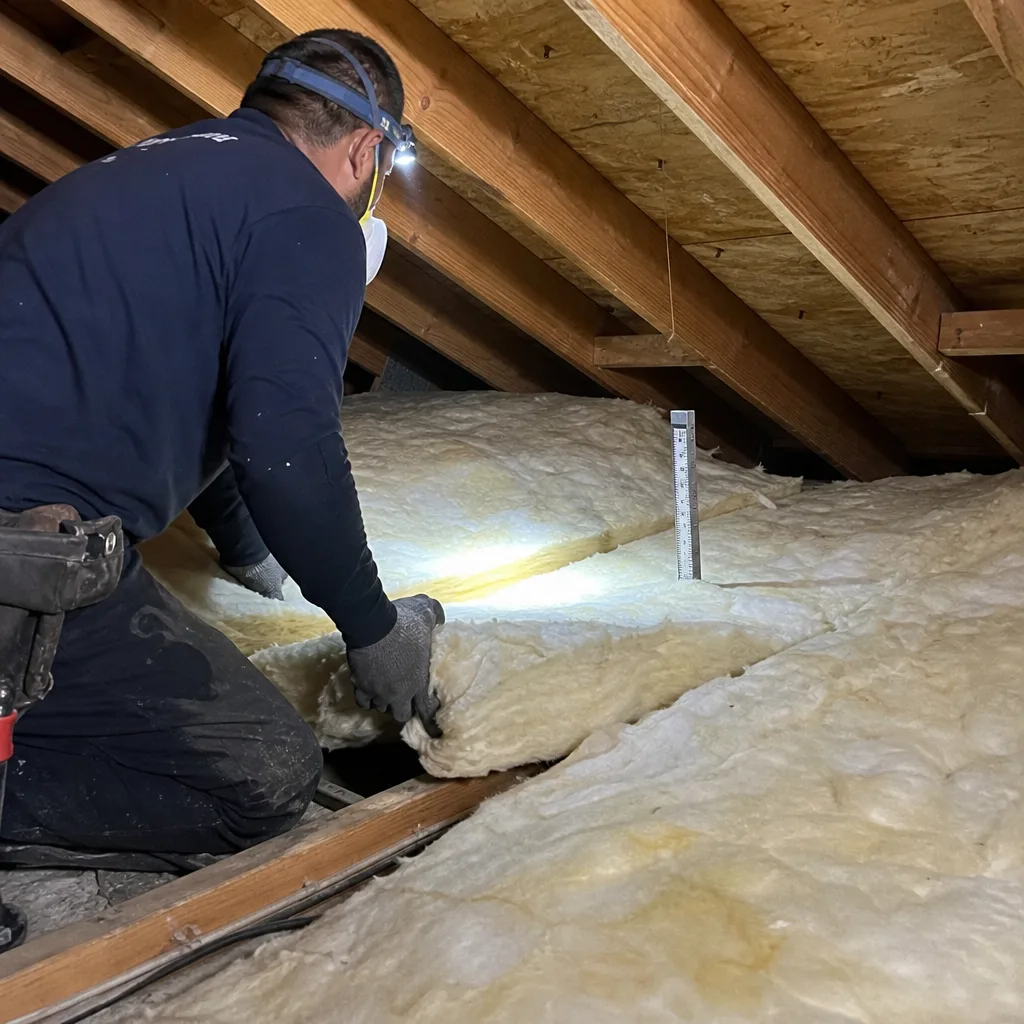
Most Fountain Valley attics we enter have original fiberglass batts compressed to half their rated depth. The joist bays are shallow, the roof pitch is low, and the access hatch is smaller than you’d like. That’s the job. We work around all of it.
Air-Sealing Before You Insulate
Blowing new insulation over an attic floor that leaks air is like patching a tire without finding the nail. We seal top plates, can-light housings, and chase penetrations before new material goes in. This makes a measurable difference in how hard your AC works in August.
Attic Ventilation in Fountain Valley
Attic Ventilation in Fountain Valley is tied directly to insulation performance, especially in these low-pitch tract roofs where the marine layer pushes damp morning air into the attic space and afternoon sun bakes the sheathing. Homes here came with minimal soffit and gable venting by modern standards. A typical baffles-and-ventilation prep job runs $400 to $900, though HOA restrictions can push the solution toward interior-only options like sealed ridge vents or powered attic fans.
Working Around HOA Rules
Several Fountain Valley HOAs restrict exterior changes, including the look of new vents or roof penetrations. When that’s the case, we recommend interior solutions: improved baffle placement, passive ventilation at existing openings, and insulation upgrades that reduce heat gain so the attic doesn’t need as much airflow to stay functional. We’ll explain what your association allows before we propose anything that requires exterior modification.
Solving Duct Sweat and Heat Gain
Original flex duct in these homes runs through unconditioned attic space, and when cold air moves through a hot, humid attic, the duct jacket sweats. Insulating and sealing the ductwork, plus raising attic insulation to current R-values, addresses both the comfort problem and the moisture problem. It’s one fix doing two jobs.
Trusted Brands We Service in Fountain Valley
We carry eight manufacturer brands, and three matter most for Fountain Valley’s retrofit-heavy market: CertainTeed for blown-in fiberglass that hits high R-values without a full teardown, Rockwool for mineral wool batts where fire resistance matters to a homeowner, and GreenFiber for recycled-content blown-in cellulose on homes where sustainability is part of the decision. Blown-in, spray foam, or attic batts, we’ll tell you which one actually fits your situation. Ask us why we carry Rockwool, spray foam, and recycled fiber. Most contractors carry none of them.
Common Attic Insulation Problems We See in Fountain Valley Homes
- Settled builder-grade batts. In homes off Bushard Street and throughout the 92708 zip code, original R-11 fiberglass has settled to about four inches. That leaves the attic floor with the thermal resistance of a heavy blanket, not a proper barrier.
- Bare spots around recessed lights and HVAC platforms. Builders cut batts around can lights and furnace platforms, then decades of service work pushed material aside. Those gaps leak conditioned air straight out of your living space.
- Sweating original flex duct. Marine-layer mornings put humid air in the attic, and uninsulated, unsealed ducts condense like a cold glass on a warm day. Homeowners near the Santa Ana River often see ceiling stains from this before they notice the comfort loss.
- HOA limits on ventilation upgrades. If your association fences off exterior vent changes, you may never fix the underlying airflow problem. We design interior-only solutions that raise attic temperature stability without touching the roofline’s appearance.
Pricing for Attic Insulation in Fountain Valley, CA
Blown-in attic insulation in Fountain Valley runs $1,800 to $3,400 for a typical single-story tract home, depending on attic size and prep work like air-sealing. Attic batt insulation replacements run $1,500 to $2,800. Attic insulation top-ups are the most affordable entry point, typically $900 to $1,600 when the existing batts are in reasonable shape but under depth. Attic insulation replacement, where the old material comes out entirely, runs $2,200 to $4,200. Baffles and ventilation prep add $400 to $900. Call (833) 390-3099 for a free estimate. We give you exact numbers before we start, not after.
We Also Serve Cities Near Fountain Valley
Our crews handle attic insulation work in Midway City, Huntington Beach, Costa Mesa, and Westminster. If you’re just outside Fountain Valley, Attic Insulation coverage still applies. And if you’re in a Fountain Valley tract home specifically, spend a few minutes on Attic Insulation in Fountain Valley before you call. We’d rather talk to an informed homeowner.
Serving Fountain Valley, CA — Our Local Coverage Area
We’re based in the Fountain Valley area and know this community well. Use the map below to see our service coverage — if you’re nearby, we can almost certainly help.
FAQs About Attic Insulation in Fountain Valley
Because those batts were installed to 1970s Title 24 standards, which called for roughly R-11 to R-19 in the attic. Today’s standard for new construction in this climate zone is R-49. Decades of compression, displacement from HVAC service work, and simple settling have dropped your effective R-value to half or less of the original label. Your attic may have insulation, but it’s doing a fraction of its job.
Yes. Blown-in fiberglass and cellulose go inside the attic and don’t touch the exterior. Mineral wool batts fit in existing joist bays. No roofline changes, no new penetrations, no visible modification. We’ll confirm what your HOA allows before proposing anything, and we default to interior-only solutions in Fountain Valley for exactly this reason.
R-49 is the current Title 24 target for attic insulation in this climate zone. That typically means about 16 to 18 inches of blown-in fiberglass or cellulose. Some homeowners stop at R-38 for budget reasons and still see a meaningful improvement, but we quote to R-49 as standard. Call (833) 390-3099 and we’ll explain what the difference means for your specific attic.
Fountain Valley’s marine layer brings humid air in overnight, especially in the hours before sunrise. When your AC runs and sends cold air through uninsulated or under-insulated flex ducts in a hot humid attic, condensation forms on the duct jacket and drips. Insulating and sealing the ductwork, plus raising the attic’s overall insulation, keeps the attic air warmer relative to the duct surface, which reduces condensation. It also stops the ceiling staining we see in homes near the river channel.
It usually should be. Ventilation moves moisture out of the attic and keeps the space from becoming an oven in August. In these low-pitch tract roofs, natural airflow is limited, so baffle placement and working with existing soffit vents matter. We evaluate ventilation on every attic insulation estimate and only add work that’s actually needed. Call (833) 390-3099 to get a straight answer about your attic.
If you’re in Fountain Valley and your attic hasn’t been touched since the Ford administration, call us at (833) 390-3099. Nate Calloway will walk you through what we’d do, what it costs, and how soon we can get it done. Estimates are free, and you’ll talk to someone who’s actually been in your neighbors’ attics.
Written by Nate Calloway, Owner at Fountain Valley Insulation, serving Fountain Valley and surrounding Orange County communities.