


Fast, Reliable Attic Insulation Across Coto De Caza
Attic insulation in Coto De Caza typically runs $1,800 to $5,400 for a full upgrade on one of the community’s large custom homes, with top-ups and venting work starting around $900. Most jobs wrap up in a single day. We know the gates, the winding streets up toward the ridgelines, and the specific attic layouts in the Canyon, the Greens, and the Covenant. Our crews arrive with the right materials loaded and a clear plan. If your attic is bleeding conditioned air into the Santa Ana wind corridor, call (833) 390-3099 for a free estimate.
Why Fountain Valley Insulation Is Coto De Caza’s Preferred Attic Insulation Company
The homes here aren’t like tract housing in Mission Viejo or Lake Forest. Coto De Caza is a master-planned, gated community of large custom and semi-custom homes built into the foothills of the Santa Ana Mountains. Big attics. Steep roofs. Multi-level floor plans with vaulted ceilings. That changes how insulation gets installed, and it’s why homeowners call us after generic crews have already made mistakes.
Nate Calloway, our owner, built Fountain Valley Insulation around a simple idea: match the material to the house, not the other way around. We carry eight manufacturer lines because a 4,000-square-foot ridgeline home with ember exposure needs something different than a standard single-story attic. Rockwool mineral wool for fire resistance. Owens Corning blown-in fiberglass for coverage in cathedral-style cavities. Icynene spray foam for air sealing. We don’t push one product on every job.
Our reputation in Coto De Caza comes from work on homes in the Covenant, the Greens, and the Ridge. Homeowners here talk. When a neighbor’s attic passes a third-party wildfire inspection after our venting upgrade, that travels fast. We get called back for second homes, guest houses, and whole-home energy retrofits.
Insulation Contractors in Coto De Caza
Insulation contractors in Coto De Caza do more than blow fiberglass into an attic. The job here means evaluating large attic volumes, sealing ember entry points around gable and soffit vents, and choosing materials that hold up to Santa Ana wind loads and weeks of 95-degree heat. A homeowner in Coto De Caza needs a contractor who understands that insulation failure in this community is not just about energy bills. It’s about fire hardening. That’s the core of what we do for attics in the 92690 ZIP code.
Typical full attic insulation replacement on a Coto De Caza home runs $2,800 to $5,400 depending on square footage and roof complexity. Top-up work over existing insulation starts at $1,200. We provide itemized pricing before any work begins.
Whole-Home Insulation Upgrades
Many Coto De Caza homes were built in the late 1980s through the early 2000s. The original insulation in many attics is R-19 fiberglass batts, which is well below today’s recommended levels for inland foothill heat. We regularly remove old, compressed batts and replace them with blown-in fiberglass or Rockwool to bring attics up to R-38 or R-49. For homes with cathedral ceilings, spray foam is often the only practical way to reach proper R-value without ripping out drywall.
Attic Baffles and Ventilation Prep
Large attic volumes with steep-pitched roofs need air movement. Baffles keep soffit vents clear when insulation is added. Without them, insulation blocks airflow and the attic cooks. In Coto De Caza, we install baffles before any blown-in work and pair them with ember-resistant vent covers. This is not a step we skip.
Attic Ventilation in Coto De Caza
Attic ventilation in Coto De Caza is a fire-safety issue first and a comfort issue second. Standard soffit and gable vents on homes near the wildland-urban interface let wind-driven embers into the attic during a Santa Ana event. That’s how homes ignite from the inside. We replace standard vents with ember-resistant models that still allow proper airflow, and we seal gaps around gable ends. The work typically runs $800 to $2,100 depending on the number of vents and attic size.
Ember-Resistant Venting
Homes at the canyon edges and near the ridgelines of Coto De Caza face the highest ember exposure. We see it on every job. Our crews install WUI-compliant vent covers with fine mesh screens that block embers while maintaining the airflow that prevents heat buildup. This detail gets missed by generic insulation companies, and it’s one of the first things we inspect.
Heat Gain Reduction
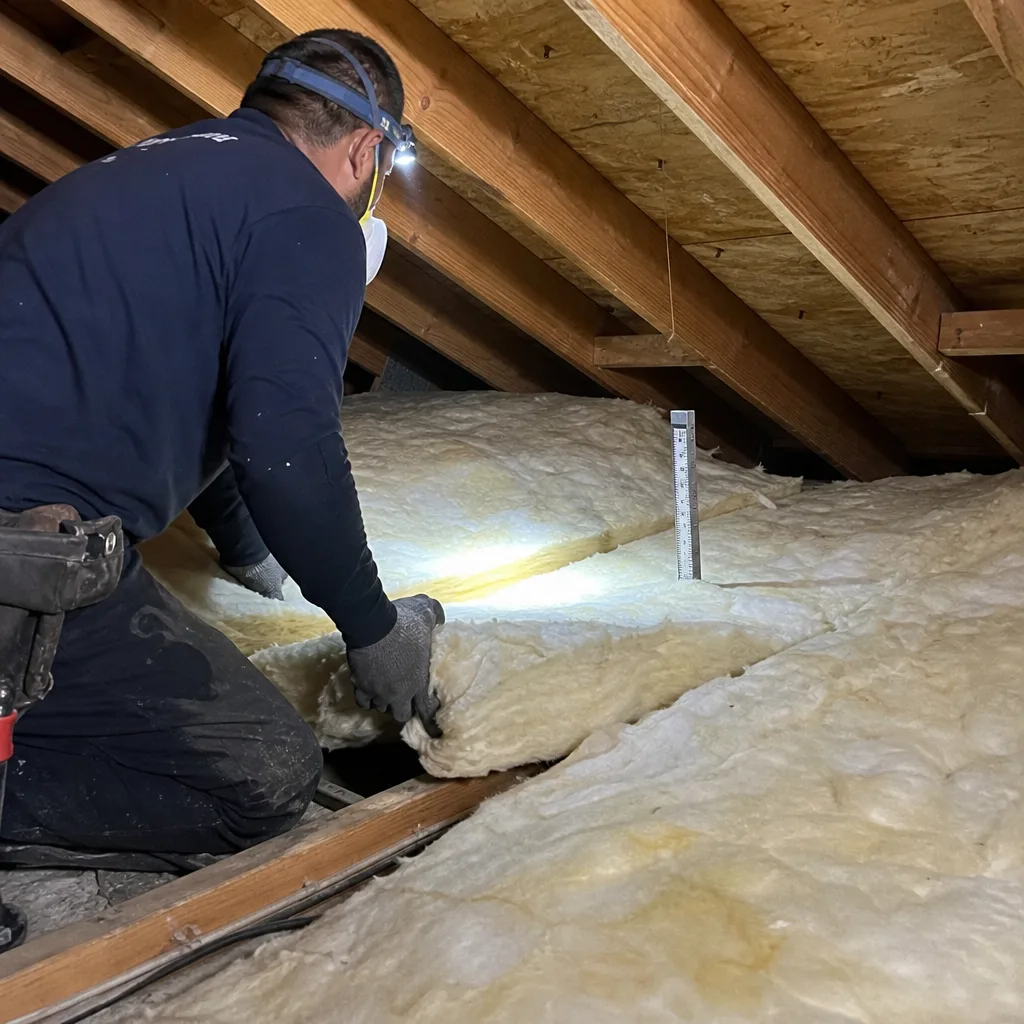
An attic in Coto De Caza can hit 140 degrees in August without proper ventilation. That heat radiates down into living spaces and forces AC systems to work harder against already high electrical rates. Proper venting, combined with the right insulation depth, drops attic temperatures by 20 to 30 degrees. Homeowners notice it in their cooling bills within the first summer.
Trusted Brands We Service in Coto De Caza
We stock materials for Coto De Caza jobs from our Fountain Valley warehouse, so there’s no waiting on special orders. Our attic work includes CertainTeed fiberglass, Rockwool mineral wool for fire-resistant applications, and GreenFiber recycled-content blown-in insulation for homeowners who want a more sustainable product. For spray foam, we install Icynene and Demilec, two names most general insulation contractors don’t carry. Ask us why we keep all of them. The answer has to do with matching the material to your attic, not the truck inventory.
Common Attic Insulation Problems We See in Coto De Caza Homes
- Degraded blown-in fiberglass on canyon-edge lots. Santa Ana winds force dust and embers into attics, and old blown-in fiberglass compresses and shifts over time. Thermal performance drops, and exposed gaps become fire-entry points.
- Uneven coverage in vaulted and multi-level ceilings. High ceilings and split-level floor plans make it difficult for original batt insulation to stay in place. We find bare spots and gaps in homes where the builder cut corners, especially around recessed can lights and HVAC chases.
- Non-compliant vents that allow ember entry. Standard gable and soffit vents on 1990s-era Coto De Caza homes weren’t designed for today’s fire codes. Many have corroded screens or missing mesh entirely.
- Air leaks around attic access hatches and scuttle holes. A surprising number of custom homes here have uninsulated attic hatches. It’s a small detail that creates a major thermal bypass, and it’s one of the first things we fix on a top-up job.
Pricing for Attic Insulation in Coto De Caza, CA
Attic insulation pricing in Coto De Caza tracks with the size and complexity of the homes here. Expect to pay more than you would in Lake Forest or Laguna Hills because the attics are bigger, the roofs are steeper, and the material requirements are heavier. A basic attic top-up with blown-in fiberglass runs $1,200 to $2,400. Full attic insulation replacement on a 3,000-square-foot home runs $2,800 to $4,200. Homes over 5,000 square feet with multiple attic zones run $4,500 to $6,500. Ember-resistant venting adds $800 to $2,100 depending on vent count. Spray foam applications typically start at $3,800. Call (833) 390-3099 for a free, itemized estimate specific to your home.
We Also Serve Cities Near Coto De Caza
Beyond Coto De Caza, our crews regularly handle Attic Insulation projects in Mission Viejo, Lake Forest, Laguna Hills, and Rancho Santa Margarita. If you’re in a neighboring community and want the same brands and the same fire-hardening approach, we’re a short drive away. See our Coto De Caza hub for full local details.
Serving Coto De Caza, CA — Our Local Coverage Area
We’re based in the Coto De Caza area and know this community well. Use the map below to see our service coverage — if you’re nearby, we can almost certainly help.
FAQs About Attic Insulation in Coto De Caza
Wildfire exposure is the single biggest factor in material selection for Coto De Caza attics. Homes near canyon edges and ridgelines face ember intrusion through standard vents, which means we recommend non-combustible insulation like Rockwool mineral wool and ember-resistant venting on nearly every attic project. Fiberglass alone is fine, but it should be paired with vent upgrades and air sealing. Call (833) 390-3099 and we’ll walk you through what your specific lot needs.
Yes. Multi-level homes with steep-pitch roofs are actually where we do our best work in Coto De Caza because the complexity rewards experience. We use a mix of blown-in fiberglass for open attic volumes, Rockwool batts on fire-facing gable walls, and spray foam for cathedral ceilings that can’t be reached from above. On a recent job in the Covenant, we insulated a multi-level custom home facing the Santa Ana wind corridor, sealed the gable vents, and the homeowner passed a third-party wildfire inspection the same month.
We install CertainTeed fiberglass, Rockwool mineral wool, GreenFiber recycled-content blown-in fiberglass, Owens Corning, Johns Manville, Knauf, and spray foam from Icynene and Demilec. For ridgeline and canyon-edge homes in Coto De Caza, Rockwool is a common choice because it’s non-combustible and resists moisture. For standard attic top-ups, we often recommend GreenFiber or CertainTeed blown-in. The brand is not the point. The fit is.
A properly vented attic in Coto De Caza runs 20 to 30 degrees cooler than an unvented one, and that directly reduces the heat load on your upstairs living areas and AC system. Ember-resistant venting does double duty: it keeps airflow moving in summer and blocks embers during Santa Ana wind events. Most homes built in the 1990s here have undersized vents, so we often upgrade venting at the same time as insulation.
Yes. Whole-home insulation is a standard scope for us in Coto De Caza, especially for homeowners doing renovations or energy retrofits. We insulate attics, exterior walls, garage ceilings, and crawl spaces, and we coordinate with other trades during remodels. A whole-home upgrade on a large custom home typically runs $8,000 to $18,000 depending on square footage and materials. Call (833) 390-3099 for a breakdown.
Written by Nate Calloway, Owner at Fountain Valley Insulation, serving Coto De Caza and surrounding Orange County communities.