
Fast, Reliable Spray Foam Insulation Across Upland
Spray foam insulation in Upland typically runs $2,800 – $7,500 for a standard attic floor and rim joist scope, with closed-cell foam landing on the higher end and open-cell on the lower. Most Upland jobs take one to two days, and we’re usually on-site within 48 hours of your call. If you’re in the 91784, 91785, or 91786 ZIP codes and tired of rooms that won’t hold temperature during a Santa Ana stretch, call us at (833) 390-3099.
We know Upland homes because we’ve worked in them. The 1950s single-story off Euclid Avenue, the newer foothill builds above 19th Street, the mid-century tracts off Foothill Boulevard near downtown. Each has a different insulation story to tell. Our Spray Foam Insulation team matches the foam type and thickness to what your specific home actually needs, not what’s easiest to spray.
Why Fountain Valley Insulation Is Upland’s Preferred Spray Foam Insulation Company
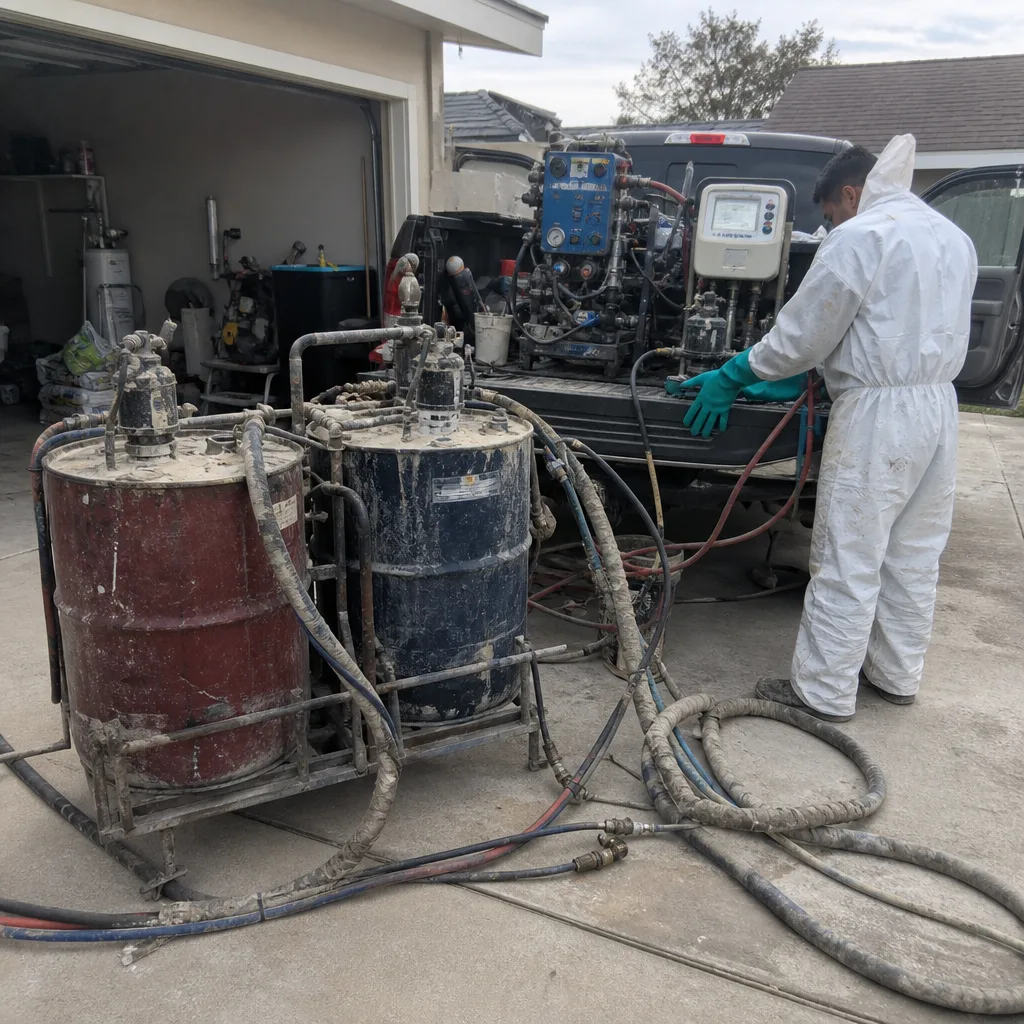
Upland homeowners call us because we carry two of the most recognized names in spray foam: Icynene and Demilec. Most general insulation contractors in this area stock one open-cell product and call it a day. We don’t. Nate Calloway built Fountain Valley Insulation around giving homeowners real material choices, and that matters most in a city like Upland where the right recommendation changes block by block.
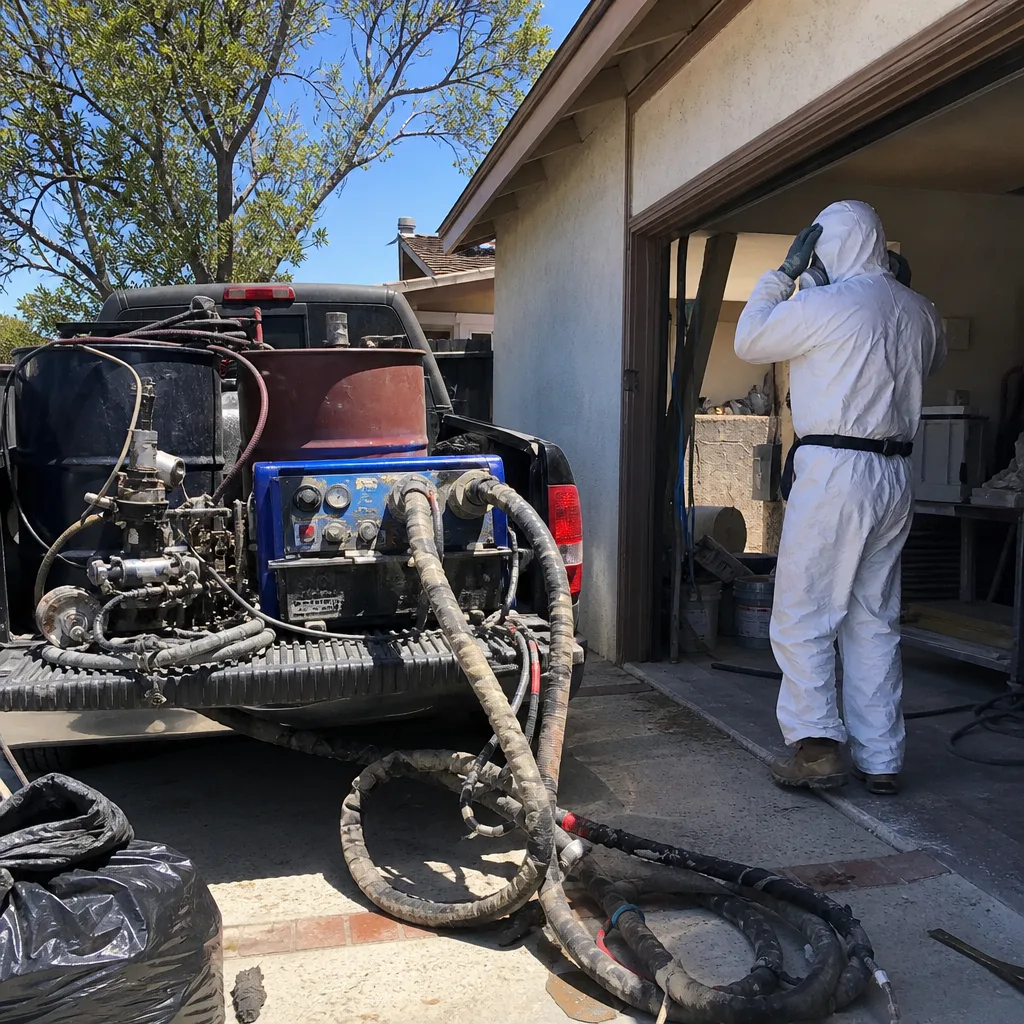
Our crews have worked extensively across Upland’s housing stock. We know what a 1962 tract home near San Antonio Avenue hides behind its drywall, and we know what a 1998 two-story in the 91784 foothills needs to handle the reflected heat off the San Gabriels. That familiarity means we show up with the right rig, the right foam, and a plan that doesn’t waste your afternoon.
Response time to Upland is typically same-day for estimates and within two days for installation scheduling. We’re based in Fountain Valley, but Upland is a regular route for our crews, not a one-off dispatch.
Closed Cell Spray Foam Insulation in Upland
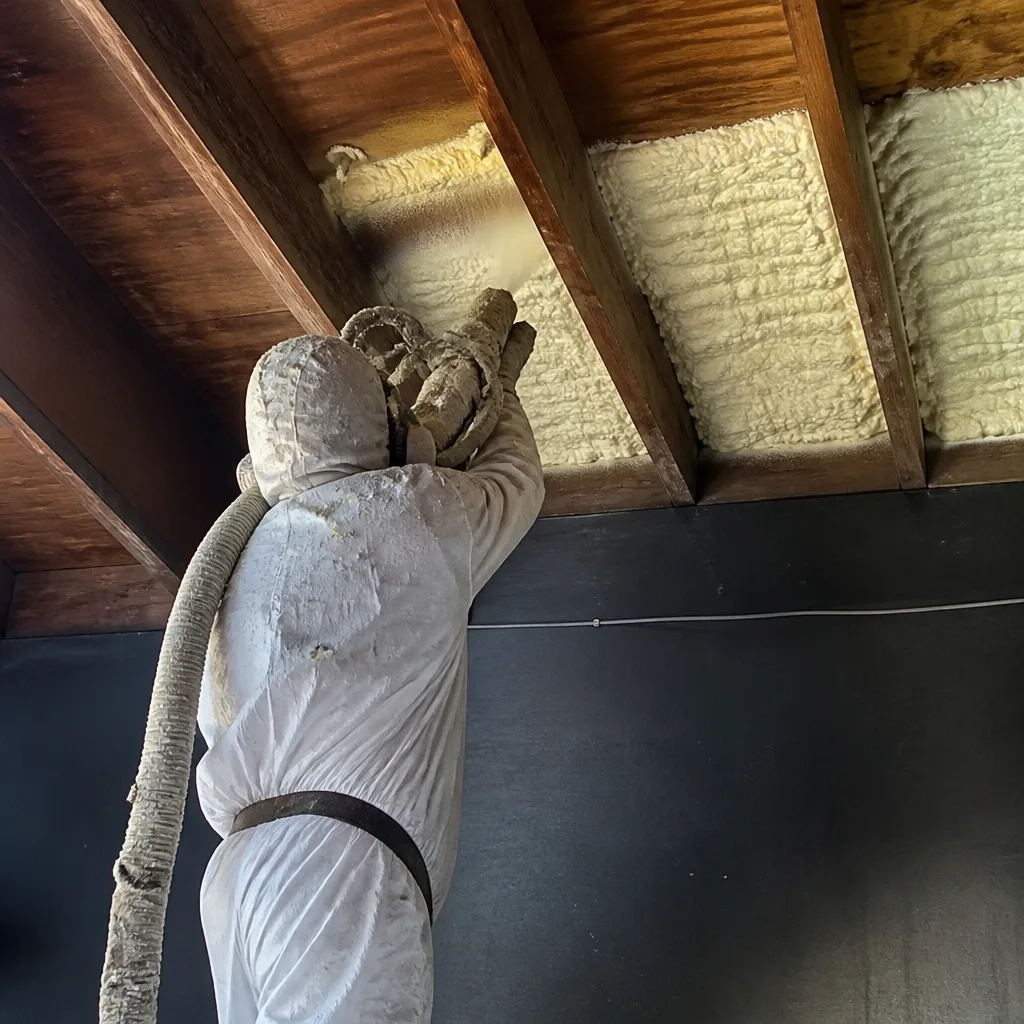
Closed Cell Spray Foam Insulation is the heavier, denser foam option we recommend for most Upland attics that face 150°F summer heat and Santa Ana wind infiltration. It expands to roughly an inch of foam per inch sprayed, hardens into a rigid barrier, and carries a higher R-value per inch than open-cell. Better yet, it acts as its own vapor retarder, which matters in a climate that swings from 100°F dry heat to cool, damp winter mornings.
For a typical Upland attic floor, closed-cell runs $4,500 – $7,500 depending on square footage and whether we’re also air-sealing top plates and penetrations. It’s the right call for homes where the attic is used for storage, or where roof deck undersides need sealing against the intense thermal load that builds in Upland’s inland summers.
Air-Sealing the Top Plates
Upland’s pre-1980s tract homes almost always have unsealed penetrations along the top plates: plumbing chases, electrical drops, wire runs. Air that’s 150°F in the attic finds every one of those gaps and pushes down into the living space. We pair closed-cell with air-sealing on nearly every older Upland home we foam because the seal does as much for your cooling bill as the foam itself.
Rim Joist Applications
In homes with crawl spaces or elevated foundations off the foothill slopes, rim joists are a major culprit for air leakage and uneven room temperatures. Closed-cell on rim joists in Upland’s 91784 and 91785 homes stops air movement at the perimeter and keeps the dust from Santa Ana winds from infiltrating around the sill plate.
Open Cell Spray Foam in Upland
Open Cell Spray Foam is lighter, expands more aggressively, and costs less per board foot than closed-cell. For Upland homes, we typically recommend open-cell for wall cavities and vertical applications where the foam doesn’t have to fight direct roof-deck heat. It carries an R-value around 3.5 to 3.8 per inch and does an excellent job of air-sealing when applied to the right depth.
Open-cell in Upland runs $2,800 – $4,500 for a standard attic floor scope. That’s a meaningful savings from closed-cell, and it’s the honest recommendation when the structure doesn’t demand the denser product. The catch on open-cell in Upland’s climate: it must be sprayed thick enough to hit its rated R-value, especially against ceilings that see 140°F-plus attic air directly above.
Where Open-Cell Fits Upland Homes
Interior wall cavities, bonus rooms over garages, and knee walls in foothill homes with vaulted ceilings are all good open-cell candidates. In these spaces, the foam’s job is air-sealing and sound control as much as thermal insulation, and open-cell’s expansion fills irregular framing better than most alternatives.
When to Skip Open-Cell
Under a directly heated roof deck, open-cell can underperform if installed too thin. The 150°F temperatures common in Upland attics during July and August demand full-depth open-cell or a switch to closed-cell. We’ll tell you if your roof deck is the wrong candidate before we ever spray.
Trusted Brands We Service in Upland
We install Icynene and Demilec spray foam products across Upland, and we also carry Owens Corning and GreenFiber for homeowners whose scopes call for blown-in or batt coverage alongside foam. Carrying multiple brands means we can match the material to your home rather than forcing your home to fit a single product. For Upland homeowners, that means an honest recommendation, and for our crews it means we aren’t waiting on parts from a distributor we don’t control.
Common Spray Foam Insulation Problems We See in Upland Homes
- Settled original fiberglass is doing nothing. In Upland’s 1950s – 1970s tract homes, the original batts have sagged away from the ceiling plane or compacted to R-8 or worse. That leaves a direct path for 150°F attic air to push down through the ceiling, and no amount of thermostat adjusting fixes it.
- Unsealed top plates and penetrations. Before the 1980s, nobody air-sealed anything. Electrical drops, plumbing vents, and wire chases along the top plates leak air in both directions, which means the $5,000 foam job performs like a $2,000 job without the seal.
- Missing attic ventilation paired with new foam. Some Upland homes get rim joist or attic foam installed while the original static roof vents remain inadequate. Trapped heat and moisture can degrade the foam edge over time. Ventilation has to be checked before foaming, not after.
- Open-cell sprayed too thin under foothill heat. Homes in the 91784 ZIP code sit directly against the foothills, where reflected solar heat pushes attic temperatures even higher than the valley floor. Open-cell that’s under-sprayed won’t reach its rated R-value in these conditions, and the performance shortfall shows up on the August electric bill.
Pricing for Spray Foam Insulation in Upland, CA
Here’s what you can expect to pay for spray foam in Upland:
- Closed-cell attic floor with air-sealing: $4,500 – $7,500
- Open-cell attic floor, standard scope: $2,800 – $4,500
- Rim joist-only closed-cell (crawl space perimeter): $1,200 – $2,400
- Garage ceiling open-cell (bonus room conversion prep): $900 – $1,800
What moves the number: square footage, how much air-sealing the penetrations need, whether the roof deck underside gets foamed, and how much prep the existing insulation requires. Homes on the older side of Upland’s downtown grid tend to need more air-sealing than 1990s foothill builds. Call (833) 390-3099 for a free estimate, and we’ll give you a line-item number within a couple of days.
We Also Serve Cities Near Upland
Our crews cover San Antonio Heights, Claremont, Montclair, and Rancho Cucamonga in addition to Upland. If you’re in one of those neighboring cities and need spray foam, the same brands, crews, and pricing approach apply. We’ll route a team out to you on the same schedule we run for Upland proper.
Serving Upland, CA — Our Local Coverage Area
We’re based in the Upland area and know this community well. Use the map below to see our service coverage — if you’re nearby, we can almost certainly help.
FAQs About Spray Foam Insulation in Upland
Older Upland homes near downtown were built before air-sealing was standard practice, so the top plates, electrical penetrations, and plumbing chases are wide open. Foam sprayed without sealing those gaps is only doing half its job. Call (833) 390-3099 and we’ll include air-sealing in your estimate if your home needs it.
Yes. The Santa Ana winds push hot, dry air against west-facing and foothill-adjacent exterior walls, which makes closed-cell the better choice for rim joists and roof decks that face sustained wind pressure. Open-cell still works for interior cavities, but the perimeter needs the denser product.
Open-cell foam must be sprayed to full depth in Upland attics, because anything short of the manufacturer’s specified thickness underperforms in 150°F conditions. Closed-cell hits its rated R-value at a thinner profile, which is why we lean closed-cell on most Upland attic floors. We quote the right thickness, not the thin spray that saves us material.
Yes. If the existing blown-in insulation is in salvageable shape, we can remove or level it and then apply spray foam where it counts: rim joists, knee walls, and the attic floor perimeter. In many 91784 foothill homes, the biggest win is perimeter air-sealing rather than a full re-foam. Call (833) 390-3099 and we’ll tell you what’s actually worth doing.
We install Icynene and Demilec spray foam products in Upland. Both are closed-cell and open-cell specialists with strong reputations in the industry. If your home also needs blown-in or batt coverage, we carry Owens Corning and GreenFiber as well, so the whole scope stays under one crew.
Written by Nate Calloway, Owner at Fountain Valley Insulation, serving Upland and the Inland Empire with spray foam, blown-in, and attic insulation since day one.