
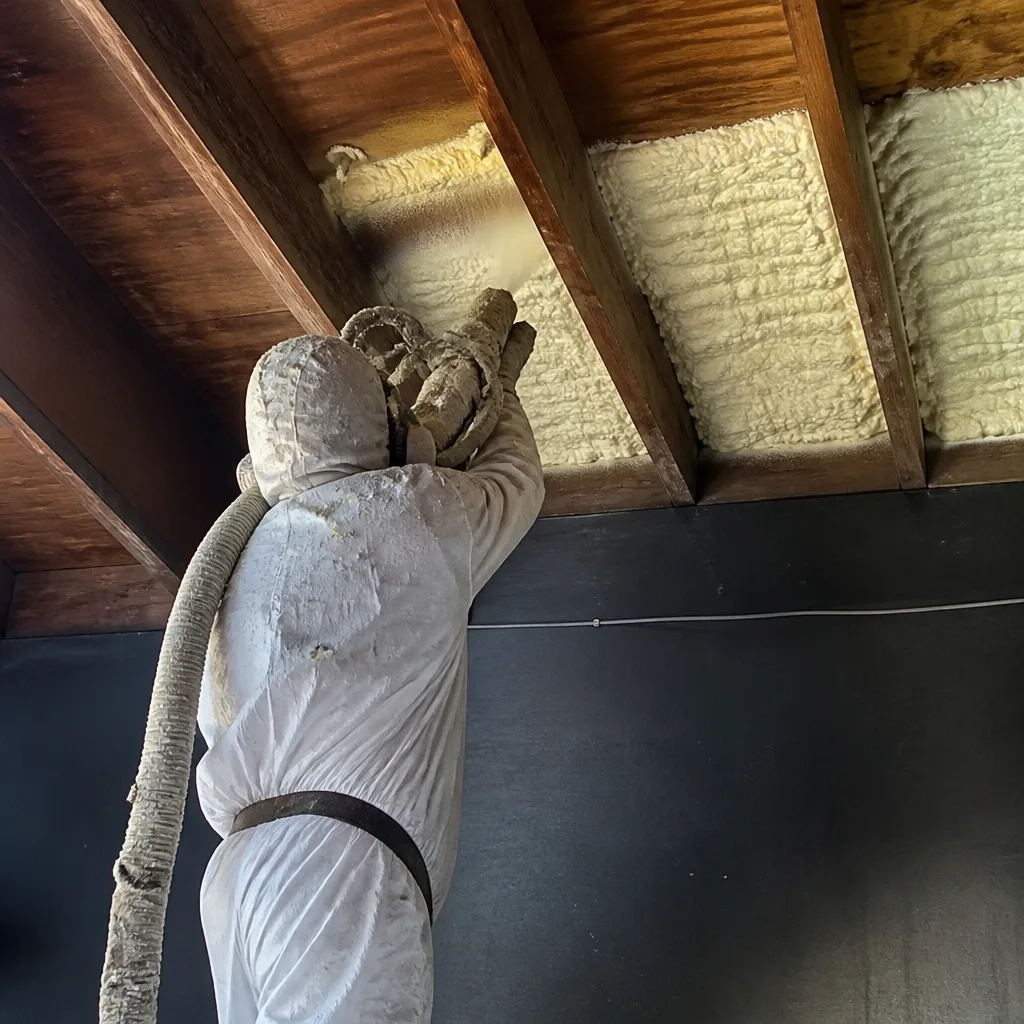
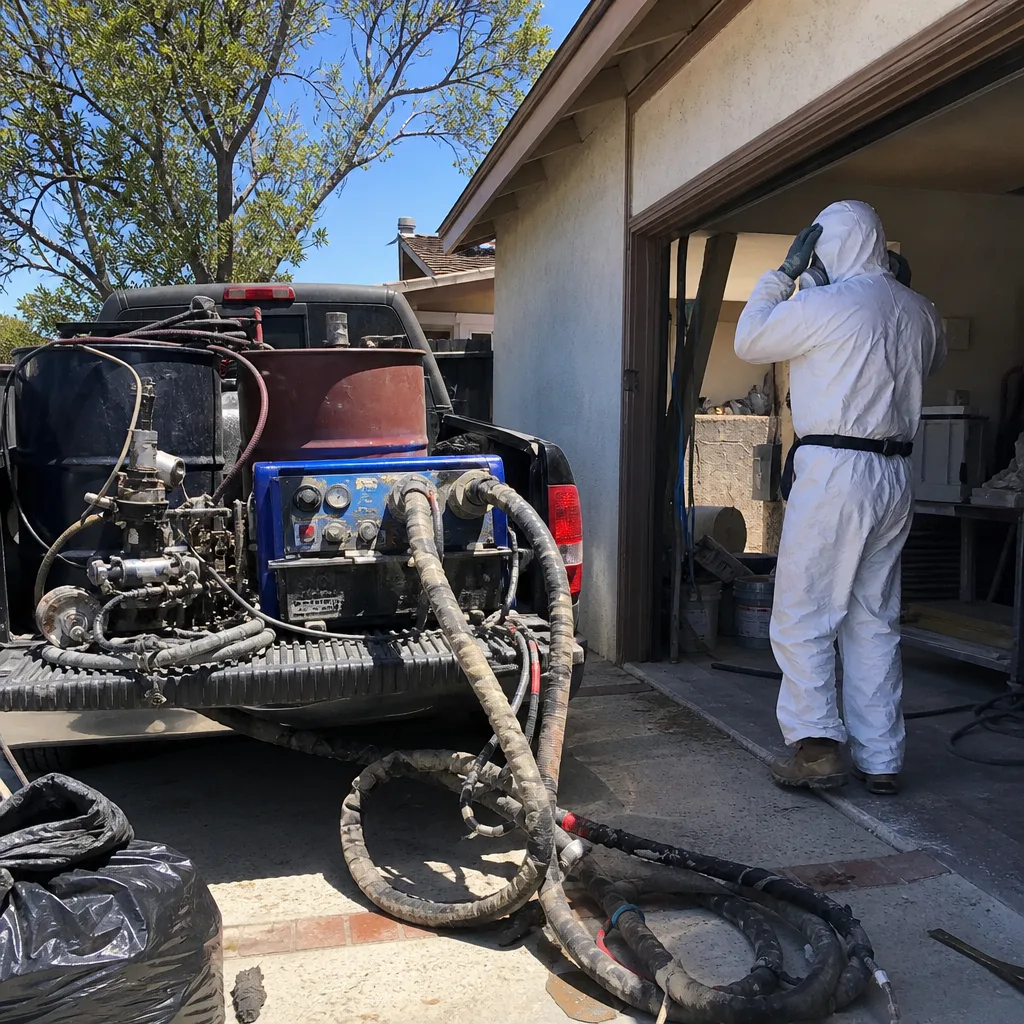
Fast, Reliable Spray Foam Insulation Across Santa Fe Springs
Spray foam insulation in Santa Fe Springs typically runs $2.50 to $6.50 per board foot installed, with rim joist work on a typical postwar home landing between $1,400 and $2,800. Most jobs we schedule here are done within one to two days once the foam cures. If you’re fighting triple-digit summer heat that turns your attic into an oven, or rail and refinery noise that never lets up near Valley View, call (833) 390-3099 for a straight answer and a free estimate.
Why Fountain Valley Insulation Is Santa Fe Springs’s Preferred Spray Foam Insulation Company
We work on the housing stock Santa Fe Springs actually has. That means 1940s-to-1970s tract homes off Telegraph Road and Pioneer Boulevard, mid-century tilt-up warehouses along the 5 and 605, and everything in between. Our Spray Foam Insulation team has spent enough time in 90670 and 90671 to know which homes have original single-pane windows, which garages hold rail-corridor moisture, and which attics were never insulated in the first place.
What homeowners in Santa Fe Springs tell us matters most is that we show up when we say we will and we tell them what’s actually wrong before recommending a fix. Nate Calloway built our process around matching the right material to the home, not pushing one product on every job. If open-cell Icynene is the right call for acoustical dampening near the rail yards, that’s what we spec. If closed-cell Demilec is what a garage wall needs to stop moisture migration, we say so.
We carry eight manufacturer lines, which means we’re not locked into a single brand or method. For Santa Fe Springs customers, that matters because the right foam for a Valley View tract home facing rail noise is often different from the right foam for a Heritage Park garage with salt-air corrosion at the rim joist.
Spray Foam Wall Insulation in Santa Fe Springs
Spray Foam Wall Insulation in Santa Fe Springs means filling exterior wall cavities with expanding foam to stop the air leakage that older postwar framing never addressed. In homes built between the 1940s and 1970s across Heritage Park and Valley View, original builders often skipped wall insulation entirely, assuming the Whittier Narrows climate didn’t need it. The first sustained heat wave proves otherwise. Wall cavity foam in a standard single-story Santa Fe Springs home runs $3,500 to $8,000 depending on square footage and whether we’re drilling through drywall or working from open studs during a remodel.
Closed-Cell for Coastal Moisture
Homes within a few blocks of the rail corridor or industrial buffer zones pick up moisture you won’t find further inland. Closed-cell Demilec locks out that moisture and adds structural rigidity to older framing. We use it on rim joists and garage walls where salt-laden air attacks the wood and hardware.
Open-Cell for Noise and Heat
When a homeowner near Valley View complains about both heat and 24/7 rail or refinery hum, open-cell Icynene makes sense. It’s less expensive per board foot than closed-cell, expands fully into irregular cavities, and does significant acoustical work. For wall cavities in the living quarters of a postwar home, this is often the best material fit.
Rim Joist Spray Foam in Santa Fe Springs
Rim Joist Spray Foam in Santa Fe Springs is one of the highest-return jobs we do here, because the rim joist is where your framed floor meets your foundation, and in this city’s older housing stock that band is typically unsealed, under-insulated, or actively rotting from rail-corridor moisture and coastal salt air. A rim joist spray on a typical 1,200 to 1,600 square foot Santa Fe Springs home runs $1,400 to $2,800. It’s usually a one-day job.
Why Fastener Points Fail First
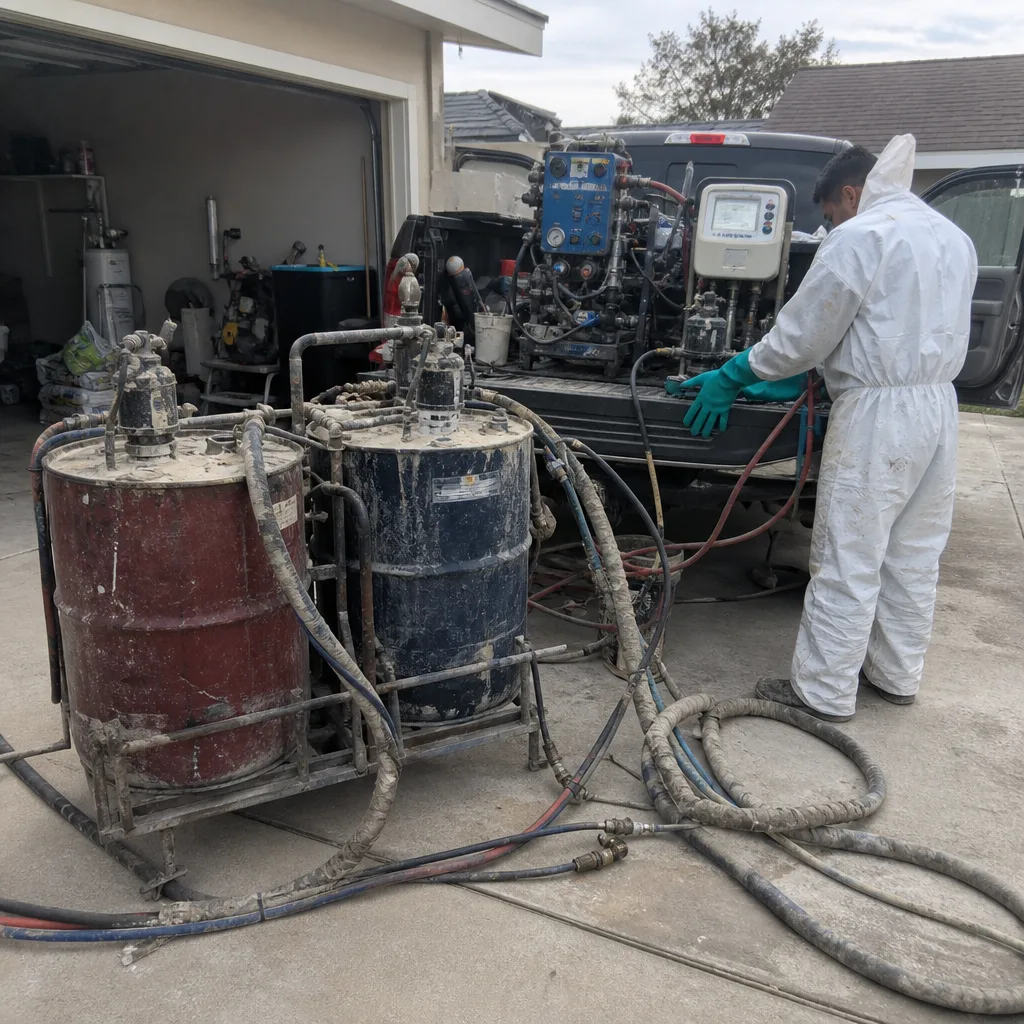
On a postwar tract home off Heritage Park, our crew opened the garage wall to find original fasteners and rim joist bays wiped out by salt-laden coastal air and rail-corridor moisture, with the old batt insulation sagging off the plate. We sprayed closed-cell Icynene into the rim joist and wall cavities, then bagged and sealed the penetrations so the coastal salt-air attack on hardware no longer pulls conditioned air and moisture through — a Reflectix repair in Santa Fe Springs would address similar moisture-driven degradation in other assemblies. The homeowner noticed the garage stopped sweating within a week and the AC no longer ran flat-out through the afternoon heat.
Where We See Thin Coverage
Santa Fe Springs’ tilt-up warehouses along the 5 and 605 were built with metal-frame roof decks and exposed fastener penetrations. Spray foam specs here hinge on sealing thousands of linear feet of fastener points where rim joist and wall cavity foam frequently goes thin. A homeowner who hires a contractor to spray only the visible attic often misses these thermal bridges entirely. That’s exactly the kind of gap we inspect for before quoting.
Trusted Brands We Service in Santa Fe Springs
We install and service Icynene and Demilec spray foam systems, and we keep the full catalog accessible so Santa Fe Springs homeowners get the right material, not whatever’s on the truck. If a job calls for recycled-content fiber options, we can bring GreenFiber into the mix. If a customer asks why we carry Rockwool, spray foam, and recycled fiber when most contractors carry none, the answer is simple: we match the material to your home, not the other way around. For Santa Fe Springs specifically, that means closed-cell foam where moisture is the enemy and open-cell where acoustical dampening near the rail corridor is non-negotiable.
Common Spray Foam Insulation Problems We See in Santa Fe Springs Homes
- Foam adhesion failure at rim joists. Mid-century tilt-up framing and postwar wood hold moisture driven by coastal salt air and rail-corridor humidity. When foam is applied over damp, corroded surfaces, it peels and leaves the same air gap it was supposed to seal.
- Skipped coverage around metal fastener penetrations. In 1960s-70s warehouses and older tract homes alike, exposed fasteners in roof decks and wall assemblies create thermal bridges that feed heat gain. Thin or missed foam at these points is common on jobs done by crews who spray only the open attic.
- Settled blown-in insulation mistaken for full coverage. In Heritage Park and Valley View homes, contractors sometimes spray the visible attic and leave the settled, degraded blown-in material behind uninsulated walls. The homeowner thinks they now have full foam coverage. They don’t.
- Garage wall and rim joist corrosion hidden behind drywall. Salt-laden coastal air plus rail-corridor moisture corrodes original fasteners, hinges, and rim joist bays years faster than inland. By the time we open a garage wall, the hardware is often rusted and the batt insulation has slumped off the plate.
Pricing for Spray Foam Insulation in Santa Fe Springs, CA
Spray foam wall insulation in Santa Fe Springs runs $3,500 to $8,000 for a standard postwar single-story home. Rim joist spray runs $1,400 to $2,800. A garage ceiling spray typically lands between $1,800 and $3,500. Full attic spray foam on a 1,200 to 1,600 square foot home runs $4,500 to $9,000 depending on whether we’re doing open-cell or closed-cell and whether existing insulation needs removal first. What moves the number? Access, existing moisture damage, how much settled blown-in material has to come out, and whether the home is near the rail corridor where closed-cell specs add cost. Call (833) 390-3099 and we’ll give you real numbers, not a vague range.
We Also Serve Cities Near Santa Fe Springs
Our crews run spray foam work in West Whittier-Los Nietos, Downey, Pico Rivera, and South Whittier as well. If you’re in one of those areas and want the same brand-specific, material-matched approach we bring to Spray Foam Insulation in Santa Fe Springs, call (833) 390-3099 and we’ll route you to the right team.
Serving Santa Fe Springs, CA — Our Local Coverage Area
We’re based in the Santa Fe Springs area and know this community well. Use the map below to see our service coverage — if you’re nearby, we can almost certainly help.
FAQs About Spray Foam Insulation in Santa Fe Springs
Yes. Open-cell spray foam does meaningful acoustical dampening because its porous structure absorbs sound energy rather than reflecting it. For homes within a few blocks of Santa Fe Springs’ 24/7 rail operations and refinery activity, we often spec open-cell Icynene in wall cavities and rim joist bays specifically for noise reduction on top of the thermal benefit. Call (833) 390-3099 and we’ll tell you honestly whether foam can solve your noise problem or whether you’re also looking at window replacement.
Because the rim joist here is under attack from two fronts: coastal salt air pushing in from the west and rail-corridor humidity sitting against it from the industrial buffer zones. That moisture accelerates corrosion of exposed fasteners and causes batts to sag off the plate. In a drier inland city, a skipped rim joist is an energy loss. In Santa Fe Springs, it’s an active moisture and air-quality problem. Closed-cell foam at the rim joist seals the band and stops conditioned air from pulling moisture through the wall assembly.
Yes, and we do it regularly along the 5 and 605 corridor. The critical work on those buildings is sealing the thousands of exposed fastener penetrations in the metal roof deck and wall assemblies. Spray foam applied without addressing those points leaves thermal bridges that feed heat gain no matter how thick the visible coverage looks. We inspect those penetrations before quoting so the foam actually does what it’s supposed to.
Closed-cell Demilec at the rim joist and in garage walls, and open-cell Icynene in the living-space wall cavities if noise is a factor. The knob-and-tube wiring is a separate issue that must be addressed by an electrician before we spray around it; foam is not safe to apply directly over live knob-and-tube. Once the wiring is squared away, closed-cell’s moisture-blocking properties matter more in Heritage Park because of how much rail and coastal moisture sits against those older wood-framed walls.
Santa Fe Springs sits in the Whittier Narrows coastal plain, which means hot inland summers drive the insulation need far more than mild winters ever will. Attic temps in July and August routinely exceed 140°F, and that heat radiates down through uninsulated ceilings and walls. Spray foam decisions here should prioritize summer heat gain: sealing the attic plane, the rim joist, and wall cavities to stop hot air from infiltrating during the afternoon peak. Winter cold is a minor factor by comparison. Call (833) 390-3099 and we’ll assess which zones in your home are losing the most summer cooling.
Written by Nate Calloway, Owner at Fountain Valley Insulation, serving Santa Fe Springs and surrounding communities.