
Fast, Reliable Spray Foam Insulation Across San Antonio Heights
Spray foam insulation in San Antonio Heights typically costs $2,800 to $7,500 for a standard attic application, with most projects completed in one or two days. For homes in this hillside community, the real question isn’t whether insulation helps. It’s whether what you have now is still doing anything at all. Our Spray Foam Insulation team works with Icynene and Demilec products specifically because they hold up under the temperature swings this area throws at a roofline. If you’re near Verano Drive, Alto Loma Drive, or up toward the foothills off Euclid Avenue, we can be on site quickly. Call (833) 390-3099 for a free estimate on closed-cell or open-cell foam.
Why Fountain Valley Insulation Is San Antonio Heights’s Preferred Spray Foam Insulation Company
We spend a lot of time in attics across San Antonio Heights, and we see the same story over and over: insulation that was installed decades ago and has quietly stopped working. The 91784 ZIP code is full of single-family homes built between the 1950s and 1990s, and many of them still have whatever fiberglass batts the original builder put in. Those batts were not designed for 140°F attic temperatures. They were not designed for five decades of summer heat baking down through the roof deck. By the time we get called, the batts are often compacted to an inch thick or less, and the homeowners have been paying for the slow failure every single month on their energy bill.
Nate Calloway leads our team, and his approach is simple: match the material to the house, not the other way around. That’s why we carry spray foam from Icynene and Demilec alongside Rockwool, Owens Corning, and GreenFiber. For San Antonio Heights specifically, spray foam is frequently the right answer because it survives the heat that destroys standard fiberglass. We’re not going to upsell you on foam if your situation calls for blown-in or batts. But when a hillside attic is hitting 140°F in July, spray foam is usually the only product that makes sense. Our customers in San Antonio Heights consistently tell us the same thing: they wish they’d done it five years earlier.
Spray Foam Insulation Contractors in San Antonio Heights
Spray Foam Insulation Contractors in San Antonio Heights handle a specific type of job: applying expanding polyurethane foam to attics, rim joists, walls, and roof decks. The material expands to fill gaps, cracks, and voids, creating an air seal that fiberglass and cellulose simply cannot match. In a community like this one, where homes sit on hillsides and get hit with both intense summer sun and winter winds, that air seal matters more than most people realize. For typical work, closed-cell spray foam on a roof deck runs $3,200 to $6,800, while open-cell wall injection projects range from $2,800 to $5,400 depending on square footage and access difficulty. Every estimate from us is free and includes a walkthrough of what we found, not just a number on a sheet.
What the Work Actually Involves
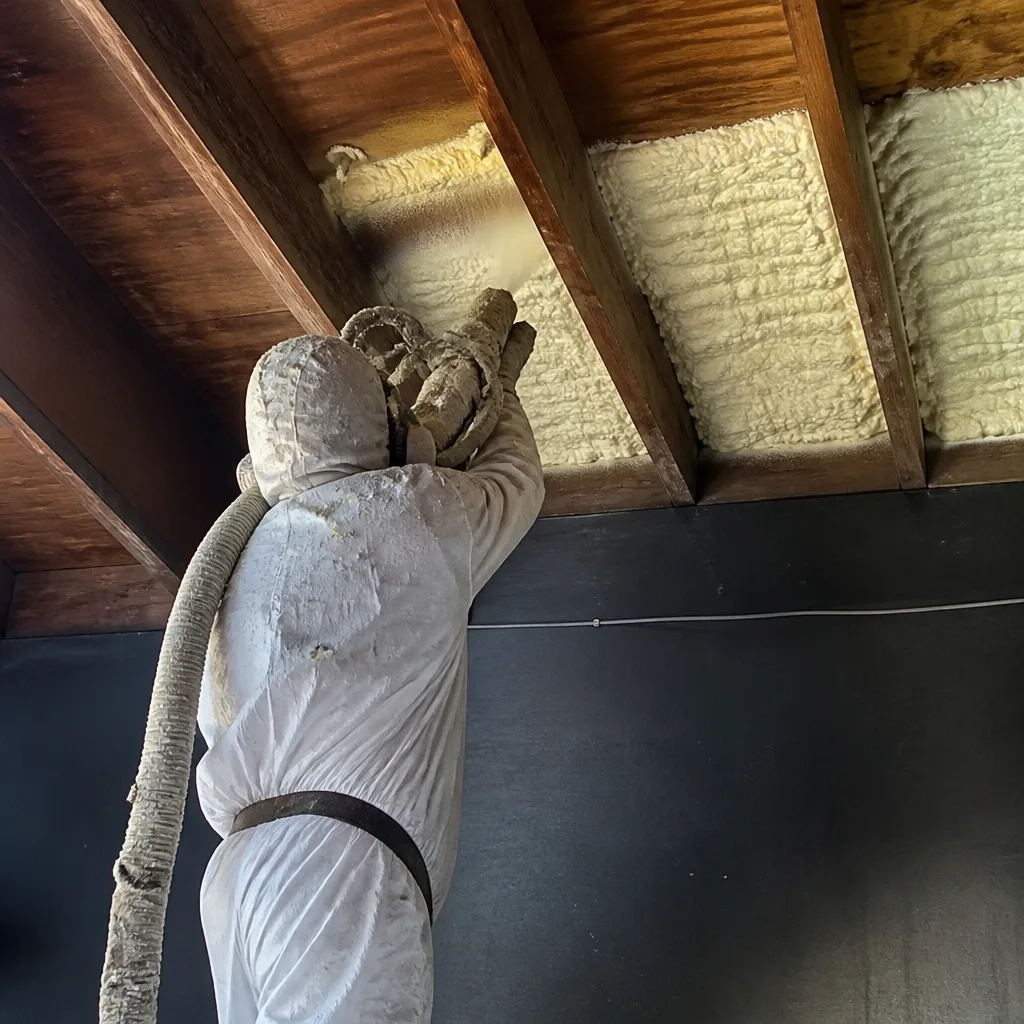
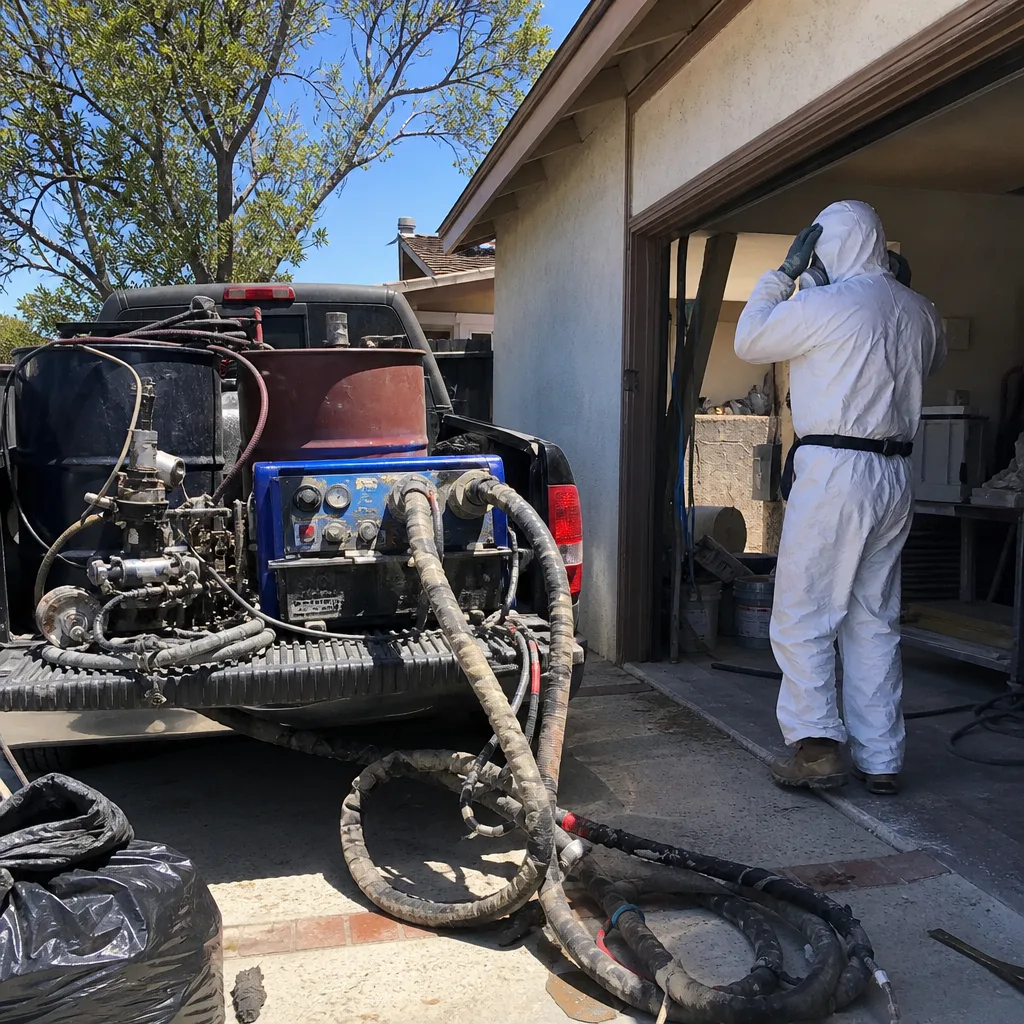
We start by inspecting the attic, rim joist, or wall cavities. In San Antonio Heights, that inspection often reveals problems the homeowner didn’t know existed: heat-stained rafters, compacted batts, gaps around top plates, and unsealed soffit vents. Then we remove what needs removing, prep the area, and apply foam at the correct depth and coverage for your specific structure. The job usually takes one day for a rim joist or garage ceiling, two days for a full attic roof deck.
When a San Antonio Heights Homeowner Needs Us
You need a spray foam contractor when your upstairs rooms won’t hold temperature, when your AC runs constantly from June through September, or when you’re planning a renovation and want the building envelope done right the first time. Older homes in the 91784 area with original insulation are the most common candidates. If your attic has fiberglass batts that are compressed, shredded, or missing entirely, spray foam is the retrofit that fixes it permanently rather than patching it.
Spray Foam Attic Insulation in San Antonio Heights
Spray Foam Attic Insulation in San Antonio Heights means applying foam directly to the underside of the roof deck, bringing the attic into the building’s conditioned space. This is the single highest-impact upgrade you can make in a hillside home that bakes all summer. Standard attic floor insulation leaves the attic itself at 140°F or higher, which means your ductwork sits inside an oven and every inch of ceiling drywall is a radiant heat source pushing 100°F-plus temperatures down into your living space. Foam on the roof deck changes the entire equation. Typical cost for a 1,200 to 2,000 square foot attic in San Antonio Heights runs $4,200 to $7,500 for closed-cell, with open-cell coming in lower at $3,400 to $5,800.
Roof Deck vs. Floor Application
On a flat-truss attic, we often recommend spraying the roof deck and air-sealing the attic as conditioned space. On a home with a usable attic or specific ventilation design, we may spray the attic floor and rim joists instead. The decision depends on your ductwork location, whether you store anything up there, and how your home handles moisture. There’s no single right answer for every house on the hill.
Garage Ceiling and Rim Joist Work
Attached garages in San Antonio Heights are often uninsulated, which means every degree of heat that builds up in the garage gets pressed against the shared wall and the bonus room above it. Spray foam on a garage ceiling seals that boundary and stops the heat transfer. Rim joist spray foam costs between $900 and $2,200 for most homes here and delivers immediate returns by blocking the drafts that run along the top of your foundation walls.
Trusted Brands We Service in San Antonio Heights
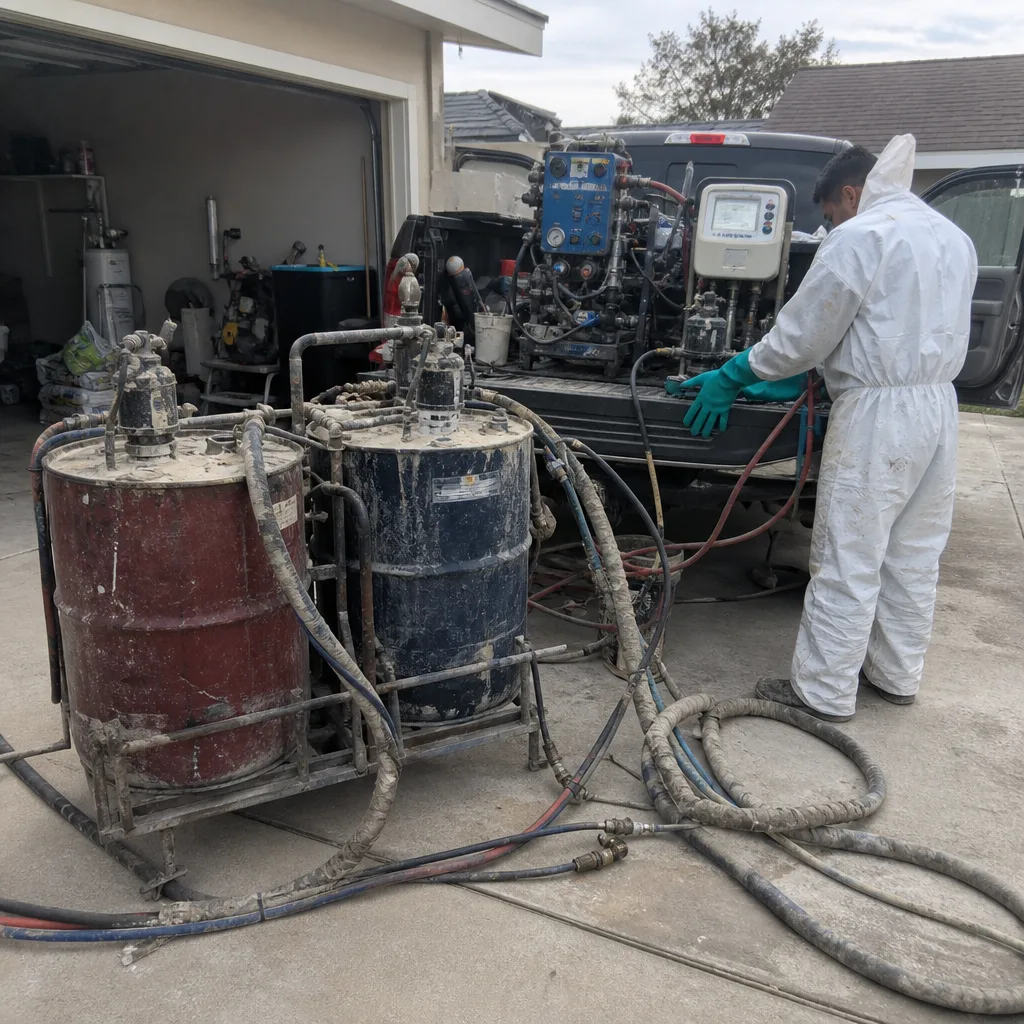
We’re not tied to one manufacturer, and that matters. For San Antonio Heights homes, we most often recommend Icynene closed-cell foam for roof decks and unconditioned spaces, Demilec open-cell for wall cavities where breathability matters, and Rockwool mineral wool or Owens Corning products where fire resistance or specific R-value targets are the priority. We stock parts and materials suited to the local housing stock, so there’s no waiting on a shipment when your attic is already open and the heat is building. Having eight manufacturer partnerships means we can tell you honestly which product fits your home, because we’re not trying to make one product fit every situation. Ask us why we carry Rockwool, spray foam, and recycled fiber: most contractors carry none of them.
Common Spray Foam Insulation Problems We See in San Antonio Heights Homes
- Compacted fiberglass batts in original 1950s through 1970s attic floors. The summer heat breaks down the binder that holds fiberglass loft, and the batts collapse to a fraction of their original thickness. Once that happens, R-value is gone and the ceiling becomes a radiant heat panel.
- Open-cell foam applied too thin on older wood-frame walls. When freezing nights hit after a warm day, thin open-cell can allow moisture to migrate and condense inside the wall cavity. Proper depth and correct product selection are not optional in this climate.
- Unsealed soffit and gable vents leaving ember paths open. Spray foam at the flat ceiling doesn’t address vents as potential ember intrusion points during wildfire season. Homes near the foothills need vent detailing that accounts for ember exposure, especially along the wildland-urban edge.
- Heat-stained rafters and decking from years of 140°F attic temperatures. This is a sign the attic has been acting as an unvented solar collector. It also tells us that any new insulation must be able to handle the same conditions without degrading, which is exactly where closed-cell foam earns its cost.
Pricing for Spray Foam Insulation in San Antonio Heights, CA
Closed-cell spray foam on a typical attic roof deck in San Antonio Heights runs $4,200 to $7,500. Open-cell wall injection for an older 1950s or 1960s home ranges from $2,800 to $5,400 depending on how many exterior walls are involved and whether we can work from the exterior or need to go through interior drywall. Rim joist sealing costs $900 to $2,200. Garage ceiling applications range from $1,600 to $3,400. What moves the price: square footage, whether we’re working on a steep hillside access point, how much old material has to be removed, and whether you have useful attic space that needs to remain accessible. Every estimate includes an attic inspection and a written scope of work. Call (833) 390-3099 to schedule yours. It’s free, and you’ll learn more about your house than you knew this morning.
We Also Serve Cities Near San Antonio Heights
Our crews work throughout the foothill communities around San Antonio Heights, including Upland, Claremont, Montclair, and Rancho Cucamonga. If you’re in one of those cities and dealing with the same hillside heat, the same aging housing stock, and the same energy bills, we can help. The fundamentals don’t change when you cross the city line, but the specific fix for your attic might be different from what your neighbor needs.
Serving San Antonio Heights, CA — Our Local Coverage Area
We’re based in the San Antonio Heights area and know this community well. Use the map below to see our service coverage — if you’re nearby, we can almost certainly help.
FAQs About Spray Foam Insulation in San Antonio Heights
Yes. Closed-cell spray foam is stable at temperatures far beyond what a San Antonio Heights attic reaches, and it does not compact, settle, or lose R-value the way fiberglass batts do under sustained 140°F heat. This is the exact reason we recommend foam for hillside attics here: the product survives the conditions. Open-cell foam is also stable at these temperatures, though we typically select closed-cell for roof deck applications where moisture control and higher R-value per inch matter. Call (833) 390-3099 and we’ll look at your specific attic conditions before recommending anything.
In most cases, yes. We can inject open-cell or closed-cell foam into existing wall cavities through small access points, either from the exterior sheathing or through interior drywall that gets patched afterward. This is a well-established retrofit method for the wood-frame 1950s through 1970s construction common in San Antonio Heights. The condition of your existing cavity, any knob-and-tube wiring that may still be present, and sheathing type all factor into feasibility, so we need to inspect before committing. Estimates are free and include that inspection.
Spray foam itself is not a fireproofing product, but it does help in a specific way: when applied correctly, it seals soffit vents, gable vents, and other openings where wind-driven embers can enter an attic during a wildfire event. Unsealed vents are a major ember intrusion path for homes in hillside communities like San Antonio Heights. Closed-cell foam at the roof deck or at vent locations can close those gaps. We recommend pairing foam work with ember-rated vent covers for the strongest protection. We’ll walk you through exactly what your roofline needs.
When foam is applied directly to the roof deck, we’re creating an unvented attic assembly, which means the traditional soffit-to-ridge ventilation path gets converted to a conditioned space. That’s an intentional, code-recognized approach called a hot roof or encapsulated attic, and it works extremely well in San Antonio Heights because it removes the 140°F attic entirely from the equation. Moisture management becomes the priority, which is why we choose the specific foam type and depth based on your roof pitch, shading, and whether you have a cathedral ceiling or flat trusses. This is not a one-size-fits-all detail, and we treat each hillside roof individually.
Closed-cell foam is denser, acts as a vapor barrier, and delivers roughly R-7 per inch. Open-cell foam is lighter, vapor-permeable, and provides about R-3.5 to R-4 per inch. For San Antonio Heights roof decks, we most often recommend closed-cell because of its higher R-value per inch, its moisture control properties, and its stability under the heat loads these attics experience. Open-cell can be the right call for interior wall cavities or where a breathable assembly is preferred. The correct choice depends on your specific wall assembly, roof structure, and exposure. We’ll explain the recommendation for your house in plain language before any work starts. Call (833) 390-3099 and ask us directly.
If you’re in San Antonio Heights and your attic has original insulation that’s been cooking in the hillside heat for forty or fifty years, you already know what your energy bills look like in August. You know which rooms get hot first. The fix isn’t another blanket of fiberglass over the problem. It’s a properly specified spray foam application from a contractor who understands this specific housing stock, this specific climate, and the right material for each part of the house. Call Fountain Valley Insulation at (833) 390-3099 for a free estimate. We’ll inspect your attic, show you what we find, and give you a straight answer on what your home actually needs.
Written by Nate Calloway, Owner at Fountain Valley Insulation, serving San Antonio Heights and the surrounding foothill communities.