
Fast, Reliable Spray Foam Insulation Across Portola Hills
Spray foam insulation in Portola Hills typically costs $2,800 – $6,400 for a full attic application, with open-cell foam running $1.10 – $1.80 per board foot and closed-cell running $1.60 – $2.60 per board foot installed. Most Portola Hills jobs are completed in one day, and we schedule within 3 – 5 business days for this area. The reason spray foam matters more here than in flat coastal Orange County is simple: homes in the 92610 ZIP sit on hillside slopes above Live Oak Canyon, where Santa Ana heat gain through attics is brutal and wildfire ember intrusion through canyon-facing eave gaps is a real, annual concern. Call (833) 390-3099 for a free estimate on your Portola Hills home.
We know this community’s housing stock. The stucco-and-tile homes built in the 1980s and 1990s throughout Portola Hills carried R-11 to R-19 attic insulation when new. Thirty-plus years later, that fiberglass has settled, compacted, and been shoved around by HVAC replacements and re-roof jobs. We see it every week. A home that looks fine from the street is losing cooling efficiency through an attic that’s performing at R-7 or worse. That’s the Portola Hills problem we solve.
Why Fountain Valley Insulation Is Portola Hills’s Preferred Spray Foam Insulation Company
We’re a multi-brand insulation specialist, not a one-product contractor. That matters in Portola Hills because the canyon-facing homes here need a specific combination of high R-value and ember-resistant air sealing, and no single foam type solves every house. Our Spray Foam Insulation team carries Icynene and Demilec, two of the most recognized names in open-cell and closed-cell spray foam. We also install Rockwool mineral wool and GreenFiber recycled-content options, so when we recommend spray foam for your Portola Hills attic, it’s because the material fits the job, not because it’s all we sell.
Nate Calloway, who leads our installation work throughout Orange County, has his crews trained on the specific air-sealing protocols that hillside homes require. We match the material to your home, not the other way around. Homeowners in Portola Hills call us because we can explain the difference between open-cell and closed-cell foam, tell you which one belongs in your attic versus your rim joists, and give you a straight answer about cost before we ever arrive.
Open Cell Spray Foam in Portola Hills
Open Cell Spray Foam is the workhorse product for attic floors and interior wall cavities in Portola Hills, and it’s what we recommend for most 1980s – 90s wood-frame homes here. Installed as a liquid that expands to roughly 100 times its volume, open-cell foam fills the irregular gaps that settled fiberglass leaves behind. The cost in Portola Hills runs $1.10 – $1.80 per board foot, with a typical 1,800-square-foot attic floor running $2,800 – $4,200. That range covers removal of the old settled insulation, air sealing around penetrations, and the foam application itself.
Why open-cell instead of closed-cell for most Portola Hills attics? Open-cell foam allows moisture to pass through slowly, which means a minor roof leak won’t hide behind the foam until the sheathing rots. On canyon-facing homes above Live Oak Canyon, we pair open-cell attic floor foam with ember-resistant venting and meticulous eave gap sealing. The foam does the thermal work; the venting and sealing do the fire-hardening work. Together they address both threats this community faces.
Attic Floor Applications
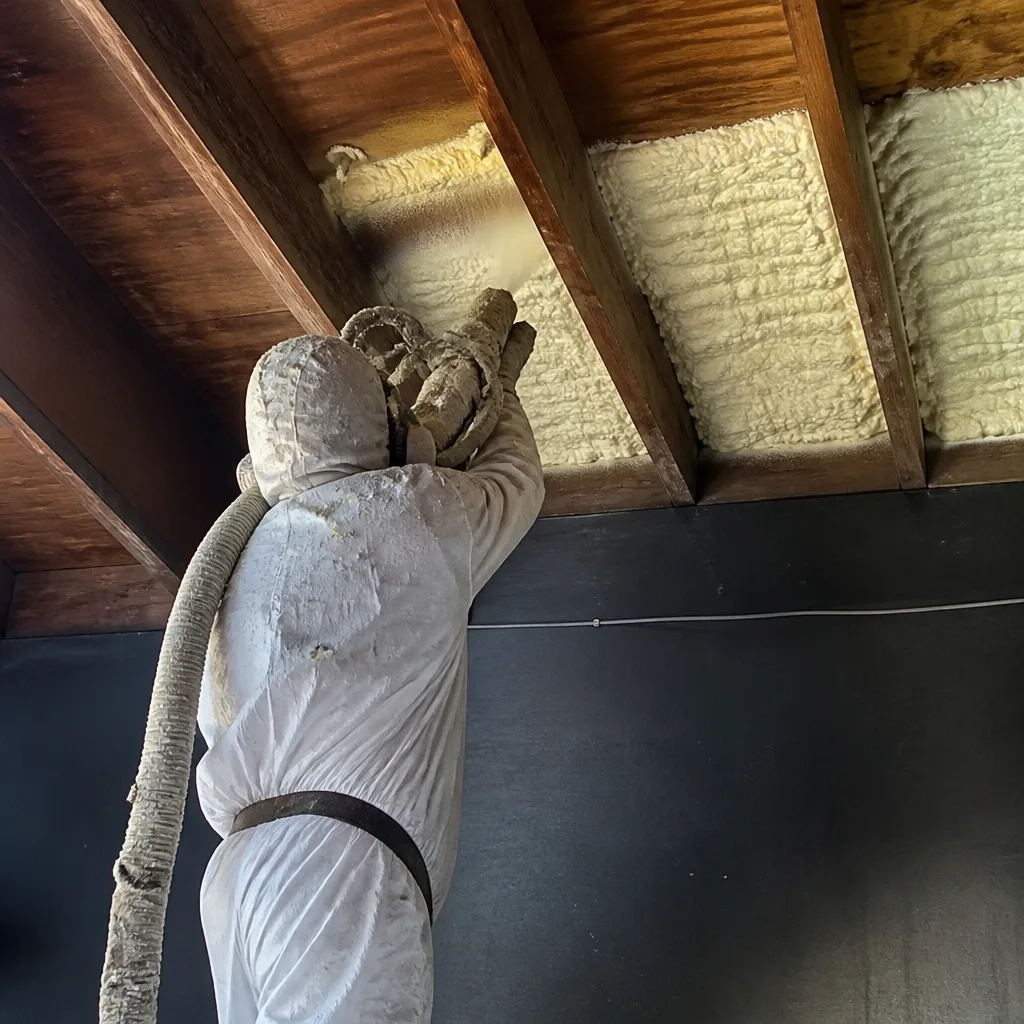
We spray open-cell foam directly onto the attic floor after removing old fiberglass batts or blown-in material. This creates a continuous thermal barrier that can’t settle or shift. For Portola Hills homes still carrying original R-11 insulation, this single change typically doubles or triples the effective attic R-value and eliminates the hot-air leaks that make upstairs bedrooms unbearable in August.
Air Sealing the Canyon Wind Corridor
Hillside lots in Portola Hills face canyon wind corridors, and the eave gaps and attic vents along those rooflines get hit hard during Santa Ana events. We air-seal those gaps before or during foam application, then install ember-resistant venting where existing vents are degraded or missing. This isn’t standard spray foam work; it’s what this geography demands.
Spray Foam Insulation Contractors in Portola Hills
Spray Foam Insulation Contractors in Portola Hills need to understand two things that flat-land contractors don’t: heat gain patterns on hillside slopes and wildfire ember dynamics through attic vents. We send crews who know the difference between a standard attic in Foothill Ranch and a canyon-facing attic off Live Oak Canyon Road. The labor itself runs $1.50 – $2.80 per square foot for spray foam work in this area, which includes prep, masking, application, and cleanup. A full attic with air sealing typically lands between $3,800 and $6,400 all-in.
We don’t rush Portola Hills jobs. The steep lots mean ladder access is often difficult, and some attics on hillside homes have shallow rooflines that require careful maneuvering around truss work. Our crews plan for that. We schedule a full day for most Portola Hills spray foam installations rather than trying to squeeze two jobs into one day and leaving a mess in your driveway.
Rim Joist and Crawlspace Work
Older wood-frame Portola Hills homes leak air through rim joists at the foundation line. We use closed-cell spray foam there because it adds structural rigidity and blocks moisture migration, not just air. Rim joist sealing in Portola Hills typically runs $900 – $1,800 depending on access and linear footage, and it’s one of the highest-return air sealing improvements we do in this community.
Garage Ceiling and Roof Deck
Attached garages in Portola Hills trap heat that radiates into living space above. We spray the garage ceiling with open-cell or closed-cell foam to cut that transfer. For homes with vaulted ceilings or finished attic rooms, spray foam on the roof deck itself is the right call, and those jobs in Portola Hills run $5,500 – $9,000 depending on square footage and foam type.
Trusted Brands We Service in Portola Hills
We carry Icynene and Demilec for spray foam, which puts us in different company than general insulation contractors who push one fiberglass product. We also stock GreenFiber recycled-content blown-in insulation and Owens Corning batts for jobs where spray foam isn’t the answer. For Portola Hills customers, that means fast turnaround on material, no waiting on special-order foam kits, and honest guidance across multiple brands instead of a single upsell. Ask us why we carry Rockwool, spray foam, and recycled fiber. Most contractors carry none of them.
Common Spray Foam Insulation Problems We See in Portola Hills Homes
- Settled original insulation masquerading as “fine.” The R-11 fiberglass installed when these 1980s – 90s homes were built has compacted to R-7 or less in many Portola Hills attics. It’s not failing visibly; it’s just not working, and the upstairs heat tells the story.
- Open eave gaps on canyon-facing rooflines. The Santa Ana winds that sweep up Live Oak Canyon push air through eave gaps and pull attic heat into living spaces. These gaps also become ember entry points during wildfire events, which is why air sealing here is a fire-hardening measure, not just an efficiency upgrade.
- Spray foam slapped over old insulation. We’ve followed other crews in Portola Hills who sprayed foam directly over settled, compacted fiberglass without removing it first. The result is trapped moisture, uneven coverage, and a homeowner who paid twice for a job that should have been done right once. We remove the old material first.
- Degraded attic vents that defeat the whole system. The original vents on 1980s homes in this community are often rusted, blocked, or missing screens. Open-cell foam does great thermal work, but if the attic can’t breathe through ember-resistant venting, you’re trading one problem for another.
Pricing for Spray Foam Insulation in Portola Hills, CA
Here are the numbers we give Portola Hills homeowners when they ask what this costs:
- Open-cell attic floor spray foam (1,500 – 2,000 sq ft attic): $2,800 – $4,400
- Closed-cell rim joist sealing (standard perimeter): $900 – $1,800
- Garage ceiling spray foam (2-car garage): $1,400 – $2,600
- Full attic with air sealing and ember-resistant venting: $3,800 – $6,400
- Spray foam roof deck (vaulted ceiling or finished attic): $5,500 – $9,000
The biggest cost drivers in Portola Hills are attic accessibility on steep hillside lots, whether we’re removing old insulation first, and whether air sealing around canyon-facing eave gaps is part of the job. Call (833) 390-3099 for an exact quote on your home. Estimates are free, and we’ll tell you if spray foam is the right call or if blown-in or mineral wool makes more sense for your situation.
We Also Serve Cities Near Portola Hills
Our Spray Foam Insulation in Portola Hills work regularly takes us into Foothill Ranch, Lake Forest, Mission Viejo, and Trabuco Canyon. The housing stock shifts a bit from city to city, but the heat gain patterns and fire exposure across the Saddleback foothills are similar. We schedule across the whole area weekly, so response time stays short no matter which side of the canyon you’re on.
Serving Portola Hills, CA — Our Local Coverage Area
We’re based in the Portola Hills area and know this community well. Use the map below to see our service coverage — if you’re nearby, we can almost certainly help.
FAQs About Spray Foam Insulation in Portola Hills
Portola Hills sits on hillside slopes above Live Oak Canyon where Santa Ana winds drive heat into attics at a rate that flat coastal neighborhoods don’t experience. The 1980s – 90s wood-frame homes here also carry original insulation that’s settled well below its rated R-value, and the canyon-facing eave gaps are an ember-intrusion risk during wildfire season. Spray foam here has to solve both problems at once: high R-value for heat gain and air sealing for fire hardening. That’s a different job than insulating a tract home in Irvine or Fountain Valley.
Spray foam itself is not a fire barrier, but the air sealing we do alongside the foam closes the eave gaps and penetrations where embers enter. We install ember-resistant venting and seal canyon-facing rooflines as part of most Portola Hills spray foam jobs. The foam handles thermal performance; the sealing and venting handle ember defense. Without the air sealing, even a well-insulated home has open gaps that embers can exploit. Call (833) 390-3099 and we’ll assess your existing vents and eave gaps during the estimate.
Yes, because that original insulation has likely settled to R-7 or less and been disturbed by decades of HVAC work and re-roofing. Spray foam fills the gaps that settled fiberglass can’t cover and creates an air seal that boosts effective R-value beyond what the foam rating alone suggests. We’ve removed old R-11 insulation from Portola Hills attics and found bare spots above bedrooms that had zero coverage. The improvement after foam installation is immediate and measurable in upstairs comfort.
Closed-cell spray foam in the rim joists and open-cell foam on the attic floor cut the two main heat paths into a hillside home: air infiltration through gaps and radiant transfer through the ceiling. The Santa Ana winds push air through eave gaps and force hot attic air into living space. Foam stops that exchange. Homes we’ve insulated in Portola Hills report double-digit drops in upstairs summer temperatures, including one 1989 stucco-and-tile home near Live Oak Canyon where we saw a 15°F drop after sealing and foaming the attic.
Find someone who removes old insulation before applying foam, air-seals eave gaps and penetrations, and knows how to work on steep hillside lots with difficult attic access. Also ask what brands they carry. We run Icynene and Demilec foam products, and we stock multiple insulation types so we’re not forcing one material onto every job. Nate Calloway runs our Portola Hills work and can walk you through exactly what your attic needs. Call (833) 390-3099 for a free estimate.
Written by Nate Calloway, Owner at Fountain Valley Insulation, serving Portola Hills and the surrounding Saddleback foothills.