
Fast, Reliable Spray Foam Insulation Across Pico Rivera
Spray foam insulation in Pico Rivera does more than fill wall cavities. Done right, it air-seals the old 1950s and ’60s tract homes that dominate this city’s neighborhoods, cutting the attic heat gain that drives August cooling bills. We work across all three Pico Rivera zip codes – 90660, 90661, and 90662 – usually within a day or two of your call. If you’re dealing with rooms that never cool down or ducts leaking into a hot attic, call (833) 390-3099 and we’ll walk you through what your home actually needs.
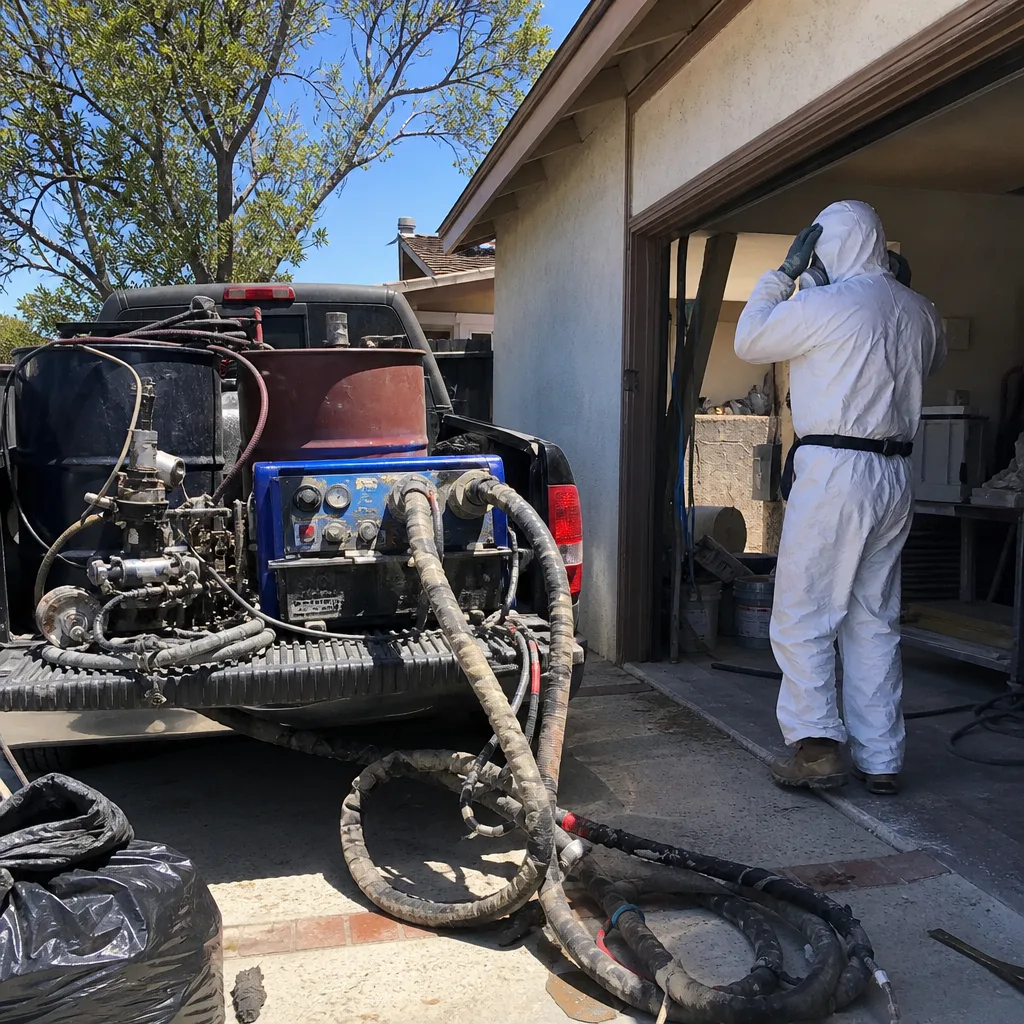
Our crews know these houses. Single-story, wood-frame, east-west sited with the afternoon sun beating on the roofline. Most still have their original fiberglass batts, now compacted and doing very little. We replace that with closed- or open-cell foam matched to the specific cavity conditions, wiring, and duct layout of each home. Not a guess. Not whatever’s on the truck.
Why Fountain Valley Insulation Is Pico Rivera’s Preferred Spray Foam Insulation Company
Most insulation contractors in Southern California carry one brand and push it everywhere. We don’t work that way. Spray Foam Insulation is one of three installation methods our crews run, alongside blown-in and batt attic work, which means we recommend foam only when it’s genuinely the better fit for the home in front of us. In Pico Rivera, that’s a lot of homes. But not all of them.
We bring spray foam capability through Icynene and Demilec, two names that general insulation outfits rarely carry. That matters on older Pico Rivera homes where the foam has to work around original wiring and plumbing, not just fill open stud bays. Nate Calloway, who leads our team, has spent years matching material to building era. If a 1958 tract home off Mines Avenue needs closed cell in the rim joist but open cell in the walls, that’s exactly the call we’ll make and explain to you before any work starts.
Response time to Pico Rivera is straightforward: most estimates happen within 48 hours, and installs are usually scheduled within the week. We’re not a franchise that triages your neighborhood last because it’s not “our side” of the county. Pico Rivera is a regular service area for us, and our crews know the streets, the housing stock, and the problems these homes throw at you.
Closed Cell Spray Foam Insulation in Pico Rivera
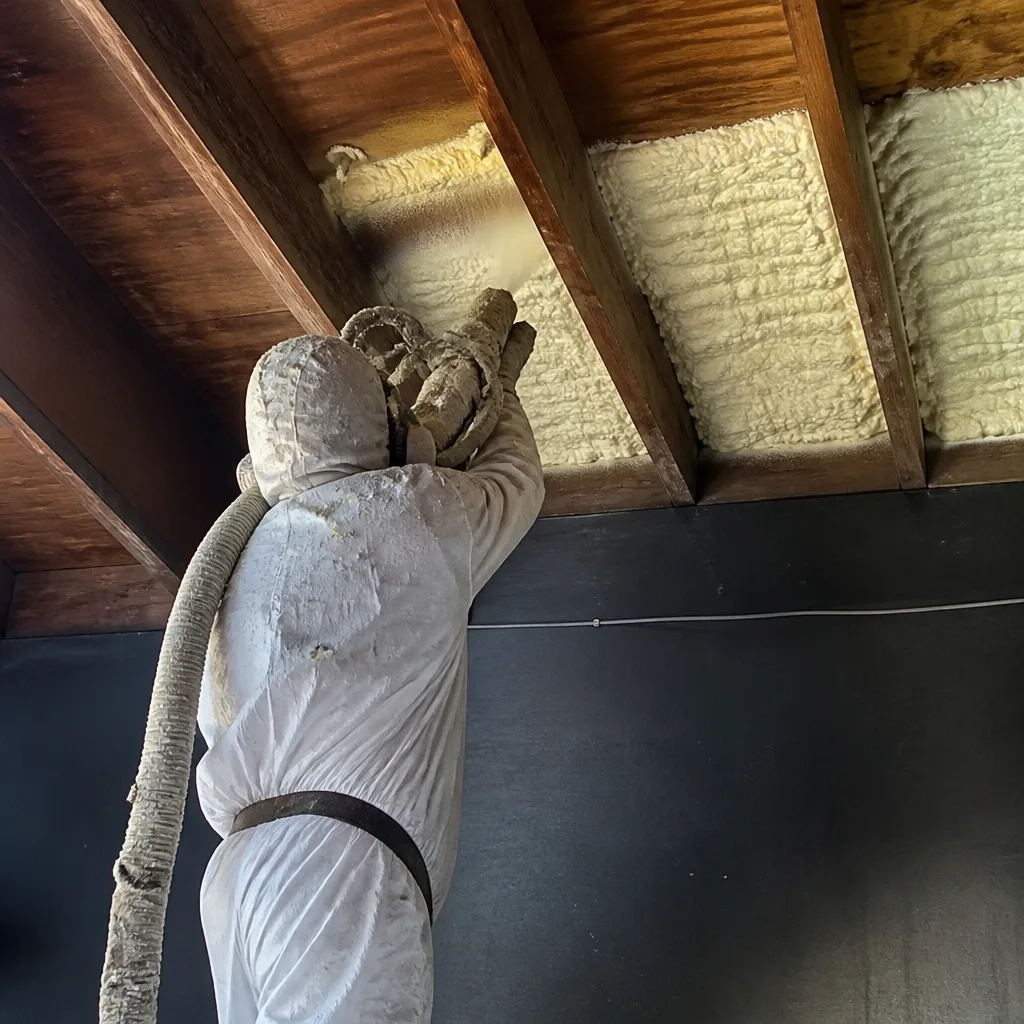
Closed Cell Spray Foam Insulation in Pico Rivera is the workhorse retrofit for rim joists, band areas, and any cavity where you need structural rigidity plus a vapor barrier. On a Pico Rivera tract home, that usually means the rim joist and the underside of the roof deck when you’re converting an attic into semi-conditioned space. Closed cell runs about $1.80 to $3.10 per board foot installed in this market, and a typical rim joist job on a 1,100-square-foot single-story in the 90660 zip code lands between $2,400 and $4,200.
Closed cell makes sense when you’re fighting humidity, when the cavity needs to stay dry, and when you want the highest R-value per inch available. It also adds shear strength to the wall assembly, which older wood-frame homes benefit from quietly. But there’s a catch on these older homes, and it’s one most contractors won’t mention because they either don’t know or don’t want to lose the job. Original aluminum wiring. Closed cell foam applied directly over aluminum branch conductors creates a real corrosion and overheating concern inside the wall, where you’ll never see it until something fails. We flag this on every Pico Rivera estimate where it applies and adjust the plan accordingly.
Rim Joist and Band Sealing
The rim joist is where the floor framing meets the foundation wall, and on these older homes it’s typically uninsulated, drafting air into the crawlspace and up through the walls. Closed cell foam is the right material here because it air-seals and insulates in one pass, and the band area rarely has the aluminum wiring concerns that wall cavities do. Most Pico Rivera rim joist jobs are one-day installs.
Retrofit Wall Cavity Work
Retrofitting walls with closed cell means opening interior drywall or siding, and on 1950s and ’60s homes you’ll find whatever’s been hiding in there. Sometimes it’s clean and simple. Sometimes it’s original galvanized plumbing that’s starting to pin-hole and aluminum branch circuits that were never updated. We work around both, and if a wall cavity has aluminum conductors too close to where foam would go, we route the foam plan away from them rather than burying them.
Open Cell Spray Foam in Pico Rivera
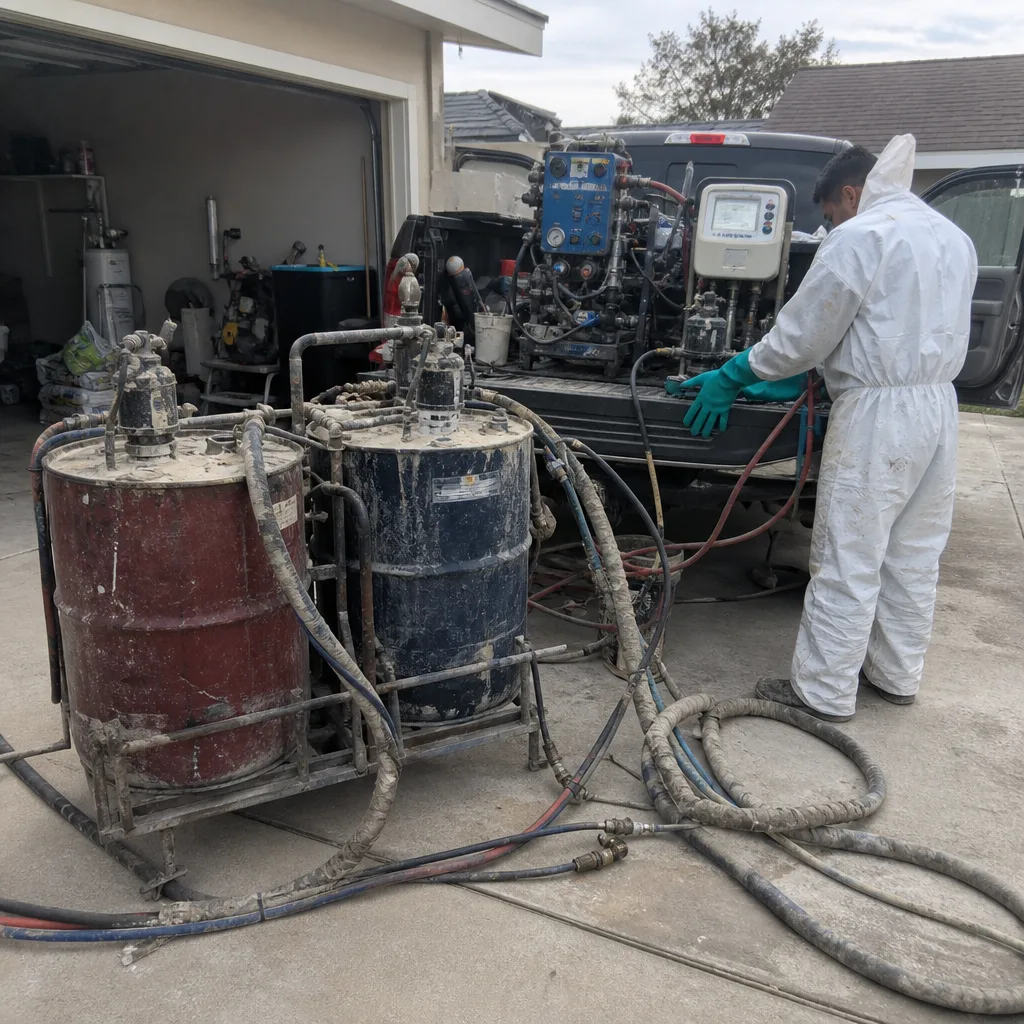
Open Cell Spray Foam in Pico Rivera is what we tend to recommend for wall cavities in these older wood-frame homes, and for good reason. Open cell runs around $0.70 to $1.30 per board foot installed, meaning a full wall cavity job on a typical 1,200-square-foot tract home usually falls between $3,800 and $6,500 depending on access and how many walls you’re doing. It’s an air-sealing material first and an insulator second, which is exactly what these leaky houses need.
Open cell is vapor-permeable, so the wall assembly can still breathe. On a Pico Rivera home with original aluminum wiring, that permeability matters. It doesn’t create the same encapsulation risk that closed cell does when sprayed near conductors, and it’s easier to remove if a future electrician ever needs to get at the wiring. It’s also a better fit for the open attic floor in a home where you’re keeping the attic unconditioned but want to choke off the air movement between living space and the roofline.
Wall Cavity Air-Sealing
Most Pico Rivera tract homes leak air through a hundred small paths: top plates, electrical boxes, plumbing penetrations, the gap where the wall meets the floor. Blown-in fiberglass added over those leaks does almost nothing. Open cell foam applied after air-sealing the openings actually stops the air movement, and that’s the part of the job that shows up on your energy bill.
Attic Floor and Top Plate Work
Before any foam goes in, we air-seal the top plates, can lights, and duct chases. That step is where younger crews skip and homeowners pay for it later, because the best insulation in the world won’t help if your conditioned air is still pouring into a hot attic through unsealed openings. We do that work first, every time, and foam after.
Trusted Brands We Service in Pico Rivera
We install Icynene and Demilec spray foam systems because they’re the two names in this category that have held up over decades of installs, and because they give us an open-cell and closed-cell pairing we can match to the home rather than forcing one product into every job. For homeowners with different priorities, we also carry CertainTeed and GreenFiber in the blown-in and batt side of the business. You’re not locked into foam just because that’s what you called about. If we walk your Pico Rivera attic and the honest answer is blown-in insulation over air-sealing, we’ll tell you that. Our trucks stock parts and materials for Pico Rivera jobs, which means fewer supply runs and tighter scheduling.
Common Spray Foam Insulation Problems We See in Pico Rivera Homes
- Closed-cell sprayed directly over aluminum branch wiring. This is the one we see most on 1950s and ’60s Pico Rivera homes, and it’s completely avoidable. Foam encapsulating aluminum conductors creates a corrosion and overheating risk inside the wall cavity, and it’s a fire hazard nobody can see until the wall is opened. We check for this before any closed-cell plan is finalized.
- Foam applied without air-sealing the original duct chases. Pico Rivera homes off Passons Boulevard and the river corridor often have leaky metal ducts running through the attic. If the chases aren’t sealed before foam goes in, the attic heat still drives your cooling bills, and the homeowner blames the foam. The real problem was the missed prep step.
- New foam shot over compacted legacy batts. Near the San Gabriel River subdivisions, walls and attics often still hold the original batts, now flattened and R-value-depleted. Shooting foam over them without removing the old material traps moisture, kills the air-seal benefit, and wastes whatever R-value you thought you were buying.
- Galvanized plumbing left unshielded in wall cavities. Older Pico Rivera homes still have galvanized supply lines, some of them pin-holed and sweating. Foam applied directly to those lines makes future plumbing repairs far more invasive and can hide slow leaks until the damage is done. We map plumbing runs before we foam.
Pricing for Spray Foam Insulation in Pico Rivera, CA
You’ll hear numbers from $0.70 to over $4 per board foot depending on the material and the job. That’s real spread, and it’s driven by what each cavity actually needs. Closed cell on a rim joist in a Pico Rivera home typically runs $2,400 to $4,200 for the full band area. Open cell in wall cavities on that same home usually lands between $3,800 and $6,500. A roof deck encapsulation project with closed cell is the high end, often $8,000 to $15,000 on older east-west sited homes where the attic space is finished or semi-finished. What drives your price: material type, cavity access, how much demolition is needed, whether old batts have to be removed, and how much air-sealing we’re doing first. Estimates are free, always, and we give you a written line-item number before you commit. Call (833) 390-3099 and we’ll come walk the home.
We Also Serve Cities Near Pico Rivera
Our spray foam crews work across the surrounding LA Basin communities too. If you’re in West Whittier-Los Nietos, Montebello, Santa Fe Springs, or Bell Gardens, same crew, same material selection, same honest assessment of whether foam is actually your best move. We schedule these runs together, so booking from a neighboring city doesn’t add a week to your timeline.
Serving Pico Rivera, CA — Our Local Coverage Area
We’re based in the Pico Rivera area and know this community well. Use the map below to see our service coverage — if you’re nearby, we can almost certainly help.
FAQs About Spray Foam Insulation in Pico Rivera
Yes, but only after we confirm where the aluminum branch circuits run and adjust the material plan around them. Open cell foam is generally safe in wall cavities with aluminum wiring because it’s vapor-permeable and doesn’t encapsulate the conductors, while closed cell should not be applied directly over aluminum circuits without shielding or a routing plan. We inspect this on every 1950s and ’60s Pico Rivera estimate before we quote a material. Call (833) 390-3099 and we’ll check yours.
Because blown-in insulation alone doesn’t stop air movement. These 1950s and ’60s tract homes were built with leaky top plates, unsealed duct chases, and wall cavities that draft air right through the siding, and adding fiberglass over those leaks just buries them. Spray foam is an air-sealing material first, so it addresses the actual problem: air infiltration driving heat into and out of the home.
Usually open cell in the wall cavities and closed cell in the rim joist, band areas, and any below-grade or moisture-prone zones. Open cell breathes, which is what these older wood-frame assemblies want, and it’s the safer choice around original aluminum wiring. Closed cell is the right call where you need a vapor barrier and higher R-value per inch. We’ll tell you which one applies where, and why, before you spend anything.
Yes, and this is where the combination of air-sealing and insulating really shows up. Homes on east-west streets take direct afternoon sun on the roofline and west-facing walls, which transfers into the attic and then into the living space. Foam at the roofline or rim joist, plus air-sealing at the top plates and duct chases, knocks down that heat load measurably. It won’t turn a 1958 tract home into a new build, but it changes what the AC has to fight against every August afternoon.
We can, but we don’t bury it blindly. Original galvanized lines in these homes are past their expected service life, and some are already pin-holing behind the walls. We map the plumbing runs during the estimate, and we either shield the lines or leave an access path so future plumbing repairs aren’t a demolition job. Foaming over aging galvanized pipe without a plan is how a $5,000 insulation upgrade turns into a $15,000 wall-opening repair two years later.
Get a Straight Answer, Not a Sales Pitch
If you own one of these older Pico Rivera homes and you’re tired of guessing why upstairs is hot while the thermostat says 72, call us. We’ll walk the attic, the rim joist, the wall cavities, and tell you exactly what you need and what you don’t. Free estimate, written line-item pricing, no obligation. Call (833) 390-3099 and ask for Nate.
Written by Nate Calloway, Owner at Fountain Valley Insulation, serving Pico Rivera and the surrounding LA Basin.