
Spray Foam Insulation in Newport Beach, CA: What It Costs & What Actually Works Near the Water
Spray foam insulation in Newport Beach typically runs $3.50 to $7.50 per board foot for open-cell and $4.50 to $9.00 per board foot for closed-cell, with a typical 1,200-square-foot crawlspace or garage project landing between $4,200 and $9,800. Closed-cell jobs come in higher because near the water you need closed-cell’s vapor impermeability to stop marine-layer moisture from moving through the foam itself. That’s not a price inflated for a coastal zip code. It’s the material cost of doing the job in 92662, 92663, 92658, and 92659 without trapping salty air against your framing.
We’re Fountain Valley Insulation, led by Nate Calloway, and we’ve crawled, sprayed, and re-flashed enough bay-front subfloors to know what fails and what holds. Call (833) 390-3099 for a straight answer and a free estimate.
Why Newport Beach Spray Foam Is a Different Job Than Irvine
Newport Beach sits inside a persistent marine layer that delivers heavy morning dew, fog-adjacent humidity, and salt-laden air nearly year-round. In Irvine, 15 miles inland, a crawlspace dries on its own between rains. On Balboa Island and the Balboa Peninsula, a raised pier-and-beam subfloor with open vents pulls damp bay air underneath the house every night and never really dries. That changes everything about how we spec spray foam here.
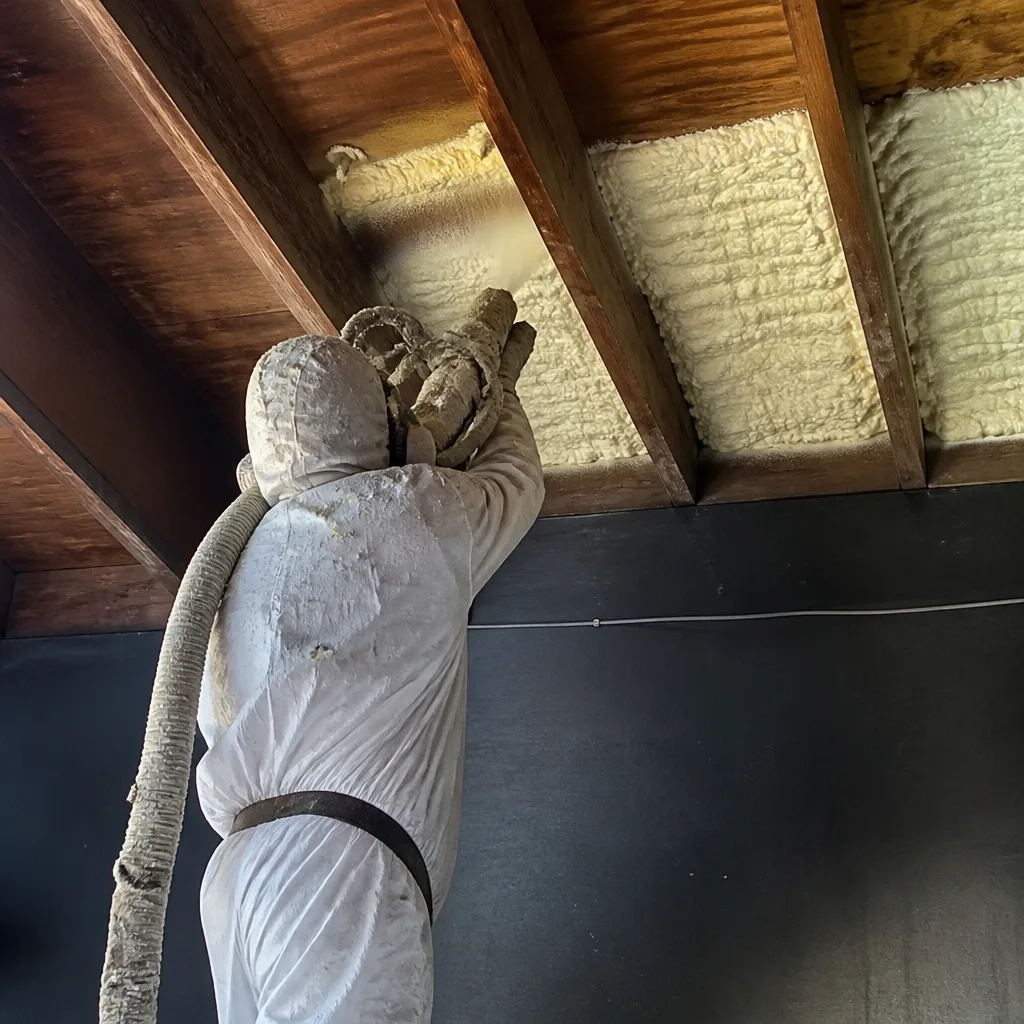
An R-value-only approach fails in Newport Beach. If you spray open-cell foam against a subfloor that’s moving moisture, the foam absorbs it, loses adhesion, and eventually sags off the joists. If you spray closed-cell over a damp substrate without addressing vapor and ventilation first, you can seal water in and hide rot behind a foam skin until the subfloor softens. On a raised Balboa Island cottage, our crew found the original fiberglass batts sagging off the joists and dripping condensation onto the pier-and-beam subfloor, with salt-corroded fasteners giving way as we pulled them. We removed the failed batts, sealed the rim joists and subfloor with closed-cell spray foam, and re-flashed the crawlspace vents so bay air stops feeding the moisture problem. Two seasons later the subfloor stayed dry and the first-floor rooms no longer smelled of damp wood.
We work with eight manufacturer brands, including Icynene and Demilec for spray foam, plus Reflectix service in Newport Beach, and we match the material to your home, not the other way around. That matters more along the 92662 and 92663 waterfront than almost anywhere else in Orange County.
Crawl Space Spray Foam Insulation in Newport Beach
Crawl Space Spray Foam Insulation in Newport Beach is not a one-material answer. On Balboa Island and the Balboa Peninsula, it means sealing a pier-and-beam cavity that breathes in moist bay air every time the wind shifts. The job starts with a moisture check on the existing subfloor, because foam applied over a damp substrate will debond. Then we address rim joists, subfloor seams, and the vent strategy before spraying.
When the subfloor is dry enough, closed-cell spray foam from Demilec or Icynene goes on at roughly $4.75 to $8.50 per board foot, installed. That gives you a vapor barrier plus R-6.5 to R-7 per inch. Open-cell makes sense in some raised floors where the framing is in good shape and the vents can be properly closed, running closer to $3.50 to $6.00 per board foot.
Why does foam applied over a damp subfloor fail here? Because even closed-cell needs mechanical adhesion to the wood. Salt-laden air that has soaked the joists for 30, 50, or 90 years leaves behind mineral residues and expanded fibers that prevent a clean bond. Our crews treat those surfaces before spraying, which is the part most bids skip.
Marine-Layer Prep
Morning dew condenses on rim joists and exterior sheathing near the water from March through November. We check with a moisture meter before any foam goes down. If the moisture content is above 18 percent, we dry or replace before spraying, because no foam can outperform a substrate that’s actively wicking water.
Vent Sealing and Re-Flashing
Older Peninsula homes vent their crawlspaces to salt air year-round. We close and re-flash those vents after the foam is sprayed, so the insulated cavity no longer inhales bay moisture each night. Skip this step and the spray foam becomes a sponge holding humidity against the floorboards.
Crawl Space Spray Foam Insulation in Newport Beach on a typical pier-and-beam cottage runs $5,500 to $9,800, depending on access height and how much old insulation has to come out first.
Garage Spray Foam Insulation in Newport Beach
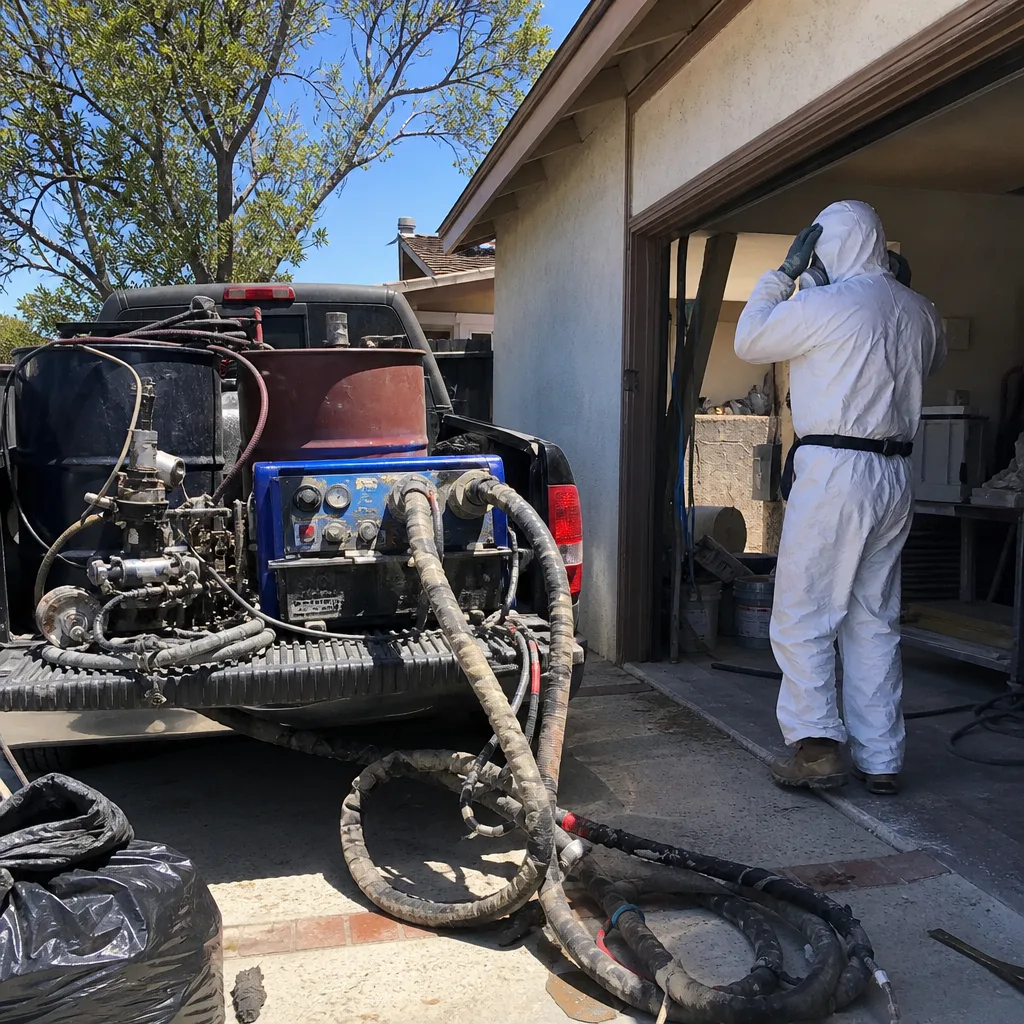
Garage Spray Foam Insulation in Newport Beach usually targets a ceiling below an uninsulated bonus room or a wall shared with living space, not the garage for its own sake. Salt air corrodes the garage door hardware first, but the thermal boundary between the garage and the rest of the house is where spray foam earns its keep. In Newport Heights and Dover Shores tract homes, garage walls facing the ocean sometimes get open-cell foam for sound and thermal break, then closed-cell around rim joists where the garage ceiling meets the exterior wall.
The marine layer effects are real here. Exposed fasteners, foil facings, and duct hangers in garages near the harbor show rust and white corrosion within five to eight years. Closed-cell spray foam, applied correctly, won’t accelerate that. But if we’re spraying over corroded strapping and failing duct insulation, we address those first so the foam doesn’t hide a disintegrating metal hanger.
Garage Ceiling and Rim Joist
Rooms over garages in Newport Beach almost always underperform thermally, because the garage ceiling cavity is uninsulated and open to the exterior. Closed-cell foam at 2 to 3 inches on the garage ceiling and rim joist stops the heat and the moisture movement that makes the floor above feel cold. Work like this on a two-car garage in Newport Heights typically lands between $3,800 and $6,500.
Salt-Air Hardware Inspection
We check garage door tracks, springs, hinges, and opener chains for corrosion before spraying nearby. If the hardware is rusted through, the foam isn’t the problem. But foam can seal in the salt that’s already working on metal surfaces, so we note it, clean what we can, and tell you what a garage door specialist should address.
Trusted Brands We Service in Newport Beach
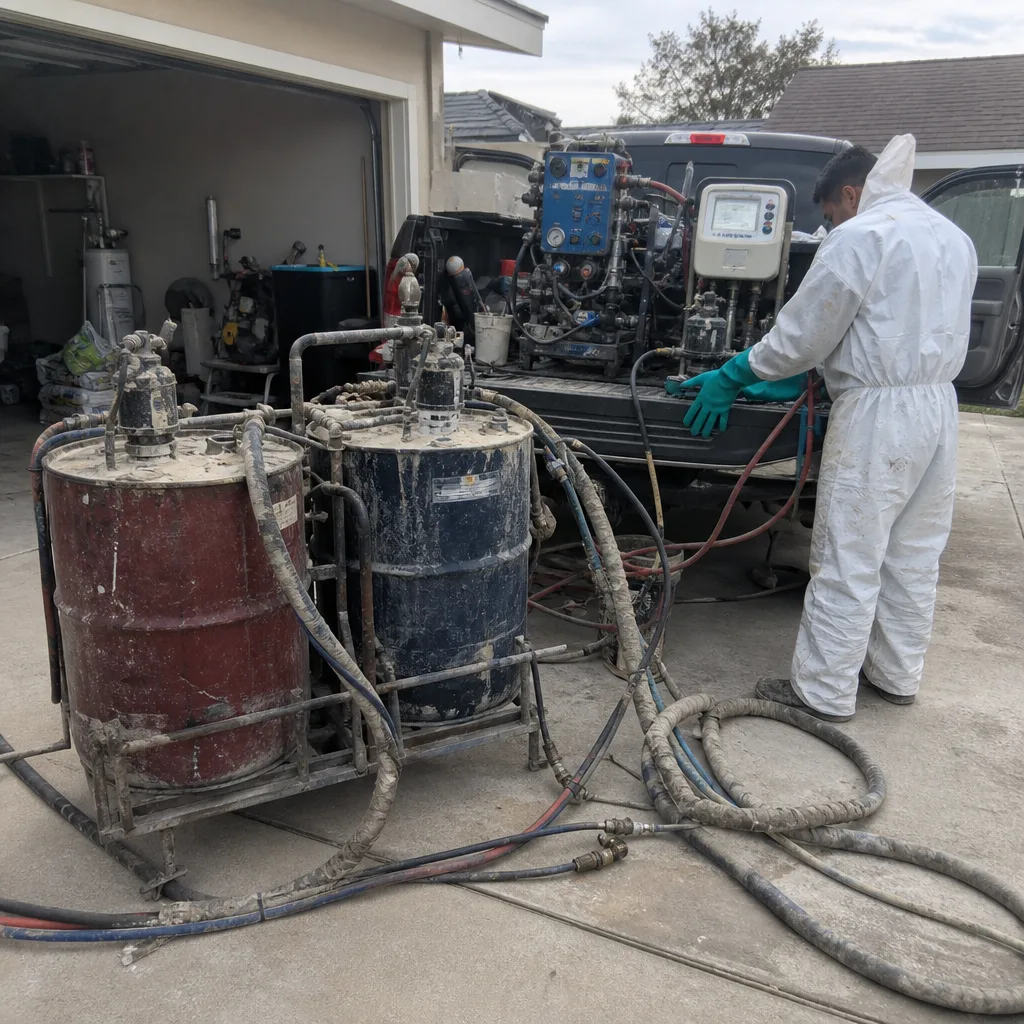
We’re not tied to a single foam manufacturer. We carry and install Icynene and Demilec spray foam, two of the most recognized names in the category, and we use GreenFiber when a project calls for recycled-content fiber in adjacent attics or walls. That means if your home needs closed-cell at the rim joists but open-cell in ceiling cavities, we spec it that way instead of forcing one product through the whole job.
We stock the common replacement materials for Newport Beach work, so we’re not waiting on a distributor when we re-flash a crawlspace vent or replace corroded strapping. That’s the difference between a one-material contractor and a shop that works with eight brands.
Common Spray Foam Insulation Problems We See in Newport Beach Homes
- Open crawlspace vents on Balboa Peninsula and Balboa Island pier-and-beam homes. They pull salt-laden marine-layer air under the floor every night. Foam applied over that damp subfloor traps moisture and debonds within a season or two.
- Salt air corroding foil facings and fasteners near the coast. Spray foam edges and hangers degrade faster within a quarter mile of the water than they do inland in Dover Shores or Eastbluff. We check for white corrosion before spraying.
- Morning-dew condensation on Newport Coast and Bay Island custom builds. Rim joists and sheathing get sealed in by foam applied without a vapor-climate check. That’s how rot hides behind good-looking spray foam.
- Sagging fiberglass in raised-floor cottages. The original batts lose adhesion to open floor joists in damp air, fall away, and leave the floor with zero insulation. Spray foam installed properly replaces that failed layer with something that actually stays up.
Pricing for Spray Foam Insulation in Newport Beach, CA
A typical crawlspace spray foam job in Newport Beach runs $5,500 to $9,800, while garage ceiling and rim joist work lands between $3,800 and $6,500. Open-cell spray foam runs $3.50 to $7.50 per board foot installed. Closed-cell runs $4.50 to $9.00 per board foot depending on depth and access.
What changes the price in Newport Beach specifically: access height in the raised-floor homes on Balboa Island, how much failed fiberglass we have to remove before spraying, whether vents need re-flashing, and whether existing corrosion on strapping or ducts needs addressing. The ocean-facing side of a house always costs more than the inland side, because the substrate needs more prep. Call (833) 390-3099 and we’ll come out, take moisture readings, and give you a number that won’t change after we open things up.
Get your free estimate by phone. We’ll tell you what you actually need, not what we want to sell.
We Also Serve Cities Near Newport Beach
Our spray foam crews work throughout coastal Orange County. We’re in Costa Mesa, San Joaquin Hills, Fountain Valley, and Irvine most weeks. If you’re near Newport Beach but outside city limits, call us. Our Spray Foam Insulation team handles the full range, from raised-floor cottages to newer custom builds. Most jobs start within a week of the estimate. For the full service area overview, see Spray Foam Insulation in Newport Beach.
Serving Newport Beach, CA — Our Local Coverage Area
We’re based in the Newport Beach area and know this community well. Use the map below to see our service coverage — if you’re nearby, we can almost certainly help.
FAQs About Spray Foam Insulation in Newport Beach
Spray foam fails in Balboa Island crawlspaces because the open vents pull moist bay air under the raised floor every night, keeping the subfloor damp year-round, while Irvine crawlspaces dry out on their own between rains. The fix is moisture-treating the substrate, sealing rim joists with closed-cell foam, and re-flashing the vents so bay air stops feeding the cavity. Call (833) 390-3099 if your crawlspace smells like wet wood; we’ll diagnose it before quoting a rep.
Yes. The marine layer means garage walls and ceilings hold more surface moisture, so we take moisture meter readings on the rim joists and sheathing before any spray foam goes on. If readings are above 18 percent, we dry or replace first. Most garages within a mile of the harbor need at least some prep before open- or closed-cell foam goes up.
No, spray foam doesn’t stop salt-air corrosion on metal hardware; it can actually seal corrosion in if applied over corroded strapping or fasteners. What we do is inspect exposed metal before spraying, clean what can be cleaned, and let you know if the garage door hardware itself needs replacement. For genuine moisture protection, closed-cell foam at the rim joist is the right play.
A Dover Shores tract home from the 1960s or 70s usually has a vented attic and garage ceiling cavities that need open-cell foam at the thermal boundary, plus closed-cell at rim joists. A Newport Coast custom build has tighter framing, bigger window packages, and more complex rooflines, so we spec foam by room, not by square foot. The material per board foot is similar; the detailing is not.
It can, if you spray foam over a damp subfloor or into a crawlspace that still has open vents pulling in bay air. That traps moisture against the wood and makes the smell stronger. We remove failed insulation, treat the substrate, seal vents, and then spray, so the foam dries the space out instead of sealing the dampness in. Call (833) 390-3099 for a free estimate and a moisture check before you decide.
We’re Fountain Valley Insulation, led by Nate Calloway, serving Newport Beach and coastal Orange County. Call (833) 390-3099 for a free estimate and a straight answer about spray foam near the water.
Written by Nate Calloway, Owner at Fountain Valley Insulation, serving Newport Beach and coastal Orange County with spray foam, blown-in, and attic insulation.