
Fast, Reliable Spray Foam Insulation Across Lynwood
Spray foam insulation in Lynwood typically costs $2,800 – $7,500 for a full attic or converted-space job, and most homes in the 90262 zip code can be quoted and scheduled within the same week. If you’re living in a 1950s stucco ranch off Long Beach Boulevard or near the 710, the real reason to call us isn’t the foam itself. It’s that we know what’s waiting in your attic before the first hose goes up. Call (833) 390-3099 and we’ll walk the space with you over the phone, tell you what we expect, and give you a straight quote.
Why Fountain Valley Insulation Is Lynwood’s Preferred Spray Foam Insulation Company
We carry the two spray foam names that matter most for Lynwood’s housing stock: Icynene and Demilec. Most general insulation contractors in this area don’t carry either. They carry what’s on the truck from a single supplier, and they spray it. We match the foam type and brand to what the house actually needs. That’s why homeowners along Long Beach Boulevard, on the grid streets around the 710 corridor, and through the 90262 neighborhoods call us when a converted garage is baking or a bedroom above an attached carport smells like exhaust.
Nate Calloway leads our crew, and his approach is simple: open the attic, look at the wiring first, then decide on the material. In Lynwood, that means dealing with the old knob-and-tube that’s been sitting in a never-insulated attic since Eisenhower was president. We bring wire-clearance gear and foam kits on the same truck. One trip. No generational waiting between inspections.
Our team services Lynwood directly. Response time from our Fountain Valley base to most Lynwood addresses runs around 35 to 45 minutes for estimates and scheduled work. If you’re off Imperial Highway or near the Plaza Mexico shopping center, we’re close enough to make a same-day site visit work when our schedule allows.
Closed Cell Spray Foam Insulation in Lynwood
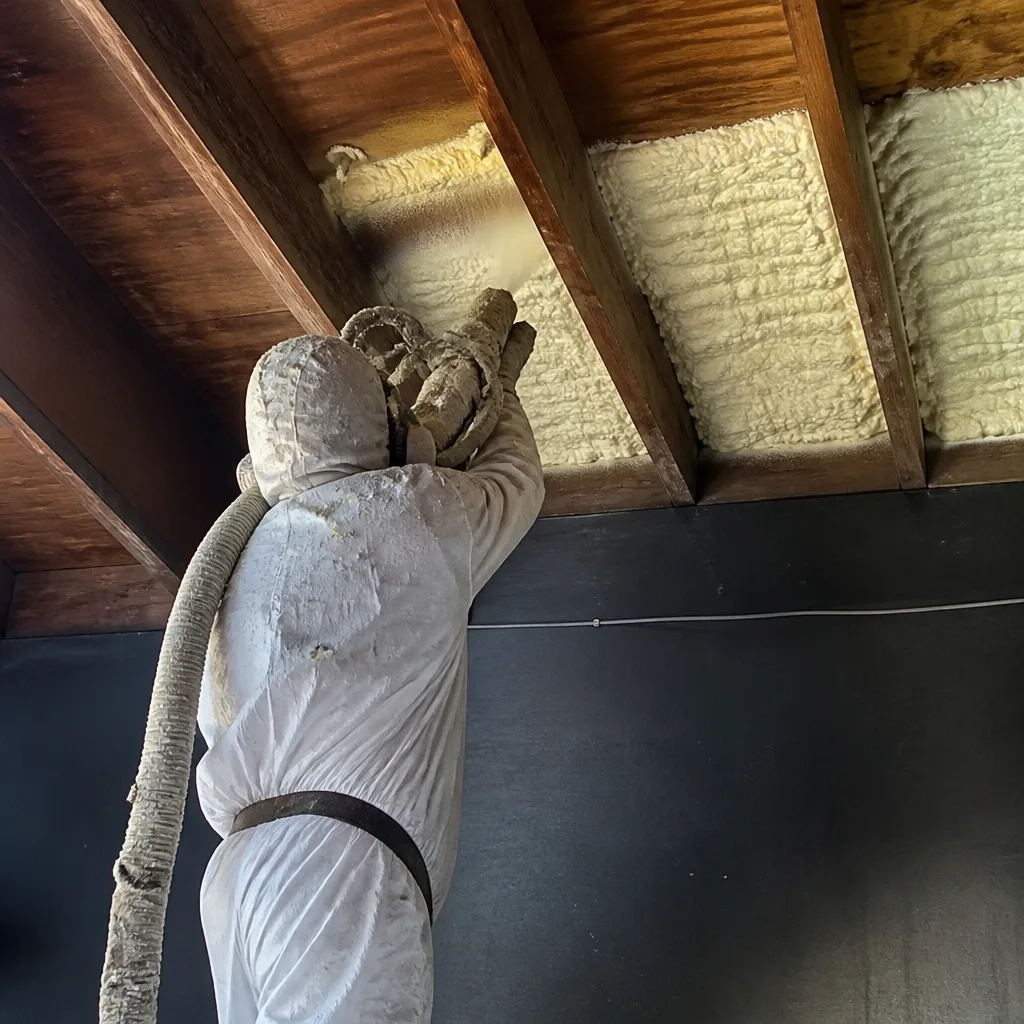
Closed Cell Spray Foam Insulation is the workhorse for Lynwood’s converted garages, back-room additions, and low-pitch 1950s roof decks. This dense, rigid foam seals air, blocks moisture, and adds structural strength to roof assemblies that were never designed to be conditioned space. In a city where summer attics routinely hit 120-plus degrees and single-pane windows let the heat pour through, closed cell does two jobs at once: it stops solar gain from pushing down through the ceiling, and it stiffens the old framing so the room doesn’t flex when the temperature swings.
Converted Garage and Back Room Foam
A converted garage off Long Beach Boulevard is not a conditioned room. It’s a shell with stucco on the outside, open 2×4 cavities behind it, and a roof deck absorbing full sun. Closed cell against the roof deck turns that shell into an insulated, air-sealed envelope. The exhaust smell from the attached carport stays outside. The midday heat stays in the attic. The room becomes usable in July.
Roof Deck and Rim Joist Sealing
Closed cell on the underside of a roof deck in Lynwood is where the material earns its cost. The foam seals penetrations, blocks radiant heat transfer, and locks the roof sheathing to the rafters. Homeowners who choose this route on a low-pitch 1950s roof often tell us the difference is immediate and drastic. Expect a closed cell roof deck job to run roughly $4,000 – $7,000 depending on square footage and whether we’re also doing the rim joists.
Open Cell Spray Foam in Lynwood
Open Cell Spray Foam is the budget-conscious option for Lynwood homeowners who want a tighter, quieter house without the full closed-cell investment. It’s softer, expands more per inch, and does an excellent job of air-sealing and sound-dampening. In a dense neighborhood where houses sit close together and street noise off the 710 is a constant, open cell in the attic or rim joist cavities can make a room noticeably quieter while knocking down heat gain.
Attic Air Sealing and Sound Control
Open cell sprayed directly against the attic floor or roof deck seals the cracks, gaps, and penetrations where hot attic air pushes into the living space. For a homeowner who’s already planning to add blown-in insulation later, open cell as the air-seal layer first is a smart sequence. We apply it where it should go and don’t push it where it shouldn’t.
Rim Joist and Band Board Application
The rim joist is where the foundation meets the floor framing, and in older Lynwood homes it’s often wide open to outside air. Open cell sprayed into the rim joist cavity seals that plane and stops the stack effect that pulls hot attic air down through the walls in summer. A rim joist job alone typically lands between $900 and $1,800 for a standard 900 – 1,200 square foot ranch. Add it to an attic spray and the efficiency improves for not much more.
Trusted Brands We Service in Lynwood
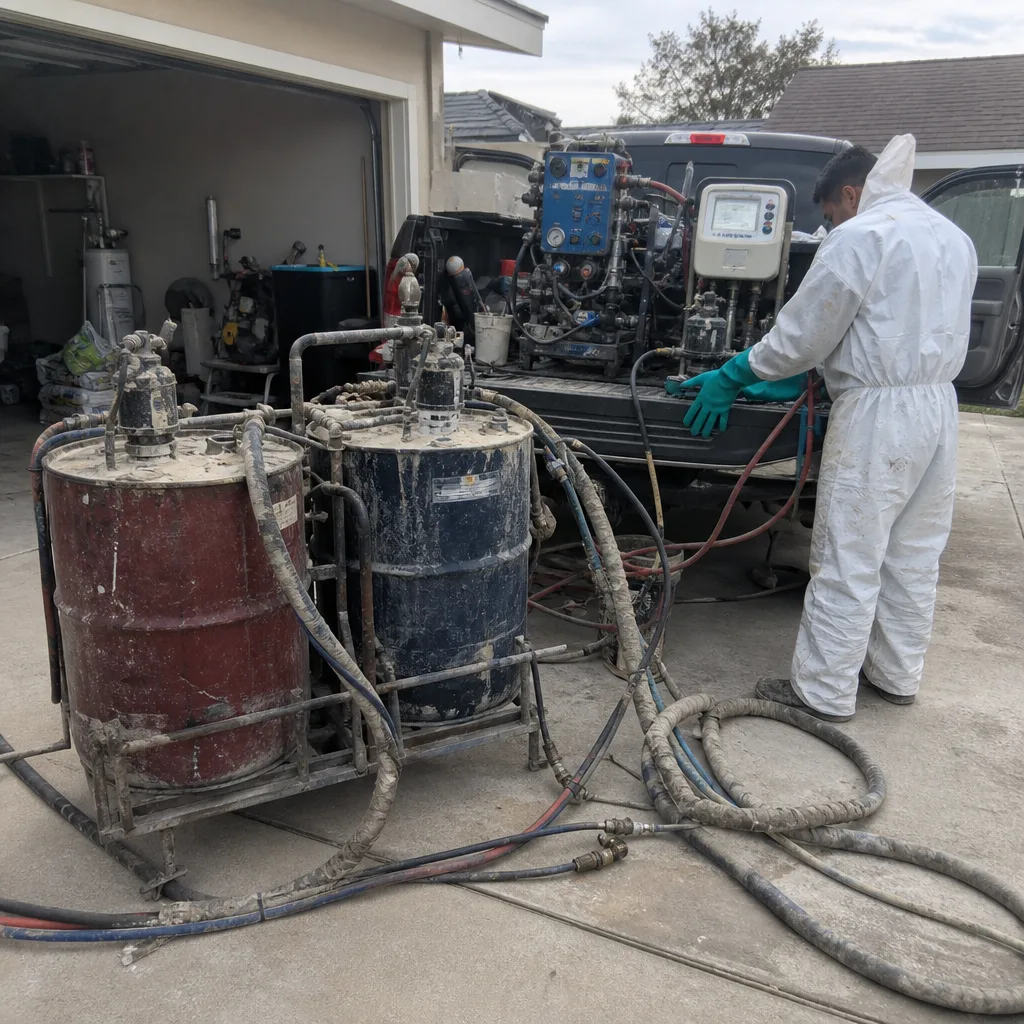
We install Icynene and Demilec spray foam because those are the two names with the most consistent field performance in hot, dry attic conditions like Lynwood’s. Demilec’s closed cell is what we reach for on converted garages and low-pitch roof decks where structural strength matters. Icynene open cell is the choice for attic air-sealing and rim joist work. We stock parts and kits for both brands and can quote either without a second site visit. We also carry GreenFiber and Owens Corning for blown-in and batt work, so if spray foam isn’t the right match for a particular Lynwood attic, we’ll say so and give you the better option.
Common Spray Foam Insulation Problems We See in Lynwood Homes
- Spraying over old knob-and-tube wiring. Never-insulated 1950s attics along Long Beach Boulevard and east of the 710 frequently hold live knob-and-tube. Foam sprayed directly over it traps heat against conductors. We clear and box the wiring before applying any foam.
- Thin open cell on a baking roof deck. An open-cell layer that’s too thin on a converted garage roof doesn’t stop solar heat gain. The foam needs enough depth and density, and closed cell is often the right call when the deck hits 120 degrees in August.
- Spot-foaming penetrations without air-sealing the whole plane. Foaming around a vent pipe but leaving the rest of the ceiling plane open means attic heat still pushes into the living space around the patch. Air-sealing is a full-plane job, not a spot repair.
- Ignoring single-pane windows and empty 2×4 wall cavities. Spray foam in the attic helps, but if the walls are empty behind the stucco, heat still radiates through. We often recommend wall injection alongside attic foam on Lynwood’s older homes because the walls are frequently the missing piece.
Pricing for Spray Foam Insulation in Lynwood, CA
A closed cell attic or converted-space job in Lynwood typically runs $4,000 – $7,500. Open cell on the attic floor or rim joists usually lands between $1,200 and $3,200. A full rim joist-only job sits around $900 – $1,800. What moves the number: whether we’re clearing old wiring, how much area we’re spraying, and whether we’re sealing walls too. For a free estimate, call (833) 390-3099. We bring the meter and the ladder, and we quote from what we see.
We Also Serve Cities Near Lynwood
Beyond Lynwood, our crews work regularly in South Gate, East Rancho Dominguez, Willowbrook, and Paramount. If you’re just outside the 90262 boundary, you’re still in our service area. For more on what we do across the region, see our Spray Foam Insulation team page or our dedicated Spray Foam Insulation in Lynwood overview.
Serving Lynwood, CA — Our Local Coverage Area
We’re based in the Lynwood area and know this community well. Use the map below to see our service coverage — if you’re nearby, we can almost certainly help.
FAQs About Spray Foam Insulation in Lynwood
Because the typical 1950s stucco home east of Long Beach Boulevard still has live knob-and-tube wiring running through the joist bays, and foam sprayed over it traps heat against the conductors and fails inspection. We clear and box the wiring first, then spray. Call (833) 390-3099 and we’ll check what’s actually in your attic before any foam goes down.
Closed cell is usually the better choice for a converted garage in Lynwood because it seals against the exhaust from the attached carport and blocks the solar gain that turns those rooms into ovens by 2 p.m. in July. Open cell works in some cases, but closed cell is what we reach for most often on garage conversions. We’ll walk you through the difference for your specific room.
Yes, typically. Spray foam air-seals the ceiling plane, and that’s the step blown-in insulation alone skips. In Lynwood’s 90-degree summer attics, sealing the air leaks is what stops the hot-air stack from pushing into the house. Blown-in slows the heat transfer, but foam stops the air movement that carries it. We often do both: foam for sealing, then an insulation layer on top.
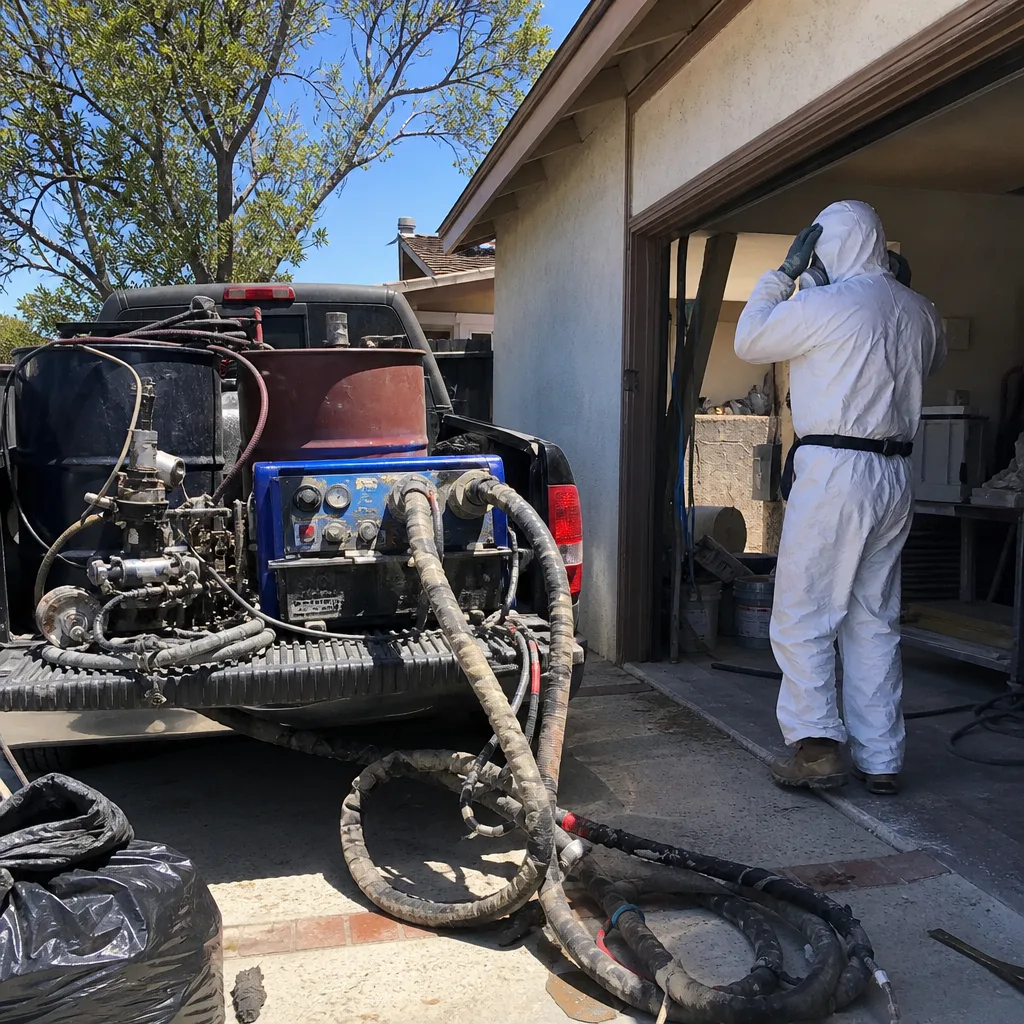
Yes, in most cases. We bring the spray rig, the wire-clearance gear, and the wall-injection equipment on the same truck, so we can foam the attic, seal the rim joists, and inject the empty 2×4 wall cavities in a single day on a standard ranch. The windows will still radiate heat, but the walls and attic won’t be the problem anymore. Call (833) 390-3099 and we’ll give you a straight answer on timing for your house.
We carry Icynene and Demilec spray foam, which are two of the most recognized names in the category and which we specifically selected for performance in hot, dry attic conditions like Lynwood’s inland-basin heat. We don’t push a single off-brand product because it’s what’s on the truck. We bring the right one. Call (833) 390-3099 and we’ll tell you which one fits your project.
Contact Fountain Valley Insulation for spray foam work in Lynwood. We serve all 90262 neighborhoods, including the blocks along Long Beach Boulevard, the streets east of the 710 corridor, and the grid around Plaza Mexico. For a free estimate, call Nate Calloway and the team at (833) 390-3099. We’ll answer, we’ll ask the right questions, and we’ll give you a price that reflects what your house actually needs.
Written by Nate Calloway, Owner at Fountain Valley Insulation, serving Lynwood and the surrounding South LA basin.