
Spray Foam Insulation in La Habra: What It Costs and Who Should Install It
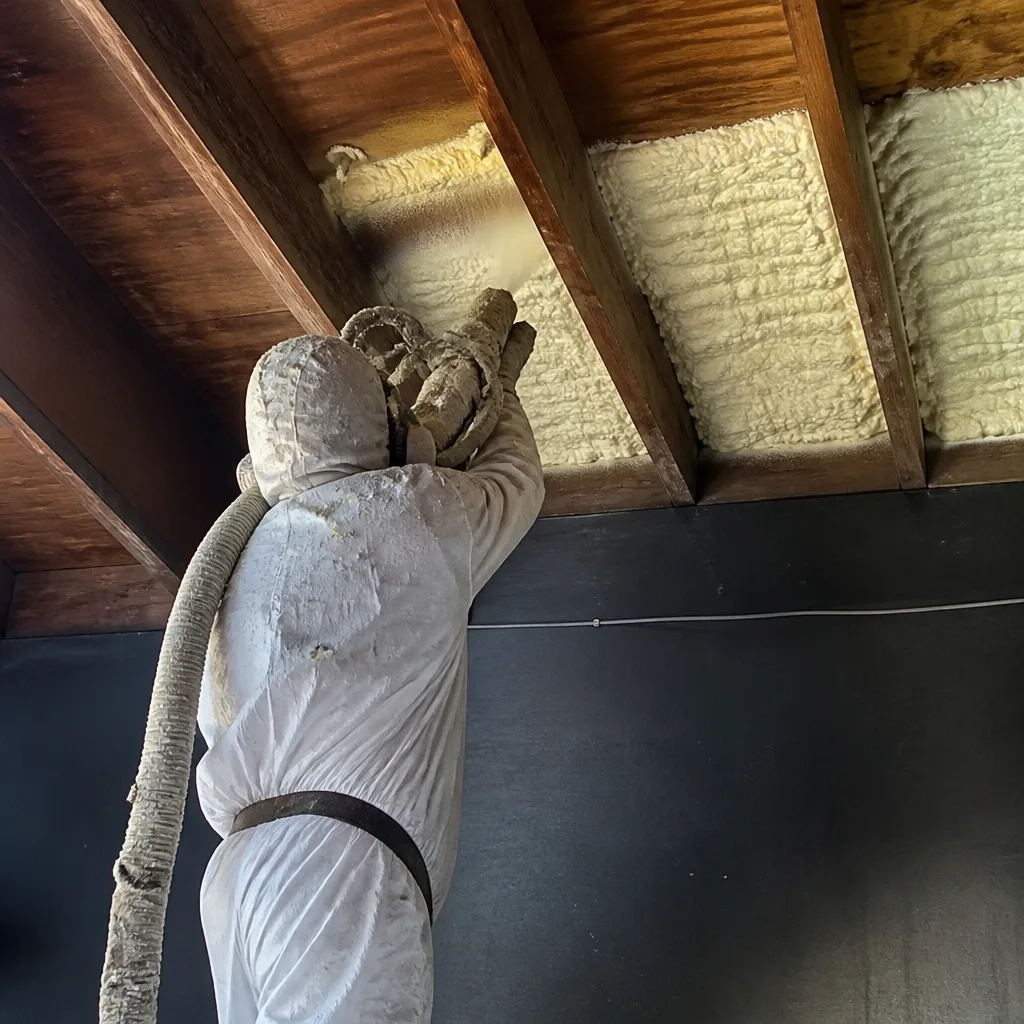
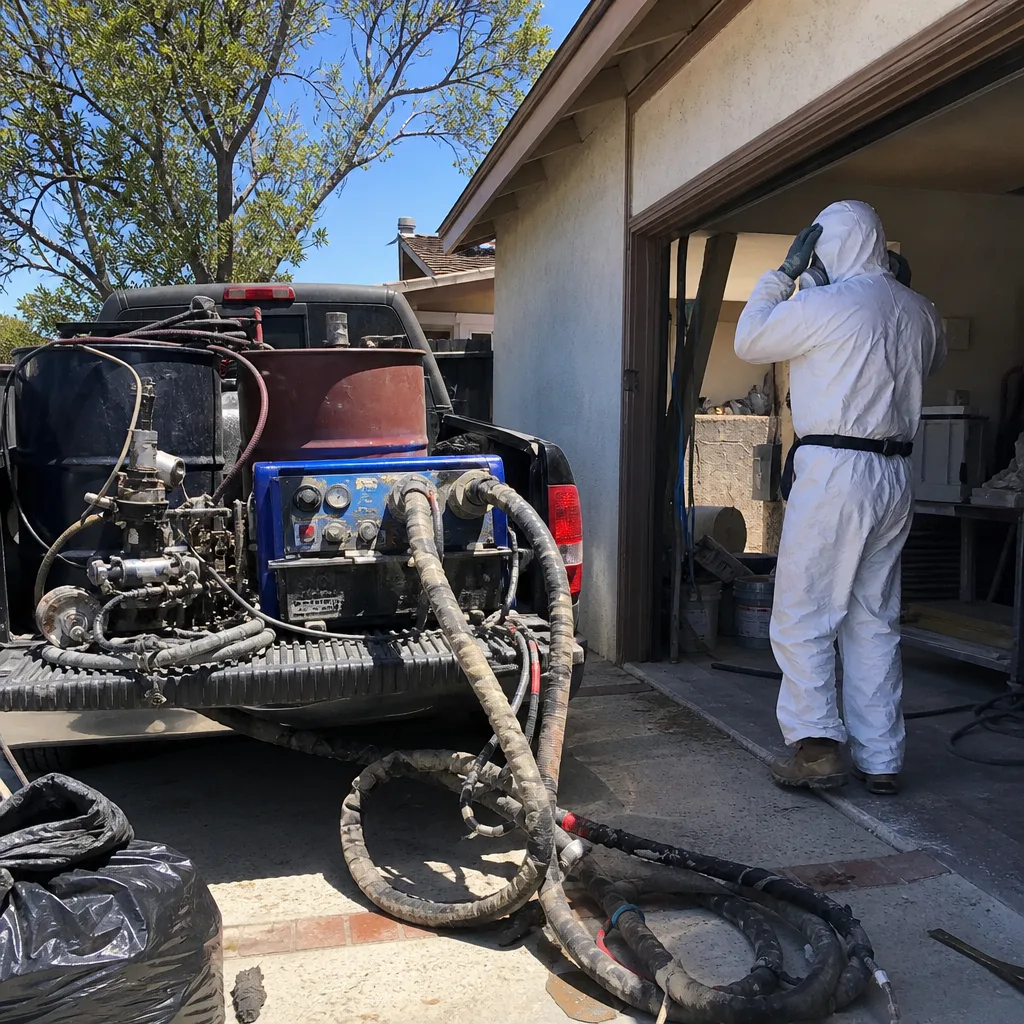
Spray foam insulation in La Habra typically runs $2.50 to $4.75 per board foot for open-cell and $3.75 to $7.00 for closed-cell, with a standard 1,200-square-foot attic falling between $4,800 and $9,200. Most La Habra jobs are completed in one day, often same-week when we’re already working in the north Orange County area. Call (833) 390-3099 for a fixed, written quote before you commit to anything.
La Habra splits in half when it comes to insulation strategy, and that’s something most contractors don’t account for. The flat west side of 90631 bakes in inland summer heat, while the north and east edges up against the Puente Hills get hammered by Santa Ana winds. Those are two different problems, and they call for two different foam approaches. We’ll explain the difference below.
Why Fountain Valley Insulation Is La Habra’s Spray Foam Insulation Choice
We carry a lineup most insulation companies in Orange and LA counties simply don’t have: Icynene and Demilec spray foam, plus Rockwool mineral wool and GreenFiber recycled blown-in. That means when we assess a La Habra attic, we’re not trying to fit one product into every situation. We’re matching the material to the house, the hillside, the wind pattern, and the budget. Nate Calloway started this company on that principle, and it’s held through every job since.
Our crews know the difference between a west-side tract attic off Whittier Boulevard and a canyon-edge home in north La Habra where ember sealing matters just as much as R-value. That local familiarity shows up in the details: we know which 1950s subdivisions have original recessed-can boxes that leak air, which hillside builds have gap-heavy eave lines, and where the Santa Ana winds hit hardest. La Habra homeowners don’t need us to explain the basics, they need someone who knows their specific block’s problems.
Garage Spray Foam Insulation in La Habra
Garage spray foam insulation in La Habra is one of the most common upgrades we do on mid-century tract homes, where attached garages radiate heat straight into adjoining kitchens and bedrooms all summer. Most La Habra garages from the 1950s-70s have an uninsulated ceiling, a bare drywall wall shared with living space, and a metal door that soaks up afternoon sun. Sealing that garage with spray foam typically runs $2,800 to $5,400 for ceiling and shared-wall application, and it changes how the whole west side of the house feels by evening.
Shared-Wall Sealing
When a garage shares a wall with a living room or kitchen, closed-cell foam on that interior plane stops heat transfer cold. In La Habra tract layouts where the garage sits forward of the main living area, that single wall is often the hottest surface in the house by 4 p.m. in July and August.
Attic Lid and Door Frame
The garage ceiling, the attic access above it, and the perimeter around the garage door frame all leak conditioned air and let attic heat push down. Foam sealing those penetrations on a La Habra home with living space above or beside the garage returns more comfort per dollar than almost any other insider upgrade.
Closed Cell Spray Foam Insulation in La Habra
Closed cell spray foam insulation in La Habra runs $3.75 to $7.00 per board foot installed, and it’s the product we recommend for north and east La Habra homes up against the Puente Hills. That’s not a sales pitch, it’s about wind-driven ember and air intrusion. Closed-cell foam forms a rigid, air-resistant barrier at the eave line and soffit penetrations, which is exactly where Santa Ana gusts force embers and outside air into foothill attics. On the flat west side, closed-cell is also the right call for band joists and rim joists where older framing gaps are too large for open-cell to handle alone.
Wind and Ember Barrier on Foothill Edges
In 90631’s north hillside pockets, the WUI (wildland-urban interface) changes the job. Closed-cell foam locks eave, soffit, and rafter-tail cavities so wind-driven embers can’t find the gaps that open-cell or fiberglass leave behind.
Heat and Humidity Control in Flatland Attics
For west La Habra homes with attic temperatures that regularly exceed 140°F in August, closed-cell foam at the roofline keeps the ceiling from absorbing that heat all afternoon and into the night. It also controls the humidity swings that cause older stucco homes to feel clammy.
Trusted Brands We Service in La Habra
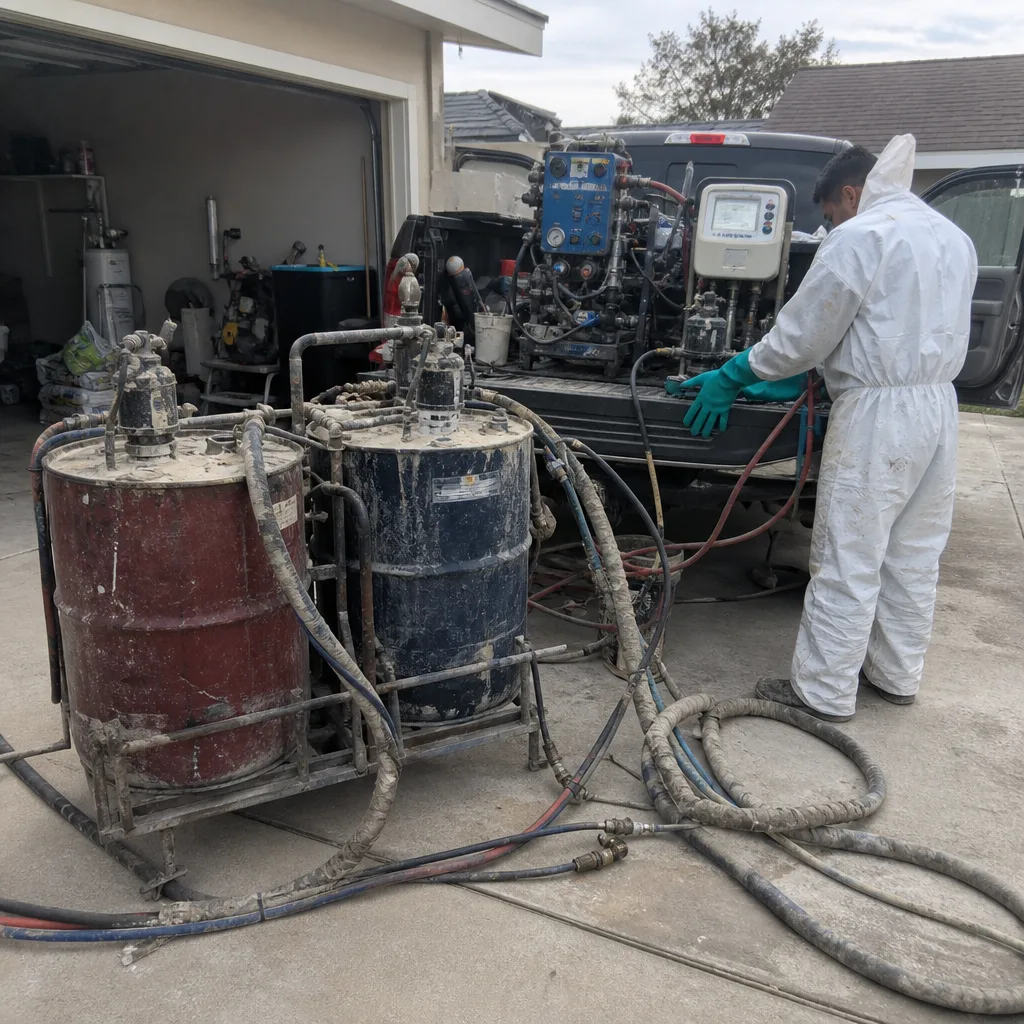
We install Icynene and Demilec spray foam, two of the most recognized names in the category, and we carry GreenFiber blown-in for hybrid jobs where foam air-sealing pairs with recycled cellulose over the field. Most general insulation contractors in the La Habra area work with one fiberglass line, maybe two. We keep eight manufacturer brand partnerships, including Owens Corning and Rockwool, so when a La Habra homeowner asks whether foam is actually the right material or whether a hybrid approach makes more sense, we can give an honest answer with a specific product behind it. That matters more here than you’d think, given the split between flatland heat problems and hillside wind problems inside the same ZIP code.
Common Spray Foam Insulation Problems We See in La Habra Homes
- Collapsed original fiberglass batts in west-side tract attics. 1950s-70s homes off Imperial Highway and Whittier Boulevard often still have the original batts, compressed to two or three inches and barely registering R-8. The ceiling drywall underneath bakes all afternoon in inland summer heat.
- Wind-scoured, drifted attic insulation near the Puente Hills. North La Habra homes routinely show insulation blown into piles in one corner while the rest of the attic sits nearly bare. Unsealed eave and soffit gaps let Santa Ana gusts scour the attic floor repeatedly.
- Gap-heavy top plates and old recessed-can boxes. Legacy framing on mid-century stucco homes left gaps at top plates, plumbing penetrations, and can lights that were never sealed. Air moves through those gaps whether the attic has insulation or not.
- Roof-deck heat radiating into living space. Homes without radiant barriers or cool-roof treatments absorb direct sun through the roof deck and transfer it to the ceiling below, especially on the flat west side of La Habra. Spray foam at the roofline interrupts that transfer at the source.
The 90631 Split: Heat vs. Wind
In La Habra, spray foam decisions split by micro-location within a single ZIP: flat west-side tract homes bake under inland heat and need attic-cap and radiant-barrier attention, while north and east hillside homes against the Puente Hills need foam for wind-driven-ember intrusion and gap-heavy soffit/eave sealing, not just R-value. A contractor working only to an energy-bill spec will miss the WUI sealing half of the job on the foothill edge.
On a 1960s single-story stucco home near old downtown La Habra, our crew found original fiberglass batts collapsed to a few inches and a soffit run so gap-heavy that the Santa Ana wind essentially swept the attic clean. We air-sealed the top plates and soffit penetrations, then applied closed-cell spray foam along the eave line and recessed-can boxes before blowing new insulation over the field, cutting the wind-scour path that had been eroding the attic for decades. That house needed both the R-value and the air-sealing, in that order.
Pricing for Spray Foam Insulation in La Habra, CA
Here are the ranges we quote for La Habra work. These are total installed prices, not materials-only.
- Open-cell attic spray foam (flat west-side tract): $4,800 to $7,400 for a typical 1,200 sq ft attic floor or roofline.
- Closed-cell attic spray foam (north La Habra foothill edge): $6,900 to $9,200 for the same footprint.
- Garage ceiling and shared-wall closed-cell: $2,800 to $5,400 depending on ceiling size and wall condition.
- Rim joist air-sealing with closed-cell: $900 to $2,100 for most slab-on-grade La Habra tract homes.
- Roof deck spray foam (vaulted or cathedral ceilings): $7,500 to $11,000 for typical single-story homes.
What changes the price most: attic size, whether we’re foaming the roofline or the floor, how much existing insulation needs removal, and accessibility on hillside slopes. We give a fixed written quote before any work starts, and that’s the number we stick to. Estimates are free. Call (833) 390-3099 and we’ll schedule a walkthrough in La Habra within days.
We Also Serve Cities Near La Habra
We work throughout La Habra and the surrounding corridor, including La Habra Heights, East La Mirada, Fullerton, and La Mirada. If you’re just outside the city line in an unincorporated pocket, call anyway. Our crews know the hillside roads and the tract layouts well enough to give you a straight answer over the phone before we even schedule.
Serving La Habra, CA — Our Local Coverage Area
We’re based in the La Habra area and know this community well. Use the map below to see our service coverage — if you’re nearby, we can almost certainly help.
FAQs About Spray Foam Insulation in La Habra
Closed-cell, almost always. Wind-driven ember intrusion and the gap-heavy eave and soffit framing common on foothill-edge homes make the rigid, air-resistant properties of closed-cell the right fit. Open-cell has its place on the flat west side, but north of about Lambert Road toward the hills, closed-cell is what we recommend for any roofline, eave, or rim joist application. Call (833) 390-3099 and we’ll tell you which one fits your specific house, not just the hillside in general.
Because it is. Santa Ana winds push through unsealed eave and soffit gaps and physically move loose-fill or degraded batt insulation across the attic floor. North and east La Habra homes up against the Puente Hills see this constantly. The fix starts with air-sealing the gaps, not just adding more insulation that will drift again. Ask us about closed-cell foam at the eave line before you re-insulate the field.
No. Collapsed, dusty, or rodent-damaged original batts need to come out first, and many older La Habra attics also have vermiculite or other materials that complicate things. We remove the old material, air-seal the framing gaps beneath, and then apply foam to a clean substrate. Skim-coating old batts with foam traps moisture and hides air leaks instead of fixing them. For a house with original insulation, we’d rather show you what’s under it before we quote.
It’s one layer, not a fireproof shell. Closed-cell spray foam slows ember intrusion at eave, soffit, and vent openings because it fills the gaps that embers travel through. But it works alongside boxed-in eaves, ember-resistant venting, and good defensible-space practices, not instead of them. For La Habra homes in the 90631 WUI zone, we look at the whole attic perimeter and tell you what foam can and can’t do.
Yes, often as much as the main attic. An attached garage on a west-facing La Habra tract absorbs direct afternoon sun and radiates heat into the adjoining wall and any room above it. Closed-cell foam on the garage ceiling and the shared wall cuts that transfer measurably, and it also tightens the garage-to-attic air path that undermines the rest of the house’s insulation. It’s one of the highest-return per square foot spaces we treat in this city.
Say you’ve got an older La Habra house, a hot west-facing garage, or a foothill attic that the wind keeps scouring. Our Spray Foam Insulation team can walk the whole space and tell you which material, which method, and which seams matter most. We match the material to your home, not the other way around. Call (833) 390-3099 for a free estimate, and we’ll have someone out to La Habra within the week.
Written by Nate Calloway, Owner at Fountain Valley Insulation, serving La Habra and the surrounding north Orange County communities.