
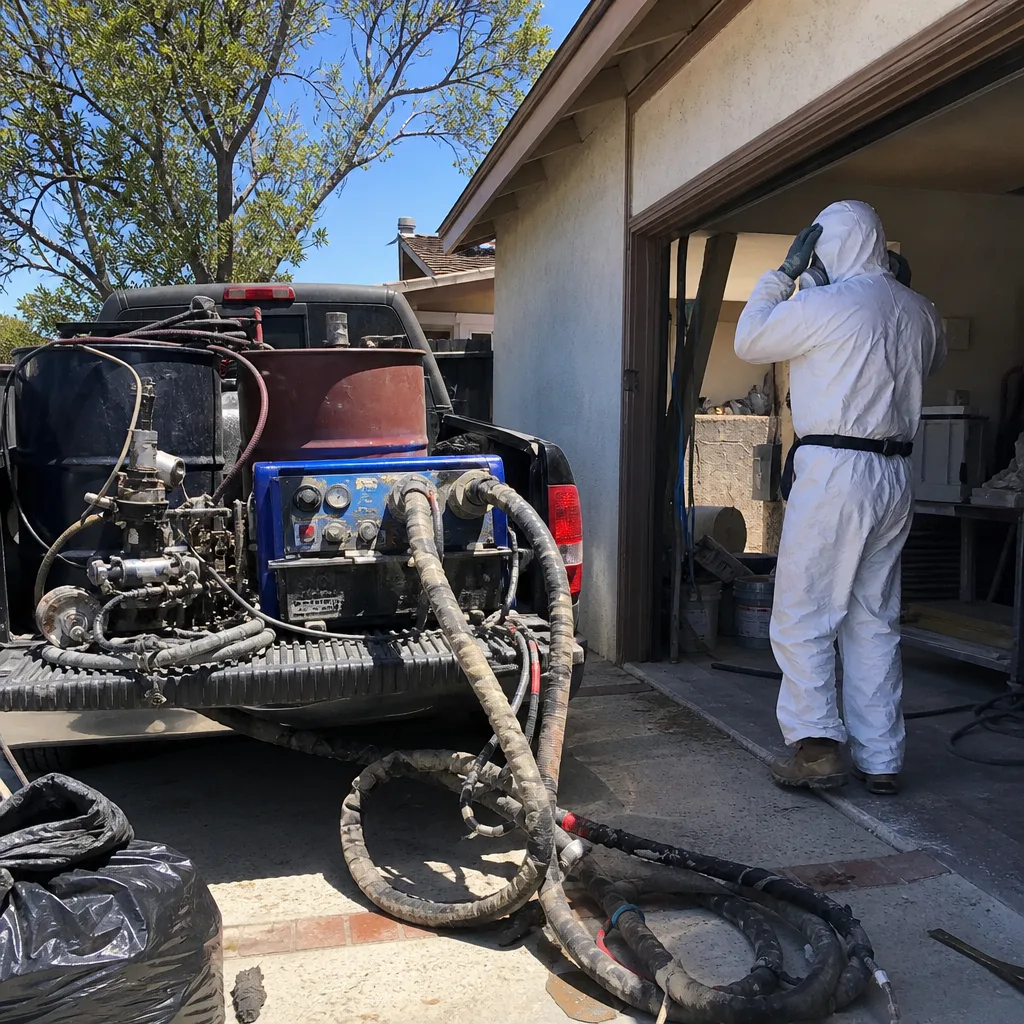
Fast, Reliable Spray Foam Insulation Across Highgrove
Spray foam insulation in Highgrove homes has to do more than hit an R-value. It has to hold up to Santa Ana wind gusts that funnel down the Box Springs ridge, 100°F-plus summer afternoons, and winter nights that flirt with freezing. Fountain Valley Insulation installs closed-cell and open-cell spray foam that seals the gaps older Highgrove ranch homes are known for, and we do it in one trip. If your attic insulation has shifted, settled, or blown around, call (833) 390-3099 for a free estimate. We know this area’s homes, and we know what wind does to them.
Why Fountain Valley Insulation Is Highgrove’s Preferred Spray Foam Insulation Company
Most Highgrove homes were built decades ago, before modern air sealing was standard. That means the typical job we walk into involves original attic insulation that’s underperforming, gaps at top plates, and venting that wasn’t designed for the wind loads this side of the Box Springs foothills takes. We approach every Highgrove job the same way: check the attic baffles and ridge venting first, then spec the foam to match the house. Nate Calloway, who leads our team, insists on that order. Foam over a compromised vent system doesn’t fix the real problem.
Our crews respond to Highgrove quickly, and we carry the materials this area’s homes need. That includes premium closed-cell and open-cell spray foam through Icynene and Demilec, two brands most general insulation contractors don’t stock. Homeowners off Center Street, along Barton Road, and near the 92313 corridor call us because we make one visit count. We match the material to your home, not the other way around.
We’re not a one-product shop. Fountain Valley Insulation works across three installation methods and eight manufacturer brands, so your Highgrove home gets the right material for the right space. An attached garage with a bedroom above it needs different foam than a detached workshop. A roof deck takes different treatment than a rim joist. We’ll tell you which one actually fits.
Garage Spray Foam Insulation in Highgrove
Garage spray foam insulation in Highgrove typically means one of two things: an attached garage that’s making the room above it miserable, or a detached workshop on a large lot that’s become unusable in summer. Both are common here. Many Highgrove properties include oversized detached garages and workshops that were never insulated at all, so they swing a hundred degrees between August afternoons and January mornings.
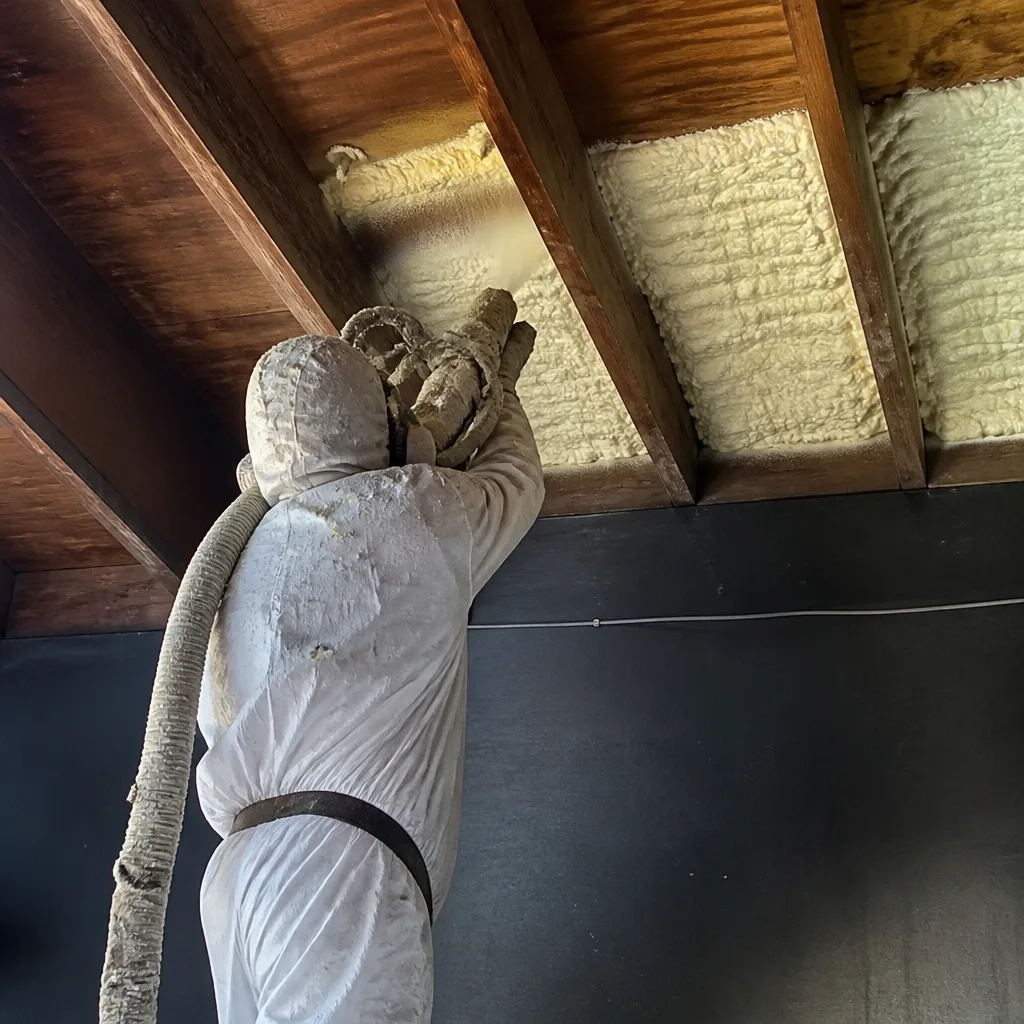
Spray foam solves this fast. We apply closed-cell foam directly to the underside of the roof deck and to rim joists, sealing wind-driven air leaks that batts never touch. Cost for a typical attached two-car garage in Highgrove runs $1,800 to $3,400 depending on height, access, and whether we’re doing walls, ceiling, or both. Detached workshops cost more, especially if there’s no power or it’s a long drive from the street.
Wind-Sealed Attached Garages
Attached garages in Highgrove act like wind catchers. Air pushes in around the garage door, through rim joists, and up into the attic. If the room above the garage runs ten degrees hotter or colder than the rest of the house, the garage lid is where we look first. Closed-cell foam seals those gaps while adding structural rigidity.
Detached Workshop Conditioning
A detached shop on a Highgrove acreage lot that bakes in July becomes usable with spray foam. We insulate the roof deck so radiant heat doesn’t cook the space from above. For shops being used as workshops or hobby rooms, we often spec open-cell on the underside of the roof with a radiant barrier focused on the west-facing slope. That one change turns a tin oven into a workable shop.
Closed Cell Spray Foam Insulation in Highgrove
Closed cell spray foam insulation in Highgrove is our most requested material for attics and roof decks, and the reason is wind. Closed-cell foam cures into a dense, rigid layer that doesn’t settle, doesn’t blow around, and doesn’t lose shape when Santa Ana gusts hammer the ridge. For homes on the Box Springs foothills side of Highgrove, that stability matters more than anything else.
Closed-cell also adds structural strength, which older mid-century wood-framed homes in Highgrove benefit from. It resists moisture, so it’s the right choice for rim joists and crawlspace headers on properties where groundwater or septic-field humidity is a factor. Closed-cell typically runs $3.50 to $7.00 per board foot in Highgrove depending on depth and access. A full attic roof deck on a 1,400 square foot ranch home runs $5,500 to $9,000.
Ridge-Side Roof Decks
Highgrove homes near the foothills take wind load that other parts of the area don’t. Attic insulation that looked fine in June can be displaced by October. Closed-cell spray foam applied to the underside of the roof deck doesn’t move. It creates a continuous thermal barrier that wind can’t undermine, and it seals the framing gaps where wind-wash heat loss happens.
Rim Joists and Wind Gaps
Older Highgrove ranch homes often have gaps along rim joists and top plates that you can feel on a windy day. Air moves through those gaps and bypasses whatever insulation is in the wall cavity. Closed-cell foam fills and seals those paths. It’s an air sealing job first, an insulation job second, and it’s the difference between an attic that performs and one that just looks insulated.
Trusted Brands We Service in Highgrove
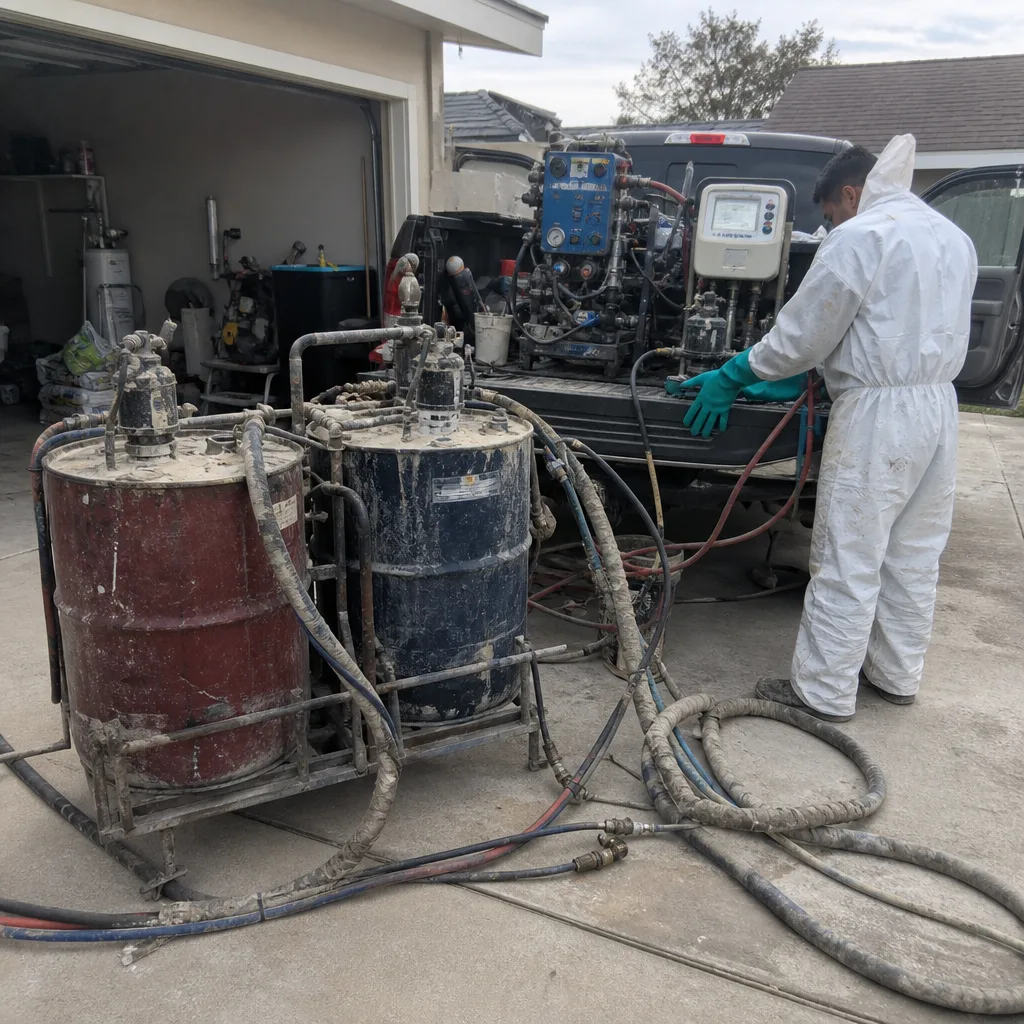
We install spray foam from Icynene and Demilec, two names in the spray foam category that most general insulation contractors don’t carry. Homeowners in Highgrove who ask about Rockwool get a straight answer too: it’s a mineral wool we offer for fire-resistant and moisture-resistant walls, and it has its place, but it’s not a drop-in substitute for spray foam in an attic roof deck. We also offer CertainTeed and GreenFiber for blown-in and recycled-content applications. Ask us why we carry Rockwool, spray foam, and recycled fiber. Most contractors carry none of them. Having access to eight manufacturer brands means we’re never pushing a single product because it’s what we happen to stock.
Common Spray Foam Insulation Problems We See in Highgrove Homes
- Foam applied over wind-damaged attic baffles. When the Santa Ana winds knock baffles loose or shred them, any foam sprayed near the vent chutes is already compromised. We secure baffles and ridge venting before foam goes in, which is why most of our Highgrove attic jobs start with an inspection of the vent system.
- Closed-cell sprayed over settled insulation without air sealing top plates. This is the shortcut we see from other contractors. Foaming directly over old, settled batts or blown fiber without sealing the framing gaps below means hot attic air still moves through the bypasses. The foam adds R-value but doesn’t solve the air leakage problem.
- Foam thickness spec’d for a coastal climate, not Highgrove’s 100°F swings. Thin closed-cell in an attic that sees wild expansion and contraction can develop seam cracks over time. Wood framing moves more than most people realize. We spec foam depth for Inland Empire temperature cycles, not for a moderate coastal zone.
- Garage ceiling foam that ignores the wind gaps around the door header. In Highgrove, attached garages leak air where the door header meets the wall framing. We foam that transition thoroughly. Miss it, and the garage still roasts in summer regardless of what’s on the ceiling.
Pricing for Spray Foam Insulation in Highgrove, CA
Spray foam pricing in Highgrove runs from about $1,800 for a small attached garage ceiling to $12,000 or more for a full roof deck on a larger ranch home. The table below gives you a straight read on typical ranges for the jobs we quote most often here.
- Garage ceiling (attached, 2-car): $1,800 to $3,400
- Detached workshop roof deck: $3,000 to $6,500 depending on square footage and access
- Attic roof deck (1,200 to 1,600 sq ft ranch home): $5,500 to $10,000
- Rim joist sealing (crawlspace perimeter): $1,200 to $2,800
- Open-cell roof deck application: $2.50 to $4.50 per board foot installed
- Closed-cell roof deck application: $3.50 to $7.00 per board foot installed
The biggest cost drivers in Highgrove are access and existing vent damage. Homes on the ridge side near the Box Springs foothills often need baffle and ridge vent work before foam goes in, and that labor shows up in the quote. We walk the attic with you, show you what we’re seeing, and give you a number before any work starts. Call (833) 390-3099 for a free estimate.
We Also Serve Cities Near Highgrove
Fountain Valley Insulation serves Highgrove and the surrounding Inland Empire communities, including Grand Terrace, Colton, Loma Linda, and Rubidoux. If you’re in one of those areas and dealing with the same wind and heat conditions, we bring the same one-trip, heavy-duty approach to your job. Our Spray Foam Insulation team covers the whole region, and we’re familiar with how the Box Springs foothills affect homes from Highgrove clear out to the city limits.
Serving Highgrove, CA — Our Local Coverage Area
We’re based in the Highgrove area and know this community well. Use the map below to see our service coverage — if you’re nearby, we can almost certainly help.
FAQs About Spray Foam Insulation in Highgrove
Spray foam fails after Santa Ana events in Highgrove when the attic’s baffles and ridge venting weren’t secured before the foam was applied. Wind blasts through the ridge, displaces the baffles, and creates wind-wash gaps that undermine the foam’s air seal. We check and secure every baffle and vent before spraying. If you’ve had a foam job that’s already failing after wind events, call (833) 390-3099 and we’ll inspect what’s going on.
No, spray foam should not be applied directly over original, settled insulation. The existing insulation hides framing gaps and top-plate bypasses that need to be air sealed first. In older Highgrove ranch homes, we remove or pull back the old material, seal the framing gaps, secure the venting, then apply foam. The foam needs to bond to the structure, not to a layer of loose fiber.
Closed-cell spray foam works best for detached workshops and garages in Highgrove. It’s rigid enough to resist wind shifts, it adds structural strength to older wood framing, and it seals the air gaps that make these outbuildings miserable in summer. For spaces that are heated or cooled intermittently, closed-cell on the roof deck and rim joists keeps temperatures manageable without overbuilding. Call for a free estimate on your specific building.
Yes, Highgrove properties on well and septic lots may need crawlspace and rim joist prep that accounts for higher groundwater humidity and soil moisture. Closed-cell foam is typically the right call for these applications because it resists moisture migration. We inspect the crawlspace, check for existing moisture damage around the foundation, and recommend the right material before any foam is applied.
Spray foam helps with both Highgrove’s summer heat and winter cold by air sealing and insulating in one continuous layer. In summer, it blocks radiant heat from the roof deck and stops hot attic air from leaking into living spaces. In winter, it seals the warm air inside and stops wind-driven cold air from bleeding through framing gaps. That’s why it outperforms batt insulation in Inland Empire climate swings. Call (833) 390-3099 for a quote.
On a ranch-style home off Center Street near the Box Springs foothills, we found the original attic insulation had been displaced by Santa Ana winds, leaving the north slope bare. After re-securing baffles and ridge venting, our crew applied closed-cell spray foam to the attic deck and rim joists, sealing the wind-driven gaps and giving the homeowner a stable thermal envelope before the next heat wave.
If you’re in Highgrove and your insulation isn’t holding up to the heat or the wind, call us at (833) 390-3099. We’ll inspect your attic, tell you what’s actually going on, and give you a straight number for the fix. Free estimates, no pressure, one trip.
Written by Nate Calloway, Owner at Fountain Valley Insulation, serving Highgrove and the Inland Empire with multi-brand spray foam expertise.