
Fast, Reliable Spray Foam Insulation Across Good Hope
Spray foam insulation in Good Hope typically runs $2.50 to $7.50 per square foot depending on whether you’re using open-cell or closed-cell, and most retrofit jobs in ZIP 92572 are finished within one to two days. That covers an existing ranch or farmhouse attic deck, wall cavities, or rim joists. Call Fountain Valley Insulation at (833) 390-3099 and we’ll give you a straight answer on what your Good Hope home actually needs, not a scripted sales pitch.
We work throughout Good Hope, from the older farmhouse blocks off Ellis Avenue to the ranch-home streets that wind toward the San Jacinto Valley. This is unincorporated Riverside County, which means the homes here weren’t built to the same code cycles as Perris or Sun City. Wall cavities are often bare 2×4 stud bays with original wood siding, and the afternoon winds push fine dust through gaps that have been there since the Eisenhower administration. That changes how you insulate, and it’s exactly the kind of retrofit we know how to handle.
Why Fountain Valley Insulation Is Good Hope’s Preferred Spray Foam Insulation Company
Most insulation contractors carry one brand and sell it to every house. We carry eight: Owens Corning, Johns Manville, Knauf, Rockwool, CertainTeed, Icynene, Demilec, and GreenFiber. For Good Hope’s pre-1980s housing stock, that matters more than you’d think. A 1962 ranch with bare wood siding and no house wrap needs different foam than a 1990s tract home in Sun City. We match the material to your home, not the other way around.
Nate Calloway built Fountain Valley Insulation around a simple idea: homeowners deserve to know why a material is right for their walls, not just that it’s what the crew has on the truck. That’s why we’re one of the few companies serving Good Hope that installs both Icynene and Demilec spray foam, plus Rockwool mineral wool and GreenFiber recycled fiber. Three installation methods under one roof means we’re not stretching one product into jobs it wasn’t meant for.
Our crews know Good Hope’s specific failure patterns because we’ve opened walls and attics throughout 92572. We know where the dust gathers, where the afternoon heat hits hardest, and what those 1960s builders left unsealed. That local knowledge changes the outcome. Call (833) 390-3099 and ask for Nate directly if you want to talk through what’s actually happening in your attic.
Open Cell Spray Foam in Good Hope
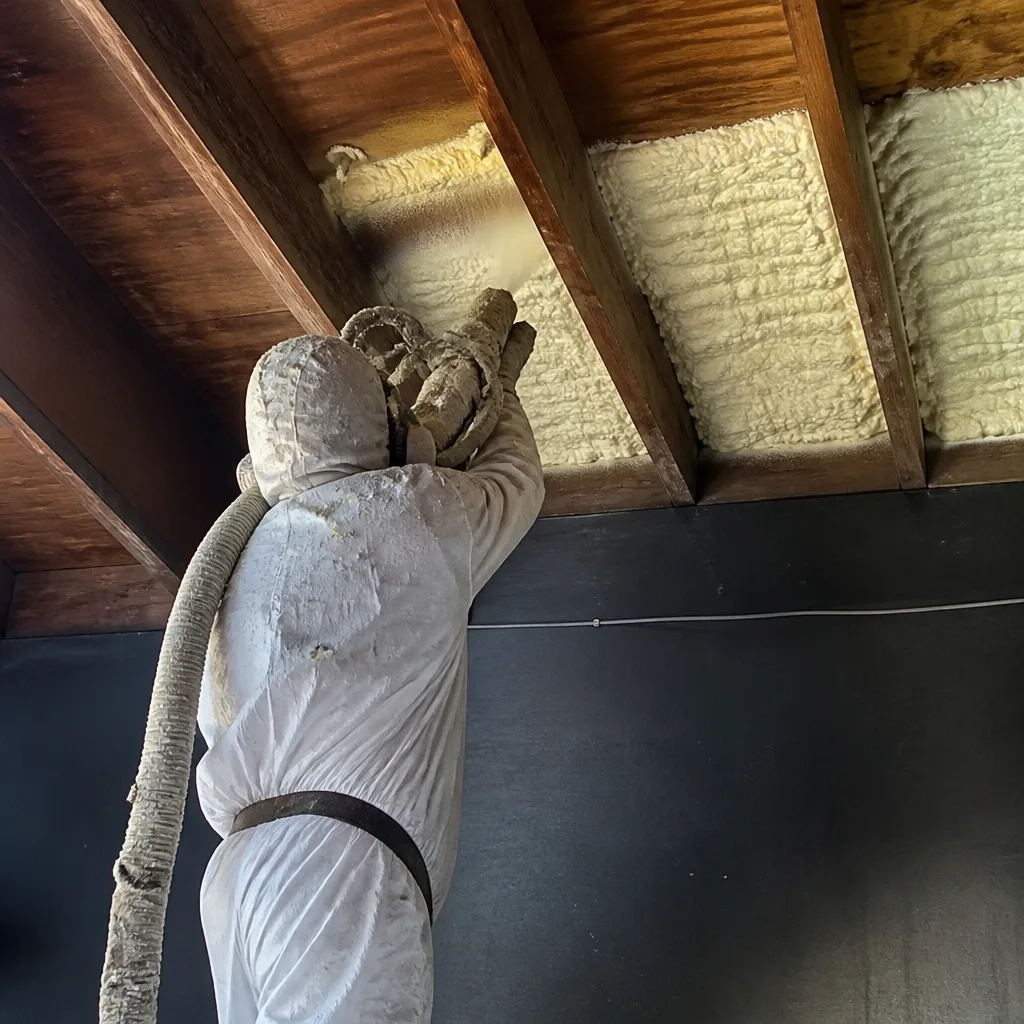
Open Cell Spray Foam is the workhorse retrofit material for Good Hope’s older ranch walls and attic decks, where its air-sealing ability closes the dust paths and bypasses that blown-in fiber alone can’t reach. In a bare 2×4 stud bay with nothing but original wood siding behind it, open-cell foam expands into every crack and gap, gluing itself to the structure and stopping the San Jacinto Valley wind-driven infiltration at the source. For Good Hope homeowners dealing with those fine-dust streaks on old batts, open-cell is usually the fix.
Wall Cavity Retrofits for Bare-Sheathing Homes
Most of Good Hope’s 1950s through 1970s homes were framed with 2×4 walls and never got sheathing or house wrap. That means open-cell foam applied directly against the wood siding has to bond correctly, and we check for venting and moisture paths before foaming. Done right, it seals the wall and adds R-value in the same pass. A typical wall cavity dense-pack or foam injection job in Good Hope runs $2.50 to $4.50 per square foot.
Attic Deck Sealing for Summer Heat
Good Hope regularly sees summer highs above 100°F, and the west-facing attic decks on those single-story ranches take the worst of it. Open-cell foam across the attic deck seals the top plate gaps, can lights, and plumbing chases where heat pours in. We’ve measured dramatic differences in afternoon interior temperatures after open-cell Icynene goes in at R-38. Expect $3.50 to $5.50 per square foot for a standard Good Hope ranch attic.
Spray Foam Insulation Contractors in Good Hope
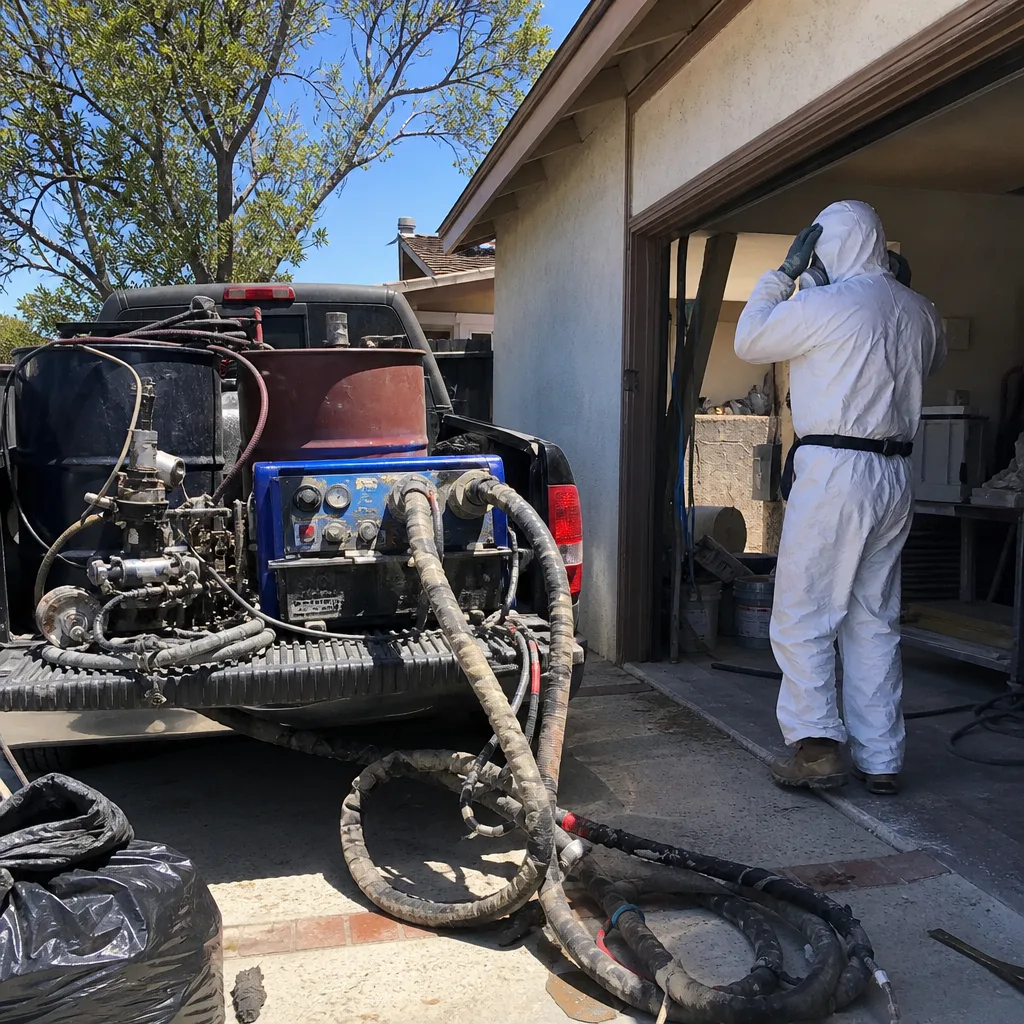
Spray Foam Insulation Contractors who actually know 92572 are rare, because this unincorporated area doesn’t have the same inspection infrastructure as incorporated Riverside County cities. We pull the permits when needed, follow the county’s retrofit requirements, and document everything before we foam. A Good Hope homeowner hiring us gets a crew that’s already worked ranch homes, farmhouses, and rural properties throughout the San Jacinto Valley, not a crew learning on the job.
The Dust-Trail Inspection Method
Before we ever cut a hole, we look for dust-streaked batt insulation in the attic. The afternoon winds that come through the San Jacinto Valley push fine particulate through old wood siding and unsealed top plates, leaving visible dust trails on the existing insulation. Those trails are a map. Where the dust is, the air was moving. We trace those paths and seal them with foam before we do anything else.
Full-Foam Scope vs. Targeted Sealing
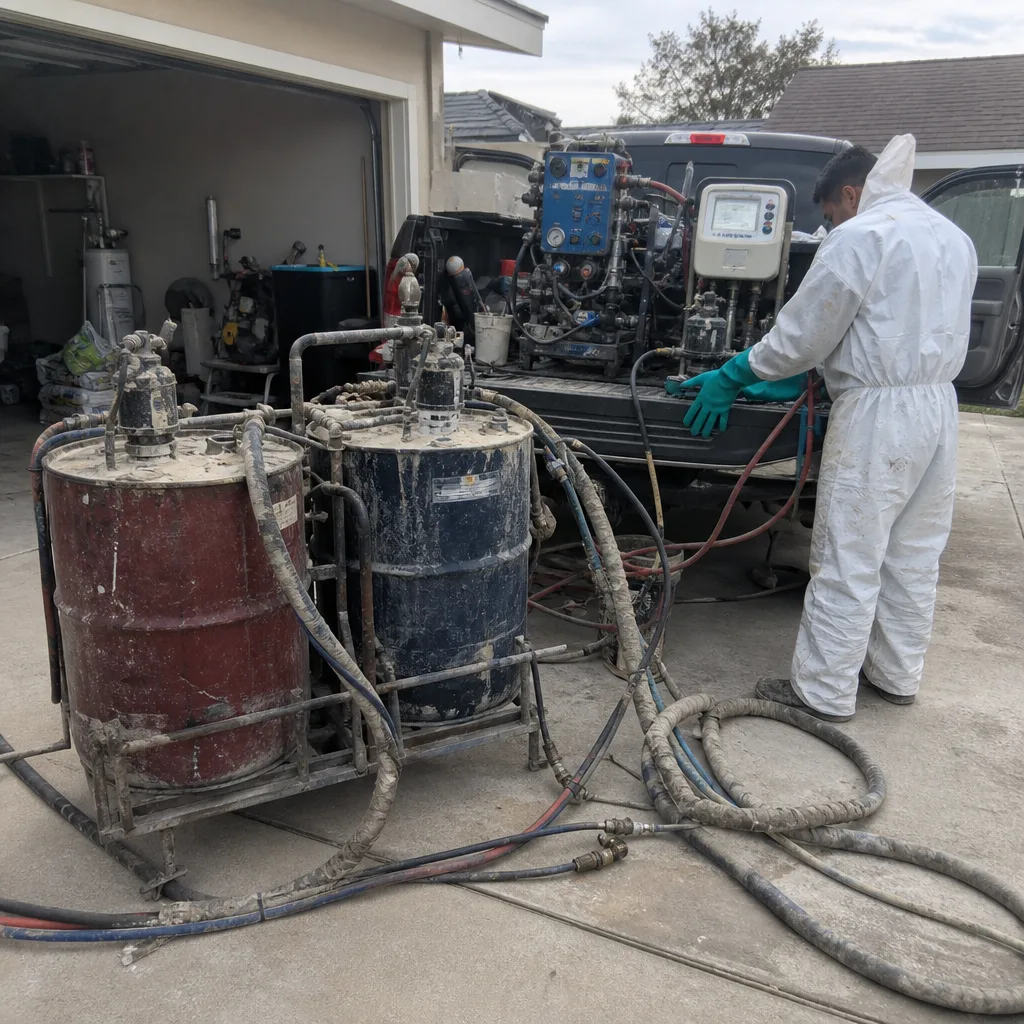
Not every Good Hope home needs a full spray foam scope. Some need open-cell across the attic deck to hit R-38 and stop heat gain. Others need closed-cell on rim joists and crawl space transitions. Still others need dense-packing wall cavities where the original R-11 has settled to near nothing. We’ll tell you which one fits your house. That’s the Fountain Valley way: blown-in, spray foam, or attic batts, we’ll tell you which one actually fits your situation.
Trusted Brands We Service in Good Hope
We carry Icynene and Demilec for spray foam work in Good Hope, which are two of the most recognized names in the category. Most general insulation contractors don’t stock either. We also install Rockwool mineral wool where a fire- or moisture-resistant material makes more sense, and GreenFiber recycled-content insulation for homeowners who want lower-embodied-carbon options. For Good Hope customers, we keep foam kits and materials staged for quick turnaround on 92572 jobs, which means less waiting when the summer heat makes attic work urgent. Ask us why we carry Rockwool, spray foam, and recycled fiber. Most contractors carry none of them.
Common Spray Foam Insulation Problems We See in Good Hope Homes
- Foam over dust-streaked batt cavities without sealing the air paths first. The dust acts as a release layer, and the foam never truly bonds to the structure. It looks sealed but delaminates within a season or two.
- Open-cell foam in an attic that needed a radiant barrier plus R-38+. Good Hope’s summer afternoons are brutal, and open-cell alone won’t stop radiant heat transfer from a sun-baked roof deck.
- Foam applied to bare 2×4 stud bays without checking wood siding venting. If the original siding can’t dry to the exterior, moisture gets trapped behind the foam. This is a real risk in unincorporated Riverside County farmhouses.
- Underestimating the wind-driven dust infiltration from the San Jacinto Valley. Crews that don’t know Good Hope treat it like a generic attic job and miss the dust trails that reveal where air has been moving for decades.
Pricing for Spray Foam Insulation in Good Hope, CA
Here’s what we see in the Good Hope market:
- Open-cell spray foam attic deck: $3,500 to $6,000 for a typical 1,200 to 1,800 square foot ranch attic
- Open-cell spray foam wall cavity retrofit: $2.50 to $4.50 per square foot of wall area
- Closed-cell rim joist sealing: $1,200 to $2,800 depending on perimeter length
- Garage ceiling spray foam: $800 to $1,800 for a standard Good Hope two-car garage
- Spray foam roof deck (cathedral or vaulted): $5.00 to $7.50 per square foot
Your exact number depends on access, attic height, whether we’re working around existing insulation, and whether the job is a full foam scope or targeted sealing. We provide written estimates before any work starts. Call (833) 390-3099 to schedule a walkthrough in Good Hope.
We Also Serve Cities Near Good Hope
Our crews cover Good Hope and the surrounding Inland Empire communities, including Good Hope itself, plus Perris, Romoland, Sun City, and Mead Valley. If you’re near the 215 corridor or up against the San Jacinto Valley, we’re close. You can also see our full Spray Foam Insulation service area and what to expect from a Fountain Valley retrofit.
Serving Good Hope, CA — Our Local Coverage Area
We’re based in the Good Hope area and know this community well. Use the map below to see our service coverage — if you’re nearby, we can almost certainly help.
FAQs About Spray Foam Insulation in Good Hope
Because those walls have nothing behind the siding except the stud bays themselves, and blown-in fiber can’t seal the air paths the wind pushes through. Spray foam expands against the bare wood siding and seals the entire cavity in one pass, which is exactly what a 1960s Good Hope ranch needs when the afternoon San Jacinto winds are forcing dust through every gap. Call (833) 390-3099 and we’ll walk you through whether your wall cavities are candidates.
Yes. Open-cell Icynene applied at roughly 10 to 11 inches of depth hits R-38, and we do this regularly on Good Hope attic decks. Closed-cell gets there at around 6 inches, but it costs more per square foot and may be overkill for an attic where heat gain is the main problem. We’ll tell you which one makes sense for your specific roof pitch and attic height.
We look for dust-streaked batt insulation. The San Jacinto Valley winds push fine particulate through old wood siding and unsealed top plates, leaving visible trails on the existing insulation. Those trails tell us where air has been moving. On a 1960s single-story ranch off the rural farmhouse blocks of ZIP 92572, our crew pulled attic batts that were dust-streaked along the west wall and found open bypasses the original builder never sealed. We dense-packed the 2×4 wall cavities and applied open-cell Icynene across the attic deck to reach R-38, sealing the dust paths the afternoon winds had been feeding for decades. The homeowner noticed the 100°F afternoon heat stopped bleeding through the west rooms within the first week.
Yes, if the siding can still vent to the exterior. We check for this before foaming bare stud bays. If the original wood siding is painted on the exterior and has no interior drainage plane or air gap, we may recommend a different approach for certain wall sections. It’s one of the reasons we carry multiple materials and methods rather than forcing foam everywhere. We match the material to your home.
We install Icynene and Demilec spray foam, both closed-cell and open-cell as the job requires. We also carry Rockwool mineral wool for fire- and moisture-resistant applications where foam isn’t the best fit, and GreenFiber recycled fiber for projects where sustainability is a priority. For Good Hope retrofits, we typically reach for Icynene open-cell on attic decks and Demilec closed-cell on rim joists and crawl spaces. Call (833) 390-3099 for a material recommendation specific to your home.
Written by Nate Calloway, Owner at Fountain Valley Insulation.