
Fast, Reliable Spray Foam Insulation Across Eastvale
Spray foam insulation in Eastvale typically costs $2.50 – $6.50 per board foot installed, with most whole-attic retrofits on two-story tract homes landing between $4,800 and $11,000 depending on scope. We run crews into Eastvale weekly from our Fountain Valley shop, and for most 92860 jobs we can be on-site within 2 to 4 business days. If your bonus room over the garage is sweltering and your AC never shuts off between June and October, give us a call at (833) 390-3099 and we’ll tell you straight what’s actually going on up there.
Why Fountain Valley Insulation Is Eastvale’s Preferred Spray Foam Insulation Company
Eastvale is a different animal than most of the Inland Empire. Almost every home here was built after 2003 by a handful of production builders, which means the insulation problems we see are predictable, and we know them cold. When we pull into a subdivision off Limonite Avenue or Archibald Street, we already have a good idea what the attic looks like before we open the hatch. That’s not guessing. That’s just having done enough of these houses to know the builder’s playbook.
Homeowners in Eastvale call us because we carry materials most general insulation contractors don’t. We’re a Spray Foam Insulation specialist that installs Icynene and Demilec open- and closed-cell foam, not just fiberglass with a different label. Nate Calloway started Fountain Valley Insulation with a simple idea: stock more than one option so the recommendation actually fits the house. Eastvale’s tract homes need specific solutions, and we’d rather show up with the right material than whatever happens to be on the truck. For a free estimate, call (833) 390-3099.
Open Cell Spray Foam in Eastvale
Open Cell Spray Foam is the workhorse for Eastvale’s unconditioned garage ceilings, bonus rooms over garages, and attic rooflines where airtight sealing matters more than maximum R-value per inch. In Eastvale’s 100°F-plus summer corridor, open-cell foam does two jobs at once: it air-seals the dozens of small gaps production builders leave behind, and it adds roughly R-3.7 per inch. For a typical Eastvale garage ceiling retrofit, expect to pay $1,800 – $3,400 depending on square footage and access.
Garage Ceiling Treatment Under Bonus Rooms
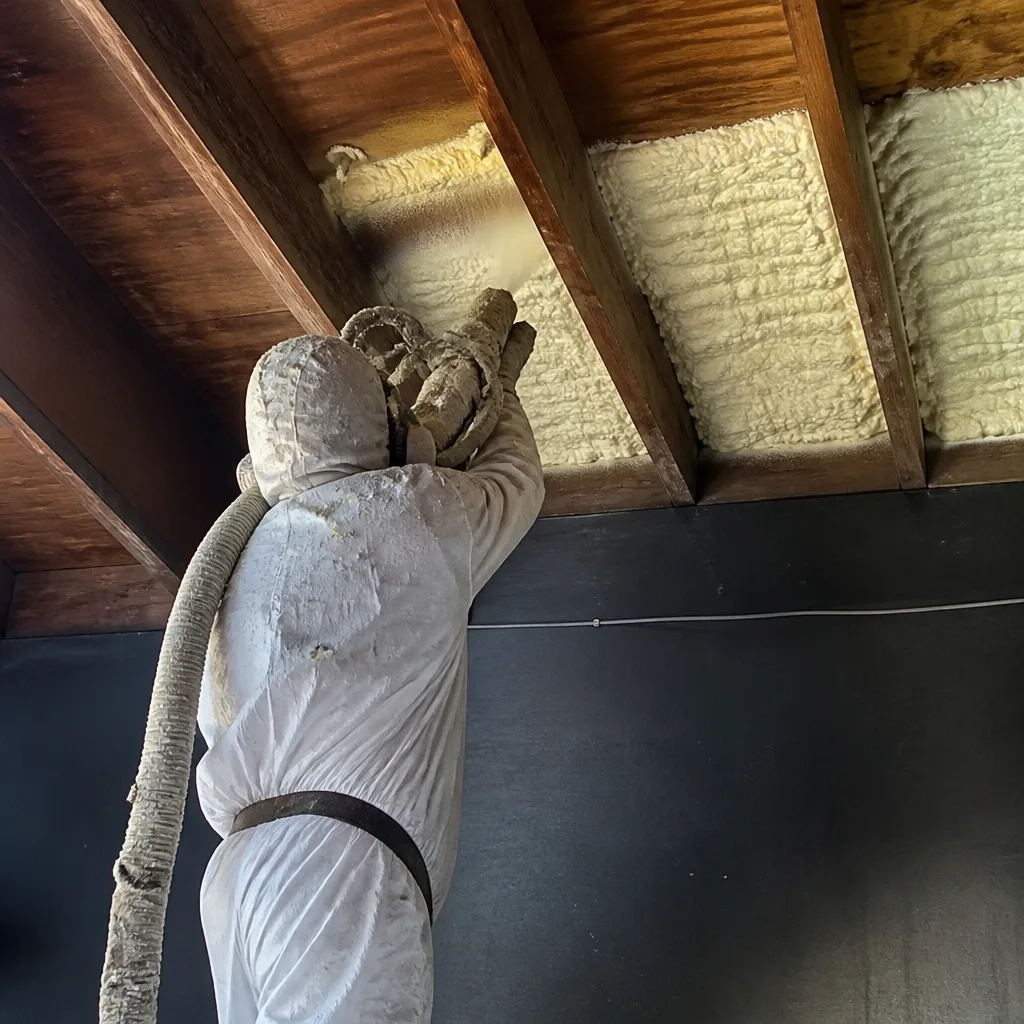
This is the single most common call we get from Eastvale. Builders in these master-planned tracts routinely left the garage ceiling cavity empty, and the bonus room above it bakes. We spray open-cell foam directly across the ceiling and rim joist, which turns that dead air space into a conditioned boundary. The difference in the room above is usually immediate and dramatic.
Attic Roofline and Rim Joist Sealing
For Eastvale homes where the HVAC equipment lives in the attic, spraying the roofline with open-cell foam puts the ductwork inside the conditioned envelope. That matters here because attic temps in these two-story tracts routinely exceed 130°F in August. Rim joist sealing closes the air leaks around the floor perimeter that let hot, dry Santa Ana corridor air push into the first floor.
Spray Foam Insulation Contractors in Eastvale
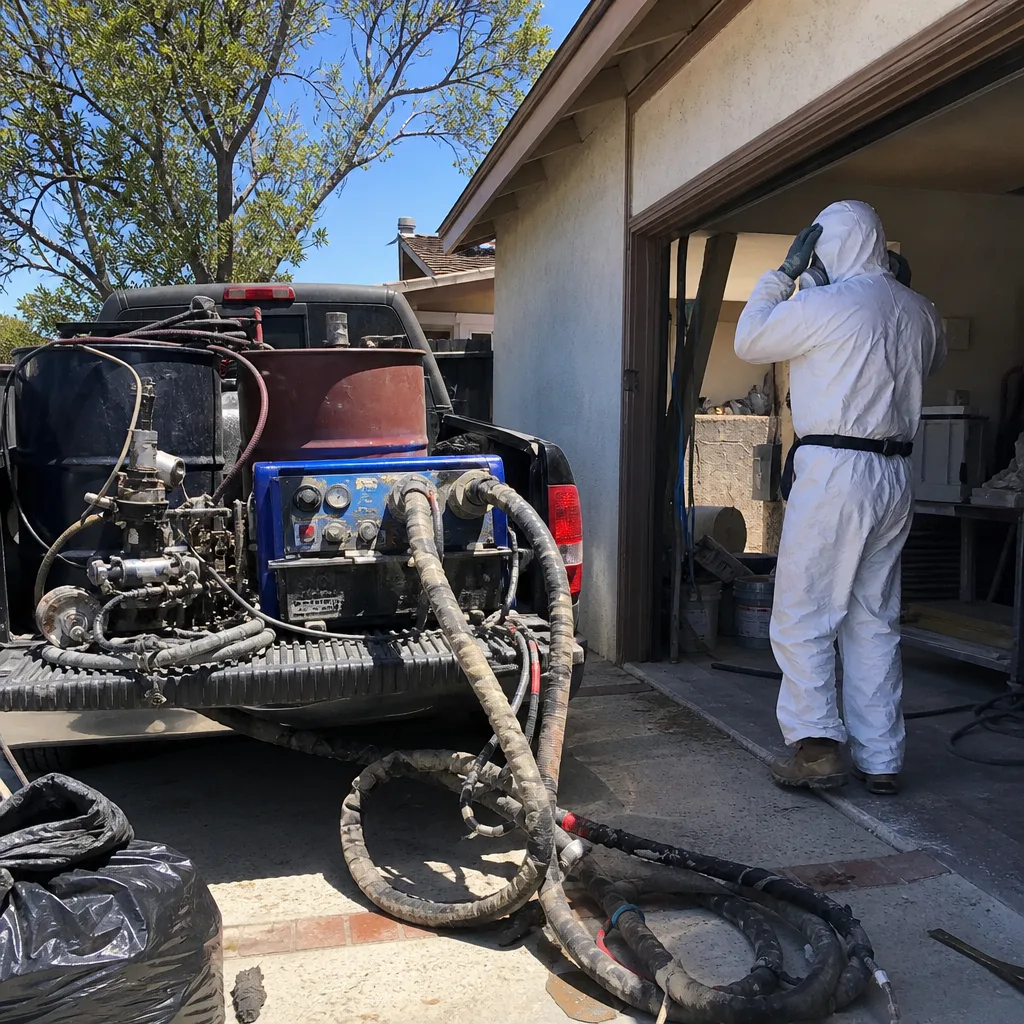
Spray Foam Insulation Contractors like our crew spend most of their time in Eastvale correcting what production builders left behind: settled batts, unsealed top plates, and wall cavities that never got the R-value the energy code suggested. We price open-cell attic work at roughly $2.50 – $4.50 per board foot and closed-cell at $3.75 – $6.50 per board foot, with a typical two-story Eastvale attic running $5,500 – $9,500 all-in. Nate Calloway’s crew handles the full scope, from prep and masking to spray, trim, and cleanup.
Closed-Cell For Hot West-Facing Walls
Eastvale’s large two-story tracts have a lot of west-facing wall area, and builder-grade 2×4 cavities at R-13 don’t stop a 105°F afternoon sun. Closed-cell foam adds roughly R-6.5 per inch and acts as a vapor barrier, which helps in the dry, windy conditions Eastvale sits in. Most homeowners combine closed-cell on problem walls with open-cell in the attic to balance performance and cost.
Whole-Attic Retrofit On Two-Story Tracts
When the original attic batts have compressed and shifted, adding more on top doesn’t fix the air leaks. We spray the roofline and gable ends, seal top plates and penetrations, and leave the attic as a conditioned space. On a 2,800-square-foot Eastvale tract home, this is usually a one-to-two-day job for our crew.
Trusted Brands We Service in Eastvale
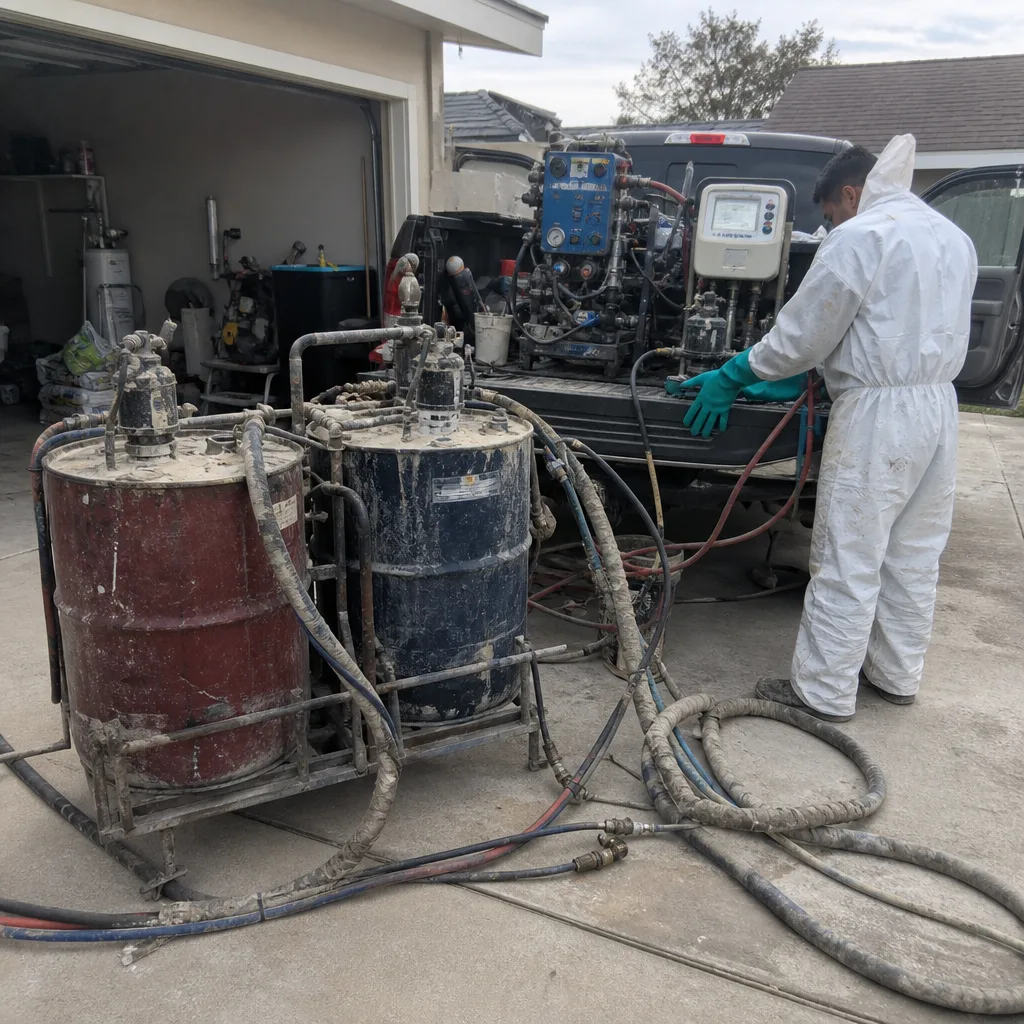
We install Icynene and Demilec spray foam because they’re the two names in this category we’d put in our own homes. The difference is real, and most general contractors in Eastvale can’t offer either. For homeowners weighing a sustainability angle, we also carry GreenFiber recycled-content insulation, and for those who want to see the full lineup, our shop stocks Owens Corning products as well. When you call us for Eastvale work, you’re not locked into one brand’s product line. You’re getting the material that fits the specific house and the specific problem, not whatever’s in the warehouse.
Common Spray Foam Insulation Problems We See in Eastvale Homes
- Bonus rooms over garages that never cool down. Eastvale’s production builders frequently left garage ceilings uninsulated in homes built between 2000 and 2015, and the room above stays 10-15°F hotter than the rest of the house. Spray foam on the garage ceiling fixes this at the source.
- Compressed and shifted attic batts after 15+ summers. The original fiberglass batts in many Eastvale attics have been cooked for close to two decades, and when batts compress, they lose R-value wherever the loft is gone. We correct the settled coverage before installing spray foam so the new layer isn’t sitting on a weak foundation.
- West-facing second-story walls that radiate heat into the bedrooms. Eastvale’s large two-story tract homes have a lot of wall area facing the afternoon sun, and 2×4 builder cavities with R-13 fiberglass don’t stop that load. Closed-cell foam in those cavities makes a real difference.
- Unsealed top plates and penetrations that leak conditioned air. Production builders were rarely meticulous about air sealing, and Eastvale’s Santa Ana wind corridor turns those small gaps into steady air changes. Spray foam seals the building envelope at points fiberglass simply can’t.
Pricing for Spray Foam Insulation in Eastvale, CA
For open-cell spray foam, Eastvale homeowners should budget $2.50 – $4.50 per board foot, and closed-cell runs $3.75 – $6.50 per board foot. A garage ceiling under a bonus room typically runs $1,800 – $3,400. A full attic roofline on a two-story tract home lands between $5,500 and $9,500. What moves the needle most is access: a tight attic with truss spacing under 24 inches takes more labor than an open, walkable space. We quote every Eastvale job in writing before any work starts, and estimates are free. Call (833) 390-3099 and we’ll give you a straight number for your specific house.
We Also Serve Cities Near Eastvale
Our crews cover Eastvale and the surrounding Inland Empire corridor regularly. We also handle spray foam and insulation work in Norco, Home Gardens, Corona, and Jurupa Valley, so if you’re right over the city line, the same crew and the same pricing apply. Whether you’re in 92860 or just outside it, we’re familiar with the housing stock and the heat load.
Serving Eastvale, CA — Our Local Coverage Area
We’re based in the Eastvale area and know this community well. Use the map below to see our service coverage — if you’re nearby, we can almost certainly help.
FAQs About Spray Foam Insulation in Eastvale
Because the builder almost certainly left the garage ceiling cavity uninsulated, and the heat from the garage rises directly into that room. This is a production-builder pattern repeated block after block across Eastvale’s master-planned subdivisions, especially in homes built in the early 2000s. We spray open-cell foam across the garage ceiling and rim joist to put that room back inside the conditioned part of your house. Call (833) 390-3099 for an estimate on your specific bonus room.
Yes, and for a very specific reason: the original builder-grade attic insulation in Eastvale’s tract homes was installed to minimum code, then spent 15 summers baking at 130°F-plus attic temperatures. Fiberglass batts compress and shift under that kind of sustained heat, and the R-value drops wherever the loft is lost. Spray foam corrects the settled coverage and air-seals at the same time, which fiberglass can’t do. If your upstairs rooms run noticeably hotter than downstairs, the insulation has already degraded.
In most cases, yes, without any significant teardown. We access the attic through the existing hatch, mask off the living spaces, and spray directly onto the roofline, gable ends, and top plates. On Eastvale’s 2000s-era two-story tracts, the attics are usually accessible enough that we can complete a full roofline retrofit in one to two days.
We install Icynene and Demilec spray foam, both open-cell and closed-cell depending on the application. These are premium brands that most general insulation contractors in the Inland Empire don’t carry. For Eastvale’s specific conditions, the choice between the two usually comes down to whether vapor-barrier performance or cost per R-value is the bigger factor for your project.
Because in Eastvale’s climate, the attic is where the dominant heat load lives. Summer highs routinely pass 100°F, humidity is low, and the Santa Ana wind corridor pushes hot, dry air against the roofline and upper walls. Attic spray foam delivers the largest comfort and energy savings per dollar by cutting the radiant heat from above, which is why we start there and add wall foam only where specific rooms need it. Call (833) 390-3099 and we’ll walk through the priority order for your specific house.
On a two-story tract home off Hamner Avenue in one of Eastvale’s early-2000s subdivisions, our crew found the bonus room over the garage sweltering because the builder had left the garage ceiling cavity empty, while the attic batts above had compressed and shifted after 15+ summers of 100°F-plus attic temps. We sprayed open-cell Icynene across the garage ceiling and rim joist to condition that bonus room, then sealed and foamed the attic roofline so the reflective heat load stopped cooking the second floor. Those two fixes, done together, typically cut the second-floor temperature swing in half. If your Eastvale home is doing the same thing, call (833) 390-3099 for a free estimate and we’ll tell you what’s actually happening up there.
Written by Nate Calloway, Owner at Fountain Valley Insulation, serving Eastvale and the Inland Empire with spray foam and insulation expertise.