
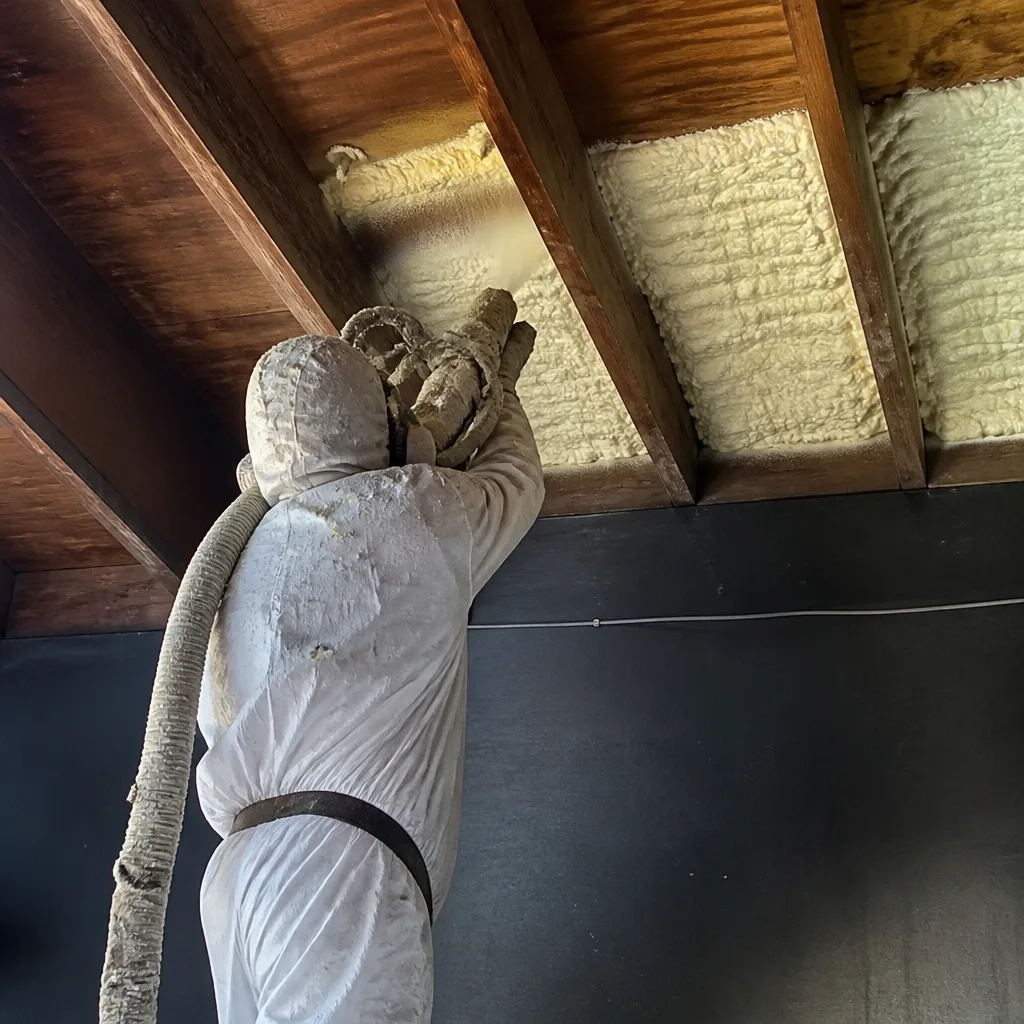
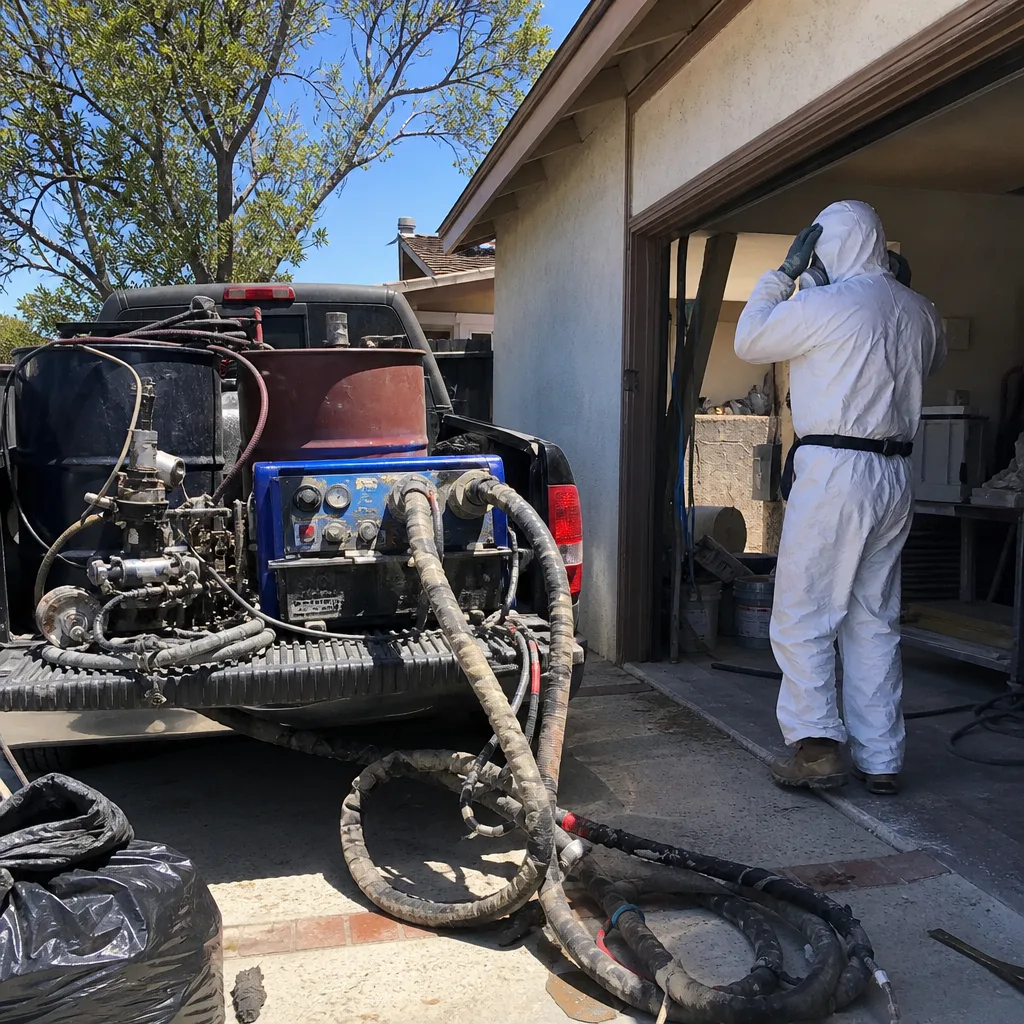
Fast, Reliable Spray Foam Insulation Across East Los Angeles
Spray foam insulation in East Los Angeles typically costs $2,100 – $6,800 for a full attic or roof deck application, with open-cell running $1.10 – $2.00 per board foot and closed-cell $2.10 – $3.60 per board foot installed. Most jobs in the 90022 ZIP take one to two days, and we schedule within the same week for most calls. We know the stucco tract homes, the flat and low-pitch roofs, and the ventilation problems that repeat block after block here. If your attic is baking at 150°F and your energy bills climb every July, call (833) 390-3099 and we’ll figure out exactly what’s going on.
Why Fountain Valley Insulation Is East Los Angeles’s Preferred Spray Foam Insulation Company
East Los Angeles homes share a specific construction pattern: single-story stucco, built tight to the lot line, with original foil-faced batts that were undersized even in the 1960s and are now mostly dust. We’ve worked enough attics around Belvedere Park, along Whittier Boulevard, and through the side streets off Atlantic Avenue to know what we’ll find before we open the hatch. That predictability means we arrive with the right foam, the right ventilation materials, and a clear plan instead of a surprise.
The brands we install set us apart from most insulation companies working East Los Angeles. We carry Spray Foam Insulation materials from Icynene and Demilec, two manufacturers most general contractors don’t stock. That matters in 90022 because the corrective work these homes need, opening blocked eave vents before foaming, requires a crew that understands building airflow, not just a spray rig. Nate Calloway has built this company around matching the right material to the actual house in front of us.
We answer the phone. You’ll talk to a person who knows East Los Angeles, not a call center. And we show up when we say we will because we know you’re scheduling around work, kids, and a house that’s been uncomfortable for years.
Crawl Space Spray Foam Insulation in East Los Angeles
Crawl Space Spray Foam Insulation in East Los Angeles involves sealing the floor assembly from below to stop cold air from rising through the floorboards in winter and hot, damp air from entering in summer. The older 1950s and 1960s homes around the 90022 ZIP usually have raised foundations with open vented crawl spaces, which means cold floors in January and musty smells that drift up into the living room. Sealing that space with closed-cell foam also keeps out the fine dust and rodent traffic that those old foundation vents invite.
Most crawl space spray foam jobs in East Los Angeles run $1,800 – $4,200 depending on square footage and how much old debris has to be removed first. We handle the prep, which often means pulling out settled fiberglass or batt remnants from decades past before spraying. One trip gets it done.
Sealing the Floor Assembly
We apply closed-cell foam to the subfloor underside and rim joist band, creating an air and moisture barrier that fiberglass batts can’t deliver. On East LA crawl spaces, this stops the winter cold-soak that makes tile floors feel like ice even with the heat running.
We also inspect the foundation vents and perimeter drainage while we’re down there. If the vents are rusted open or the grade slopes toward the foundation, those issues get flagged before foam goes in, so you’re not sealing a moisture problem inside the envelope.
When Older Homes Need It Most
Homes with unpermitted additions or enclosed patios, common in East Los Angeles, often have crawl spaces that were never properly insulated when the addition went in. The original section of the house may have something, but the added room is open to the dirt below. That’s where you feel the temperature difference room to room. Foaming the entire crawl space evens it out.
Garage Spray Foam Insulation in East Los Angeles
Garage Spray Foam Insulation in East Los Angeles targets the garage ceiling and shared wall assemblies that turn attached garages into heat sinks. In a 1965 stucco house on a tight lot near Saybrook Park, the garage often shares a wall with a bedroom or kitchen, and the garage attic connects to the house attic. When that garage ceiling has no insulation at all, which is common, the shared wall bakes all afternoon and the bedroom on the other side climbs five or ten degrees. Foam stops that heat transfer at the source.
Most garage spray foam jobs in East Los Angeles run $1,400 – $3,600 for ceiling and shared-wall applications. Detached garages, which are everywhere in this part of unincorporated LA County, cost toward the lower end unless you want the roof deck done too. We’re in and out in a day.
Attached Garage Ceilings and Shared Walls
We spray the garage ceiling cavity or the roof deck directly, depending on whether your garage attic connects to the house. For attached garages, we also foam the wall assembly that faces the living space. This cuts the radiant heat that builds up through a west-facing stucco wall by late afternoon.
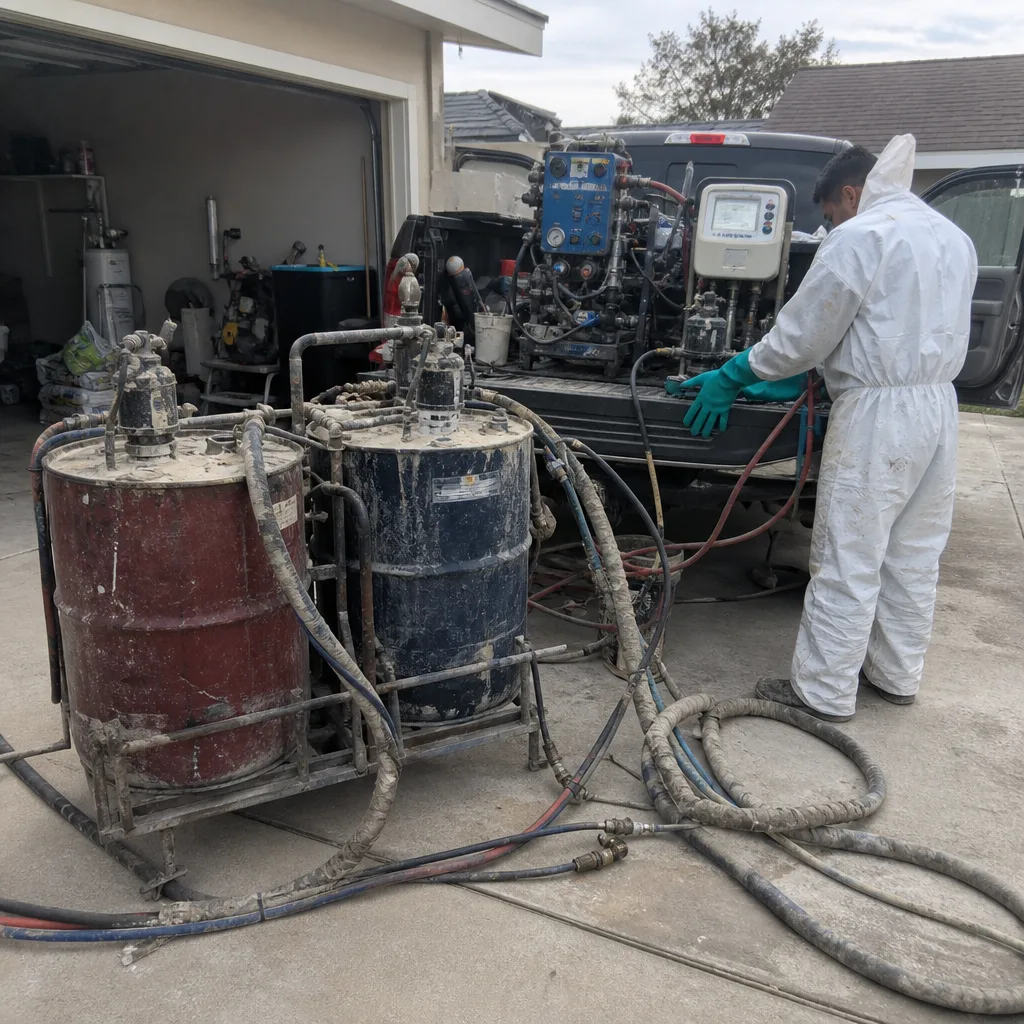
Closed-cell Icynene works best here because it adds structural rigidity to the assembly while it seals. On older East LA garages with cracked stucco and loose framing, that extra stiffness is a real benefit, not just a sales point.
Detached Garage Conversions and Workshops
East Los Angeles has a lot of detached garages doing double duty as workshops, laundry rooms, or semi-finished hangout space. If you’re running tools or spending real time out there, spray foam changes the space. We’ve done several detached garages off Rowan Avenue and the streets behind East LA College where the owner just wanted the place not to feel like an oven by noon. Open-cell foam on the roof deck handles the heat at a lower cost, while closed-cell is better if moisture from a washer or a slab floor needs to be blocked.
Trusted Brands We Service in East Los Angeles
We don’t push one product because we carry three methods and work with the brands that actually fit each situation. For spray foam in East Los Angeles, we use Icynene and Demilec, two names that have earned their place in the closed-cell and open-cell categories. For homes that need something other than foam, we stock Rockwool mineral wool and CertainTeed fiberglass so you’re never forced into a product that doesn’t match the house. Nate Calloway built Fountain Valley Insulation around having real material choices on the truck, not a manufacturer rebate dictating what we offer. Ask us why we carry Rockwool, spray foam, and recycled fiber, because most contractors carry none of them, and we’ll give you a straight answer.
Common Spray Foam Insulation Problems We See in East Los Angeles Homes
- Foam sprayed over blocked eave vents. The original intake vents on 1960s and 1970s stucco homes were often painted shut or stuccoed over decades ago. If foam goes in without fixing that, the roof deck sits sealed above trapped heat, and attic temps climb past 150°F when the San Gabriel Valley heat hits.
- Closed-cell applied over disintegrated foil batts. The original foil-faced R-11 batts in these homes turn into shiny flakes and dust. Spraying foam on top of that residue creates a bond surface that can delaminate. We remove the failed material first, always.
- Unpermitted additions foamed without ventilation correction. Enclosed patios and add-on rooms are common in East Los Angeles, and many were built without proper eave or soffit vents. Sealing those assemblies with foam without adding ventilation creates a hot-roof situation that fails county inspection.
- Flat and low-pitch roofs done with the wrong foam type. East LA has a lot of flat and near-flat roofs. Open-cell foam on a low-pitch roof deck can hold moisture if the roofing above it leaks. Closed-cell is usually the right call in those assemblies because it blocks water migration and adds strength.
Pricing for Spray Foam Insulation in East Los Angeles, CA
Here’s what we see across the 90022 ZIP. Open-cell spray foam runs $1.10 – $2.00 per board foot installed, and a typical 1,200-square-foot attic application lands around $2,100 – $4,800. Closed-cell, which we use on roof decks, rim joists, and moisture-prone surfaces, runs $2.10 – $3.60 per board foot, putting most full attic jobs between $3,800 and $6,800. Crawl space work usually falls between $1,800 and $4,200, and garage ceilings run $1,400 – $3,600 depending on whether it’s attached or detached. The biggest cost swings in East Los Angeles come from prep work: removing old settled insulation, opening blocked vents, and correcting ventilation before foam goes in. That work isn’t optional in these homes, and it’s where generic spray foam contractors cut corners. Call (833) 390-3099 for a free estimate, and we’ll give you a real number based on your specific house, not a ballpark that shifts when we show up.
We Also Serve Cities Near East Los Angeles
Our crews run from East Los Angeles into Boyle Heights, Commerce, Montebello, and South San Gabriel regularly, so scheduling stays tight even when your street is right on the boundary between unincorporated county land and an incorporated city. If you’re a few blocks outside the 90022 ZIP, we still know your housing stock and your code situation. Spray Foam Insulation in East Los Angeles is our home base for this work, but the neighboring communities see us daily.
Serving East Los Angeles, CA — Our Local Coverage Area
We’re based in the East Los Angeles area and know this community well. Use the map below to see our service coverage — if you’re nearby, we can almost certainly help.
FAQs About Spray Foam Insulation in East Los Angeles
Because so many 1950s through 1970s stucco homes in the 90022 ZIP have original eave vents that were painted shut or covered with stucco years ago. If we spray foam onto a roof deck with no intake airflow, we seal a hot assembly that can push attic temperatures past 150°F in summer and shorten the life of your roofing. We open and screen the vents before any foam goes in. Call (833) 390-3099 and we’ll inspect yours first.
Spray foam work in East Los Angeles falls under unincorporated LA County code, not City of Los Angeles code. That affects ventilation requirements, inspection procedures, and what’s allowed in enclosed patio and addition assemblies. We handle county permits and inspections regularly, so you don’t have to figure out the paperwork. Call us and we’ll tell you exactly what applies to your address.
Yes, almost always. A detached garage ceiling or roof deck in East Los Angeles is usually a single-day job. The exception is when the old roof deck has water damage or the framing needs attention before foam can bond properly. We’ll know that before we start, because we inspect before we spray. Call (833) 390-3099 and we’ll schedule a walkthrough.
We remove them. The original foil-faced R-11 batts in East Los Angeles homes from the 1960s and 70s are usually disintegrated into shiny flakes and dust by now. Spraying closed-cell foam over that residue creates a contaminated bond surface that can separate later. The removal is part of our prep, and it’s non-negotiable on every job we do in this area.
We do, and we see it often. Unpermitted additions and enclosed patios in East Los Angeles frequently have crawl spaces that were never insulated when the addition was built. We foam the subfloor and rim joist band across the entire footprint, including the added section, so the floor temperature evens out through the whole house. Call (833) 390-3099 for a free estimate on your specific layout.
On a 1968 single-story stucco home near Belvedere Park, our crew found the original foil-faced batts had disintegrated into shiny flakes and the eave vents were painted shut, pushing attic temps well past 150°F after a hot spell. We opened and screened proper intake vents at the eaves, then applied Icynene closed-cell foam to the roof deck and gable transitions to seal the assembly in one trip instead of returning for a second pass. That’s the work most spray foam contractors skip, and it’s the work these East Los Angeles homes actually need.
Written by Nate Calloway, Owner at Fountain Valley Insulation, serving East Los Angeles with spray foam, blown-in, and attic insulation across eight manufacturer brands.