
Fast, Reliable Spray Foam Insulation Across Corona
Spray foam insulation in Corona costs $2,400 – $6,800 for a typical attic or crawl space project, with most jobs completed in one day. We serve every Corona zip code from 92882 to 92883, and our crews know the difference between a 92879 postwar tract home and a 2005 two-story in Sierra Del Oro. If you’re tired of upstairs bedrooms that bake in July or dust that shows up on every surface during Santa Ana winds, call (833) 390-3099 and we’ll walk you through what actually makes sense for your house.
Why Fountain Valley Insulation Is Corona’s Preferred Spray Foam Insulation Company
Corona homeowners call us because we carry two spray foam lines most local contractors don’t stock: Icynene and Demilec. That matters when you’re deciding between open-cell and closed-cell for a foothills home in 92883 versus a valley-floor tract in 92880. Nate Calloway built Fountain Valley Insulation around a simple principle: match the material to the house, not the other way around. Our crews work in Corona weekly, so we’re not driving in blind from across the county. We know the 91 corridor traffic patterns, we know which subdivisions in 92881 have vaulted ceilings with recessed can lights everywhere, and we know what happens to builder-grade insulation after 15 years of Corona summers.
We also know that Spray Foam Insulation only performs when the prep work is done right. Air-sealing comes first. Foam comes second. Skip step one and you’ve spent thousands on a product that can’t do its job. That’s the difference between a contractor who sprays and a specialist who solves the problem.
Crawl Space Spray Foam Insulation in Corona
Crawl Space Spray Foam Insulation in Corona is most common under the older postwar homes around the downtown circle and in 92879, where vented crawl spaces pull damp, dusty air up into the house all year. A typical crawl space encapsulation with closed-cell foam on the foundation walls and rim joists runs $2,800 – $5,500 depending on square footage and access. In Corona’s dry summer heat, uninsulated crawl spaces also let hot air migrate under floorboards, so the AC works harder than it should from May through October.
Closed-Cell Rim Joist Sealing
Rim joists are the biggest air leak in most crawl spaces. We spray 2 inches of Demilec closed-cell foam along the rim to stop air movement, then optionally coat the foundation walls. This alone often drops crawl space humidity noticeably within a week.
Foothill Moisture Control
Homes in 92883 near the Cleveland National Forest edge get cooler winter mornings and more overnight condensation than the valley floor. Closed-cell foam acts as a vapor barrier in these conditions, which open-cell cannot do. We see fewer musty odors and fewer pest entry points after encapsulation.
Garage Spray Foam Insulation in Corona
Garage Spray Foam Insulation in Corona is one of the most underrated upgrades for homes in 92880 and 92881, where attached garages soak up afternoon heat and radiate it into adjacent rooms all evening. Spraying open-cell or closed-cell foam on the shared wall between the garage and living space, plus the garage ceiling if there’s a bonus room above, typically runs $1,400 – $3,200. If your master bedroom sits over the garage, you already know what we’re talking about: that floor never cools down in August.
Shared Wall Treatment
The wall between your garage and your living room is often nothing more than drywall and bare studs. We spray open-cell Icynene into that cavity, and the improvement in adjacent room comfort is immediate. This is a common request from Corona homeowners who use their garage for a workshop or home gym.
Garage Ceiling and Bonus Room Floors
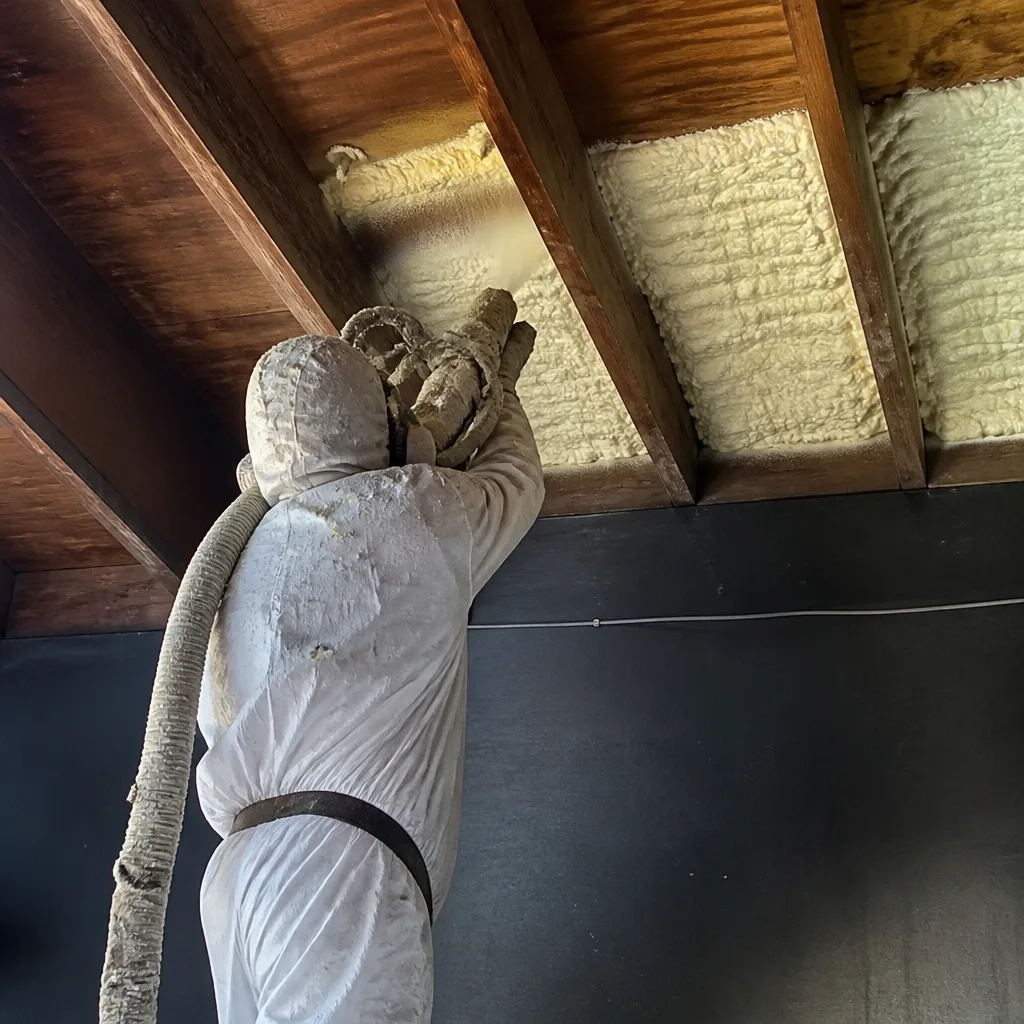
For homes with a bonus room or bedroom above the garage, we spray the garage ceiling with closed-cell foam. This creates a thermal break that stops heat transfer through the floor assembly. We’ve measured 15 – 20°F differences in bonus room floor temperatures after treatment in Corona’s summer months.
Trusted Brands We Service in Corona
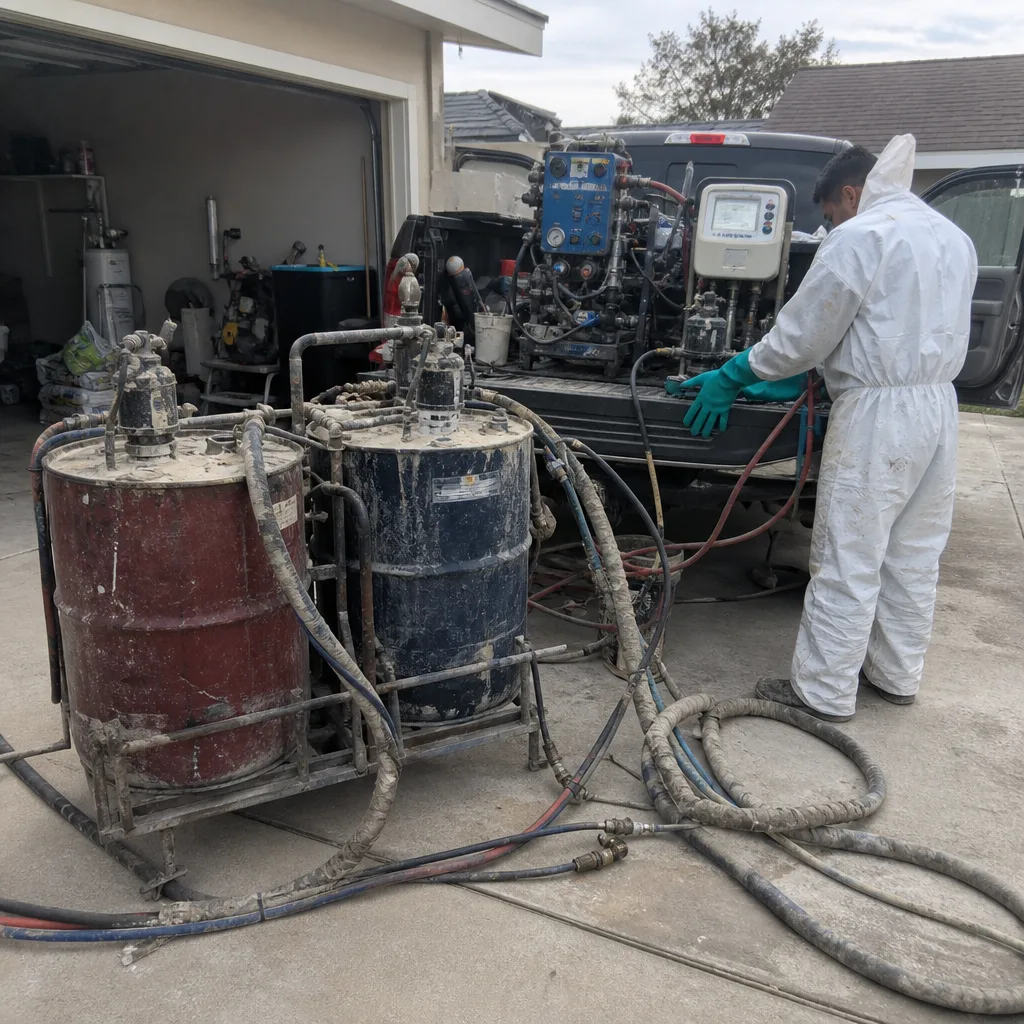
We install Icynene and Demilec spray foam exclusively, which means you get the two most recognized names in the category. For homeowners interested in a hybrid approach, we can also pair spray foam with CertainTeed batts or GreenFiber blown-in for areas where foam isn’t the right call. We keep common Demilec and Icynene product sets allocated for Corona jobs so scheduling doesn’t stall waiting on materials. If you want to know why we carry two foam lines instead of one, ask us. The answer matters for homes on the 92883 foothill edge versus the 92882 valley floor.
Common Spray Foam Insulation Problems We See in Corona Homes
- Foam over dusty, unsealed can lights. In 92880 and 92881 tract homes, spray foam applied over recessed can housings without cleaning and sealing first often fails to bond. Air keeps leaking, hot spots stay over bedrooms, and the foam itself can delaminate. The fix is air-sealing the can housings before any foam goes down.
- Open-cell in high-swing foothill attics. Homes in 92883 sit closer to the National Forest edge and see bigger overnight temperature drops. Open-cell foam without a proper vapor strategy can hold moisture in those conditions. We usually recommend closed-cell for foothill roof decks.
- Skipped top plate sealing. Santa Ana winds push fine dust through unsealed top plates and can housings. Foam alone won’t stop it. The dust just finds another gap. Air-sealing is the step that actually fixes indoor air quality.
- Inconsistent foam thickness. We regularly correct DIY or handyman foam jobs where thickness varies from half an inch to 3 inches across the same roof deck. In Corona’s 100°F summer afternoons, thin spots become thermal bridges you can feel from below.
Pricing for Spray Foam Insulation in Corona, CA
Here’s what Corona homeowners can expect to pay. Garage shared wall and ceiling work: $1,400 – $3,200. Crawl space encapsulation with rim joist sealing: $2,800 – $5,500. Attic roof deck with closed-cell foam for a typical 1,800 – 2,400 sq ft two-story: $4,200 – $6,800. Open-cell attic floor foam runs a bit less, $2,400 – $4,500, but it doesn’t air-seal the way closed-cell does. What changes your price: square footage, roof pitch and access, how much air-sealing is needed before foam, and whether you’re treating one zone or doing a whole-home scope. Call Nate’s team at (833) 390-3099 and we’ll give you a written number, not a vague range.
We Also Serve Cities Near Corona
Our Corona crews also cover Home Gardens, El Cerrito Corona, Eastvale, and Norco. If you’re just outside the city line and searching for Spray Foam Insulation in Corona, give us a call and we’ll confirm coverage. Response time to Eastvale and Norco is typically same-day for estimates.
Serving Corona, CA — Our Local Coverage Area
We’re based in the Corona area and know this community well. Use the map below to see our service coverage — if you’re nearby, we can almost certainly help.
FAQs About Spray Foam Insulation in Corona
Spray foam makes more sense because it air-seals while it insulates, which blown fiberglass cannot do. In 92880 tract homes, the builder-grade blown insulation has already settled around the recessed can lights and top plates. Adding more blown fiber on top of those gaps just buries the problem. Closed-cell foam seals the air leaks and adds R-value in one step. Call (833) 390-3099 and we’ll tell you if your attic is a good candidate.
Yes, spray foam is the most effective fix for Santa Ana dust infiltration in Corona homes. The dust enters through unsealed can housings, top plate gaps, and rim joists. Closed-cell foam fills those penetrations and stops the air movement that carries dust in. We’ve seen homes in 92881 where the HVAC plenum was coated in fine dust from years of wind events, and foam air-sealing was the only fix that held.
Closed-cell is almost always the right call for 92883 foothill homes. The temperature swing between Corona’s hot days and cool foothill nights is larger up there, and closed-cell’s vapor barrier properties plus higher R-value per inch handle that condition better than open-cell. We recently sprayed Icynene closed-cell in Sierra Del Oro and dropped attic temps by 25°F. For valley-floor homes in 92879 and 92882, open-cell can work well for interior walls and garage applications where moisture isn’t a factor.
Spray foam in the garage improves comfort by stopping heat transfer through the shared wall and ceiling into your living space. In Corona’s summer, an uninsulated attached garage can hit 110°F, and that heat bleeds into adjacent bedrooms and bonus rooms for hours after sunset. Foaming the shared wall and garage ceiling cuts that heat gain dramatically. Five Star customers in 92880 tell us their bonus rooms feel like different rooms after treatment.
The first step is air-sealing all penetrations, especially recessed can housings and top plates. In Corona’s 92880 and 92881 tracts, the builder-grade blown insulation has settled around the can light fields, leaving gaps where hot attic air pours in and Santa Ana dust follows. Foam applied over those gaps without sealing first won’t bond properly and won’t stop the air movement. We air-seal every penetration before any foam is sprayed, which is why our Corona jobs hold up. Call (833) 390-3099 for a free attic assessment.
We work across Corona, from the older streets near the downtown circle in 92879 to the big two-story subdivisions in 92880, the foothill-adjacent homes of 92883, and everything in between. If you’re ready to stop guessing and get a straight answer about what your house actually needs, call (833) 390-3099 and ask for Nate. Estimates are free, and we’ll tell you if spray foam is the right call or if another material fits better.
Written by Nate Calloway, Owner at Fountain Valley Insulation.