
Fast, Reliable Spray Foam Insulation Across Azusa
Spray foam insulation in Azusa typically runs $2.50 to $6.50 per square foot installed, with most attic projects landing between $3,800 and $9,200 depending on foam type and square footage. We get crews to Azusa homes quickly, usually within one to two business days for an estimate, and most installations are done in a single day. If your mid-century ranch off Foothill Boulevard or a newer place near the 210 is bleeding cool air all summer, call us at (833) 390-3099. We know these homes. We know what’s in their attics. We’ll tell you straight what needs to happen.
Why Fountain Valley Insulation Is Azusa’s Preferred Spray Foam Insulation Company
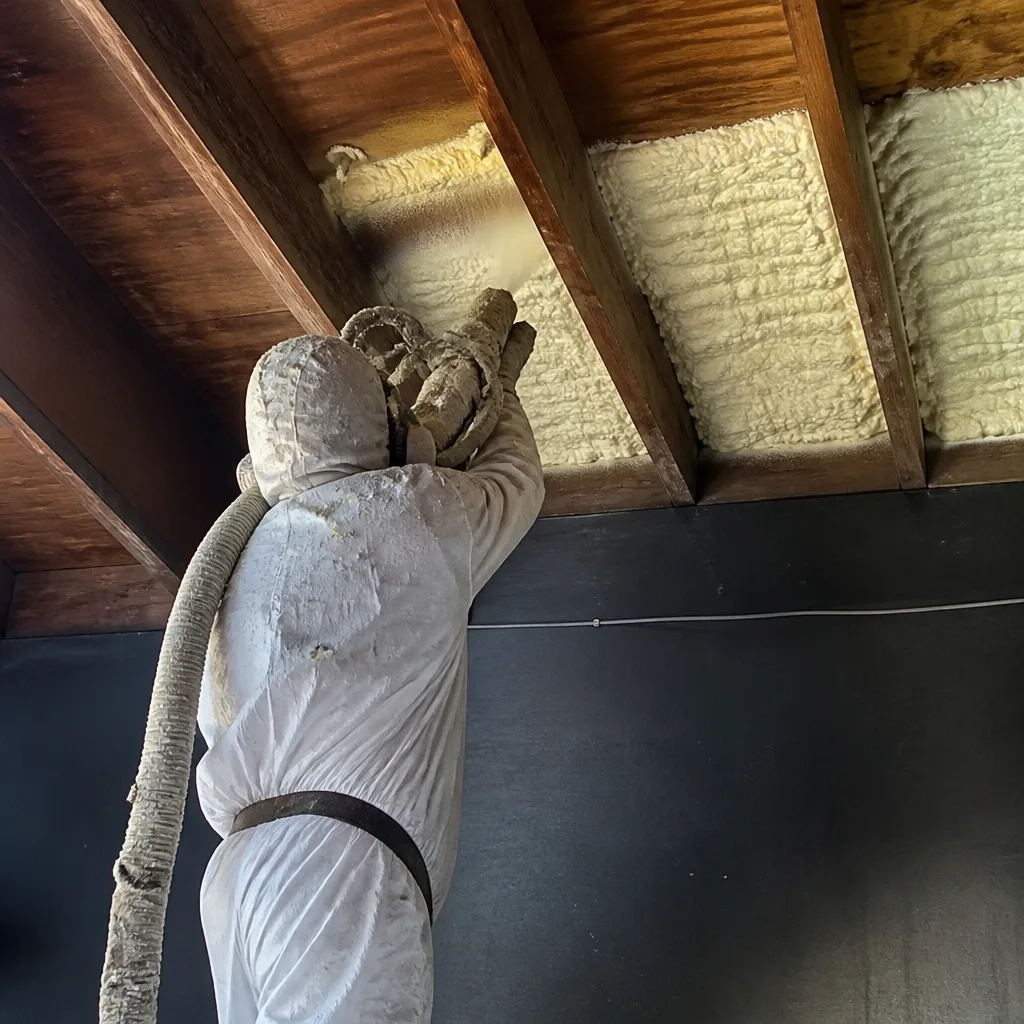
Azusa homeowners keep calling us for one reason: we don’t show up with a single product and force it into every attic. We carry eight manufacturer brands across three installation methods, including spray foam through Icynene and Demilec. That means when a 1962 stucco tract home off North Azusa Avenue needs closed-cell foam on the rim joists but open-cell across the ceiling plane, we can do both without compromising. Most contractors carry one foam brand. Maybe two. We match the material to your home, not the other way around.
Our crews have worked in enough Azusa attics to know what’s waiting up there. Thin, drifted fiberglass batts. Soffit vents packed with dust. Eave gaps that let hot San Gabriel Valley air pour in. Nate Calloway, who leads our team, has built our process around fixing those problems before foam ever leaves the gun. Homeowners appreciate that we explain the vent-clearing step instead of skipping it. It’s the difference between a foam job that actually works and one that traps heat under the roof deck.
We also understand that Azusa gets hit harder by inland heat than anywhere on the coastal side of the county. When it’s 102 degrees in July and your AC hasn’t shut off since noon, you don’t want a contractor who treats insulation like an afterthought. You want someone who knows why your attic is the problem. Call (833) 390-3099 and we’ll walk you through what we’d do differently.
Closed Cell Spray Foam Insulation in Azusa
Closed Cell Spray Foam Insulation is the workhorse choice for Azusa homes facing brutal radiant heat gain from the San Gabriel Valley floor. It cures into a rigid, dense layer that seals air movement and adds structural strength while delivering roughly R-6.5 to R-7 per inch. For most Azusa ranch homes from the 1950s through 1970s, we’re installing closed-cell on rim joists, kneewalls, and any area where moisture or structural rigidity matters, with most jobs running $2.80 to $4.50 per board foot installed.
Where We Use It Most in Azusa
Rim joist bays are a priority in nearly every Azusa home we service. The gap between the foundation and the first floor framing is a leak point that most homeowners never see. Closed-cell foam seals those bays tight, blocks outside air, and stands up to the dry conditions we get during Santa Ana wind events.
Structural Benefits for Older Homes
Many Azusa attics have roof decks that have flexed through decades of heat cycles. Closed-cell foam bonds to the sheathing and stiffens the assembly. For a detached garage or workshop off Citrus Avenue, that extra rigidity is worth knowing about.
Open Cell Spray Foam in Azusa
Open Cell Spray Foam is the better fit for interior ceiling planes and walls in Azusa when the goal is air sealing plus sound control without the higher material cost of closed-cell. It expands dramatically, fills irregular cavities in older framing, and delivers around R-3.5 to R-3.8 per inch. Azusa homeowners usually see open-cell pricing between $2.50 and $3.80 per board foot installed, depending on depth and access.
Filling Gaps in Settled Attics
Azusa’s older homes rarely have uniform cavities. Framing has shifted, batts have compressed, and the space above the ceiling is often a patchwork. Open-cell foam expands into all of it, conforming to odd joist spacing and blocking air movement that fiberglass never could.
Sound Control for Busy Streets
Homes along Azusa Avenue or near the 210 freeway deal with traffic noise that open-cell foam noticeably dampens. The same air-sealing property that stops heat transfer also interrupts sound transmission through ceiling cavities and interior walls.
Trusted Brands We Service in Azusa
We install foam from Icynene and Demilec, two of the most recognized names in spray foam, alongside complementary materials from Rockwool and CertainTeed where hybrid approaches make sense. Because we stock materials and know Azusa’s housing stock well, we can often schedule and complete foam work faster than a contractor ordering everything job-by-job. Ask us why we carry multiple foam brands when most companies carry one. The answer matters for your attic’s long-term performance and for getting the right material in the right place the first time.
Common Spray Foam Insulation Problems We See in Azusa Homes
- Drifted fiberglass batts left in place under new foam. In Azusa’s 1950s and 1960s tract homes, original fiberglass has shifted and compressed after decades of heat cycles and Santa Ana winds. Foaming over it without clearing the eaves leaves thermal bypasses that let hot air stream past the new insulation.
- Blocked soffit vents causing moisture buildup. Many Azusa attics were vented originally, and the soffits are now choked with dust and settled insulation. If foam goes in without clearing those vents, the roof deck can trap heat and moisture, accelerating shingle and sheathing deterioration.
- Open-cell foam in the wrong places without an ignition barrier. Code requires a thermal or ignition barrier over open-cell foam in certain attic configurations. In Azusa’s hot, dry attics, cutting that corner is a fire risk and does little to stop radiant heat from the intense inland sun.
- Foam applied without sealing eave gaps first. The space where the roof meets the exterior wall is a major air leak in Azusa ranch homes. Foaming the flat ceiling while leaving the eaves open gives you a sealed room with a leaky perimeter, and the AC still runs all afternoon.
Pricing for Spray Foam Insulation in Azusa, CA
Closed-cell spray foam in Azusa generally runs $2.80 to $4.50 per board foot installed. Open-cell foam lands between $2.50 and $3.80 per board foot. For a typical 1,200 to 1,600 square foot attic in a mid-century ranch, that puts most full-attic projects between $4,200 and $8,600, though rim joist-only work is significantly less. The biggest cost drivers are access, the condition of existing insulation, and whether eave and soffit prep is needed. We give you a written estimate before any work begins, and it’s free. Call (833) 390-3099 and we’ll get a real number to you fast.
We Also Serve Cities Near Azusa
Our crews work throughout the San Gabriel Valley and the surrounding foothill communities. In addition to Spray Foam Insulation in Azusa, we regularly serve Citrus, Irwindale, Covina, and Glendora. If you’re a few minutes up the 210 or over in the neighboring tracts, the same crew and the same brands are available to you. Call us and we’ll schedule a free estimate.
Serving Azusa, CA — Our Local Coverage Area
We’re based in the Azusa area and know this community well. Use the map below to see our service coverage — if you’re nearby, we can almost certainly help.
FAQs About Spray Foam Insulation in Azusa
No, not properly. In Azusa attics where original fiberglass has drifted and compressed from heat cycles and Santa Ana winds, we remove or clear the old batts first, especially at the eaves. Foaming over settled fiberglass leaves air gaps and blocks soffit ventilation. Call (833) 390-3099 and we’ll assess what’s actually in your attic before recommending anything.
Yes, especially closed-cell foam on the roofline or rim joists. Azusa’s inland location means attics routinely exceed 140 degrees in July, and radiant heat pours through the roof deck into the living space. Closed-cell foam creates an air and thermal barrier that reduces that transfer significantly. Open-cell alone doesn’t block radiant heat the same way, which is why we match the foam type to your specific attic.
Closed-cell is dense, rigid, and adds structural strength while delivering about R-6.5 per inch. Open-cell is softer, expands more, and runs around R-3.8 per inch at less cost. For most Azusa ranch homes, we use closed-cell on rim joists and open-cell on flat ceiling planes. The right choice depends on where the foam goes and what problem you’re solving.
We clear and baffle every eave before foaming. In Azusa’s older tract homes, decades of wind and dust have often packed the soffit vents solid. We remove the debris, install baffles to maintain airflow, and then foam the intended surfaces. It’s an extra step most contractors skip, and it’s the difference between a sealed attic and a moisture trap.
Yes. Detached garages and workshops in Azusa are typically unvented metal or wood-framed structures with big temperature swings. Closed-cell foam on the walls and roofline works well there because it seals and insulates in one pass. We treat each workshop as its own small building rather than just blanketing it with one product. Call (833) 390-3099 for a free estimate and we’ll tell you what’s actually needed.
Written by Nate Calloway, Owner at Fountain Valley Insulation, serving Azusa and the San Gabriel Valley with trusted insulation brands and spray foam expertise.