

Fast, Reliable Attic Insulation Across West Covina
If your West Covina home was built between 1955 and 1975, the attic is almost certainly costing you money every month. Those original fiberglass batts have compacted to R-8 or less over 50-plus years of San Gabriel Valley heat, and the result shows up on your summer electric bill. We fix that. Fountain Valley Insulation serves the entire West Covina area with blown-in insulation, spray foam, and air sealing that’s matched to the way these houses were actually framed. Call (833) 390-3099 for a free estimate and we’ll tell you exactly what your attic needs, not what happens to be on the truck.
Why Fountain Valley Insulation Is West Covina’s Preferred Attic Insulation Company
West Covina homeowners call us because we understand the specific problems of 1950s and 1960s tract housing. We know what happens to the original insulation in a 1963 ranch off South Lark Ellen after sixty summers of 100°F heat. We know that the 2×4 ceiling joists in 91791 are often spaced 24 inches on center, which means standard batt rolls won’t bridge the bays properly. And we know that most attics in West Covina have never been air sealed, which is why adding insulation alone rarely fixes a hot upstairs. Our team works across West Covina, including 91790, 91791, 91792, and 91793. Nate Calloway built Fountain Valley Insulation around a simple idea: match the material and the method to the house, not the other way around.
We carry eight manufacturer brands so we can make honest recommendations. That includes Icynene and Demilec spray foam for attics with complex roof geometry, plus GreenFiber recycled-content blown insulation for homes where we’re topping up over compressed batts. Most contractors carry one fiberglass line. We carry options because West Covina attics aren’t all the same. Call (833) 390-3099 and we’ll talk through what fits your specific house.
Insulation Contractors in West Covina
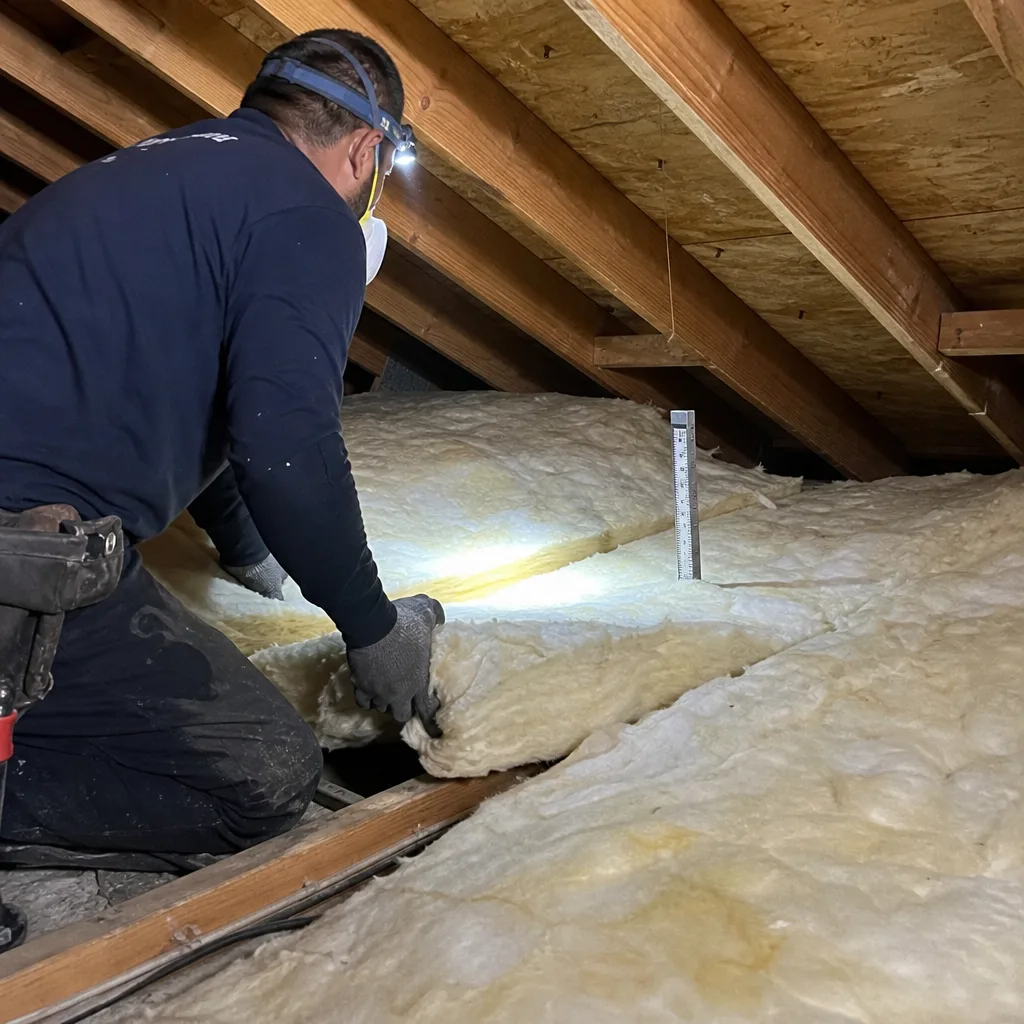
Insulation Contractors in West Covina handle one job above all others: getting aging tract-home attics back to functional R-value and keeping conditioned air where it belongs. The work usually starts with an attic inspection. We check joist spacing, measure what’s up there, look at the top plates and can lights, and then recommend blown-in insulation, spray foam, or a targeted top-up. A typical attic insulation project in West Covina runs $1,800 to $4,200 depending on square footage, access, and how much air sealing is needed.
Blown-In R-38 Upgrades for Older Tracts
Most West Covina homes from the 1955 – 1975 era were built with R-11 or R-13 batts, now compacted to R-8. Blowing in additional insulation to reach R-38 is typically a one-day job for us. We’ll air seal the top plates and can lights before we blow so the new insulation actually does its job.
Spray Foam for Tight or Difficult Attics
Some West Covina attics have low-pitch roofs that make traditional vented insulation methods less effective. In those cases, closed-cell spray foam from Icynene or Demilec applied to the roofline can turn a 140°F attic into conditioned space. It’s a larger investment, usually $4,500 to $9,000 for a typical ranch, but it solves both heat and air leakage in one pass.
Attic Ventilation in West Covina
Attic Ventilation in West Covina matters because these attics bake. On the first hot week of May, a south-facing roof in 91791 can push attic temperatures past 140°F by 10 a.m. If the attic can’t exhaust that heat, it radiates down through the ceiling all afternoon and forces your AC to run constantly. We install and correct ridge vents, soffit vents, gable vents, and baffles so air moves through the attic properly. Ventilation work in West Covina typically adds $400 to $1,200 to an insulation project, depending on how much of the existing venting is undersized or blocked.
Baffles and Soffit Correction
Older West Covina homes often have soffit vents that were painted over, blocked by blown-in insulation, or simply never installed at the right spacing. We install baffles at every rafter bay before blowing insulation so the soffit-to-ridge airflow path stays open. This is not optional on a 1960s ranch with a low-pitch roof.
Radiant Barrier for South and West Exposures
For homes where the roof plane faces south or west, radiant barrier stapled to the underside of the rafters can cut attic temperatures by 20 to 30 degrees before we add insulation on top. It’s an option we recommend often in 91791, where the foothill slopes catch the sun all afternoon.
Trusted Brands We Service in West Covina
We’re a multi-brand shop, which means we don’t have to steer you toward one product line because it’s all we stock. For West Covina attics, we commonly recommend GreenFiber blown-in cellulose for top-ups over compressed batts, Icynene or Demilec spray foam for roofline applications and air sealing, and Owens Corning for batt work where it’s the right call. We keep material staged for quick turnaround in the San Gabriel Valley, so a West Covina job doesn’t wait on a warehouse shipment. Ask us why we carry spray foam, mineral wool, and recycled fiber. Most contractors carry none of them.
Common Attic Insulation Problems We See in West Covina Homes
- Compacted original batts at R-8 or less. The insulation is still “there,” but it’s no longer doing anything. We see this in nearly every 1950s – 1970s tract home in West Covina we open up. Sixty years of heat has pressed the fiberglass flat.
- Unsealed top plates and recessed can lights. A 140°F attic forces hot air through every unsealed gap in the ceiling framing. Added insulation alone barely moves the thermostat because the air is leaking straight into the living space.
- 24-inch-on-center ceiling joists. Standard batt rolls are cut for 16- or 24-inch bays, but older West Covina framing is often irregular, leaving unbridged gaps around the edges. These attics need blown-in insulation or extra strapping to hold batts properly.
- HVAC ducts running through the hot attic. In many West Covina ranch homes, the ductwork for the second story or addition runs through attic space at 130°F-plus. Leaky, uninsulated ducts lose a significant share of your cooled air before it reaches the bedrooms.
Pricing for Attic Insulation in West Covina, CA
A typical blown-in R-38 upgrade for a 1,200-square-foot West Covina attic runs $1,800 to $2,800. If we’re also air sealing top plates, can lights, and duct penetrations, expect $2,400 to $3,600. Full roofline spray foam with Icynene or Demilec runs $4,500 to $9,000 depending on roof geometry and access. Attic ventilation correction, including baffles and new soffit or ridge vents, adds $400 to $1,200. These are honest ranges for the San Gabriel Valley market, not a teaser price. Call (833) 390-3099 for a free, itemized estimate. We’ll tell you what your attic actually needs and what it doesn’t.
Key Takeaways
- Most West Covina homes built before 1975 have attic insulation performing at R-8 or worse.
- Air sealing matters as much as added R-value in these older tract attics.
- 24-inch joist spacing in 91790 and 91791 often requires blown-in insulation or strapping.
- Summer attic temps over 140°F make ventilation work a legitimate part of the fix.
- We carry eight brands, so the recommendation fits the house, not our inventory.
We Also Serve Cities Near West Covina
Our Attic Insulation team regularly works in Valinda, South San Jose Hills, La Puente, and Irwindale. If you’re anywhere in the eastern San Gabriel Valley, we can usually reach you the same week for an attic assessment. See our Attic Insulation in West Covina page for the full breakdown of how we handle the older tracts in this city specifically.
Serving West Covina, CA — Our Local Coverage Area
We’re based in the West Covina area and know this community well. Use the map below to see our service coverage — if you’re nearby, we can almost certainly help.
FAQs About Attic Insulation in West Covina
Yes. Blown-in insulation actually works better than batts in 24-inch-on-center framing because it fills the full bay width without gaps. We blow GreenFiber cellulose directly over the old batts or after removing them, and it bridges the irregular spacing that makes batt rolls a poor fit in these older West Covina homes. Call (833) 390-3099 and we’ll confirm your joist spacing during a free attic check.
The short answer: if your home was built before 1980 and the insulation hasn’t been touched, it’s past its service life. Original fiberglass batts in West Covina tract homes have typically compacted from R-13 to R-8 or lower. The practical signs are a second story that won’t cool in summer, attic temperatures that spike early in the day, and higher cooling bills every July. We can measure what’s actually up there and tell you exactly where you stand.
Because insulation without air sealing leaves the real leak unaddressed. In West Covina attics, unsealed top plates, recessed can lights, and duct penetrations let 140°F attic air pour straight into the living space. Insulation slows conductive heat, but it doesn’t stop air movement. That’s why our process always includes sealing those bypasses before we add R-38. Otherwise you’re paying for insulation that can’t do its job.
Usually yes, especially on low-pitch roofs and south-facing exposures common in West Covina. If your attic can’t exhaust heat, the new insulation just sits under a 150°F lid. We install baffles, correct blocked soffit vents, and add ridge or gable venting as needed. It’s typically a $400 to $1,200 addition and it protects the insulation investment. Call (833) 390-3099 and we’ll inspect your ventilation during the free attic assessment.
Yes, when combined with air sealing. Homes in 91791 and 91790 with original R-8 batts and unsealed top plates consistently see the biggest reductions once we air seal and blow to R-38. The exact savings depend on your AC, duct condition, and sun exposure, but moving from R-8 to R-38 alone cuts conductive heat gain through the ceiling by roughly 75%. Air sealing removes the hot-air leak that insulation can’t stop. For a free assessment of what your attic needs, call (833) 390-3099.
Written by Nate Calloway, Owner at Fountain Valley Insulation, serving West Covina and the San Gabriel Valley.