


Fast, Reliable Attic Insulation Across South Whittier
Attic insulation in South Whittier usually means a retrofit job on a 1940s-60s stucco home, not a new-construction install. Most houses in the 90605 ZIP were built decades before modern Title 24 standards, and plenty still carry their original insulation, if they have any at all. Our crews know these tracts. We know what’s hiding under the blown-in layers and why the west-facing bedrooms run ten degrees hotter than the rest of the house. If you’re in South Whittier and your attic has never been assessed by someone who actually understands unincorporated LA County housing stock, call (833) 390-3099 for a free estimate.
We respond to South Whittier service calls with the same urgency as our Fountain Valley base. We’re not a fly-by-night operation dropping in from across the county. Our Attic Insulation specialists work these neighborhoods regularly, and the trucks are stocked for the job before we roll out.
Why Fountain Valley Insulation Is South Whittier’s Preferred Attic Insulation Company
We carry eight manufacturer brands and run three installation methods under one roof. That matters in South Whittier because most local contractors arrive with a single product and a single way of installing it. Your 1952 tract home near Pioneer Boulevard needs a different approach than a 1980s addition off Lambert Road. We match the material to your home, not the other way around.
The company is led by Nate Calloway, who has built Fountain Valley Insulation around a simple idea: a homeowner should hear what actually fits their attic, not what’s easiest to sell. That’s why we keep Rockwool, CertainTeed, Icynene, and Demilec on the roster, alongside recycled-content GreenFiber for homeowners who want a lower-footprint option. If you asked three South Whittier insulation contractors which brand they’d install, two of them couldn’t name more than one. We can name eight, and we’ll explain why one beats another for your specific roof pitch, framing depth, and sun exposure.
South Whittier homeowners call us because we show up on time, we don’t upsell what the house doesn’t need, and we know the difference between a leaky top plate and a compressed batt issue. That kind of assessment skill comes from working these streets for years.
Attic Mold Removal in South Whittier
Attic mold removal in South Whittier typically runs $1,200 to $3,400 depending on square footage, and it’s most common in homes where an enclosed patio or unpermitted addition created a dead-air pocket in the attic. South Whittier’s older stucco tracts trap moisture differently than newer builds. Add in thirty years of uneven ventilation and you get the black spotting homeowners find along the north-facing sheathing. We remove the affected insulation, treat the framing, and prep the space for proper baffles and airflow before anything new goes in.
Moisture and Ventilation Issues
Most mold we see in South Whittier attics traces back to bathroom fans venting into the attic instead of through the roof. That was standard practice on 1950s and 60s builds. The warm, humid air hits the underside of the roof deck, condenses, and feeds mold growth behind the insulation where nobody looks.
Full Removal and Remediation
We don’t spray over moldy insulation and call it done. The old material gets bagged and hauled out, the affected wood gets treated, and we install proper soffit and ridge ventilation if the existing setup is inadequate. Rushing this step means the mold returns in two summers. South Whittier heat accelerates the cycle.
Attic Insulation Removal in South Whittier
Attic insulation removal in South Whittier usually runs $1,000 to $2,800 for a standard single-story tract home, and it’s often the first step when we find rodent damage, old compressed rock wool, or layers of DIY cellulose that never got air-sealed. The county-governed nature of South Whittier means many of these attics have seen unpermitted work over the decades. We find insulation piled over insulation, batts flipped upside down, and vapor barriers stapled in backwards. None of that gets fixed by adding more on top.
Removing Legacy Materials
Original 1940s and 50s rock-wool batts lose their R-value as they compress and fill with dust. Buried under a layer of loose-fill cellulose someone blew in during the 1990s, they become a thermal dead zone. Removing them is dirty, tedious work, but it’s the only way to start fresh and actually hit the R-values your ceiling needs.
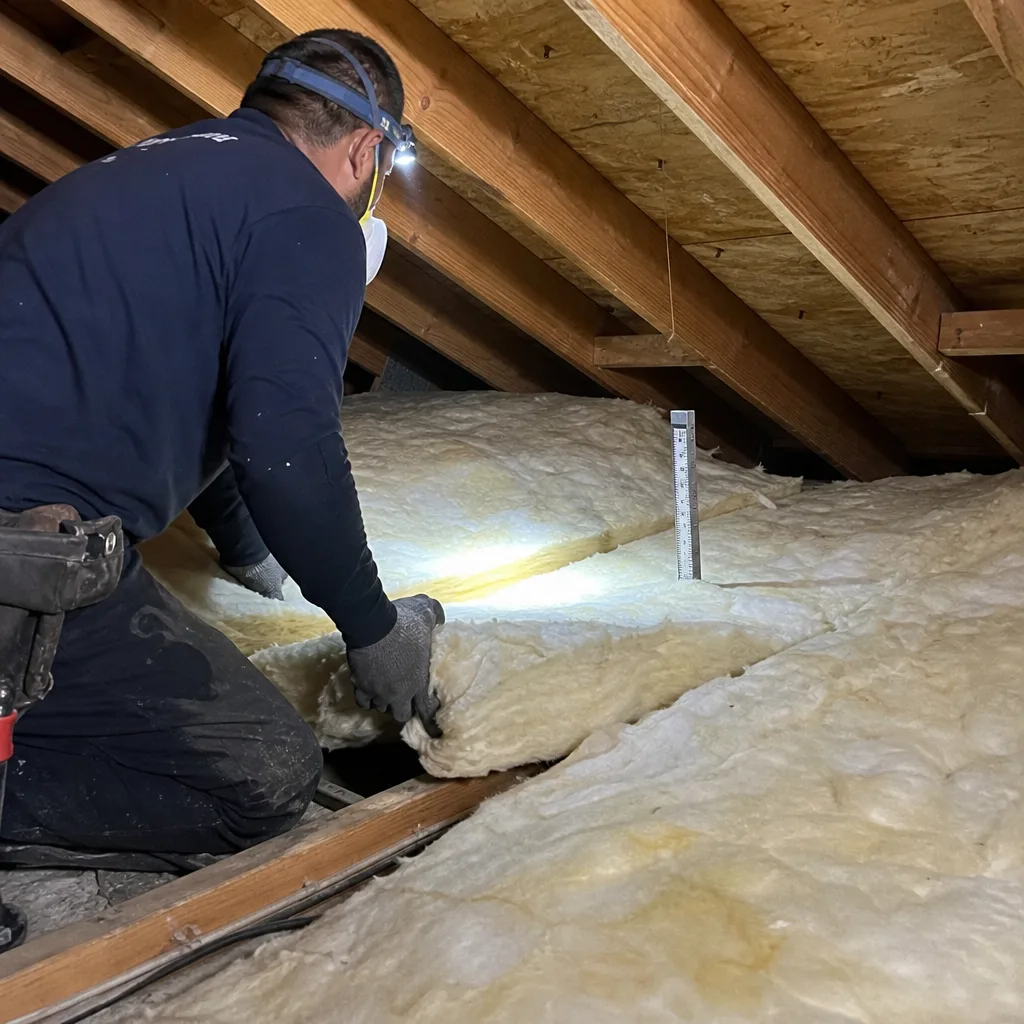
Assessment Before Replacement
Before we remove anything, we map your attic: where the top plates leak, where the can lights are bleeding conditioned air, where the additions connect to the original ceiling plane. South Whittier homes with enclosed patios and bump-outs almost always have a transition zone that was never insulated properly. That’s the spot we fix first after removal.
Trusted Brands We Service in South Whittier
We install Rockwool mineral wool for South Whittier homeowners who want fire resistance and moisture tolerance in their attic. We install CertainTeed fiberglass when budget and R-value targets call for batt or blown-in work. For spray foam, we carry Icynene and Demilec, two names most general insulation contractors never touch. We keep common material stock ready for South Whittier jobs, which means we don’t waste a day waiting on a distributor truck before we can start your removal or top-up. Blown-in, spray foam, or batts, we’ll tell you which one actually fits your situation.
Common Attic Insulation Problems We See in South Whittier Homes
- Compressed rock-wool batts under DIY cellulose. South Whittier’s unincorporated county status means many attic retrofits skipped permits entirely. A previous owner blows cellulose over 1950s rock wool, the layers compress, and the whole assembly loses its thermal value within a few years.
- Unsealed top plates and can lights. In 2×4-framed South Whittier attics, the top plates above exterior walls were never sealed. During summer afternoons, 140°F attic air pours into living rooms through these gaps, and no amount of new insulation stops it until the leaks are foamed shut.
- West-facing “Whittier Heat” walls. The stucco on west-facing exterior walls absorbs afternoon sun and radiates it inward. If the attic above those rooms isn’t air-sealed and insulated properly, the rooms never cool down until after midnight, even with the AC running.
- Patchwork insulation from additions. Enclosed patios and unpermitted family room additions create uneven thermal envelopes. One room holds temperature fine; the next one over swings ten degrees. The transition zones between old ceiling and new ceiling are almost never insulated correctly.
Pricing for Attic Insulation in South Whittier, CA
A full attic insulation replacement on a standard 1,000-square-foot South Whittier home runs $2,500 to $5,500, depending on material and whether we’re pulling old insulation out first. An attic top-up with blown-in fiberglass over existing but serviceable insulation typically lands between $1,400 and $2,400. Air-sealing work adds $800 to $1,800 to the job and pays for itself fast in these west-facing tracts. Spray foam from Icynene or Demilec runs higher, usually $3,800 to $7,000 for a full attic, because the material and prep work are more involved. The final number depends on your attic’s depth, access, and what’s already up there. Call (833) 390-3099 and we’ll give you a straight quote after one walkthrough.
One thing we want homeowners to understand clearly: South Whittier’s unincorporated county status means attic retrofits often skip permits entirely. Our crews regularly find DIY-blown insulation piled over original 1940s rock-wool batts, layers that have never been air-sealed and compress under their own weight. That’s why we don’t quote a top-up without first checking what’s underneath. Insulating over a failed assembly just wastes your money.
We Also Serve Cities Near South Whittier
Our trucks also cover South Whittier plus the surrounding communities: Whittier, East La Mirada, La Mirada, and Santa Fe Springs. If you’re anywhere in the 90605 corridor or just across the city line, we’ll schedule your attic assessment the same week you call. The same crews, the same eight-brand lineup, and the same assessment-first approach apply everywhere we work.
Serving South Whittier, CA — Our Local Coverage Area
We’re based in the South Whittier area and know this community well. Use the map below to see our service coverage — if you’re nearby, we can almost certainly help.
FAQs About Attic Insulation in South Whittier
In most cases, no. South Whittier is unincorporated Los Angeles County territory, and a straightforward insulation replacement or top-up generally doesn’t trigger a permit requirement. But if you’re adding square footage, moving walls, or doing structural work, that changes. We can tell you during the walkthrough whether your specific scope needs county sign-off. For a no-obligation assessment, call (833) 390-3099.
If your west-facing rooms run noticeably hotter than the rest of the house by mid-afternoon, the insulation is suspect. Go further: peek into the attic and check for compressed batts, dust-caked material, rodent droppings, or unsealed gaps around can lights and top plates. Homes in the 90605 ZIP typically fail at the air-sealing layer first, not the insulation thickness. We’ll tell you exactly what’s working and what’s dead after one free attic inspection.
Because the attic above that room wasn’t air-sealed before the insulation went in. The west-facing stucco wall radiates heat inward, and when the attic top plates leak, that 140°F attic air pushes straight down into the living space. Insulation slows conductive heat, but it does nothing for air leaks. This is the single most common issue we fix in South Whittier homes, and the solution is removal, sealing, and re-insulation, in that order.
Yes, and on most South Whittier homes, we recommend it. Old rock-wool batts buried under DIY cellulose have lost their R-value and are trapping heat against the ceiling. Removing them lets us air-seal the top plates and find problems that would otherwise stay hidden. Removal adds cost to the job, but skipping it often means paying twice to fix the same hot-room problem.
For attic floors and ceilings, blown-in cellulose like GreenFiber or blown-in fiberglass from CertainTeed works well and hits R-38 without changing your framing. If you want moisture and fire resistance, Rockwool batts are the premium option. Spray foam via Icynene or Demilec makes sense when you’re converting the attic to living space or sealing a complicated roofline. There’s no single right answer for every South Whittier home. That’s the point of carrying eight brands and three methods. Call (833) 390-3099 and we’ll tell you which one fits yours.
Written by Nate Calloway, Owner at Fountain Valley Insulation, serving South Whittier and surrounding Los Angeles County communities.