


Fast, Reliable Attic Insulation Across Ontario
Attic insulation in Ontario, CA isn’t a winter project. It’s a July project. When your attic hits 140°F and your air conditioner runs all afternoon without cooling the bedrooms, the insulation above your ceiling is the problem. We work in Ontario’s east-side tracts, the historic downtown core, and the newer Ontario Ranch subdivisions every week. You’ll get a straight answer about what’s failing, what it costs to fix, and which material actually belongs in your attic. Call (833) 390-3099 and we’ll schedule a look at your attic, usually within a couple of days.
Why Fountain Valley Insulation Is Ontario’s Preferred Attic Insulation Company
Most Ontario homes we inspect were built between 1950 and 1990. That means slab-on-grade foundations, stucco exteriors, and low-pitch roofs with attics that never had enough insulation to begin with. We know what the original builders put up there. Thin fiberglass batts, poorly fitted around can lights and trusses, now baked brittle by decades of Inland Empire heat. Homeowners in the 91761 and 91764 ZIP codes call us after discovering their second-floor rooms run ten degrees hotter than the rest of the house. That’s a classic symptom of heat-collapsed insulation, and it’s the first thing we check.
Our Attic Insulation team works with eight manufacturer brands, which matters when you’re replacing failed material in an Ontario attic. You’re not stuck with whatever one contractor bought in bulk. We match the material to your home, not the other way around. For a 1980s tract home off Euclid Avenue, that might mean Owens Corning batts. For an older single-wall house near the 91762 ZIP code, we might recommend a different approach entirely. Nate Calloway leads our crew, and he’s been through enough Ontario attics to know what holds up here and what doesn’t.
We respond fast to Ontario. If you’re off Vineyard Avenue or up toward San Antonio Heights, we can usually get a technician to you within 24 to 48 hours for an inspection. You need someone who understands that an Ontario attic in August isn’t like a Long Beach attic. The heat load changes everything.
Attic Insulation Removal in Ontario
Attic Insulation Removal in Ontario is often the first step before any upgrade, and it’s not optional when the existing material has been destroyed by attic heat. The job involves vacuuming out old, collapsed fiberglass, hauling away debris, and prepping the attic floor for new material. In Ontario, a typical removal runs $1.50 to $2.50 per square foot depending on attic access and how much material is up there. If your insulation is original to a house built in the 1960s or 1970s, you almost certainly need removal, not a top-up. Adding fresh batts over heat-degraded material buries the problem instead of solving it.
When Removal Beats Topping Off
You need removal when the old batts have sagged away from the rafters, when they’re discolored from dust and heat cycling, or when rodents have nested in them. You also need removal if previous work left gaps around top plates and ductwork. Topping off is fine when insulation is dry, intact, and just below current recommended depth. Most Ontario attics we see fall into the removal category.
What Gets Hauled Away
We remove fiberglass, rock wool, denim, cellulose, and whatever else a previous owner stuffed up there. We also flag cooked duct insulation while we’re up there. In Ontario Ranch area homes, we regularly find duct wrap so brittle it flakes when touched. That’s a separate fix, but it’s part of the same heat problem. Leaving it means your new attic insulation only does half its job.
Insulation Contractors in Ontario
Insulation Contractors in Ontario should understand slab-on-grade tract construction and low-pitch roofs before they quote you a number. A contractor who only does coastal work will sell R-value and ignore ventilation. That’s a mistake here. When your attic floor reaches 150°F in July, ventilation and radiant barrier performance matter as much as how many inches of fiberglass you have. We carry three installation methods, blown-in, attic batts, and spray foam, and we’ll tell you which one actually fits your situation. For most Ontario homes, that means batts plus a radiant barrier. Spray foam has its place, but it’s not the right answer for every low-pitch attic with a stucco exterior.
What We Look For Before Quoting
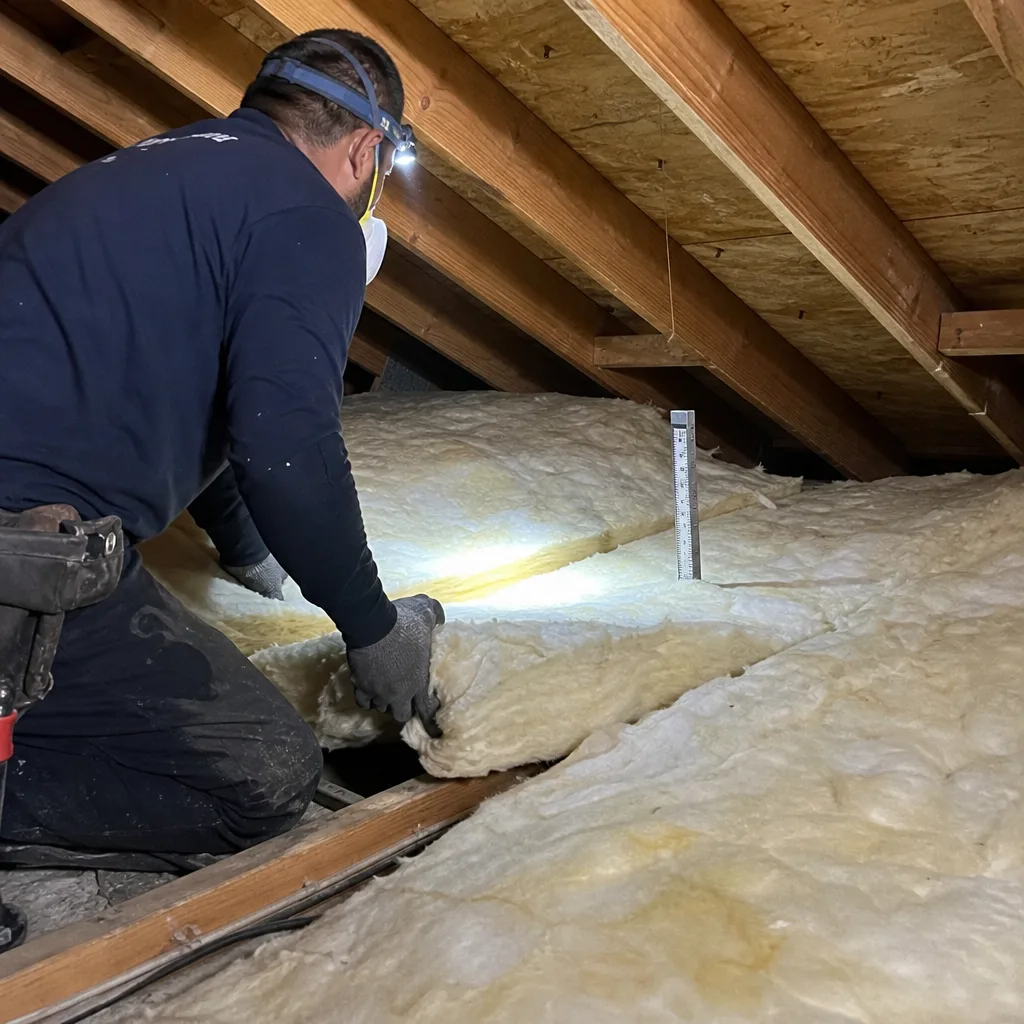
We check your existing R-value, attic ventilation, duct condition, and whether the insulation touches the top plates. We look at the roof pitch and the eave vents. In Ontario’s east-side tracts, under-ventilated attics are common, and adding insulation without fixing ventilation traps even more heat. We’ll tell you if you need baffles before we install anything.
New Construction and Renovation Work
If you’re building in the newer Ontario Ranch area or tearing out a ceiling in an older home near the 91764 ZIP code, bring us in before drywall goes up. It’s easier and cheaper to insulate correctly on the front end than to retrofit later. We also handle renovations where a previous owner left the attic under-insulated for decades. Getting the envelope right matters more than any other single upgrade you’ll make.
Trusted Brands We Service in Ontario
We’re not a one-brand shop. We install blown-in, attic, and spray foam insulation using materials from eight manufacturers, including CertainTeed for fiberglass batts, Icynene and Demilec for open- and closed-cell spray foam, and GreenFiber for recycled-content blown-in. That range means a 1970s Ontario rancher with a low-pitch roof gets a different material than a new build with cathedral ceilings. Ask us why we carry Rockwool and spray foam and recycled fiber. Most contractors carry none of them. We stock what we need for Ontario jobs and can turn around most attic replacements within a week of your approval.
Common Attic Insulation Problems We See in Ontario Homes
- Heat-collapsed fiberglass batts. In east-side tract homes across 91761 and 91764, attics regularly exceed 140°F. Batts sag, pull away from top plates, and leave the ceiling exposed to full attic heat.
- Cooked duct insulation. Sustained high attic temperatures bake duct wrap until it flakes. The result is energy loss and, in some cases, condensation on ducts when cool air runs through them.
- Inadequate ventilation with low-pitch roofs. Many Ontario homes have minimal eave venting and a low roof slope. Heat builds up, insulation degrades faster, and the cycle repeats.
- Under-insulated original attics. Older homes near the historic downtown core around 91762 were often built with minimal ceiling insulation. R-values of R-11 or less are common, well below current recommendations.
Pricing for Attic Insulation in Ontario, CA
Attic insulation removal and replacement in Ontario generally runs $3.50 to $6.00 per square foot, including haul-away, prep, and new material. A straightforward top-up over intact insulation costs less, typically $1.75 to $2.75 per square foot. Spray foam runs higher, usually $3.50 to $7.00 per square foot depending on whether you choose open-cell or closed-cell. The factors that move your quote: attic size, access difficulty, whether ducts need re-wrapping, and whether ventilation work is required. We give free estimates, and we’ll walk you through the material options before you commit to anything. Call (833) 390-3099 to schedule a look.
We Also Serve Cities Near Ontario
Our crews cover Attic Insulation in Ontario and the surrounding communities. We’re regularly in Montclair, Upland, Chino, and San Antonio Heights. If you’re just over the city line, the same heat issues apply, and we’ll get to you just as fast. Same crew, same brands, same straight answers.
Serving Ontario, CA — Our Local Coverage Area
We’re based in the Ontario area and know this community well. Use the map below to see our service coverage — if you’re nearby, we can almost certainly help.
FAQs About Attic Insulation in Ontario
Because Ontario attics bake. Triple-digit summer temperatures and intense solar load push attic temperatures to 140 – 150°F, which breaks down fiberglass batt structure and causes sagging. Coastal attics rarely exceed 110°F, so their insulation lasts longer. If your Ontario attic hasn’t been inspected in ten years, call (833) 390-3099 for a free look.
If the batts have fallen away from the top plates, they need removal. If they’re discolored, dusty, or compressed to half their original thickness, they need removal. If you can see ductwork because the insulation has collapsed around it, you need removal. Top-off only works when existing insulation is intact and dry.
For most slab-on-grade tract homes in 91762, we recommend new R-38 fiberglass batts paired with a radiant barrier. The radiant barrier reflects heat before it reaches the insulation, which matters more in Ontario than adding extra R-value. Ventilation improvements are usually needed too. Call us for a specific recommendation based on your attic.
In most Ontario attics, yes. R-value slows conductive heat transfer, but a radiant barrier addresses radiative heat gain from the roof deck. That’s the dominant heat source in an Inland Empire summer. A radiant barrier can lower attic temperatures by 20 – 30°F, which extends insulation life and reduces cooling load.
Santa Ana winds add dust and debris intrusion through vents, which settles into insulation and reduces its effectiveness. They also create pressure differences that can pull conditioned air through attic bypasses. Sealing gaps before insulating matters more in Ontario because of this. We check for bypass leaks on every job.
Written by Nate Calloway, Owner at Fountain Valley Insulation, serving Ontario and the Inland Empire.