


Fast, Reliable Attic Insulation Across Morongo Valley
Attic insulation in Morongo Valley costs $1,800 to $4,600 for a typical 1,200 to 1,800 square foot home, and upgrading it is the single most effective way to cut cooling bills in a climate where summer highs regularly pass 100°F. We work throughout the 92256 area and know exactly what these desert attics need. If your home was built as a rural cabin or 1970s retreat, you’re probably sitting under insulation that’s lost most of its R-value to wind-driven dust and age. Call (833) 390-3099 and we’ll tell you honestly what needs to happen before you spend a dollar on material.
Why Fountain Valley Insulation Is Morongo Valley’s Preferred Attic Insulation Company
Homeowners in Morongo Valley call us because we carry eight manufacturer brands and match the material to your home, not the other way around. Most contractors in the Hi-Desert push one product regardless of what your attic actually needs. We carry Rockwool for its fire resistance, CertainTeed for proven fiberglass performance, Icynene and Demilec for closed- and open-cell spray foam, and GreenFiber for recycled-content blown-in. When a Morongo Valley homeowner asks why we stock five different attic insulation materials, the answer is simple: a 1960s homestead cabin and a 1990s stucco rancher have completely different attic needs. Our Attic Insulation team shows up ready to explain the differences in plain terms, then installs the right one.
Led by Nate Calloway, our crews have worked on properties along Hess Boulevard, up near Canyon Road, and across the scattered acreage parcels that define Morongo Valley’s rural character. We understand that many homes here sit on larger lots with detached workshops that need their own insulation treatment. We bring the right material, the right air sealing products, and the right approach on the first trip. No bouncing back to the shop because we guessed wrong about what your attic needed.
Attic Ventilation in Morongo Valley
Attic Ventilation is the unsung half of an insulation job in Morongo Valley, and in this climate it can make the difference between an attic that stays manageable and one that bakes insulation into uselessness by August. A ventilated attic lets superheated air escape rather than radiating down through your ceiling all night. Here it runs $400 to $1,900 depending on whether you need soffit vents, a ridge vent, gable vents, or a powered exhaust fan added to an older roof assembly.
Why Older Cabins Need Baffles
Many Morongo Valley homes were roofed without any thought to airflow. We routinely find blocked soffit vents or none at all. Installing baffles before blown-in insulation keeps airflow channels open at the eaves, so your insulation doesn’t choke the only ventilation your attic ever had.
Wind-Driven Dust and Vent Placement
Wind off the San Gorgonio Pass pushes fine dust horizontally, not just vertically. That means vent placement matters more here than it does in town. We position vents where they pull air, not where they become dust intakes that accelerate the same clogging problem you called us to fix.
Radiant Barrier in Morongo Valley
Radiant Barrier is a reflective foil installed under the roofline that blocks radiant heat gain before it ever reaches your insulation. In Morongo Valley, where summer sun hammers roofs for months at a stretch, a radiant barrier can cut attic temperatures by 20 to 30 degrees. Installed cost typically runs $1,200 to $2,800 for most single-family homes in the 92256 area, with ranch-style homes on the lower end and larger or complex rooflines on the higher end.
What It Does Against Desert Sun
Insulation slows heat transfer but doesn’t stop it. A radiant barrier reflects thermal radiation back out before it saturates your insulation. That matters when daytime attic temperatures here routinely hit 140°F. Pairing a radiant barrier with R-38 or higher attic insulation is the most effective combination we install for Morongo Valley’s climate.
When a Radiant Barrier Makes Sense
If your cooling bills spike every summer and your attic is already insulated to code, the barrier is usually the next upgrade that actually moves the needle. It’s also worth asking about when we’re doing a full attic insulation replacement anyway. The marginal labor cost is small compared to doing it separately later.
Trusted Brands We Service in Morongo Valley
We stock and install attic insulation from Rockwool, CertainTeed, Icynene, Demilec, Owens Corning, Johns Manville, Knauf, and GreenFiber. That’s not a marketing line; it means when your Morongo Valley attic calls for mineral wool’s fire resistance or Demilec’s closed-cell air sealing, we already have the relationship and local supply chain to get it fast. Ask us why we carry mineral wool and closed-cell foam when most desert contractors carry fiberglass and nothing else. The answer is that your attic’s failure mode here is unique and the fix shouldn’t be generic.
Common Attic Insulation Problems We See in Morongo Valley Homes
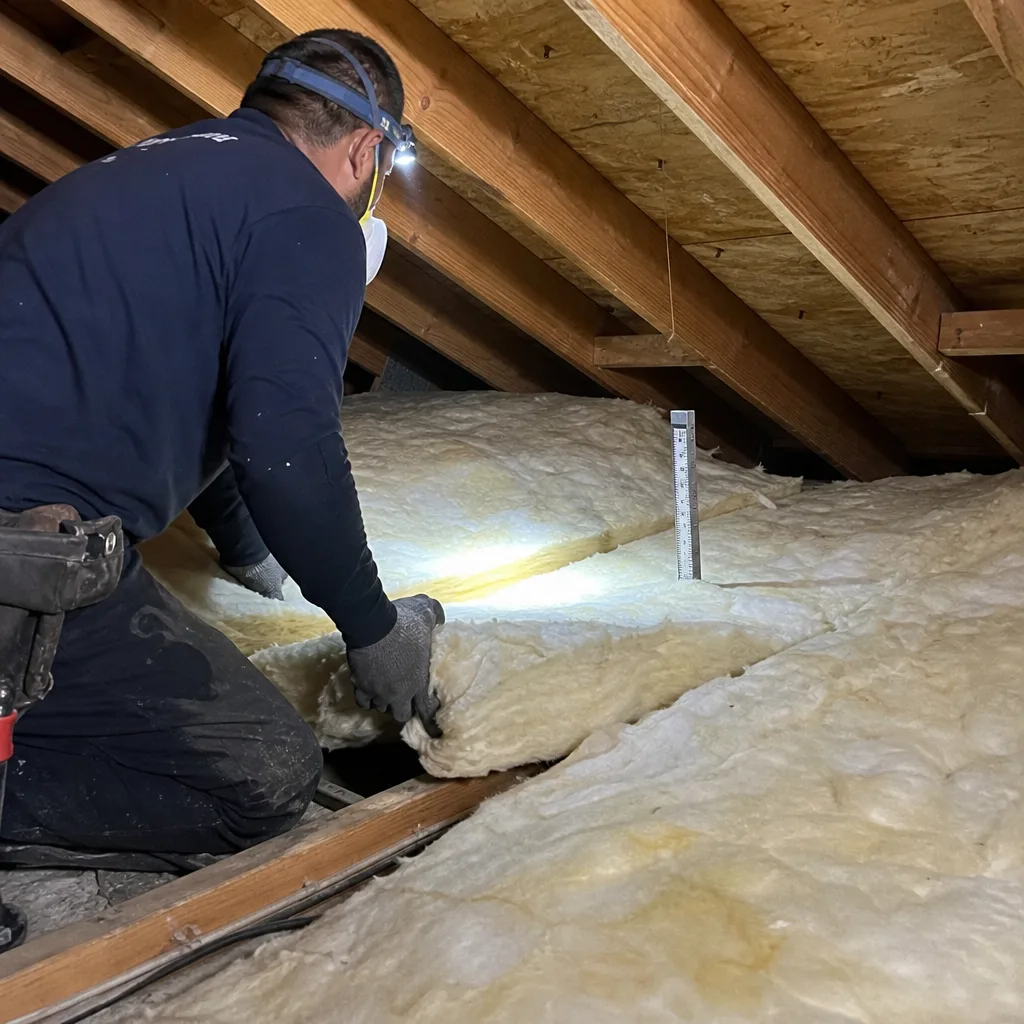
- Dust-clogged batts with half their R-value gone. Wind off the pass drives fine desert dust through unsealed penetrations, and after 10 or 15 years the insulation looks more like sandbags than fiberglass. Air sealing has to happen before new material goes in.
- Condensation damage from rapid temperature swings. Days over 100°F and nights near freezing cause moisture to condense inside under-insulated attics. That moisture settles into older insulation and degrades its thermal performance years before it should fail.
- Inadequate original insulation in cabins and manufactured homes. Many Morongo Valley homes were built as cheap desert retreats with R-11 or R-19 when they needed R-38 or higher for this climate. A top-up or full replacement is usually the fix.
- Attic ventilation that traps heat and moisture. Older rural homes here often have blocked or missing soffit vents, which turns the attic into an oven that cooks the insulation and pushes heat into living space all evening.
Pricing for Attic Insulation in Morongo Valley, CA
A full attic insulation replacement in Morongo Valley runs $2,200 to $4,600 for a typical home, depending on square footage, access, and whether we’re removing old material or sealing first. Attic insulation top-up, where existing batts are salvageable, runs $900 to $1,900. Air sealing plus insulation is the combination we recommend for most older homes here, and it adds $500 to $1,500 depending on how many penetrations need foam. Blown-in attic insulation runs $1,400 to $3,200 for a standard 1,200 to 1,800 square foot attic. Every estimate is free and written so you know the line-item cost before we start. Call (833) 390-3099 and we’ll walk the attic with you and give you a number you can plan around.
We Also Serve Cities Near Morongo Valley
Our crews work across the Morongo Basin, including Attic Insulation in Morongo Valley and the surrounding communities of Desert Edge, Garnet, Desert Hot Springs, and Yucca Valley. If you’re on acreage or in a rural subdivision outside central Morongo Valley, give us a call and we’ll schedule the same week.
Serving Morongo Valley, CA — Our Local Coverage Area
We’re based in the Morongo Valley area and know this community well. Use the map below to see our service coverage — if you’re nearby, we can almost certainly help.
FAQs About Attic Insulation in Morongo Valley
Because wind off the San Gorgonio Pass drives fine desert dust through every unsealed penetration in your attic, and that dust clogs new insulation within a few years. We recently worked on a 1960s homestead cabin off Hess Boulevard where the original batts had compacted to half their intended thickness from years of pass wind dust. After sealing gaps around the chimney and top plates with closed-cell foam, we installed Owens Corning R-38 fiberglass batts and added a radiant barrier. Sealing first means your insulation actually performs for its full service life. Call (833) 390-3099 and we’ll tell you what your attic needs before any new material goes in.
Days above 100°F followed by nights near freezing create condensation cycles that degrade insulation and promote moisture problems in unsealed attics. That’s why we lean toward moisture-resistant options like Rockwool mineral wool for many Morongo Valley homes, and why we always discuss ventilation when we recommend an insulation material. The swing also means air sealing matters as much as R-value. Our team will explain which material handles your specific attic conditions best.
Yes, we service rural properties across the 92256 zip code, including homestead cabins and manufactured homes on larger lots. Our crews are set up for one-trip jobs on acreage, carrying the full range of materials so we don’t have to run back to a supplier mid-install. If you have a detached workshop or outbuilding that needs insulation along with the main house, we’ll include it in the same estimate. Call (833) 390-3099 and tell us what you’re working with.
Uneven room temperatures, higher cooling bills in summer than your neighbors with similar homes, and visible dust trails around ceiling penetrations are the common tells. In the attic itself, batts that look flattened or darkened, or that crumble when touched, have likely been dust-clogged and compacted. If your home has gone 10 or more years without an attic inspection in this climate, the insulation has almost certainly lost measurable R-value. We’ll confirm it during a free attic walkthrough.
Yes, we install radiant barriers in Morongo Valley attics to reflect high-desert sun before it saturates your insulation. A radiant barrier under the roofline can cut attic temperatures by 20 to 30 degrees, which reduces the heat load your insulation and cooling system have to fight every day from May through October. It pairs especially well with blown-in insulation or new batts. Call (833) 390-3099 for a free estimate and we’ll tell you honestly whether a radiant barrier makes sense for your roof orientation and attic configuration.
Written by Nate Calloway, Owner at Fountain Valley Insulation, serving Morongo Valley with eight trusted insulation brands and honest material-matched recommendations.