

Fast, Reliable Attic Insulation Across Los Angeles
Attic insulation in Los Angeles is a heat-control job first and a warmth job second. The older wood-frame homes across South LA and the Eastside absorb intense summer sun, and without proper attic treatment, that heat pushes straight down into living spaces. We work in Los Angeles weekly, mostly on 1920s to 1950s bungalows and duplexes where the original insulation was thin, settled, or never really there to begin with. If your upstairs rooms bake in July or your AC runs all afternoon without winning, call (833) 390-3099. We’ll tell you what’s actually going on up there and what it takes to fix it.
Why Fountain Valley Insulation Is Los Angeles’s Preferred Attic Insulation Company
Most insulation contractors carry one fiberglass line and install it one way. That’s not how Los Angeles homes work. The shallow, open-eave attics in neighborhoods like Koreatown and Echo Park need a different approach than the deeper attics in newer construction. We carry eight manufacturer brands, including Rockwool, CertainTeed, Icynene, and Demilec, which means we can recommend what fits your specific attic rather than what happens to be on our truck. That’s the whole point of working with a multi-brand specialist.
Our crews know the common failure points in Los Angeles housing stock. We’ve worked on stucco bungalows off Vermont, Spanish duplexes in Silver Lake, and converted attics near Hollywood. What we’ve learned is that most attics here fail not because the insulation is old, but because the attic was never properly sealed before insulation went in. That’s why we start every Los Angeles job with an inspection that accounts for eave gaps, wiring, and venting conditions.
Attic Mold Removal in Los Angeles
Attic mold removal in Los Angeles is often a prerequisite for insulation work, not an afterthought. Warm days, cool nights, and vented attics create condensation cycles that leave wood sheathing damp in winter months, especially in coastal-influenced neighborhoods. When old insulation holds moisture against framing, mold follows. You need that addressed before any new material goes in. A typical attic mold removal and cleanup in Los Angeles runs $1,200 to $3,800 depending on square footage and whether the affected area is isolated to one section or spread across the entire attic deck.
When Mold Shows Up in LA Attics
The 90036 and 90038 ZIPS have a lot of 1930s and 1940s homes with vented attics that pull in morning marine layer moisture. If the existing insulation is old and compressed, it traps that moisture. You’ll see dark staining on the underside of roof sheathing, often concentrated near the eaves or around bathroom vent terminations that were never properly ducted outside.
What We Do Before Installing New Insulation
Mold removal in an attic means more than spraying. The affected material gets bagged and removed, the sheathing is treated and dried, and the ventilation path is corrected so the problem doesn’t return the following winter. After that, we can air-seal and install the right insulation for the space. Skipping the mold step is how homeowners end up paying for a second insulation job two years later.
Attic Insulation Removal in Los Angeles
Attic insulation removal in Los Angeles is often needed more than new installation. The original material in many 1920s – 1950s homes is either rock wool from the 1940s that’s settled to an inch thick, or fiberglass batts that were installed poorly during a 1980s remodel. Removing attic insulation and starting fresh in Los Angeles generally runs $1.00 to $2.25 per square foot for the removal alone, so a typical 1,200-square-foot attic lands between $1,200 and $2,700. The full replacement cost depends on what material you choose after removal.
When Removal Beats Top-Up
If the existing material is water-damaged, pest-contaminated, or has mold, you don’t top it up. You remove it. The same applies to old attics where knob-and-tube wiring is still present and needs to be handled before anything goes over it. In Los Angeles, we remove old insulation most often on Eastside bungalows and South LA duplexes that have had decades of roof leaks and wildlife traffic through the eaves.
What Happens After Removal
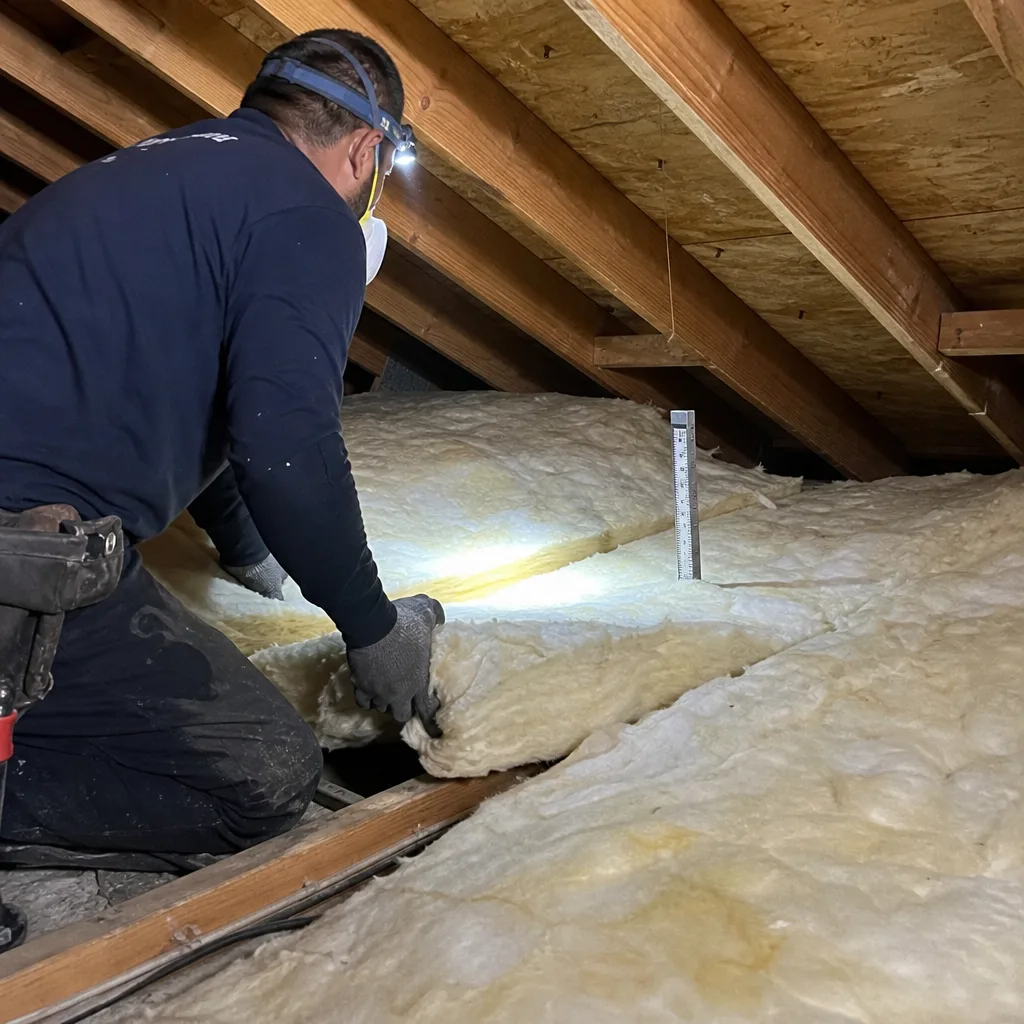
We don’t just strip the old material and leave. That’s the moment to air-seal penetrations, close eave gaps, and install ember-resistant venting if the home sits in a wildfire-embers zone. Then we blow in the right material for the attic’s clearance and the home’s exposure. GreenFiber cellulose or Rockwool batts are common choices here, but we’ll make that call with you based on what the attic actually needs.
Trusted Brands We Service in Los Angeles
We install Rockwool mineral wool, Icynene spray foam, and GreenFiber recycled cellulose across Los Angeles, along with CertainTeed and others from our eight-brand lineup. Most Los Angeles contractors carry one brand. We carry multiple because a 1940s Sunset Boulevard bungalow with open eaves needs a completely different material than a sealed attic in a Koreatown mid-rise. We keep common materials stocked for fast turnaround once the scope is set, and we order specialty product for your specific attic rather than improvising with whatever is available. Ask us why we carry Rockwool and Icynene. Most general insulation companies carry neither.
Common Attic Insulation Problems We See in Los Angeles Homes
- Open eave gaps in pre-1950s attics. The original construction left the attic edge open to the outside for ventilation. Blowing insulation in without closing those gaps means Santa Ana winds push loose fill around, and embers can enter during wildfire conditions.
- Old knob-and-tube wiring buried under new insulation. Many 1920s homes still have active or abandoned knob-and-tube circuits in the attic. Covering it with cellulose or fiberglass without dealing with the wiring creates a hidden fire hazard that most insulation crews ignore.
- Standard vents in ember-exposure zones. Homes in the 90001 – 90009 ZIPS and hillside neighborhoods need ember-resistant venting. Standard mesh vents let wind-driven embers into the attic where they ignite dust and old framing. This is a Los Angeles-specific problem that a generic insulation page never mentions.
- Low-clearance attics with no access. Many 1920s stucco houses have attic clearances under three feet at the peak. A standard 10-inch batt won’t fit, and blown-in material needs a crew that can maneuver in tight space. We work these attics regularly, and we have the right equipment for confined installation.
Pricing for Attic Insulation in Los Angeles, CA
Attic insulation in Los Angeles runs a wide range because the housing is far from uniform. A standard blown-in cellulose or fiberglass top-up in an accessible attic typically costs $1.50 to $3.00 per square foot, so an 1,100-square-foot attic lands between $1,650 and $3,300. If removal is required first, add $1.00 to $2.25 per square foot. Spray foam runs higher, typically $3.25 to $6.50 per square foot open-cell, because of equipment and prep time. Attics with eave closure, ember-resistant venting, or knob-and-tube complications cost more because the prep work is real. We give you a written line-item estimate before we start, and the estimate is free. Call (833) 390-3099 to schedule a look at your attic.
We Also Serve Cities Near Los Angeles
Our crews work throughout Los Angeles County, and we regularly handle Attic Insulation jobs in Koreatown, Echo Park, Silver Lake, and Hollywood. If you’re in one of these neighborhoods or anywhere else across Los Angeles, the same multi-brand approach applies. We match the material and method to your attic, not the other way around.
Serving Los Angeles, CA — Our Local Coverage Area
We’re based in the Los Angeles area and know this community well. Use the map below to see our service coverage — if you’re nearby, we can almost certainly help.
FAQs About Attic Insulation in Los Angeles
Because the original eave gaps are open to the outside in most pre-1950s construction, and blowing insulation in without closing those gaps means loose fill gets scattered by Santa Ana winds and embers can enter during wildfire conditions. In South LA specifically, we see this on nearly every 1940s stucco house we inspect. The right sequence is eave closure and ember-resistant venting first, then insulation. Call (833) 390-3099 and we’ll explain what your attic needs after inspecting it.
Usually yes, if the existing material is water-damaged, pest-contaminated, moldy, or too compressed to perform. Many Eastside bungalows still have original 1940s rock wool that has settled to less than an inch thick. Adding new material on top of that doesn’t fix the underlying problem. We’ll tell you whether removal is necessary after a quick attic inspection, and the quote will show both options with real numbers.
Ember intrusion changes what venting and sealing work has to happen before insulation goes in. Homes in ember-exposure zones, including much of the 90001 – 90009 ZIPS and hillside neighborhoods, need ember-resistant vents and sealed eaves so wind-driven embers can’t reach dry insulation and framing. We include this prep work in the scope when the home is in a wildfire-embers zone. It’s a standard part of our Los Angeles attic jobs, not an add-on.
Blown-in cellulose or blown-in fiberglass usually works best because batts don’t fit well in low, irregular attics. The material can be blown to the proper depth around existing framing and obstructions. Rockwool batts can work if the attic is accessible and regularly framed. We match the material to your attic after measuring clearance and looking at the framing. Call (833) 390-3099 for a free attic inspection and material recommendation.
Yes, we handle attic mold removal in Los Angeles as part of the insulation scope, not as a separate subcontract. We remove affected material, treat and dry the sheathing, correct the ventilation path, and then install the new insulation. Los Angeles attics that pull in marine layer moisture are prone to condensation mold, especially around bathroom vent terminations. Address the mold before insulating, or the new insulation holds moisture against the same surfaces. Call (833) 390-3099 and we’ll inspect and quote the full scope, including mold removal if needed.
Written by Nate Calloway, Owner at Fountain Valley Insulation, serving Los Angeles and surrounding communities.